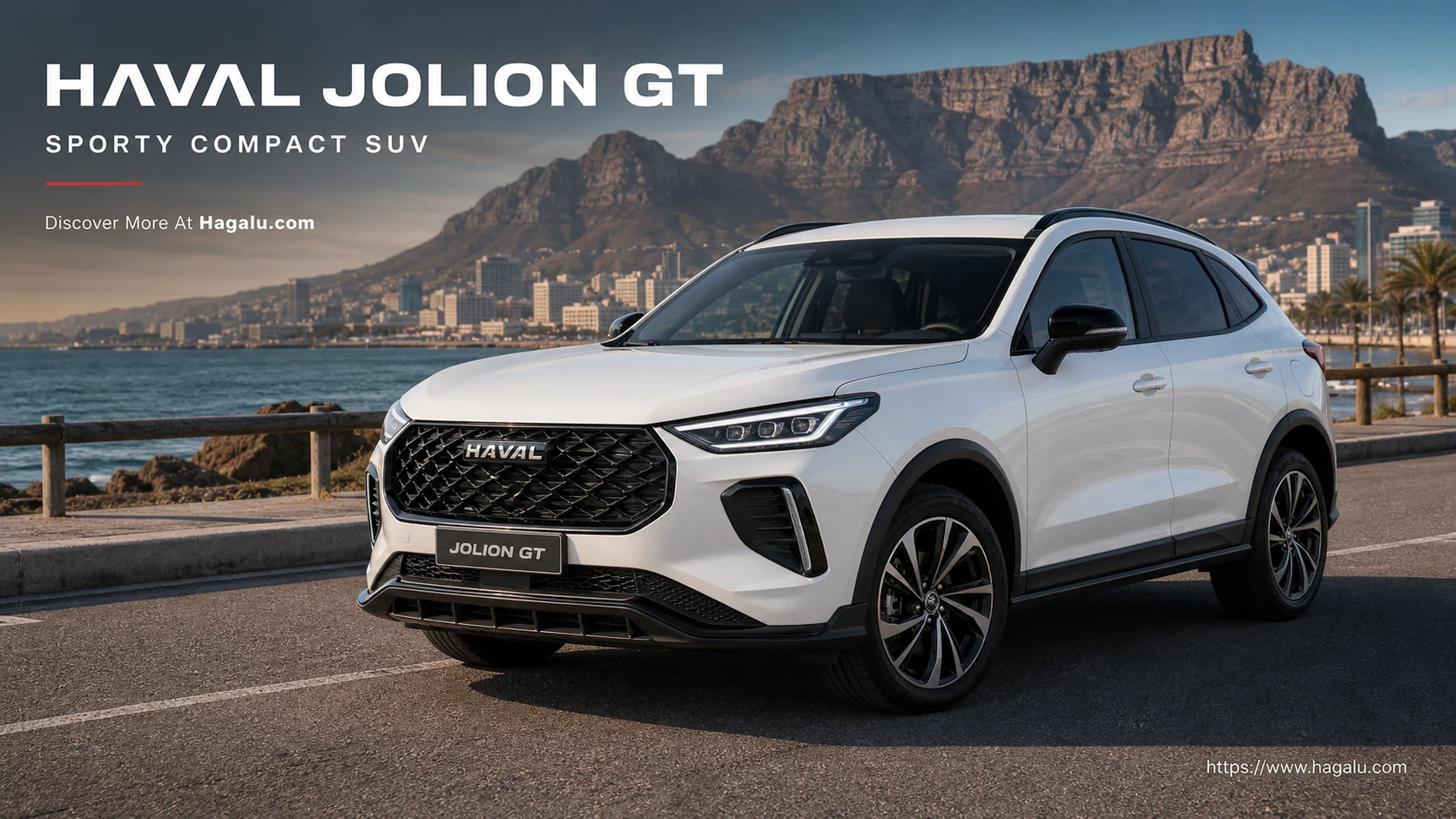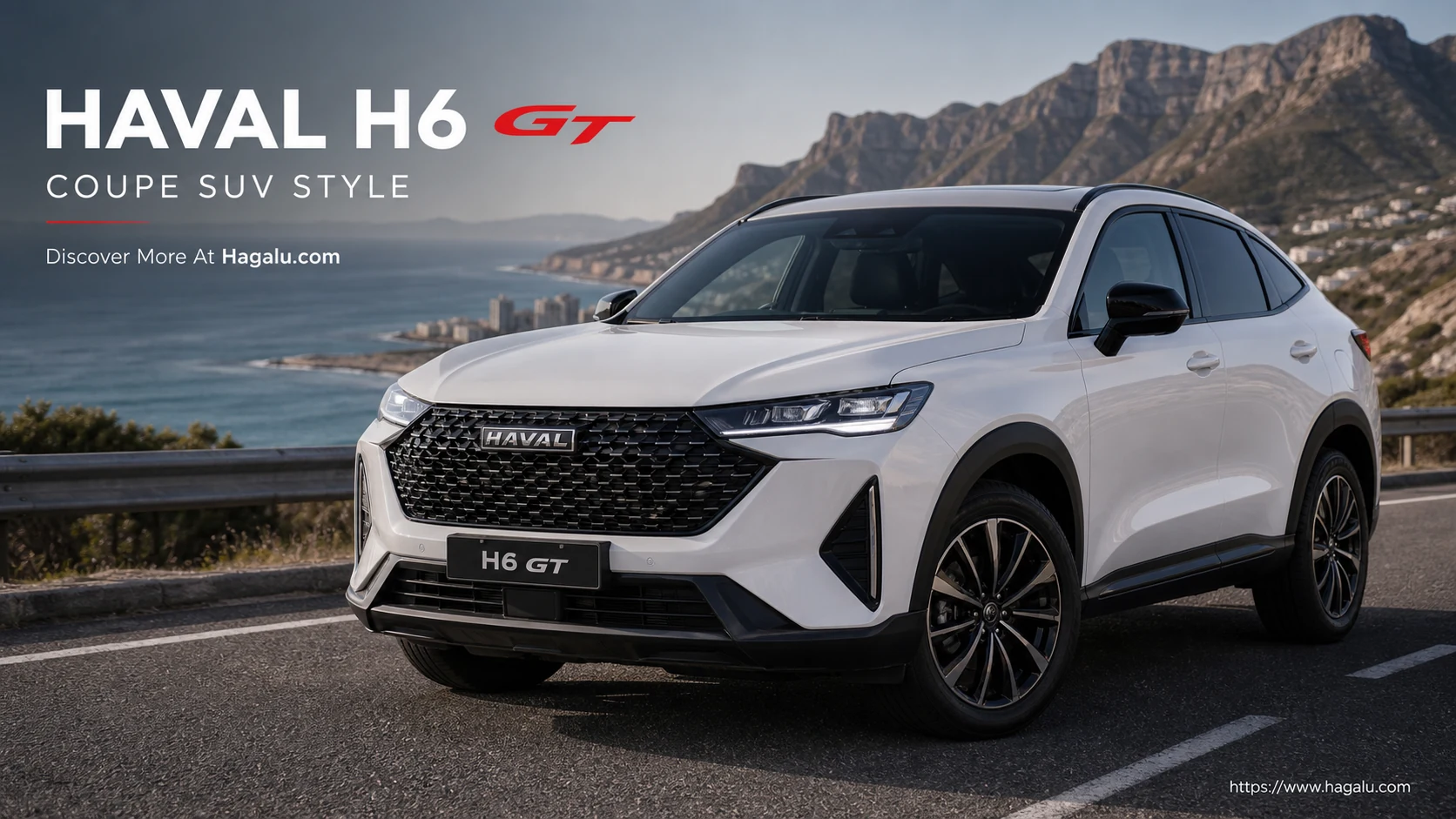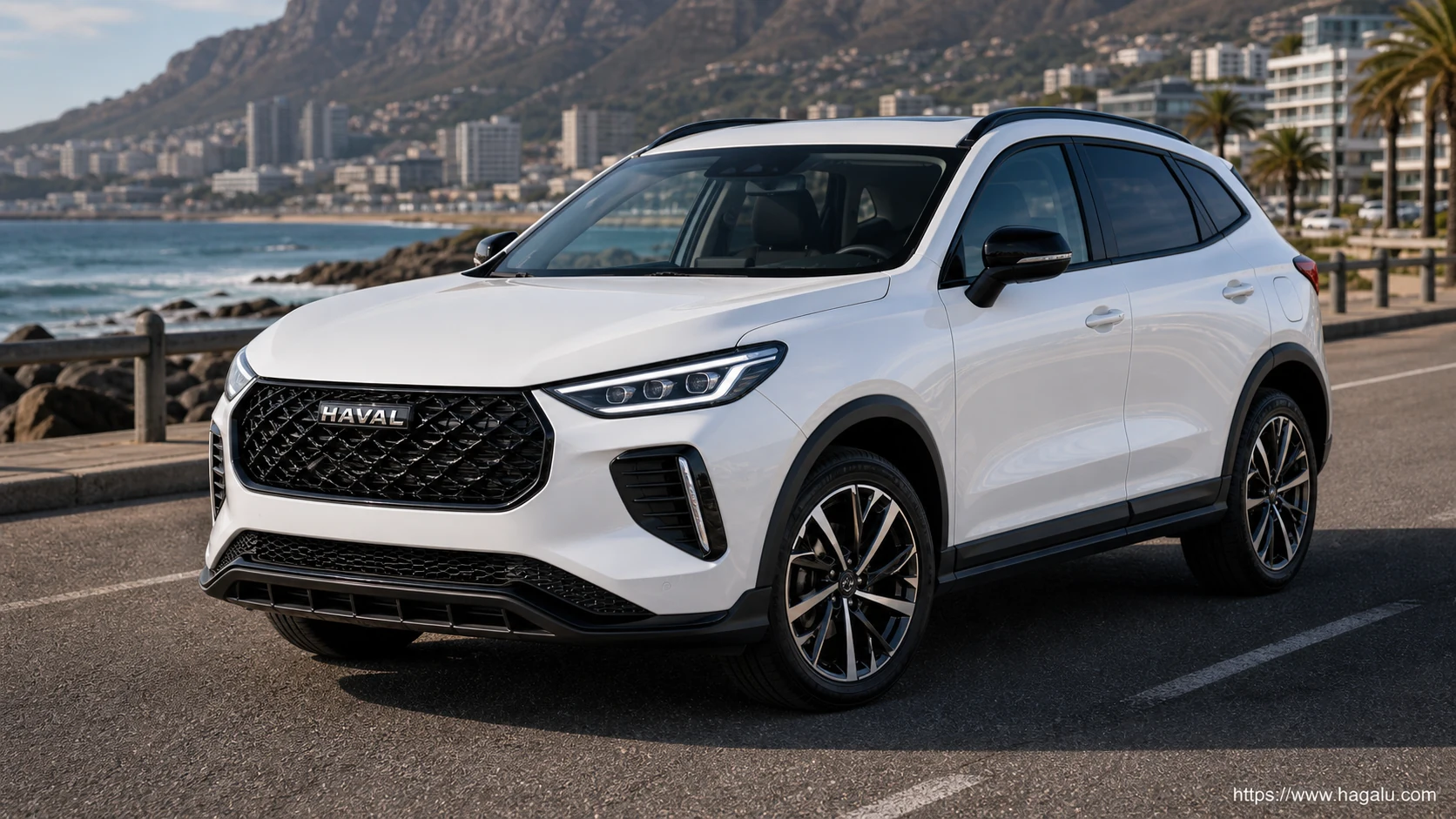
If the Jolion is GWM's volume compact SUV play in South Africa, the Jolion GT is its halo. Launched into the South African market in 2024, the Jolion GT shares the underlying platform with its Jolion sibling but adopts a more aggressive coupe-SUV roofline, more powerful 2.0-litre hybrid powertrain, larger wheels, and a substantially uprated cabin specification. The pitch is straightforward — give Haval-curious South African buyers a more emotionally engaging compact SUV without pushing into Tucson or Sportage flagship money. The 2.0-litre Atkinson-cycle petrol-electric hybrid produces 135 kW in the LS trim and 150 kW in the LT — meaningfully more than the 1.5T Jolion Hybrid's 115 kW. Combined torque on the LT is 380 Nm, and the 0-100 km/h time comes down to around 7.9 seconds — quick by compact-SUV standards and faster than the Hyundai Tucson 2.0 N-Line or KIA Sportage GT-Line. The hybrid system retains the dedicated hybrid transmission architecture used in the Jolion, but the 2.0-litre engine gives the system more headroom for highway overtaking and uphill cruising. Pricing positions the GT at R579,900 for the LS and R629,900 for the LT — a R60,000 premium over the equivalent Jolion Hybrid trim, which buys you the larger engine, the more dramatic exterior styling, 19-inch alloys, panoramic sunroof standard across the range, ventilated seats on the LT, head-up display on the LT, and a sharper chassis tune. The LT at R629,900 directly undercuts the Hyundai Tucson 2.0 N-Line at R695,000 and the KIA Sportage GT-Line at R720,000. On the road, the Jolion GT feels meaningfully different from its lesser sibling. The chassis is sharper — firmer damping, larger anti-roll bars, more direct steering — which makes it more rewarding on a twisty Mountain Road but slightly less compliant on broken urban surfaces. The 19-inch alloys with 235/50 R19 tyres look the part but transmit more road noise into the cabin than the Jolion's 18-inch setup. For buyers prioritising comfort, the regular Jolion Hybrid LT is probably the better daily car; for buyers wanting visual presence and stronger performance, the GT earns its premium. Cabin presentation in the GT LT is genuinely premium. A 14.6-inch infotainment screen dominates the dashboard, paired with a full digital instrument cluster and a head-up display. The seats are sports-bolstered with synthetic leather and Alcantara-style centre panels. The LT adds ventilated front seats with massage function on the driver's side, ambient lighting with 64 colour options, and a 12-speaker Infinity audio system. The build quality and material grade are clearly a step above the regular Jolion — panel fit is tighter, soft-touch surfaces extend further down the door cards, and the overall cabin ambiance feels genuinely premium. Safety equipment matches the LT trim of the regular Jolion — six airbags, full advanced driver-assistance suite including AEB with pedestrian detection, adaptive cruise with stop-go, lane-keep assist, blind-spot monitoring, rear cross-traffic alert, 360-camera and traffic-sign recognition. The driver-assistance calibration has been refined for SA conditions through software updates that have improved lane-keep behaviour on poorly-marked rural roads. For South African buyers comparing the Jolion GT against the Hyundai Tucson, KIA Sportage and Toyota RAV4 segments, the GT represents a strong value alternative for those open to the Haval brand. The combination of hybrid efficiency, strong performance, comprehensive equipment and competitive pricing is a tough one for rivals to match. Residual values are still developing as the model is recent, but indications suggest the GT will track approximately R40,000–R60,000 behind Korean equivalents over a 3-year ownership horizon.