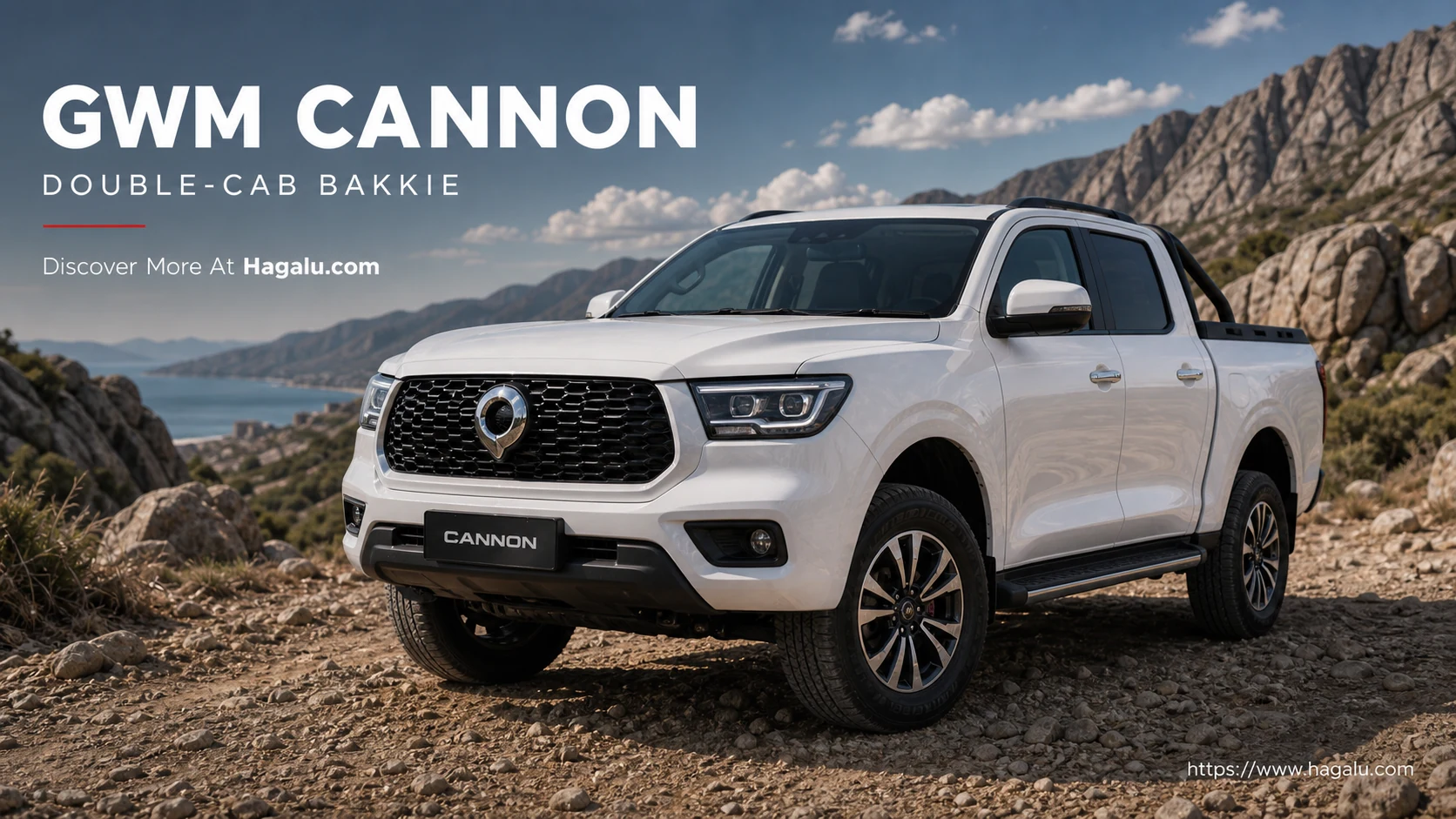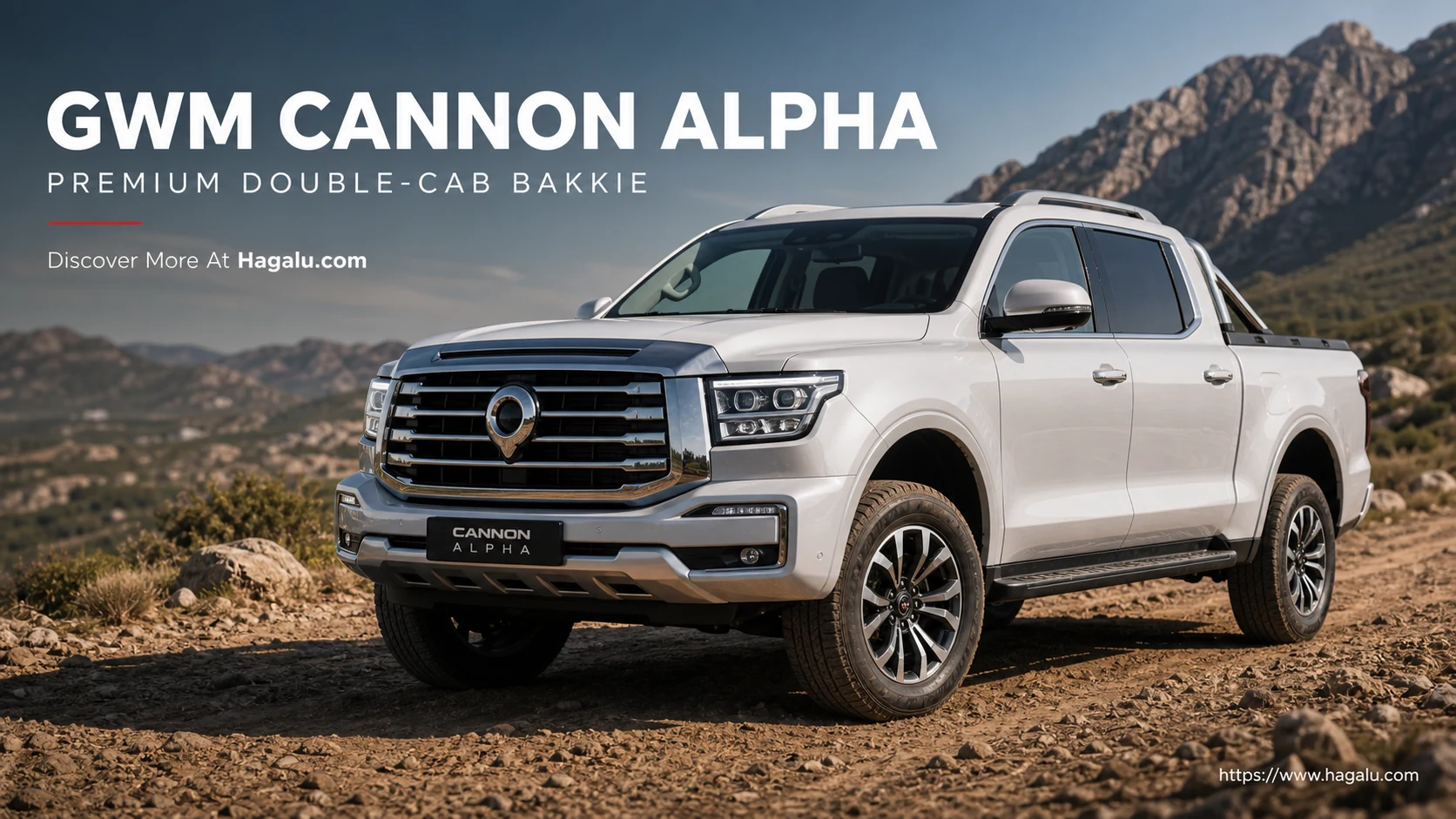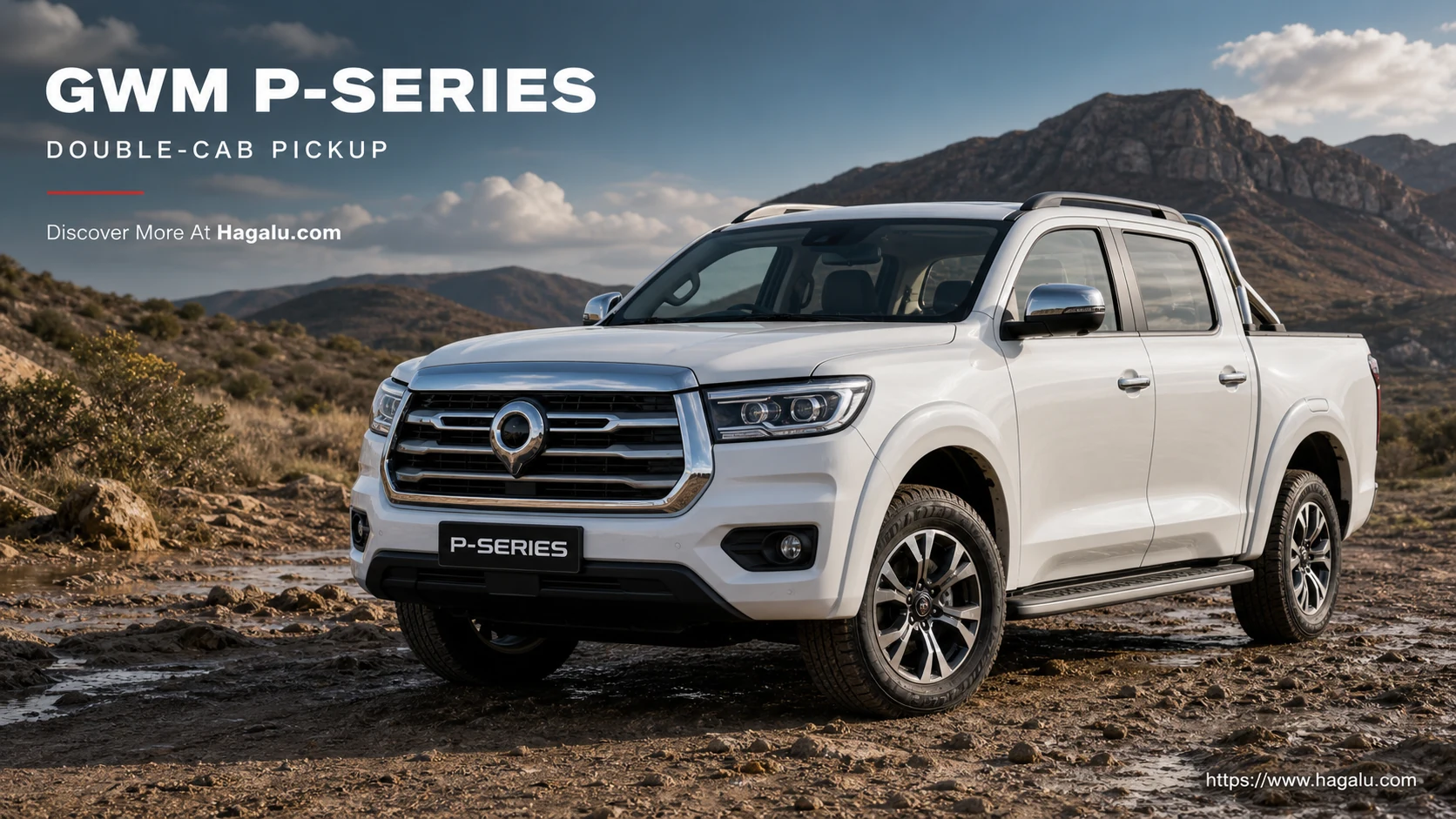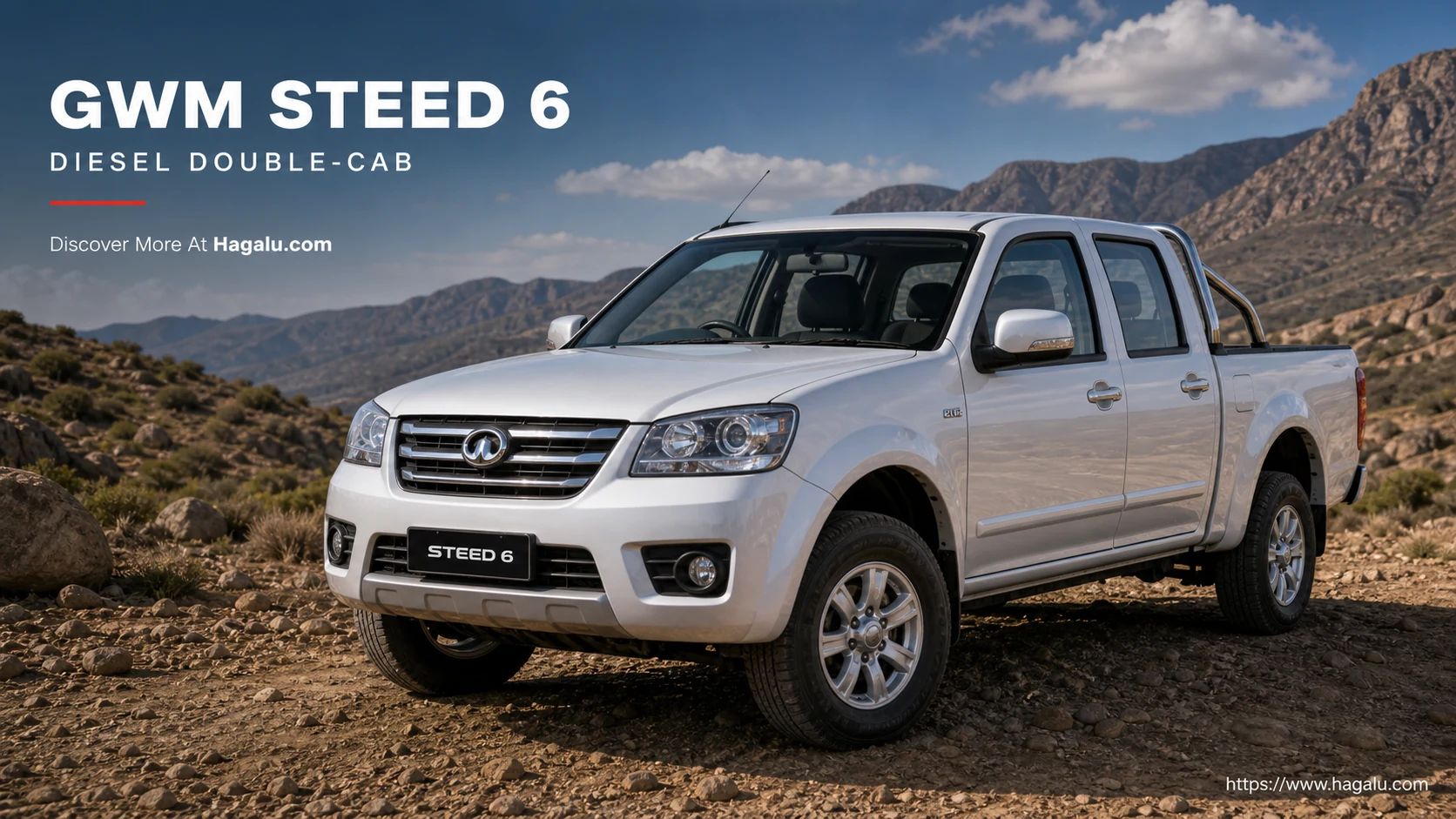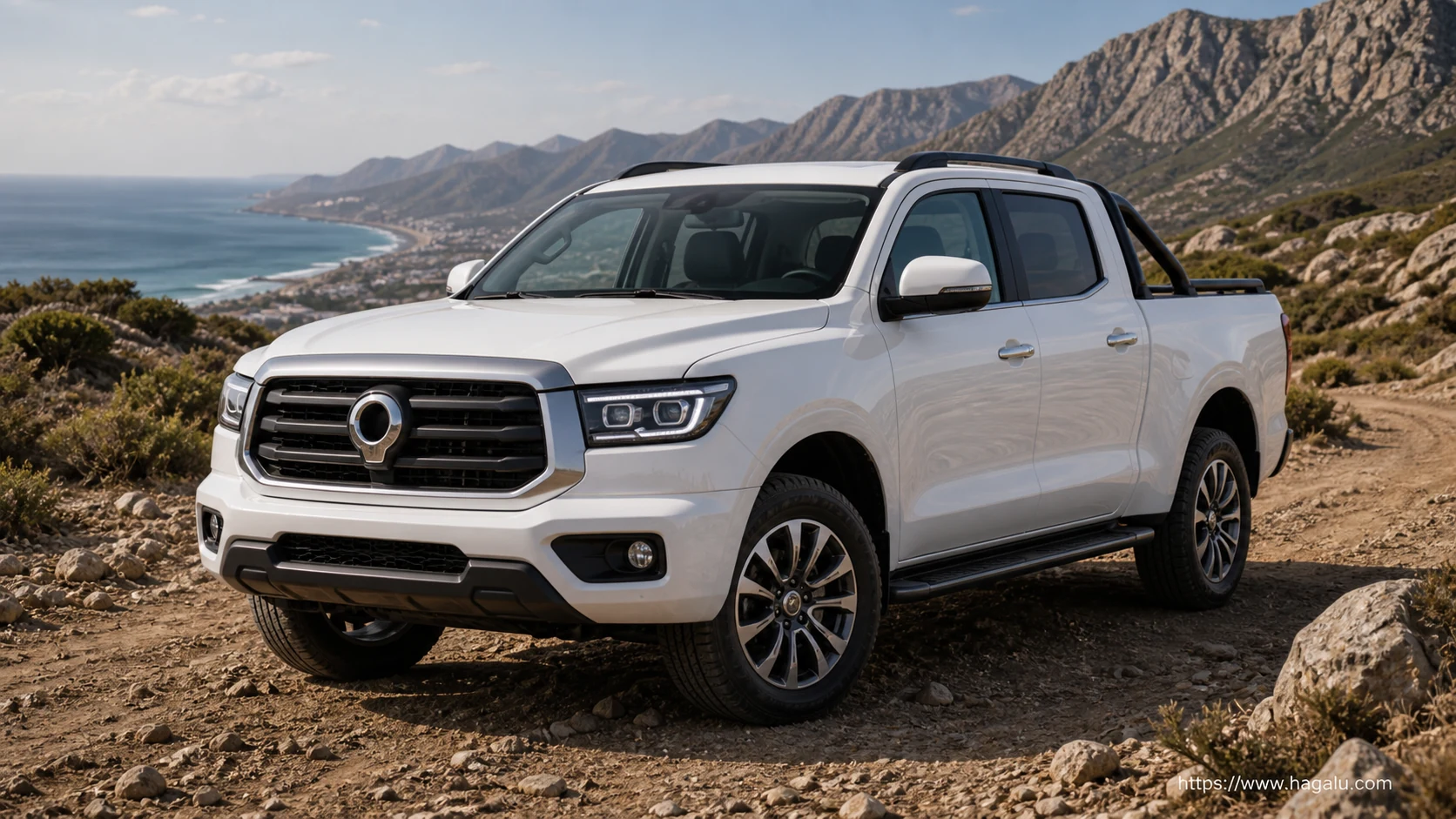
If the P Series is GWM's workhorse, the Cannon is its weekend warrior. The two bakkies share a powertrain and a basic chassis architecture, but the Cannon is positioned for buyers who want a double-cab that does the school run on weekdays and the Drakensberg run on weekends. It's the GWM answer to the Hilux Raider 4x2 and the Ranger XLT 4x2 — the volume lifestyle trims that take the bulk of bakkie sales in metropolitan South Africa. Pricing tells the story. The Cannon starts at R484,900 for the Xtra Cab Manual, rising through R524,900 for the Double Cab LS, R569,900 for the Double Cab LT and R634,900 for the Double Cab LX 4x4 flagship. That's a R40,000–R50,000 premium over the equivalent P Series specification, and it buys you a different cabin treatment, larger 18-inch alloy wheels as standard from LS, a larger 12.3-inch infotainment screen across the upper trims, and a softer suspension calibration that prioritises ride comfort over outright payload. The Cannon's payload of 930 kg versus the P Series' 1,020 kg might look like a step backward, but for the lifestyle buyer who's putting mountain bikes in the load bed rather than concrete bags, it's not a meaningful trade. What you gain in return is a noticeably more relaxed ride on the gravel road from White River to Hazyview, or the daily commute from Centurion to Sandton on the N1's worn-out concrete sections. Powertrain is the same GW4D20 2.0-litre turbodiesel as the P Series, producing 110 kW and 400 Nm. The 8-speed automatic in LS, LT and LX is the same ZF China unit. What's calibrated differently is the throttle map — the Cannon feels slightly softer off the line, more comfortable in stop-start traffic and less prone to the kind of low-rpm lurchy behaviour that some bakkie automatics suffer from. On highway cruising the Cannon returns 9.5–10.5 L/100 km in real-world use, again broadly matching the Hilux 2.4 GD-6 in equivalent conditions. The 4x4 Cannon LX is a more comfortable off-roader than its outright capability numbers suggest. Approach angle is 30 degrees, departure 28 degrees, ramp-over 26 degrees — slightly improved over the P Series LX 4x4 due to redesigned bumper geometry. Wading depth is 800 mm. The rear locking differential and low-range transfer case are both included; the LT and LS variants are 4x2 only. For most lifestyle buyers who do nothing more aggressive than gravel passes and farm tracks, the LX 4x4 is more capable than the typical owner will ever need. Cabin equipment in the Cannon LT and LX is where the lifestyle positioning shows. Synthetic leather upholstery on LS, genuine leather on LT and LX. 8-way electric driver's seat with memory function on LT and LX. Dual-zone climate, ambient lighting, wireless phone charging, 9-speaker premium audio, and on the LX, a panoramic sunroof that opens via a button on the centre console. The Cannon LX is, frankly, more comfortable than a Ranger Sport at substantially less money. Safety equipment matches the P Series. Six airbags standard, ESC, ABS, hill-start assist, AEB with pedestrian detection on LT and LX, blind-spot monitoring, lane-keep, adaptive cruise, rear cross-traffic alert, and a 360-camera with a clarity that comfortably surpasses what the rival Toyota offers at twice the trim level. Where the Cannon takes some criticism in owner feedback is on the manual gearbox in the Xtra Cab variant — a long-throw, slightly notchy unit that feels exactly like every Chinese-sourced manual. If you're buying a Cannon for daily use, the Double Cab LS automatic is the variant that earns its keep. The manual makes sense only for buyers prioritising lowest purchase price. Long-term ownership in South Africa has been broadly positive. The dealer network supporting the Cannon is the same as the P Series — substantial in metros, developing in rural areas. Service costs are competitive, parts availability has stabilised, and the 5-year/100,000 km warranty plus 5-year/75,000 km service plan remain industry-leading at the price point. Residual values track the P Series — about R80,000 behind a Hilux Raider at 5 years, which remains the central trade-off. For the South African buyer choosing between a Cannon LX 4x4 at R634,900 and a Hilux 2.8 GD-6 Raider 4x4 at R770,000, the value calculation favours the GWM if you intend to keep the vehicle long-term. The R135,000 saved up front more than covers the residual gap over an ownership horizon longer than 4 years. For shorter ownership cycles, the Toyota remains the safer total-cost choice. The Cannon's positioning makes sense in South Africa's bakkie market in a way that didn't exist five years ago. Lifestyle bakkie buyers are now genuinely willing to consider non-Japanese brands when the equipment list is strong, the warranty is generous and the dealer footprint covers their daily routine. The Cannon ticks all three boxes. It's not without compromises — the Hilux dominance won't disappear overnight — but for the buyer who has done the homework, it's a credible alternative.