Drivetrain and Chassis Explained: FWD, RWD, AWD and 4x4
Cars need a way to carry turning force from the engine or motor to the road. Follow that journey, then learn which label fits which job.
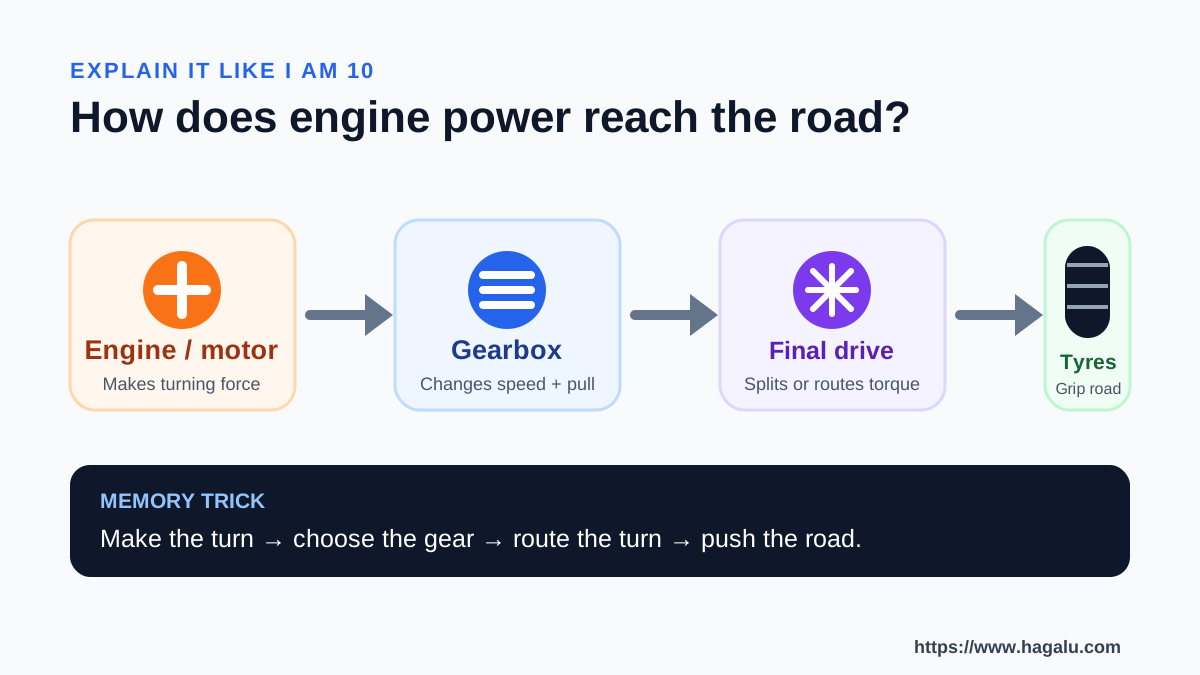
The drivetrain is a delivery team for turning force
An engine or electric motor makes turning force. The tyres need that force before they can push against the road. The drivetrain carries it through parts such as a gearbox, shafts, final drives and differentials.
Imagine four children moving water from a tap to a garden. One fills the bucket, one chooses a hose, one sends water left or right, and the sprinkler puts it on the grass. The drivetrain does a similar relay with turning force.
The exact path changes by car. An electric car may use a compact motor and reduction gear near an axle. A front-engine bakkie may use a long propeller shaft. The job is the same even when the parts move.
Make
The engine or motor creates torque: a twisting force.
Change
The gearbox trades wheel speed for pulling force, or the other way around.
Route
Shafts and final drives carry torque to the axle or axles that need it.
Grip
The tyres push the road backward; the road pushes the car forward.
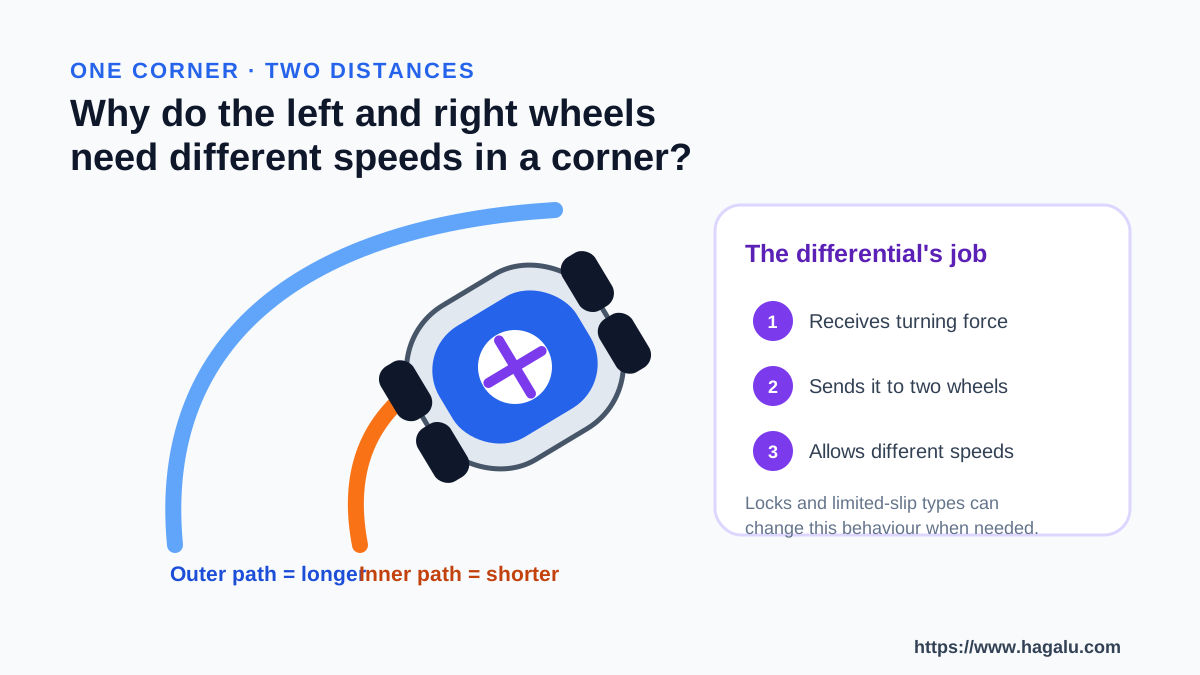
The outside wheel travels farther
Draw two curved lines around the same corner. The outside line is longer. That means the outside wheel must turn more times than the inside wheel.
A normal differential lets two wheels on an axle rotate at different speeds while still passing torque to them. Without that speed difference, tyres would scrub and driveline parts could wind up when the car turns.
Allows easy speed difference. On a very slippery surface, one wheel may spin.
Tries to limit an excessive speed difference. Designs work in different ways.
Can force both sides together for suitable low-grip conditions. Use it only as the manual allows.
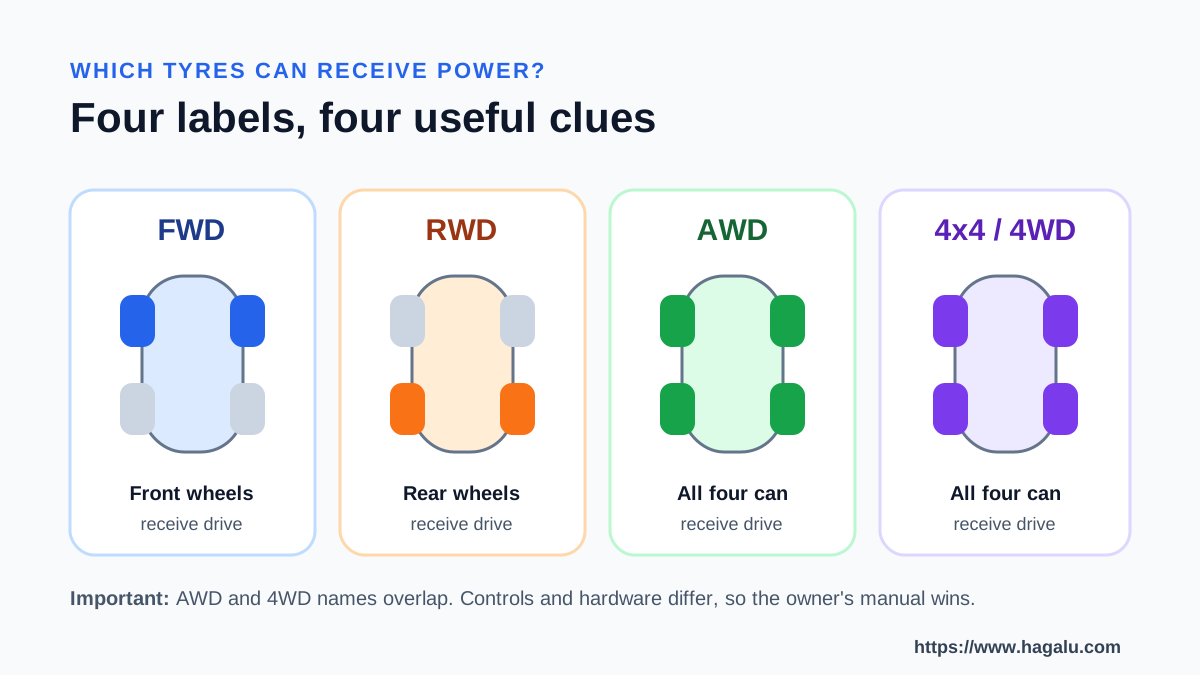
FWD, RWD, AWD and 4x4 in plain language
| Badge | Which wheels can receive drive? | Why buyers choose it | What to check |
|---|---|---|---|
| FWD | The front wheels. | Often compact, light and practical for passenger cars. | Tyres, steering feel, payload and the exact fuel figure. |
| RWD | The rear wheels. | Common in bakkies and some performance or luxury cars. | Unladen wet-road behaviour, stability control and tow ratings. |
| AWD | All four can receive drive, often changed automatically. | Extra drive traction without choosing a mode every time. | Whether it is full-time, on-demand or electric; no universal design exists. |
| 4x4 / 4WD | All four can receive drive. | Some systems add low range, selectable modes or locks for difficult terrain. | Part-time versus full-time rules, mode limits and tyre requirements. |
More driven wheels can add grip—but also parts
Possible benefits
- Less wheelspin when pulling away on a low-grip surface.
- Extra traction for suitable gravel, sand, mud or steep routes.
- Low range can give fine, slow control where fitted.
- Torque control can support stable acceleration.
Possible costs
- More mass, rotating parts and maintenance points.
- A higher purchase price on many ranges.
- Tyre matching can be more important.
- Extra traction can create false confidence; it does not shorten every stop.
These are tendencies, not promises. A modern AWD hybrid can work very differently from a mechanical part-time 4x4, and two-wheel-drive versions can have different engines, tyres or equipment. Compare exact derivatives.
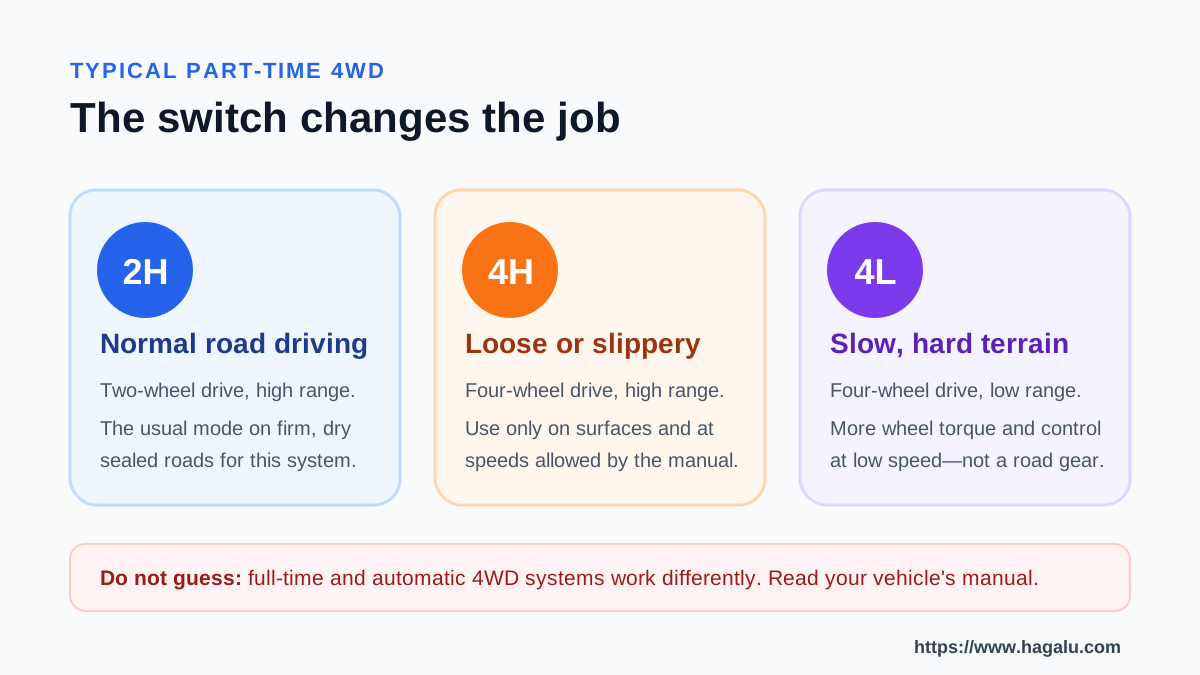
2H, 4H and 4L change how the vehicle works
On a traditional part-time system, 2H usually drives one axle in high range for normal sealed roads. 4H drives both axles in high range for suitable loose or slippery surfaces. 4L adds low gearing for slow, difficult terrain.
Stop and identify the system
Do not assume every dial works the same way. Some modes allow shift-on-the-fly; others have strict steps.
Check the surface
A locked part-time system can wind up on high-grip surfaces because the axles cannot release their speed difference.
Check the speed limit
The manual may set different maximum speeds for selecting or using each mode.
Return to the normal mode
Leave the difficult surface, follow the disengagement steps and confirm the indicator changes.
Four-wheel drive helps you go; tyres help you stop and turn
Sending torque to four wheels can reduce wheelspin during acceleration. It does not create unlimited tyre grip. Braking and cornering still depend on speed, tyre condition and pressure, road surface, vehicle mass, brakes and electronic safety systems.
AWD or 4x4 cannot defeat water, ice, worn tyres or too much speed.
Use the approved size, load rating and suitable tread; follow rotation and replacement guidance.
Use rated points and trained help. A tow ball is not automatically a recovery point.
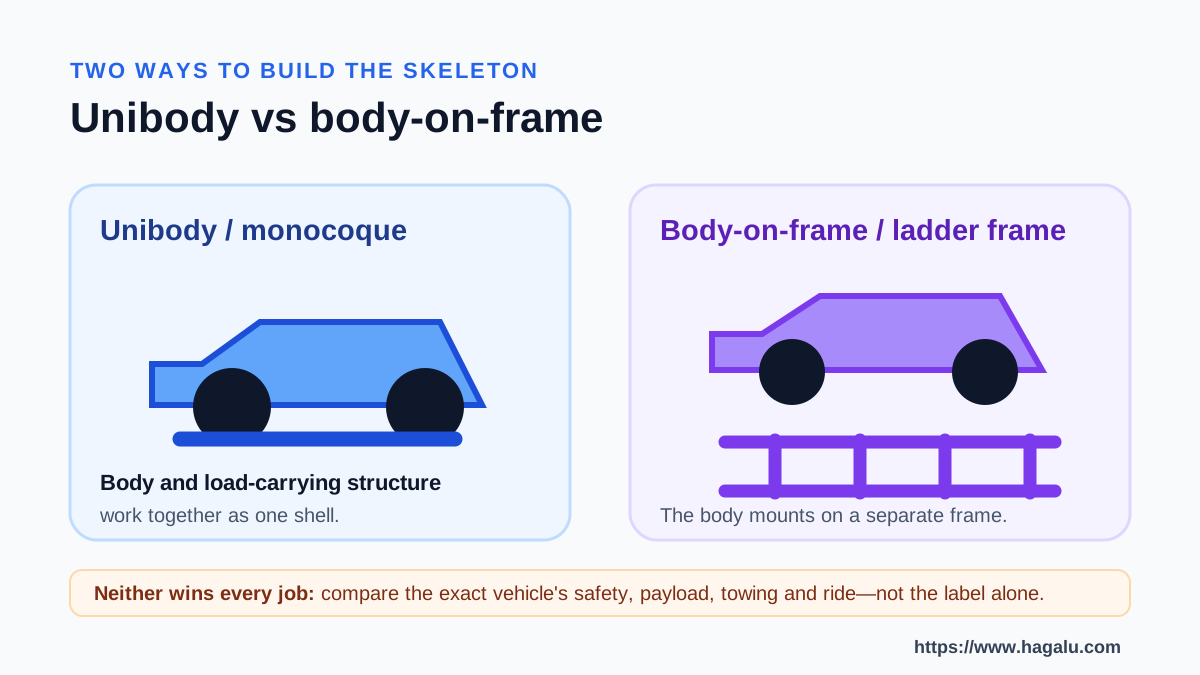
Unibody and body-on-frame are construction choices
In a unibody vehicle, the body shell and main load-carrying structure work together. In a body-on-frame vehicle, the body mounts on a separate frame, often shaped like two long rails joined by crossmembers.
| Question | Unibody / monocoque | Body-on-frame / ladder frame |
|---|---|---|
| Simple picture | One load-carrying shell. | A body sitting on a separate frame. |
| Common uses | Passenger cars and many crossovers. | Many bakkies and some off-road SUVs. |
| Possible strength | Efficient packaging, lower mass and well-controlled body stiffness. | Useful platform for high loads, towing and demanding terrain. |
| Possible trade-off | Heavy-impact structural repair can be complex. | Often heavier, taller and less car-like on the road. |
| What decides the result? | The exact engineering, tyres, suspension, ratings, safety design and maintenance—not the label alone. | |
A five-question shortlist
Mostly sealed roads, maintained gravel, deep sand, mud or rocks?
People, luggage, tools, payload or trailer—and how often?
The right tyre can matter more than an impressive badge.
Confirm 2H, 4A, 4H, 4L, locks and restrictions in the manual.
Add fuel, tyres, servicing, insurance and the finance total.
Does AWD always run all four wheels all the time?
No. Some systems vary torque or disconnect an axle. Electric systems may use a separate motor.
Does every 4x4 have low range?
No. Check the exact hardware and owner's manual.
Is body-on-frame automatically safer?
No. Safety depends on the complete vehicle design and verified test or equipment data.
Questions people actually ask
What is the difference between AWD and 4WD?
Both labels can describe systems that drive all four wheels, and the names overlap. AWD often changes torque automatically for on-road traction. Many 4WD vehicles add driver-selectable modes or low range for difficult terrain. Some 4WD systems are automatic or full-time, so the exact owner's manual matters more than the badge.
What does FWD mean in a car?
Front-wheel drive means the front tyres receive the drive force. The front tyres must steer and pull the car, while the rear tyres roll along. The layout is common in passenger cars, but it does not by itself guarantee a particular fuel-use, safety or handling result.
What does RWD mean in a car?
Rear-wheel drive means the rear tyres receive the drive force. In a common front-engine layout, a propeller shaft carries torque to a rear differential. Vehicle balance, tyres, suspension and stability control all affect how it behaves.
Is FWD or RWD better for daily driving?
Neither label wins every time. FWD often packages neatly in a small car. RWD is common in bakkies and some performance cars. Compare the complete vehicle: tyres, safety systems, turning circle, ride, payload, fuel use and price.
Does driving four wheels make a car stop faster?
No. More driven wheels can help a car move away with less wheelspin, but braking still depends on tyre grip, brakes, ABS, road conditions, speed and driver input. Four-wheel drive cannot cancel the laws of physics.
What is monocoque construction?
In everyday car language, monocoque or unibody means the body shell and main load-carrying structure work together instead of the body sitting on a separate full frame. It is common in passenger cars and crossovers.
What is body-on-frame construction?
The main frame is a separate structure, commonly built with long rails and crossmembers, and the body mounts on it. Many bakkies and some off-road SUVs use this layout. Payload, towing and crash performance still depend on the exact design and rating.
Can a monocoque SUV go off-road?
Yes, if its tyres, ground clearance, drive system, cooling, wading limits and recovery points suit the route. Construction type alone does not decide capability. The Ford Everest and Toyota Fortuner are examples of body-on-frame SUVs, not monocoque crossovers.
Which drivetrain uses the least fuel?
A two-wheel-drive derivative is often lighter and has fewer driveline losses than a comparable four-wheel-drive derivative, but there is no universal number. Engine, gearbox, aerodynamics, tyres, mass and driving conditions can matter more. Compare official figures for the exact derivatives.
Which is better for South Africa — monocoque or ladder frame?
Choose for the job, not the country. A unibody car or crossover can suit daily roads and family use. A body-on-frame bakkie or SUV may suit heavy loads, towing or demanding tracks. Check the exact payload, tow rating, tyres, safety result and comfort before deciding.
What is Low Range (4L) in a 4x4?
Low range uses a lower set of ratios to provide more wheel torque and finer control at low speed. It is intended for suitable difficult terrain, not ordinary road driving. Engagement rules, speed limits and surface restrictions differ, so follow the owner's manual.
Why does a car need a differential?
When a car turns, the outside wheel travels farther than the inside wheel. A differential lets the two driven wheels rotate at different speeds while still receiving torque. Locking and limited-slip differentials can change that behaviour for traction.
Sources and checking method
- Ford South Africa: two Everest 4WD systems — official example showing part-time 2H/4H/4L and permanent 4A systems in one model range.
- Ford South Africa: next-generation Everest capability — intended uses for 2H, 4H, 4L and automatic 4A.
- Ford Media: Everest body-on-frame construction — official chassis classification and part-time 4WD description.
- Toyota Technical Review Vol. 66 — technical example of electronically controlled front/rear torque distribution in a modern 4WD system.
Prices and availability can change after publication. We separate manufacturer-confirmed facts from inference, identify prototypes and non-SA material, and link the primary source so you can verify the wording yourself.