How Vehicle Finance Works in South Africa
Learn what the deposit, interest rate, loan term and balloon really do to your monthly instalment and the full amount you repay.
Compare the financed amount, interest rate, fees, balloon, insurance impact and total paid over the term.
Guide library
Choose another plain-language guide
Browse 41 guides +
A larger deposit lowers the loan, but keep enough emergency cash for ownership surprises.
A longer term lowers the instalment but usually increases interest when other inputs stay the same.
Write down what will still be owed on the final day—not only the percentage.
Borrowing makes today's car cost future money
Imagine borrowing 100 marbles and promising to return a few every month. The lender asks for extra marbles for waiting. That extra is interest. A deposit means you borrow fewer marbles. A balloon means you return fewer now but leave a big pile for the final day.
The smallest monthly pile is not always the cheapest deal. Count every pile from the first payment to the last.
How Car Finance Works in South Africa
When a registered credit provider finances a car, it pays the seller and you repay the debt under a credit agreement. The agreement states the instalments, interest, fees, required insurance, first payment and last payment. A linked rate can move with the reference named in the contract; a fixed rate follows the fixed terms in that contract.
The instalment depends mainly on the amount financed, interest rate, term and balloon. Fees and required products can also change the real debit order. A calculator is deliberately simpler than a lender quotation, so use it to learn and compare—not to predict approval.
The deposit is paid separately. For the complete cost from your pocket, add the deposit, all lender repayments, insurance and other ownership costs.
Car EMI Formula and Loan Computation Method
A car EMI is the monthly instalment used to repay borrowed money over an agreed number of months. A South African lender may call it a monthly repayment or vehicle-finance instalment. The basic idea is simple: turn the annual rate into a monthly rate, spread the balance over the term, and charge interest on what is still owed.
EMI = P x r x (1 + r)^n / ((1 + r)^n - 1)
P is the amount financed, r is the monthly interest rate, and n is the number of monthly instalments.
EMI = (P - B / (1 + r)^n) x r x (1 + r)^n / ((1 + r)^n - 1)
B is the balloon or residual amount due at the end. This lowers the instalment but leaves the final payment outstanding.
Car Loan Repayment Examples by Vehicle Price
Based on a 10% example deposit, 14.25% illustrative annual interest and no balloon. This is a test scenario, not today's policy rate, prime rate or a promised lender rate. Figures exclude fees and insurance.
| Vehicle Price | Deposit (10%) | Amount Financed | Term | Rate | Est. Monthly |
|---|---|---|---|---|---|
| R 250,000 | R 25,000 | R 225,000 | 60 months | 14.25% | R 5,265 |
| R 300,000 | R 30,000 | R 270,000 | 60 months | 14.25% | R 6,317 |
| R 350,000 | R 35,000 | R 315,000 | 72 months | 14.25% | R 6,533 |
| R 400,000 | R 40,000 | R 360,000 | 72 months | 14.25% | R 7,466 |
| R 500,000 | R 50,000 | R 450,000 | 72 months | 14.25% | R 9,333 |
| R 700,000 | R 70,000 | R 630,000 | 72 months | 14.25% | R 13,066 |
| R 900,000 | R 90,000 | R 810,000 | 72 months | 14.25% | R 16,799 |
| R 1,200,000 | R 120,000 | R 1,080,000 | 84 months | 14.25% | R 20,389 |
These figures teach how the inputs interact; they are not a quotation. A lender's final instalment can change once initiation fees, monthly service fees, credit life, tracking, insurance and dealership add-ons are included. Test your own price and terms in the dedicated car finance calculator.
Balloon versus no balloon: the same car, the full repayment
A fair comparison holds the car, deposit, rate and term still. Only the final balloon changes. Here both examples buy a R300,000 car with a R30,000 deposit, borrowing R270,000 over 60 months at an illustrative fixed 12% annual rate. The second deal leaves R60,000—20% of the purchase price—for the end.
| Cost to compare | No balloon | R60,000 final balloon |
|---|---|---|
| Cash deposit | R30,000 | R30,000 |
| Monthly loan payment | R6,006.00 | R5,271.33 |
| Balloon due with the final monthly payment | R0.00 | R60,000.00 |
| Interest over the term | R90,360.05 | R106,280.04 |
| Total paid, including deposit and balloon | R390,360.05 | R406,280.04 |
In this scenario, the balloon costs approximately R15,920 more interest. The monthly payment falls, but more principal remains outstanding for longer. Totals use unrounded calculations; an actual lender schedule rounds payments and may adjust the last one.
The missing line in the smaller monthly number
To build R60,000 over 60 months without relying on investment returns, you would set aside another R1,000 a month. That saving is not an extra lender charge or part of the interest total above; it is money you would need to reserve to meet the existing balloon obligation. Put it beside the advertised instalment when assessing your cash flow.
Some buyers deliberately choose a balloon while keeping settlement funds elsewhere. That is a different decision from needing a balloon because the car would otherwise be unaffordable. If the plan is “trade it in”, test a lower-than-hoped sale value and an earlier sale date. If it is “refinance”, recognise that a new application, rate and approval will be involved.
Compare the quotation, not just the advertisement
Request the cash price, deposit, amount financed, annual interest rate and whether it is fixed or linked, number of payments, each recurring fee, final balloon in rand, and total amount payable. Keep optional products separate. A linked-rate loan will not follow this fixed-rate example exactly if its reference rate changes.
Neither column includes insurance, fuel, licensing, servicing or tyres. Those costs belong alongside the loan in your full monthly car budget. Use the calculator with a current written quote; the 12% here is deliberately a teaching input, not a claim about today's prime rate or your eligibility.
Background: WesBank explains balloon obligations and their financial impact and vehicle-finance interest. The figures above are Hagalu's own illustrative calculation, not a WesBank quotation.
Why the car price changes the loan so quickly
These current Hagalu model links provide real starting-price examples. Their estimated repayments use the same fixed teaching scenario as the table above: 10% deposit, 14.25% annual interest, 72 months and no balloon.
 Renault Kwid
Starting price: R 178,799
Teaching example: R 3,337/mo
Renault Kwid
Starting price: R 178,799
Teaching example: R 3,337/mo
 Suzuki S-Presso
Starting price: R 178,900
Teaching example: R 3,339/mo
Suzuki S-Presso
Starting price: R 178,900
Teaching example: R 3,339/mo
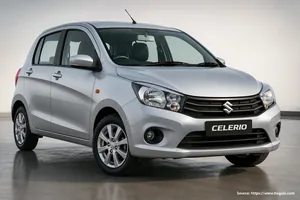 Suzuki Celerio
Starting price: R 188,900
Teaching example: R 3,526/mo
Suzuki Celerio
Starting price: R 188,900
Teaching example: R 3,526/mo
 Tata Tiago
Starting price: R 189,900
Teaching example: R 3,545/mo
Tata Tiago
Starting price: R 189,900
Teaching example: R 3,545/mo
 Suzuki Eeco
Starting price: R 196,900
Teaching example: R 3,675/mo
Suzuki Eeco
Starting price: R 196,900
Teaching example: R 3,675/mo
 Suzuki Super Carry
Starting price: R 197,900
Teaching example: R 3,694/mo
Suzuki Super Carry
Starting price: R 197,900
Teaching example: R 3,694/mo
The examples are not offers or personalised finance quotes. Verify the exact vehicle price and every credit-agreement charge before deciding.
Understanding the Key Vehicle Finance Terms
Interest Rate
The quotation must state the annual interest rate and whether it can change. Do not assume the word “prime” means you personally receive prime. Also note that SARB is consulting on the future of the prime lending rate, so the named reference and fallback wording in the actual agreement matter.
Deposit
A deposit reduces the amount financed. That usually reduces the instalment and interest when the rest of the deal stays the same. There is no universal “correct” percentage. Use an amount that helps without draining the emergency cash needed to own the car safely.
Loan Term
The term is the number of instalments. With the same amount, rate and balloon, a longer term usually creates a smaller instalment and more interest. Use the calculator to compare, then ask the lender for both totals in writing.
Balloon Payment
A balloon is a lump sum due at the end. It lowers the earlier instalments because some principal is left unpaid. A future trade-in is not guaranteed to cover it, and refinancing is a new credit decision—not an automatic right.
Linked vs Fixed Rate
A linked rate moves according to the reference and rules in the agreement. A fixed rate stays fixed as defined there. Ask what happens to the instalment or term when the linked rate changes, then compare the full fixed and linked quotations.
Lower monthly payments can hide a bigger final problem
A balloon makes the monthly number look easier, but it does not make the car cheaper. The trade-in may not cover it, and refinancing depends on a future application, rate and affordability check. Decide from the final rand amount, not a hopeful future resale value.
- Ask for the no-balloon quote first.
- Compare total paid, not only instalment.
- Check expected trade-in value conservatively.
- Do not accept a balloon without a realistic plan to pay it even if the trade-in value disappoints.
Practical Finance Tips
- Get a pre-agreement statement and quotation before signing. It must show the instalments, interest, fees, required insurance and other charges.
- Compare at least two quotations with the same price, deposit, term and balloon. A different monthly payment can hide a different deal structure.
- Ask what is required and what is optional. Put every accessory, warranty, service product and insurance premium on its own line.
- Test a no-balloon quotation first. If a balloon is offered, write down the final rand amount and how you would pay it.
- A deposit lowers the loan, but keep enough cash for emergencies and ownership costs.
- Check that the credit provider is registered with the National Credit Regulator and beware of guaranteed approval or upfront release-fee scams.
- Add insurance, fuel, licence costs, service items, tyres and parking before deciding what instalment is affordable.
How to compare finance providers safely
A familiar bank name is not enough, and a dealership quote is not automatically good or bad. Compare the written numbers and verify that the credit provider is registered with the National Credit Regulator.
- Use matching inputs: same cash price, deposit, term, balloon and optional items.
- Read the pre-agreement statement: check principal debt, annual rate, instalments, fees, required insurance and total of all instalments.
- Separate optional items: ask for a second quote without each optional product so its full effect is visible.
- Ask why if declined: the NCR says a consumer may ask for reasons and may challenge incorrect credit-bureau information.
- Watch for scams: do not trust guaranteed approval or a lender asking for a release fee before providing the credit.
Official sources and checking date
- National Credit Regulator: consumer rights under the NCAPre-agreement quotation, disclosure, plain language, decline reasons, credit-record rights and help when over-indebted.
- NCR Form 20: pre-agreement statement and quotationThe official fields for instalments, annual interest, fees, required insurance, optional items and total repayments.
- SARB: May 2026 Monetary Policy Committee statementThe policy rate was 7% when this guide was checked. The calculator does not use that policy rate as a personal vehicle-loan quote.
- SARB: consultation on the prime lending rateWhy readers should check the named reference rate and fallback wording in a long finance agreement.
Balloon comparison and its linked lender explanations reviewed 9 September 2026; other official-source checks dated 20 July 2026. This page teaches calculation and comparison. It does not recommend a lender, predict approval or replace a registered financial adviser, credit provider or debt counsellor.
Frequently Asked Questions
What interest rate should I test for car finance in South Africa?
Use a range, not a single number. Many buyers test 12% to 16% as a planning band, then replace it with the formal rate quoted by their bank or dealer. Your actual rate depends on credit profile, deposit, term, affordability, the vehicle, linked versus fixed pricing and lender fees.
How much deposit do I need to buy a car in South Africa?
There is no universal percentage. Your quotation must show any required deposit. A voluntary deposit lowers the amount financed and usually lowers interest paid, but do not empty the emergency savings you need for insurance excess, tyres or repairs.
What is a balloon payment on a car in South Africa?
A balloon is a lump sum left for the final payment. It lowers the instalments before that date but does not remove the debt. You must pay it, refinance it if approved, or use sale or trade-in proceeds. The car's future value is not guaranteed to cover it.
How long should I finance a car in South Africa?
Use the shortest term whose full monthly cost you can comfortably afford. A longer term usually lowers the instalment but keeps you in debt longer and increases interest when the other inputs are unchanged. Compare quotations with the same price, deposit, rate and balloon.
Can I get car finance in South Africa with a bad credit record?
A registered credit provider must perform an affordability assessment and may approve or decline the application. If declined, ask for the reason and check your credit report for errors. Be cautious of anyone promising guaranteed approval or asking for an unlawful upfront release fee.
What is the difference between a linked and fixed interest rate on a car loan?
A linked rate can move with the reference rate named in the agreement, so the instalment or term may change. A fixed rate stays fixed as the agreement defines. Compare both quotations rather than assuming one always starts cheaper.
How do I calculate car EMI manually?
For a standard car loan, use EMI = P x r x (1+r)^n / ((1+r)^n - 1), where P is the amount financed, r is the monthly interest rate, and n is the number of monthly instalments. If the deal has a balloon, discount the balloon back to today's value before calculating the instalment.
Is a car EMI calculator the same as a bank quote?
No. A car EMI calculator is a planning tool. A bank quote can include initiation fees, monthly service fees, credit life cover, insurance conditions, tracking, dealership add-ons and your personal credit pricing. Use the calculator to compare scenarios, then confirm the final numbers with the lender.
What is a car loan amortisation schedule?
A car loan amortisation schedule shows how every monthly payment is split between interest and capital. Early in the loan, more of the payment goes to interest. Later, more goes to reducing the balance. This is why a long 72 or 84-month term can cost much more even when the monthly payment looks affordable.
How much car can I afford with an R8,000 monthly budget?
Do not spend the whole R8,000 on the loan instalment. First subtract insurance, fuel, parking, licence costs, service items, tyres and an emergency cushion. Use what remains as the instalment limit, then test your quoted rate and fees in the calculator.
Should I use a balloon payment to qualify for a more expensive car?
Be careful. A balloon reduces the monthly instalment but leaves a large final amount owing. It can help short-term cashflow, but it does not reduce the total credit cost. If you cannot settle or refinance the balloon comfortably, choose a cheaper car or a no-balloon quote.