GWM P Series has been discontinued — this model is no longer sold new in South Africa. All specifications, variants and pricing shown below are for historical reference. See current GWM models still on sale.
Pickup Diesel Automatic 4WD 5-seat

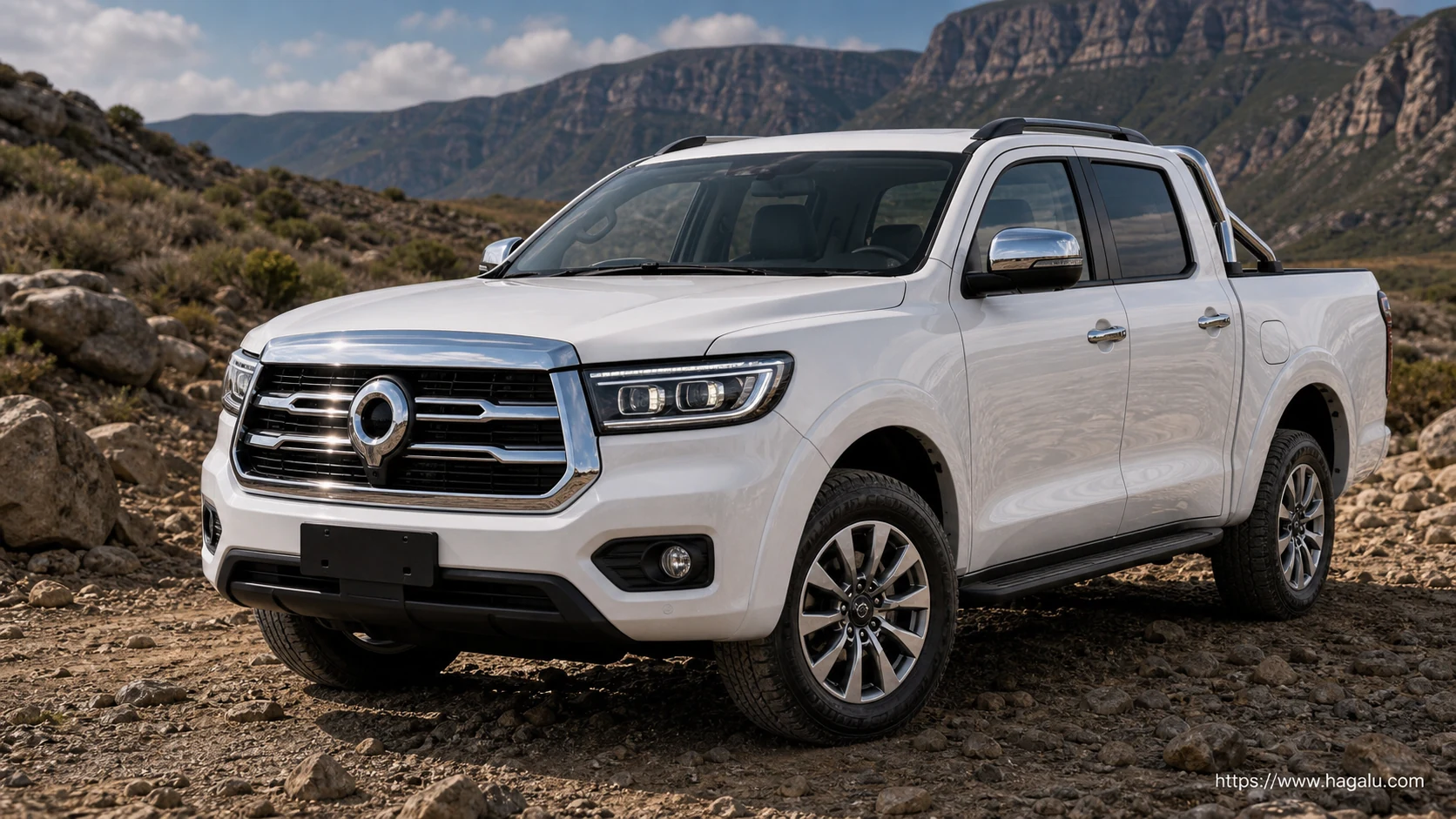
GWM P Series

Historical South African specifications and last-listed pricing

Generation The P Series sold in South Africa is the first generation marketed under the GWM banner locally, derived from Great Wall's POER platform launched in China in 2019. Local specification differs from the Chinese-market POER in suspension calibration (firmer for higher payload), 4x4 system tuning (greater bias to load-carrying durability over technical off-road performance) and trim levels (the South African range is more equipment-loaded than the domestic Chinese equivalent at the same price point). Version introduced 2024
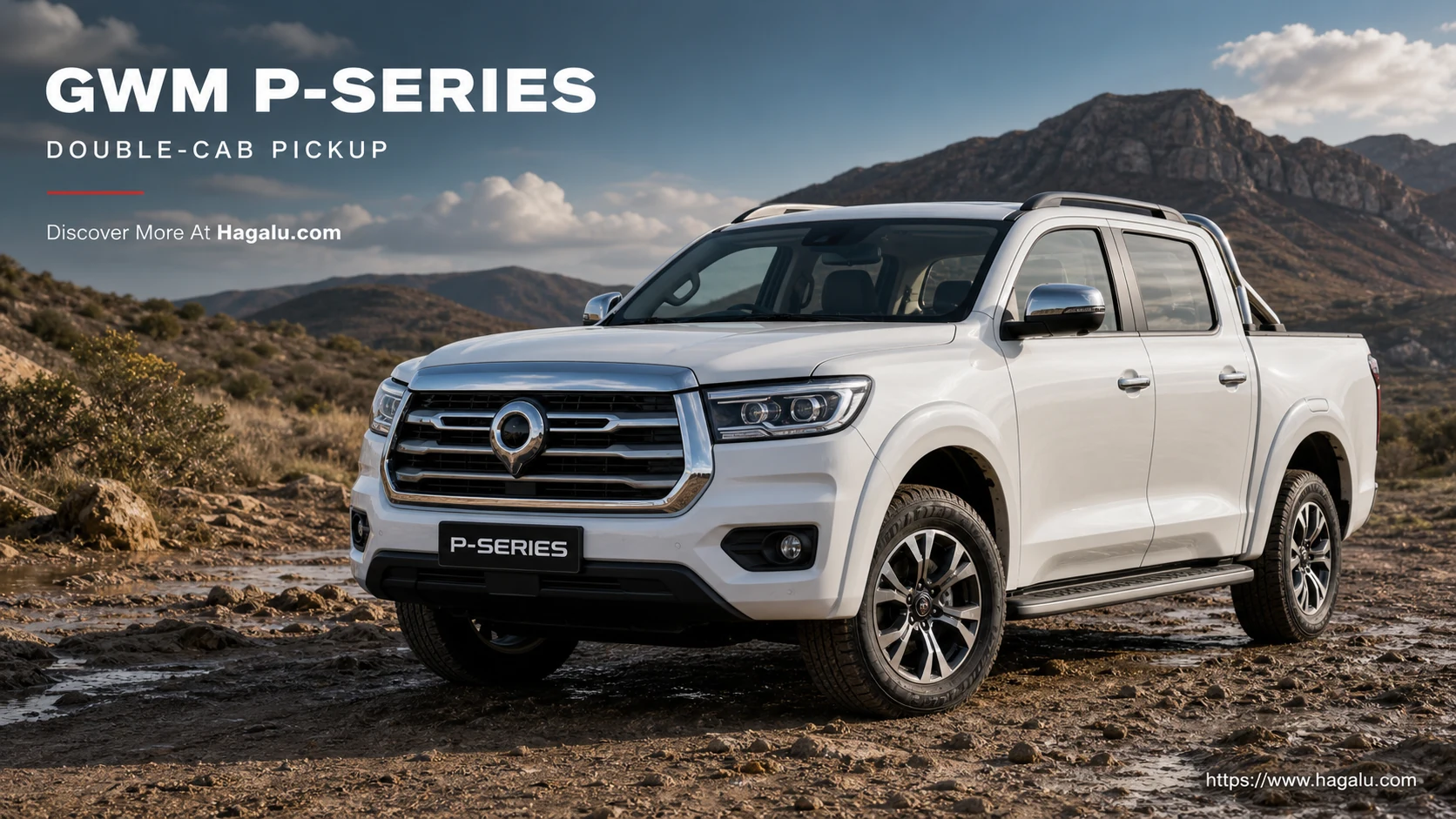
The GWM P Series brought Chinese-built bakkie credibility to South Africa from 2020, pairing real workhorse hardware with double-cab equipment that undercuts the Hilux and Ranger on rand-per-spec by a meaningful margin.
ZAR 599,900 · last listed
Last listed price ZAR 599,900
Engine:1996cc (2.0L) Torque:480Nm (354 lb-ft) Ground Clearance:210mm (8.3″) Power:110kW (148 bhp)

Hover or tap any pill for a plain-English explanation. Bracketed values show common equivalents (bhp, lb-ft, inches, cu ft).

Fuel Economy km/l · US mpg equivalent
Combined 9.8 km/l (23 mpg)
City 8.3 km/l (20 mpg)
Highway 12.2 km/l (29 mpg)

Historical pricing is retained for reference, not as a current dealer offer. Verify the exact used vehicle's condition, equipment and build date before purchase.

Source-backed vehicle data • Verified by the Hagalu team

GWM P Series

The GWM P Series brought Chinese-built bakkie credibility to South Africa from 2020, pairing real workhorse hardware with double-cab equipment that undercuts the Hilux and Ranger on rand-per-spec by a meaningful margin.

The South African bakkie market is the most stubborn segment in this country. The Toyota Hilux has topped the sales charts for so long that for most buyers, "bakkie" and "Hilux" mean the same thing. The Ford Ranger holds second place by combining genuine work-truck credibility with a lifestyle-friendly cabin. The Isuzu D-Max trades on simplicity and the kind of reliability myth that Toyota would gladly bottle if it could. Into this market, in 2020, Great Wall Motors launched the P Series — and the response was a mixture of curiosity, scepticism and quiet attention from rival product planners. The P Series matters to South Africa because of what it represents: a Chinese manufacturer pricing a properly-equipped double cab against the Japanese and American establishment, then backing it with a dealer network that has, by 2026, become impossible to ignore. The brand has done the hard yards. Five years on, P Series ownership has moved from "interesting risk" to "credible choice", particularly in the Western Cape, KwaZulu-Natal and Gauteng where the dealer footprint is most established. There are still pockets of the country — the Northern Cape, the Eastern Cape interior — where parts wait times can frustrate, but the situation is night-and-day from where GWM was in 2018. Under the bonnet, the P Series runs the GW4D20 — a 2.0-litre four-cylinder turbocharged diesel that produces 110 kW and 400 Nm of torque. Those numbers won't impress a 3.0 V6 Ranger driver, but they're absolutely competitive with the bread-and-butter 2.4 GD-6 Hilux and 2.0 Bi-Turbo Ranger that take the volume in their respective ranges. The torque arrives at 1,500–2,500 rpm, which is the band where bakkies actually live in real-world use — hauling a tradie's tool boxes out of an Industria parking lot, dragging a 1.5-tonne trailer up Van Reenen's Pass, pulling a stuck Land Cruiser out of a holiday-cottage driveway in Hermanus. Cabin specification is where the P Series rewrites the bakkie value equation. The entry-level Single Cab Manual sits at R444,900 ex-showroom — territory that gets you a stripped-out Hilux S or Ranger XL with little more than air-conditioning and a basic radio. The GWM gets you a 10-inch touchscreen, Bluetooth, USB connectivity and properly-tuned air-conditioning at the same price. Step up to the Double Cab LS at R489,900 and you're adding cruise control, rear parking sensors, automatic transmission and the kind of trim materials that would normally cost you another R30,000 in a rival's options list. The LT at R539,900 adds leather, 18-inch alloys and a 360-degree camera. The LX 4x4 flagship at R599,900 brings genuine low-range four-wheel drive, hill descent control, a rear differential lock and a wading depth rated at 800 mm — numbers that go head-to-head with the Hilux Legend and Ranger Wildtrak in the four-wheel-drive specifications that matter on a winch recovery. For South African workshop owners, the chassis matters more than the gadgets. The P Series uses a traditional body-on-frame ladder chassis — the layout the local market expects from anything calling itself a bakkie. Independent double-wishbone suspension up front and a leaf-spring live axle at the rear delivers the load-carrying credibility that monocoque imitators struggle to match. The leaf-sprung rear means the ride is honestly more truck-like than the Ranger's coil-sprung setup, but it also means the bakkie can carry its rated 1-tonne payload without sagging into the rebound stops on a corrugated district road outside Bloemfontein. The load bed itself measures 1,520 mm in length on the double cab and 2,300 mm on the single cab — enough for a standard EU pallet on the single cab and a sensible weekend's worth of camping gear on the double. Load bed width between the wheel arches is 1,180 mm, again on par with the Hilux and the Ranger. Tie-down hooks are properly anchored to the bed frame rather than the plastic liner, and the tailgate has a soft-drop assist that becomes a feature you notice the first time your local Builder's Warehouse delivers a load of cement bags. Towing capacity is 3,500 kg with a braked trailer across the range — the magic number for SA caravan-and-boat buyers, and the same as the Hilux and Ranger. The P Series will tow it; what you give up at the price point is some of the sophistication of the Ford's integrated trailer reverse-assist system, but for the majority of tradesmen and weekend boat owners who simply want to hook up and drive, the GWM does the job without drama. Real-world towing fuel consumption in the P Series sits around 12.5–14.0 L/100 km depending on load and route — figures that match Hilux and Ranger 2.0 Bi-Turbo in equivalent conditions. On the road unburdened, the P Series surprises buyers who arrive expecting a rough Chinese bakkie experience. The cabin is genuinely quiet at N1 motorway speeds — wind noise is well-suppressed around the A-pillars and tyre roar is no worse than a Hilux Legend on similar rubber. The driver's seat in the LT and LX gets electrical adjustment with adequate lumbar support for the kind of 6-hour Joburg-to-Cape Town runs that are the South African bakkie reality. Visibility forward is excellent thanks to a relatively low bonnet line; rearward visibility is helped by the 360-camera in higher trims that genuinely earns its keep in tight Pick n Pay basement parking. The 8-speed automatic transmission in the LS, LT and LX variants is sourced from a major Chinese supplier and is the same fundamental architecture used by several other brands. In normal-mode operation it's smooth and responsive — perhaps slightly less aggressive on downshifts than the Hilux's six-speed, but more refined than the older Ranger six-speed it replaces. There's a Sport mode that holds gears longer when you want it, and a Snow mode that softens throttle response for slippery surfaces. The manual gearbox in the Single Cab is a competent 6-speed unit with a slightly long-throw shift action that feels exactly like every Chinese-sourced manual ever made — functional rather than satisfying. Safety equipment is one of the P Series' standout pitches. Six airbags are standard from the base Single Cab upward — driver, passenger, two side and two curtain. Electronic stability control, ABS with EBD, hill-start assist and ISOFIX child-seat anchorages are standard across the range. The LT and LX add adaptive cruise control, blind-spot monitoring, lane-keep assist, autonomous emergency braking with pedestrian detection, rear cross-traffic alert and a driver fatigue monitor. This is equipment that, on a 2026 Hilux or Ranger, would still require you to step up at least one trim level beyond the equivalent GWM price point. Owners in South Africa have flagged some recurring frustrations. The driver-assistance systems can be over-eager — the lane-keep assist in particular has a tendency to apply small steering corrections on poorly-marked rural roads that feel intrusive until you learn to switch it off via the steering-wheel button. The infotainment system, while functionally complete, can be slow to boot up on cold starts and occasionally drops Bluetooth connections after software updates. GWM South Africa has been pushing over-the-air updates that have measurably improved both issues, but they're real ownership niggles that prospective buyers should be aware of. The 5-year/100,000 km warranty and 5-year/75,000 km service plan are standard across the range, which is a meaningful equipment package versus the Hilux (3-year/100,000 km warranty, optional service plan) and Ranger (4-year/120,000 km warranty, service plan optional on lower trims). Service intervals are 10,000 km — slightly shorter than the Hilux's 15,000 km — but each service is competitively priced and bookable through the expanded GWM SA dealer network. The unresolved question for the P Series remains residual values. Hagalu's reviewed South African used-market evidence places comparable 2020 P Series examples between R220,000 and R280,000 depending on kilometres and condition, versus roughly R320,000–R380,000 for an equivalent 2020 Hilux in similar condition. That residual gap is real money — typically R80,000–R100,000 over a 5-year ownership period — and it's the central trade-off South African buyers need to weigh against the up-front price advantage and the equipment that comes with the P Series. For the buyer planning to keep the P Series for the full duration of its warranty and service plan, the maths works. The R55,000–R75,000 saved up front versus an equivalently-equipped Hilux or Ranger more than offsets the residual difference for buyers who run the car to 200,000 km. For the buyer planning to trade in at 3 years, the established Japanese alternative will work out cheaper on a total-cost-of-ownership basis. There's no shortcut around this calculation; each buyer needs to work out their own ownership horizon honestly. The P Series in 2026 is the most mature version of a Chinese bakkie South Africa has seen. The dealer network is now substantial across major metros; parts availability has improved measurably; the warranty and service plan are competitive; and owner feedback online has shifted from "interesting alternative" to "would buy again". It's not without compromises — the residual question remains, and some equipment niggles persist — but it has earned its place on the shortlist of any South African bakkie buyer willing to consider beyond the Hilux-Ranger-D-Max trio. That alone is a meaningful achievement, and it's the kind of progress that, twenty years from now, may make the 2020 launch of the P Series look like a more important moment in the SA bakkie market than it does today. For most buyers comparing the P Series to its Japanese rivals, the deciding factor will come down to two questions. First, how long do you intend to own this bakkie? If the answer is "until it falls apart", the GWM's up-front savings work in your favour. Second, can you live with a brand that's still building its reputation? For the buyer who answers yes to both, the P Series rewards the choice. For everyone else, the Hilux remains the safe-by-default answer that has built its dominance on exactly that proposition.
GWM P Series — Quick Facts

GWM P Series Variants & Prices

Pick up to 3 variants, hit Compare Variants and you'll get a proper side-by-side spec breakdown.

Maximum 3 variants reached
Uncheck one of the selected variants below before choosing another.
Cmp Variant Trim Fuel Transmission Price
2.0T Single Cab Manual Discontinued Base Diesel Manual ZAR 444,900last listed
2.0T Double Cab LS 4x2 Discontinued Mid Diesel Automatic ZAR 489,900last listed
2.0T Double Cab LT 4x2 Discontinued Top Diesel Automatic ZAR 539,900last listed
2.0T Double Cab LX 4x4 Discontinued Flagship Diesel Automatic ZAR 599,900last listed
Cmp Variant Trim Fuel Transmission Price
2.0T Single Cab Manual Discontinued Base Diesel Manual ZAR 444,900last listed
2.0T Double Cab LS 4x2 Discontinued Mid Diesel Automatic ZAR 489,900last listed
2.0T Double Cab LT 4x2 Discontinued Top Diesel Automatic ZAR 539,900last listed
2.0T Double Cab LX 4x4 Discontinued Flagship Diesel Automatic ZAR 599,900last listed
2 variants selected

GWM P Series Specifications

Length
5360 mm
Width
1900 mm
Height
1815 mm
Wheelbase
3220 mm
Ground Clearance (Default)
210 mm
Fuel Tank Capacity
75 l
Kerb Weight
1985 kg
Gross Vehicle Weight (GVW)
3000 kg
Payload Capacity
900 kg
Towing Capacity
3500 kg
Seating Capacity
5 seats
Doors
4 doors
Minimum Turning Radius
13.6 m
Front Headroom
1020 mm
Rear Headroom
975 mm
Front Legroom
1070 mm
Rear Legroom
880 mm
Driving fit

Where the GWM P Series Fits Best

A practical view of the buyer and roads this model is best suited to.

Who buys this

Small business owners, tradespeople, farmers and lifestyle buyers in South Africa who need legitimate bakkie capability but can't justify or don't want to pay Hilux or Ranger pricing. The P Series suits buyers who do their homework — who spec-compare carefully against rivals and who are willing to consider a Chinese brand for the equipment-per-rand advantage. Particularly strong for Gauteng-based businesses where the dealer footprint is densest, and for KwaZulu-Natal and Western Cape buyers who can access the more developed GWM service network.

City
In typical South African city traffic — Sandton CBD, Cape Town Foreshore, Durban beachfront — the P Series is genuinely livable. The 5.36-metre length and 11.6-metre turning circle are bakkie-typical but manageable. Visibility forward and sideways is good thanks to thin A-pillars and large door mirrors. The 360-camera in LT and LX trims pays for itself the first time you reverse into a Builder's Warehouse loading bay. Light, well-weighted steering and the 8-speed automatic's smooth low-speed manners make it noticeably easier in stop-start traffic than older bakkie models with 4 or 5-speed gearboxes.
Highway
On the N1, N3 or N4 at 120 km/h, the P Series cruises quietly at around 2,000 rpm in 8th gear. Wind noise around the A-pillars is well-suppressed; tyre roar on the standard Continental ContiCross 18-inch rubber is no worse than a Hilux Legend. Fuel consumption at a steady 120 km/h sits at 8.5–9.5 L/100 km depending on headwinds and load. Overtaking performance from 80–120 km/h is competent — the 400 Nm of torque between 1,500 and 2,500 rpm gives you enough mid-range punch to complete passing manoeuvres on the N3 climbs without dropping to lower gears for too long. Adaptive cruise control on LT and LX trims works well at maintaining set distance on motorway runs.
Off-Road
The Single Cab Manual and Double Cab LS/LT are rear-wheel-drive only — limited to gravel district roads, farm tracks and light off-road use. The LX 4x4 is where the P Series earns its proper off-road credibility. Selectable 4x4 with high range and low range, a rear differential lock, hill descent control, 215 mm of ground clearance and a wading depth rated at 800 mm. Approach angle is 30 degrees, departure angle is 26 degrees, ramp-over angle is 24 degrees — competitive with the Hilux 4x4 and Ranger 4x4 trims at similar price points. On a Sani Pass-grade gravel road or a typical Lesotho border crossing, the LX 4x4 is genuinely capable. Serious technical 4x4 (rock crawling, deep mud) demands a more specialised vehicle, but for 90% of South African off-road use the P Series LX 4x4 does the job.

GWM P Series — Should You Buy It?

A credible Chinese-built bakkie that earns its place on the South African shortlist through equipment, warranty and pricing — the residual gap to Hilux and Ranger remains the central trade-off.

The P Series is the most fully-developed Chinese-built bakkie sold in South Africa in 2026, with five years of local refinement and a dealer network that has reached genuine maturity in major metros. The equipment-per-rand story is real, the chassis and powertrain are competitive with the Hilux and Ranger volume variants, and the warranty and service plan are above segment average. The unresolved trade-off is residual value at 3 years — Chinese-brand resale still lags Japanese rivals by R80,000–R100,000 over a 5-year ownership horizon. For buyers running the bakkie to 200,000 km or more, the up-front saving more than balances the eventual residual gap. For shorter ownership cycles, the established Japanese alternative may work out cheaper on total cost.

What's Good
  • Equipment list per rand is class-leading — adaptive cruise, blind-spot, lane-keep, 360-camera available at price points where rivals require step-up trims
  • Genuine body-on-frame ladder-chassis construction with rated 1-tonne payload and 3,500 kg braked towing capacity
  • 5-year/100,000 km warranty plus 5-year/75,000 km service plan included as standard across the range
  • Competitive on-road behaviour with quiet cabin, smooth 8-speed automatic and well-judged suspension damping
  • LX 4x4 variant offers serious off-road kit including low range, locking rear differential and 800 mm wading depth
  • GWM SA dealer network has expanded substantially over the past 24 months, particularly in Gauteng, KZN and Western Cape
  • Significant price advantage over Hilux and Ranger of around R55,000–R75,000 at equivalent equipment levels
  • Touchscreen infotainment with wireless Apple CarPlay and Android Auto from LS trim upward
  • Six airbags, ESC, ABS, hill-start assist and ISOFIX standard from the entry-level Single Cab — no safety equipment is locked behind higher trims
Watch Out For
  • Residual values lag the Hilux and Ranger by approximately R80,000–R100,000 over a 5-year ownership period, eroding the up-front saving for buyers who trade in early
  • Lane-keep assist and driver-fatigue monitor can be over-eager on poorly-marked rural roads; some owners disable them daily
  • Infotainment system can be slow to boot on cold starts and occasionally drops Bluetooth after software updates — improving via OTA updates but not fully resolved
  • Parts availability outside major metros (Eastern Cape interior, Northern Cape, North West rural areas) can mean longer wait times than Hilux or Ranger
  • Fuel economy in real-world driving is around 0.5 L/100 km worse than Hilux 2.4 GD-6 in equivalent conditions, partly due to higher kerb weight

GWM P Series FAQs

The retained historical listing for the GWM P Series shows R444,900 to R599,900, depending on the derivative. These are reference prices from its period on sale, not current new-vehicle offers.

Small business owners, tradespeople, farmers and lifestyle buyers in South Africa who need legitimate bakkie capability but can't justify or don't want to pay Hilux or Ranger pricing. The P Series suits buyers who do their homework — who spec-compare carefully against rivals and who are willing to consider a Chinese brand for the equipment-per-rand advantage. Particularly strong for Gauteng-based businesses where the dealer footprint is densest, and for KwaZulu-Natal and Western Cape buyers who can access the more developed GWM service network.

In typical South African city traffic — Sandton CBD, Cape Town Foreshore, Durban beachfront — the P Series is genuinely livable. The 5.36-metre length and 11.6-metre turning circle are bakkie-typical but manageable. Visibility forward and sideways is good thanks to thin A-pillars and large door mirrors. The 360-camera in LT and LX trims pays for itself the first time you reverse into a Builder's Warehouse loading bay. Light, well-weighted steering and the 8-speed automatic's smooth low-speed manners make it noticeably easier in stop-start traffic than older bakkie models with 4 or 5-speed gearboxes.

On the N1, N3 or N4 at 120 km/h, the P Series cruises quietly at around 2,000 rpm in 8th gear. Wind noise around the A-pillars is well-suppressed; tyre roar on the standard Continental ContiCross 18-inch rubber is no worse than a Hilux Legend. Fuel consumption at a steady 120 km/h sits at 8.5–9.5 L/100 km depending on headwinds and load. Overtaking performance from 80–120 km/h is competent — the 400 Nm of torque between 1,500 and 2,500 rpm gives you enough mid-range punch to complete passing manoeuvres on the N3 climbs without dropping to lower gears for too long. Adaptive cruise control on LT and LX trims works well at maintaining set distance on motorway runs.

Compare GWM P Series with Similar Pickups

Tap any card to see a full head-to-head — specs, scores and a clear verdict on which one's worth your money.

GWM P Series
VS
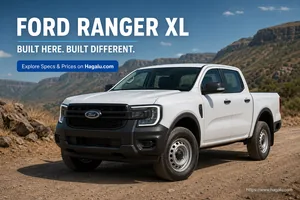
Ford Ranger XL
P Series vs Ranger XL
Diesel Pickup 6 Variants
Ford Ranger XL from ZAR 599,500
See full specs & who wins →
GWM P Series
VS
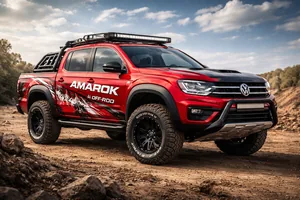
Volkswagen Amarok
P Series vs Amarok
Diesel Pickup 16 Variants
Volkswagen Amarok from ZAR 596,800
See full specs & who wins →
GWM P Series
VS
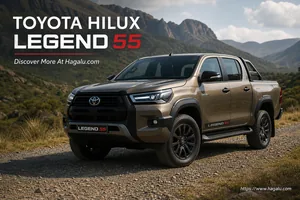
Toyota Hilux Double Cab
P Series vs Hilux Double Cab
diesel and diesel mild hybrid Pickup 10 Variants
Toyota Hilux Double Cab from ZAR 583,500
See full specs & who wins →
GWM P Series
VS
Toyota Hilux Xtra Cab
P Series vs Hilux Xtra Cab
Diesel Pickup 3 Variants
Toyota Hilux Xtra Cab from ZAR 574,500
See full specs & who wins →
GWM P Series
VS
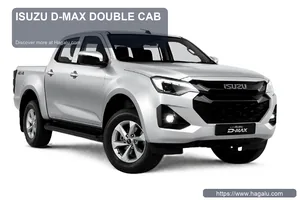
Isuzu D-Max Double Cab
P Series vs D-Max Double Cab
Diesel Pickup 10 Variants
Isuzu D-Max Double Cab from ZAR 574,010
See full specs & who wins →

Also Worth Exploring in South Africa

Different body types — refreshed every visit so you discover something new.

Jetour T2 i-DM plug-in hybrid
Jetour T2 i-DM
Suv 1 Variant
From R779,900
GWM Jolion Pro Petrol
GWM Jolion Pro
Suv 3 Variants
From R392,150
Volkswagen T-Roc Petrol
Volkswagen T-Roc
Suv 3 Variants
From R648,900
BYD SEALION 6 DM-i plug-in hybrid
BYD SEALION 6 DM-i
Suv 3 Variants
From R639,900

Other Current GWM Models in South Africa

Models currently listed for sale in the South African range.

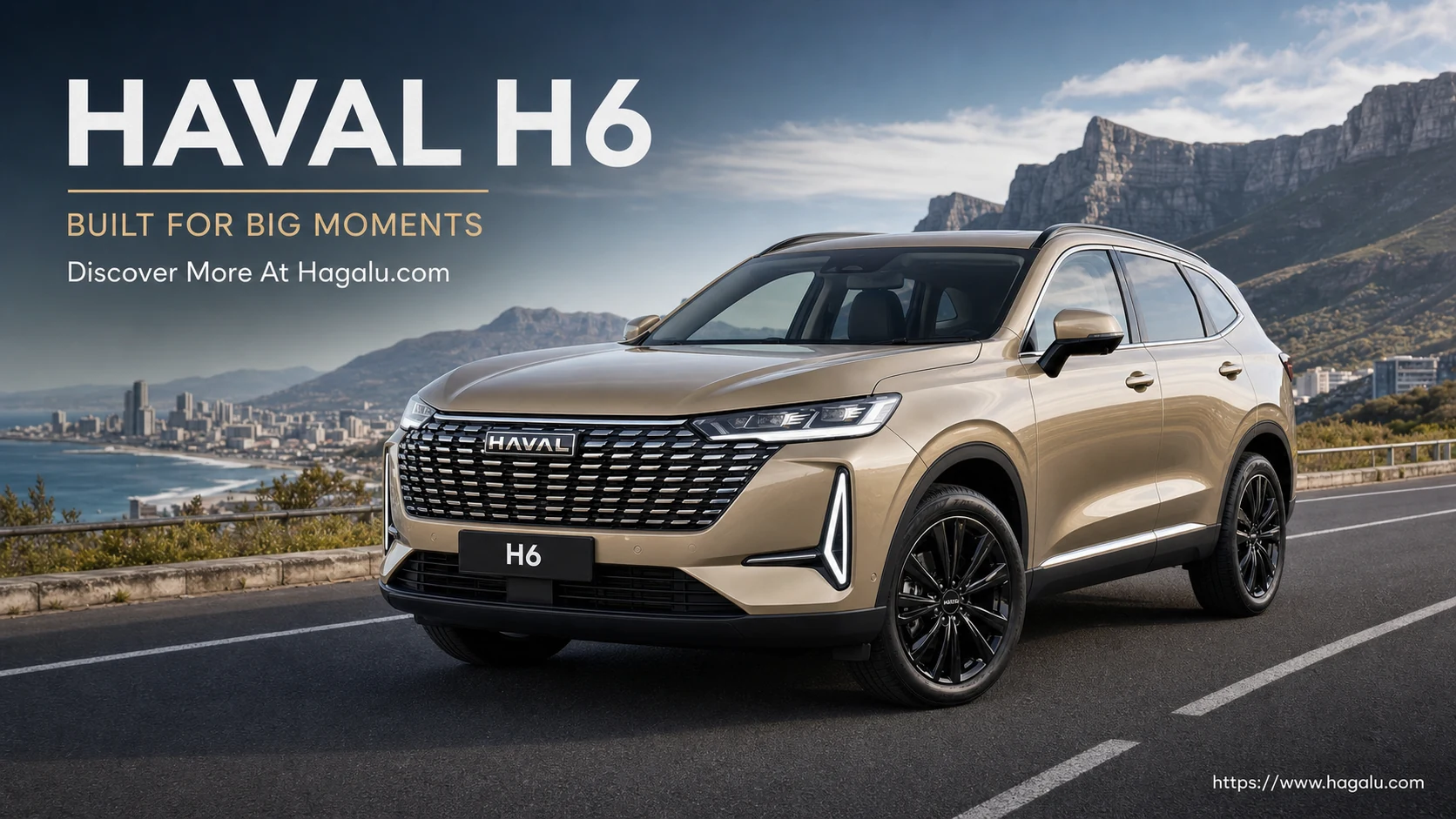
GWM H6 Hybrid
GWM
H6
SUV 3 Variants
Starting from ZAR 589,900
GWM H6 GT Petrol
GWM
H6 GT
SUV 2 Variants
Starting from ZAR 699,900
GWM H6 GT PHEV Hybrid
GWM
H6 GT PHEV
SUV 1 Variant
Starting from ZAR 799,900
GWM H6 PHEV Hybrid
GWM
H6 PHEV
SUV 2 Variants
Starting from ZAR 699,900
Archive

Discontinued & Earlier GWM Models

Historical model pages remain available without competing with vehicles currently on sale.

Full GWM range
GWM Cannon discontinued model reference in South Africa Cannon Discontinued Pickup GWM Cannon Alpha discontinued model reference in South Africa Cannon Alpha Discontinued Pickup GWM H1 discontinued model reference in South Africa H1 Discontinued SUV GWM H2 discontinued model reference in South Africa H2 Discontinued SUV GWM Jolion GT discontinued model reference in South Africa Jolion GT Discontinued SUV GWM Ora Good Cat discontinued model reference in South Africa Ora Good Cat Discontinued Hatchback GWM Steed 5 discontinued model reference in South Africa Steed 5 Discontinued Pickup GWM Steed 6 discontinued model reference in South Africa Steed 6 Discontinued Pickup

Data verified against: GWM Official South Africa Website

More from GWM