CRDe engine explained
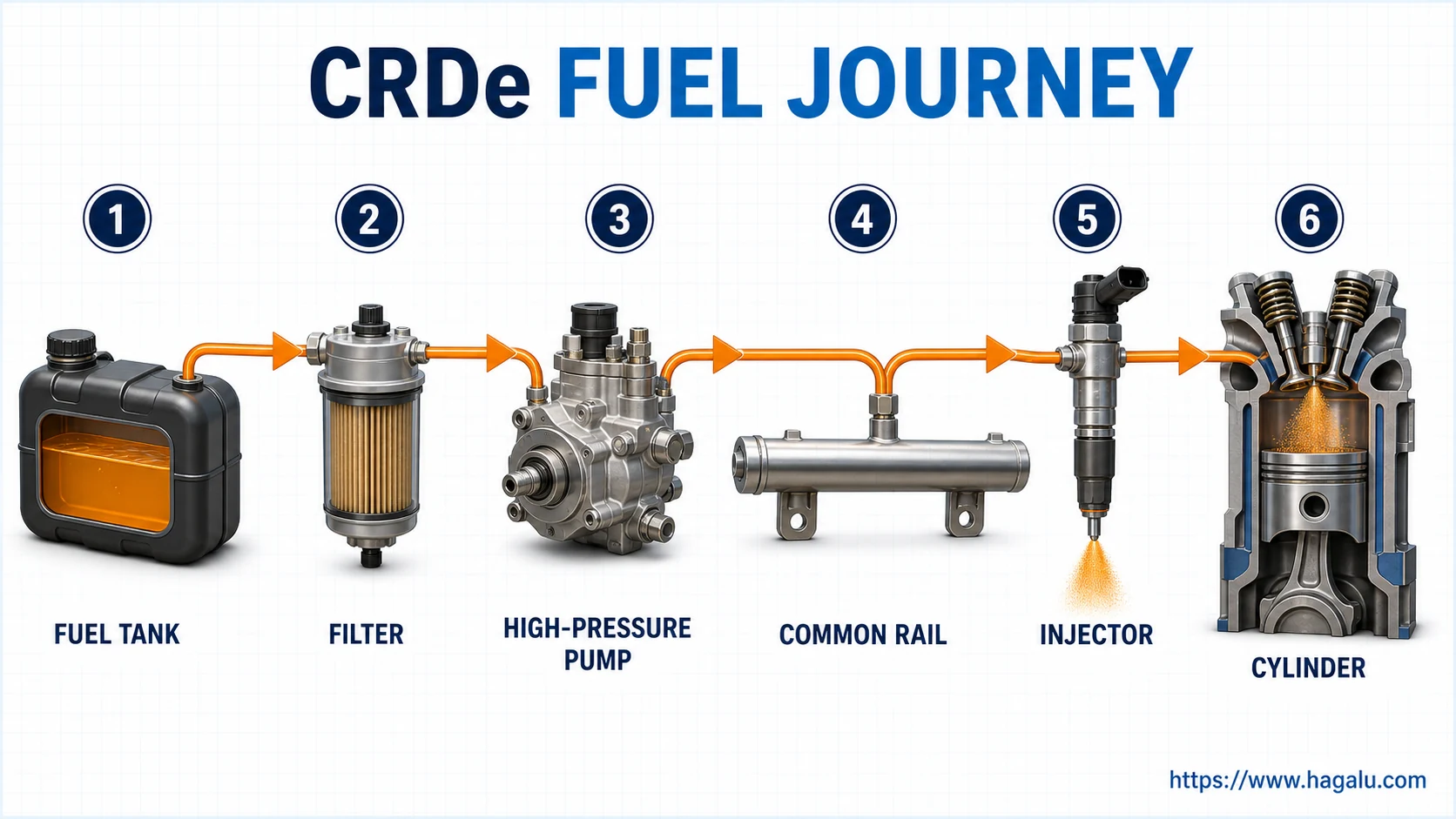
Follow one drop of diesel from the tank to the cylinder. Learn the parts, pros, cons, fuel care, DPF questions, warning signs and CRDe vs CRDi.
- 6-step fuel journey
- Fuel-economy reality check
- Owner maintenance checklist
Those letters on an engine cover can sound like a secret code. Hagalu turns them into simple fuel paths, air paths, ownership advice and questions you can actually use.
Oxygen allows fuel to release energy.
The system must deliver the right amount at the right time.
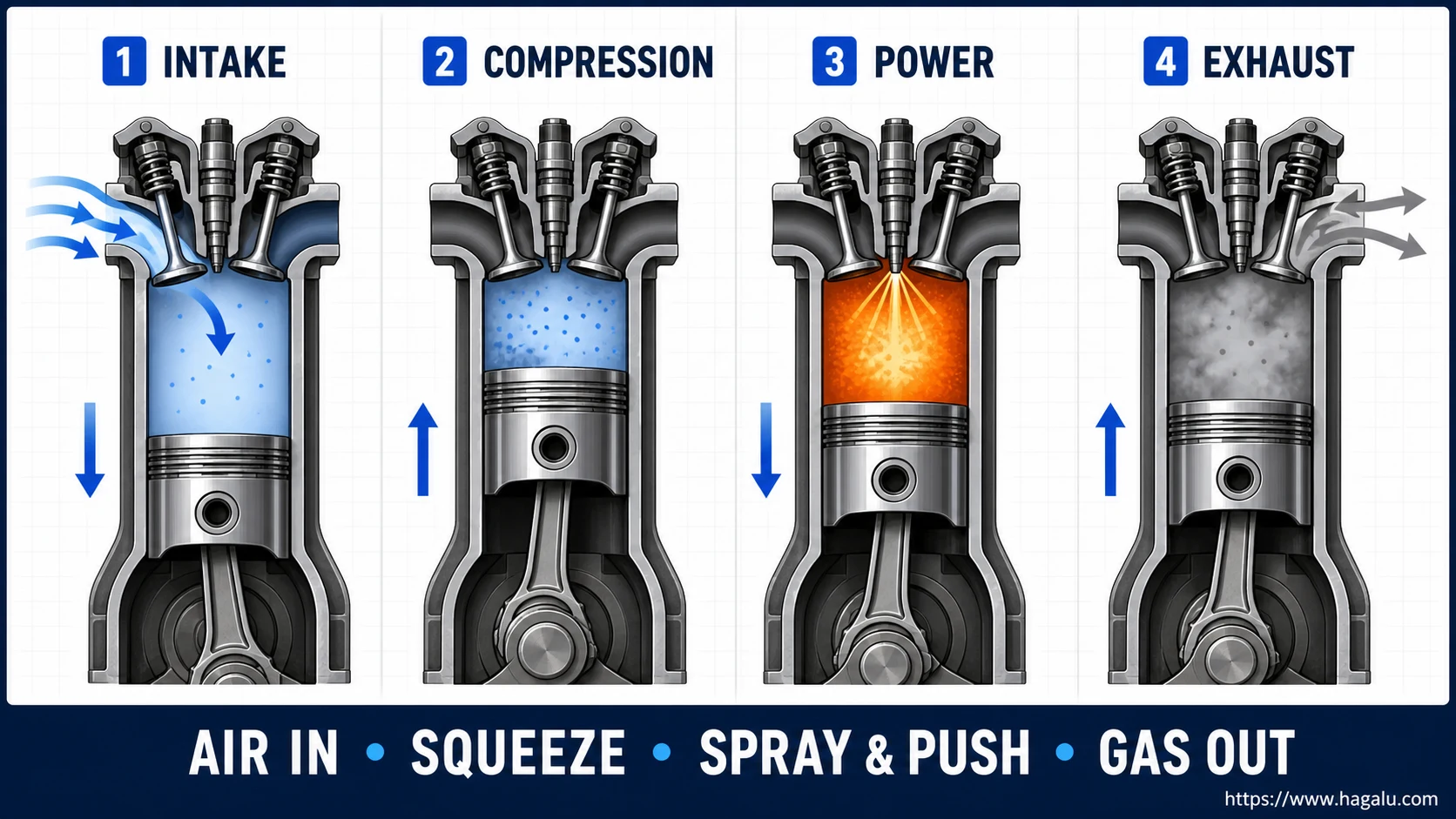
Petrol usually uses a spark; diesel uses heat created by compression.
Badges such as CRDe, TDCi, CRDi and TDI mostly describe how manufacturers manage those jobs. They do not rank engines from best to worst.
Follow one drop of diesel from the tank to the cylinder. Learn the parts, pros, cons, fuel care, DPF questions, warning signs and CRDe vs CRDi.
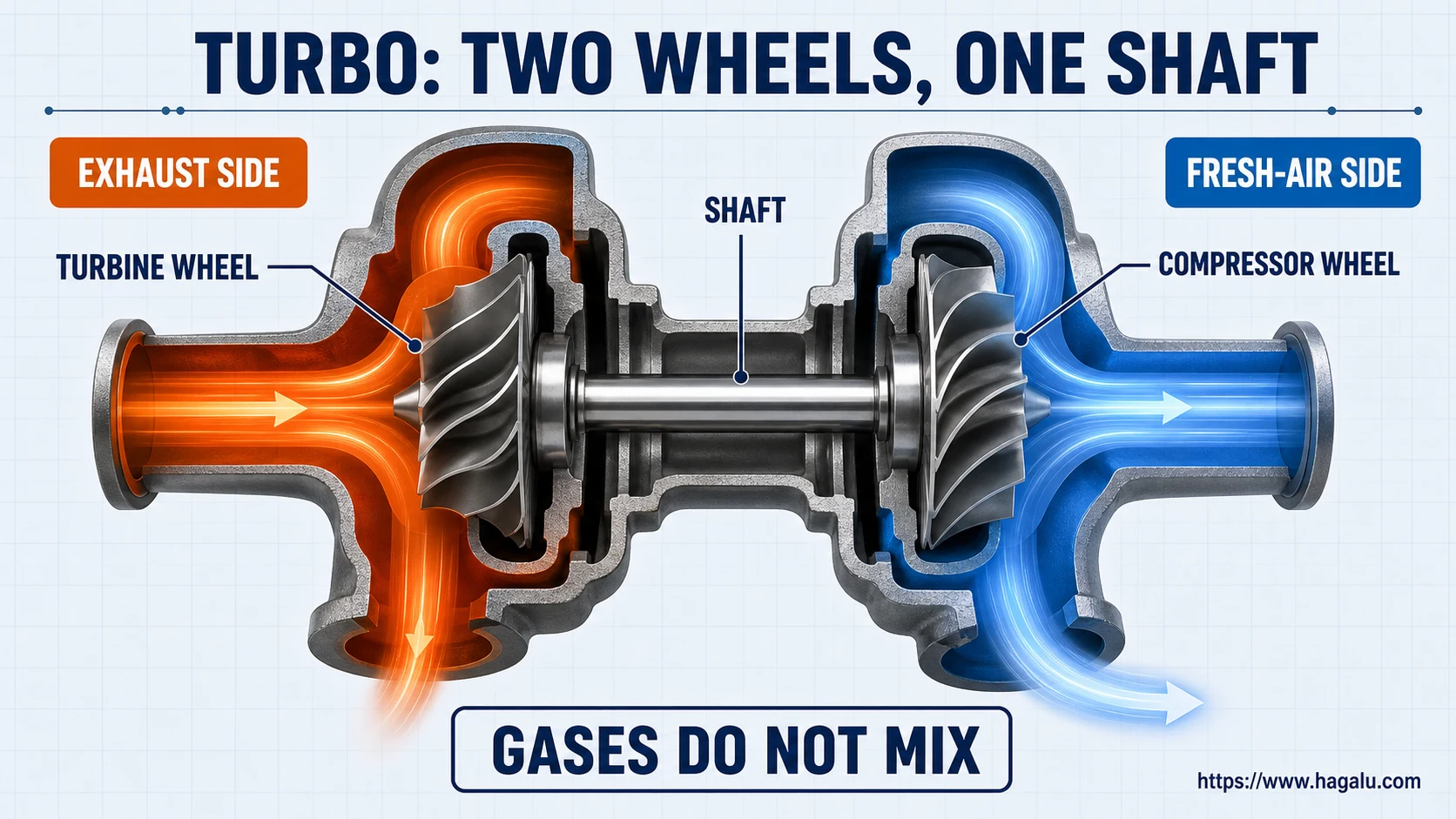
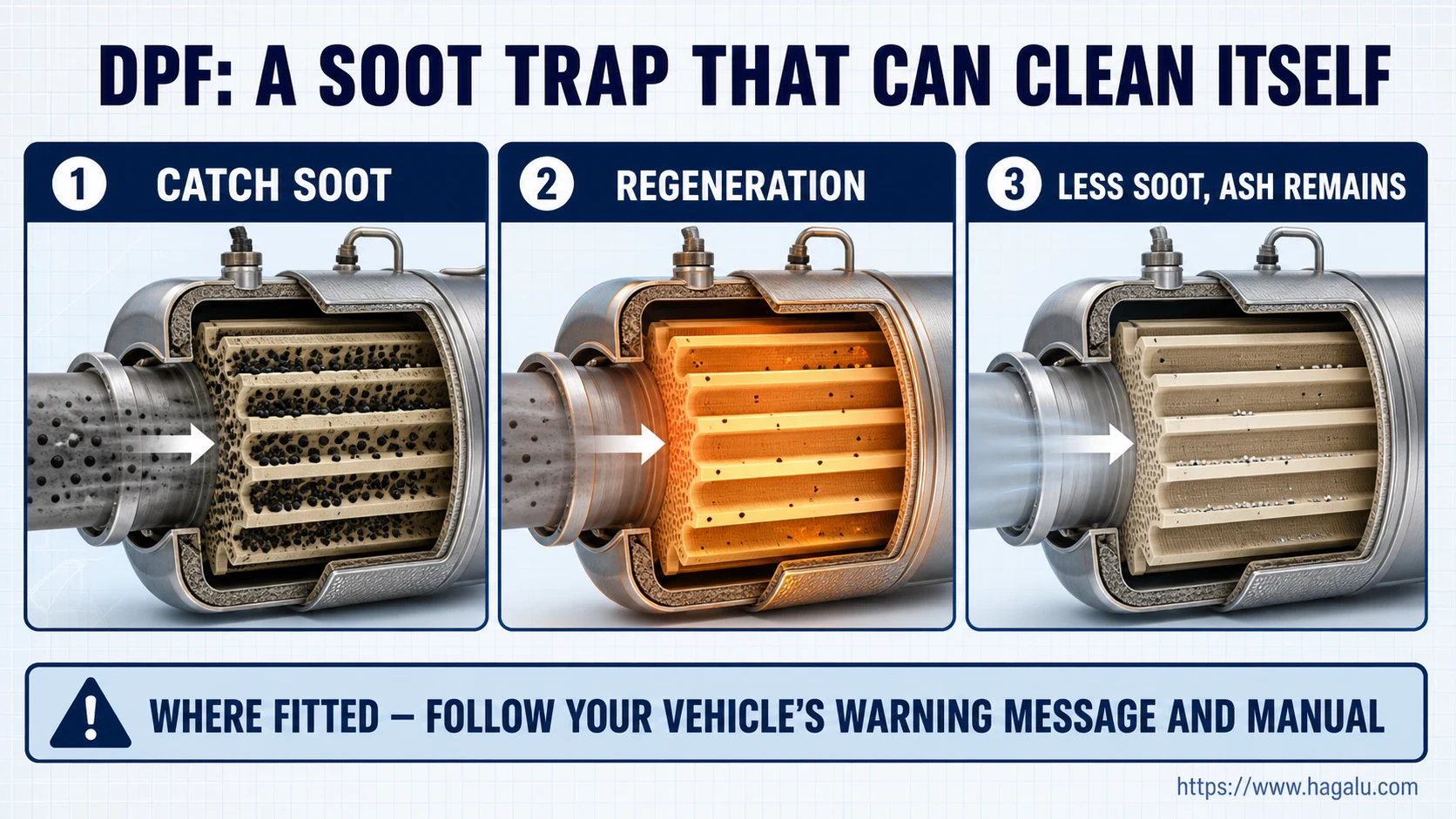
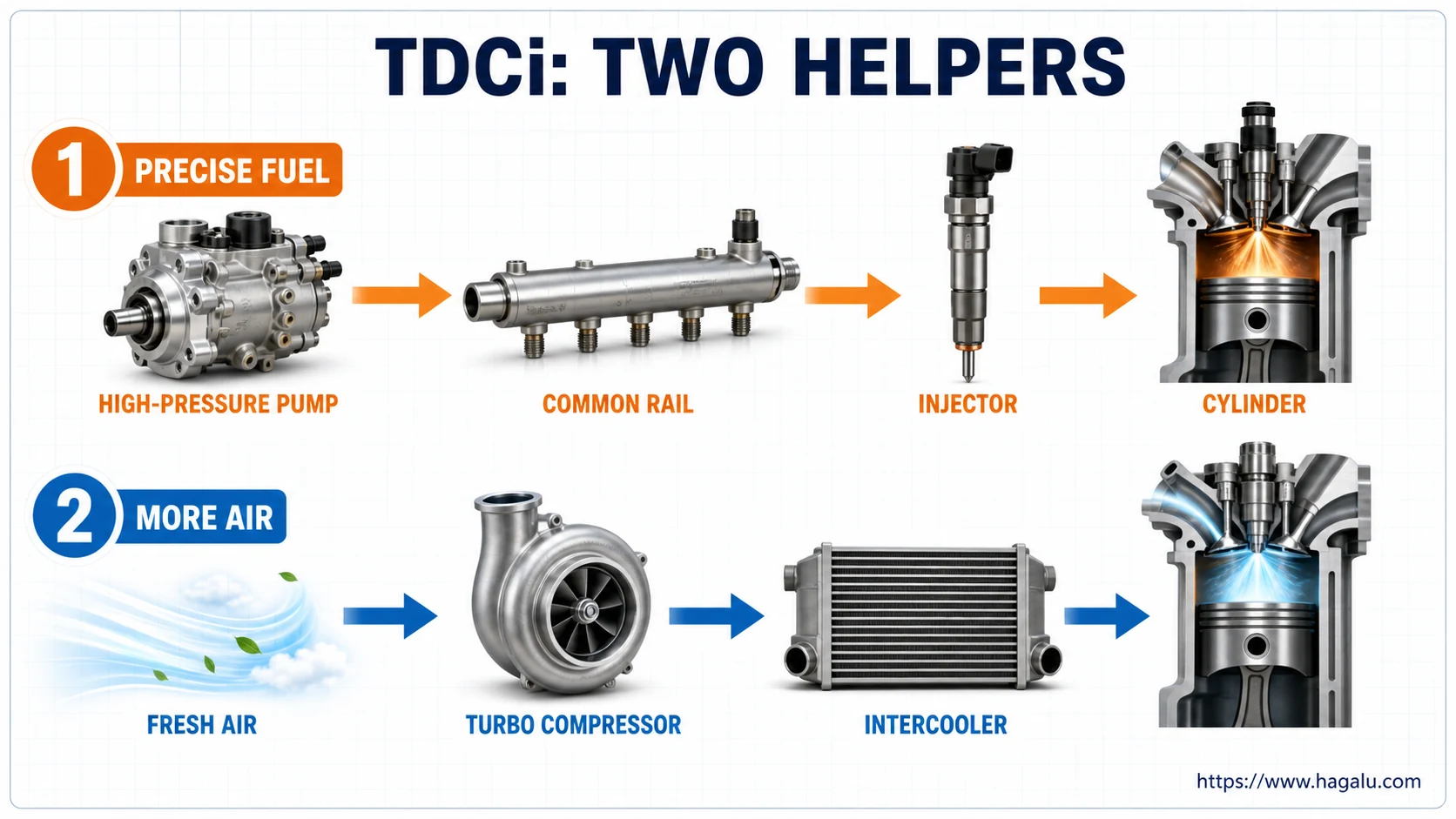
See how the turbo air path and common-rail fuel path meet inside the cylinder. Understand torque, economy, DPF care, AdBlue and TDCi vs TDI.
Both diagrams are original Hagalu educational illustrations. View image credits and usage terms.
Use the labels first, then open the full guide for the story behind each part. Every diagram is simplified for learning and checked against the explanation beside it.
| Badge | Common association | Plain-language meaning | Safe buying question |
|---|---|---|---|
| CRDe | Mahindra | Electronically controlled common-rail diesel. | Which engine code, emissions system and service history? |
| TDCi | Ford | Ford turbo-diesel common-rail family. | Which TDCi generation and exact Ford oil specification? |
| CRDi / CRDI | Multiple manufacturers | Common-rail direct-injection diesel. | Which manufacturer, engine and injector system? |
| TDI | Volkswagen Group | Manufacturer-specific turbo direct-injection diesel family. | Which engine code and emissions-generation fixes apply? |
| dCi | Renault–Nissan applications | Manufacturer-specific common-rail diesel family. | What exact engine, year and maintenance schedule? |
| D-4D | Toyota applications | Toyota diesel direct-injection family label. | Which engine and market-specific aftertreatment? |
Manufacturer associations are a navigation aid, not a claim that every vehicle under a badge uses identical technology.
It tells you which broad technology guide to read.
These separate one design or calibration from another.
Emissions equipment and service requirements can differ by country and build date.
Check fuel, oil, warning lights, regeneration and routine maintenance.
Invoices and dates are stronger than “fully serviced” in an advert.
A badge cannot reveal injector correction, boost leaks, stored faults or DPF condition.
Usually not. They are manufacturer or technology-family labels that can cover several engine sizes, generations and markets. Use the engine code, VIN and model year for parts or service research.
Yes. Both identify diesel technology built around common-rail direct injection. TDCi also identifies Ford's turbo-diesel family.
No normal spark plug starts combustion. Hot compressed air ignites the diesel spray. Glow plugs may help cold starting.
A badge alone cannot rank reliability. Exact design, year, use, fuel quality, maintenance history and current condition matter much more.
The diagrams simplify component shape and spacing for learning. They are not workshop plumbing diagrams.