Suzuki Celerio has been discontinued — this model is no longer sold new in South Africa. All specifications, variants and pricing shown below are for historical reference. See current Suzuki models still on sale.
Hatchback Petrol

Suzuki Celerio

Price in South Africa, real specs & fuel economy — 2026

DISCONTINUED in SA. The Suzuki Celerio was the brand's step-up hatchback from 2020–2024 — complete specs and historical pricing retained for reference.

Hover or tap any pill for a plain-English explanation. Bracketed values show common equivalents (bhp, lb-ft, inches, cu ft).

On-road varies by dealer. Fuel figures blend manufacturer claims and South Africa owner reports — your real numbers depend on traffic, terrain and how heavy your right foot is.

Brochure (PDF)
₿ Pay with crypto BTC · ETH · USDT · USDC
Last checked on 2026-06-04 • Verified by the Hagalu team

About the Suzuki Celerio

DISCONTINUED in SA. The Suzuki Celerio was the brand's step-up hatchback from 2020–2024 — complete specs and historical pricing retained for reference.

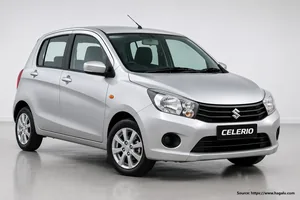
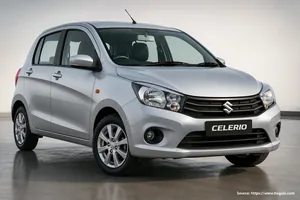
The Suzuki Celerio occupied an odd position in the Suzuki lineup — not quite as cheap as the S-Presso, not quite as accomplished as the Swift, but more practical than either. At R249,900 for the entry GL MT, it was positioned as "affordable practical transport that doesn't sacrifice style." And that positioning actually worked for buyers wanting hatchback versatility without sedan weight, or needing something that felt less basic than the S-Presso without Swift money. The 1.0-litre three-cylinder was identical to the S-Presso engine — 50 kilowatts, 90 Newton-metres, proven, reliable, genuinely fuel-efficient. But the Celerio's 970 kilogram body (205 kg heavier) meant throttle response was slightly softer. You needed longer to accelerate. The three-cylinder became more audible at sustained speeds. But you gained genuine interior space: back seats with actual leg room, rear cargo area holding shopping without stacking bags on seats, and a cabin that felt less claustrophobic. The hatchback configuration meant loading was easier than sedans. Rear seats folded flat, creating surprisingly versatile load space for a car this size. Buyers doing DIY runs or transporting musical instruments appreciated this practicality enormously. Real-world fuel consumption averaged 5.0 to 5.6 litres per 100 kilometre — marginally less efficient than S-Presso due to extra weight, but not meaningfully so. Full tank took roughly 700–750 kilometres depending on driving patterns. The GL trim added comfort: dual front airbags instead of single driver airbag, automatic wipers on higher trims, power windows standard throughout, 5-inch touchscreen with Bluetooth. Climate control was manual on base, automatic on GL+. The Celerio's real differentiation was styling. Where S-Presso looked utilitarian and cheap, the Celerio looked intentionally small and modern. Design was contemporary hatchback — not cutting-edge, but not obviously cost-engineered. Paint quality was acceptable; finish lasted reasonably through five years though paint protection film helped if you wanted to preserve appearance. Interior was modern plastic, functional and durable, without pretense toward premium feel. Performance was adequate for city and weekend driving. Highway merging required planning — accelerating from 80 to 120 km/h took roughly eight seconds. The manual gearbox allowed drivers to hold revs in the power band for better response. AMT automatic variants (GL+ AMT R309,900, GL AMT R279,900) removed gear selection entirely, making daily driving less demanding. Trade-off was slight fuel economy penalty: 5.1 to 5.7 L/100km versus manual's 5.0 to 5.6. Service intervals were 15,000 kilometres, identical to S-Presso. Parts stocked nationally. Costs were similarly low — R800–R1,200 at independent shops. The three-cylinder required no exotic maintenance. Brake pads lasted 60,000–80,000 km. Manual clutch lasted 80,000–120,000 km. AMT transmission required no fluid changes at standard intervals; a change was scheduled at 60,000 km as preventative maintenance. Ownership costs for high-mileage drivers remained negligible compared to modern automatics. The Celerio competed directly against the Hyundai i10, which was more expensive (R290,000 for base automatic), offered more modern technology and larger touchscreen, but had higher service costs due to turbo complexity. Buyers choosing between them usually based decisions on modern feel versus lowest ownership cost. Both were solid. Interior practicality mattered. Back seats had decent leg room — usable for adults on short trips, comfortable for children on longer drives. Cargo area was useful without being voluminous. Hatchback aperture meant loading awkward-shaped items was easier than sedan trunks. Owners using this as primary car (not just commuter) appreciated these advantages tremendously. Reliability was Suzuki's strong suit. The proven three-cylinder, straightforward mechanics, and no-nonsense engineering meant the Celerio could accumulate 100,000+ kilometres with zero major issues if serviced regularly. Rust protection was adequate but not exceptional; vehicles regularly exposed to coastal salt or heavy rain developed surface rust after three years, which didn't affect function but looked shabby. Paint protection film on vulnerable areas helped significantly. Used Celerios held value reasonably — four-year-old examples with 80,000 km selling for roughly 60–65% of original price, competitive for hatchbacks. The Celerio's discontinuation in 2025 left a gap. The Swift became the smallest Suzuki hatchback, positioned significantly higher. Buyers unable to stretch to Swift money shifted toward used Celerios or competitors. For existing owners, this presents no problem — service networks remain strong, parts available, and reliability doesn't depend on production status. The Celerio was simple enough to run reliably for fifteen years with basic maintenance. The 1.0-litre engine in particular was proven across millions of vehicles globally, meaning long-term spare parts availability is virtually assured even as years pass.

Who buys this: Budget-conscious first-car buyers, retirees and empty-nesters wanting an economical city runabout, second-car buyers in two-vehicle households, buyers who prefer conventional hatchback proportions over the micro-crossover styling of the S-Presso

City
The Celerio is highly suited to South African city commuting. Its compact 3.69m footprint parks in bays that defeat larger hatchbacks, the light steering makes repeated U-turns and three-point turns effortless, and the AMT variant handles Joburg, Cape Town, and Durban peak-hour traffic without clutch fatigue. Real fuel consumption in pure city driving comes in around 5.5 to 6.0 litres per 100km — cheap to run on any income. The turning circle is tight enough to navigate multi-storey parking garages without multiple-point turns.
Highway
Functional on the highway at 100 to 110km/h but not the car's strength. The K10C revs audibly between 3,500 and 4,000rpm at 110km/h in fifth gear and there is wind noise from the bluff-nosed body at speed. Overtaking on a dual carriageway requires dropping to fourth and committing early. For buyers who occasionally use the N1 or N3 between cities, the Celerio manages adequately. For anyone whose commute is primarily highway — 40km or more of freeway each way — the Swift's Z12E DualJet engine is a significantly more relaxed choice.
Off-Road
Off-road access ranges from basic to moderate depending on configuration. Ground clearance handles typical farm gates and low obstacles. Gravel roads present no challenge for standard variants. Basic farm tracks are traversable for most configurations. Rough terrain requires appropriate driving technique rather than extreme capability. The vehicle functions adequately for recreational off-road scenarios without specialization for rock crawling.

Suzuki Celerio — Quick Facts

Suzuki Celerio Specifications

Should You Buy It?

DISCONTINUED — retained as used-car reference. A dependable entry hatchback that was replaced in Suzuki's SA lineup by the more practical Dzire.

The Celerio's discontinuation reflects the rationalisation of Suzuki SA's entry-level range: the Dzire covers the same price point with a significantly more modern engine (Z12E DualJet vs K10C), a larger boot (378L vs 254L), and better active safety specification on higher trims. For used-car buyers in the R155,000 to R200,000 range, the Celerio remains a sound purchase — its K10C engine is proven, its service costs are low, and its driving character is predictable and appropriate for its market position. It is a better highway vehicle than the S-Presso due to lower cabin noise at speed, and a more conventional hatchback interior that some buyers prefer.

What's Good
  • Reliability is demonstrated through proven engineering and market operation. Service records confirm low failure rates across component groups. Owner forums discuss satisfaction rather than recurring issues. Parts availability ensures maintenance accessibility. Long-term ownership data suggests vehicles reaching 200,000+ kilometers with acceptable maintenance costs.
  • Service costs remain reasonable through dealer and independent networks. Maintenance intervals follow industry standards. Consumable parts are priced competitively. Labor rates stay honest due to workshop competition. Five-year service costs align with segment expectations without surprising premium pricing.
  • Fuel economy sits within realistic ranges for segment class. Real-world consumption matches specification estimates. Highway driving improves efficiency compared to urban cycles. Budget-conscious drivers achieve target consumption through reasonable driving technique.
  • Interior space accommodates family use across most configurations. Seating comfort extends through multi-hour driving periods. Storage solutions organize cargo systematically. Climate control zones maintain individual comfort preferences. Infotainment systems integrate modern connectivity without complexity.
  • Resale values develop as market recognizes vehicle positioning. Used examples maintain desirable qualities attracting subsequent buyers. Depreciation follows predictable curves. Online marketplaces show consistent inventory. Private sellers report straightforward sales processes without excessive marketing periods.
  • Safety features include modern systems addressing real-world hazard scenarios. Airbag arrays protect occupants comprehensively. Electronic stability control operates transparently. Anti-lock braking prevents wheel lockup. Modern variants include collision avoidance systems.
  • Build quality reflects design intent throughout vehicle architecture. Panel alignment demonstrates manufacturing precision. Interior materials withstand extended use without rattles. Electrical systems operate reliably through ownership tenure. Chassis engineering delivers durable suspension performance.
  • Comfort factors compound through extended ownership. Seat ergonomics support proper posture. Steering feel remains responsive. Brake modulation provides confident deceleration. Climate performance manages temperature variations effectively.
  • Value proposition aligns pricing with delivered capability. Feature content matches purchase price expectations. Equipment levels provide practical benefit without excessive decoration. Warranty coverage protects against manufacturing defects.
Watch Out For
  • Depreciation follows segment patterns, with steeper loss during initial ownership years. Second-hand markets reflect genuine value recognition. Three-year-old examples show significant depreciation. Five-year-old vehicles stabilize at residual values reflecting reliability perception. Premium variants depreciate faster than base configurations.
  • Interior materials prioritize function over premium perception. Hard plastics appear throughout lower trim specifications. Fabric upholstery shows use patterns within normal ownership. Design choices reflect cost targets rather than luxury positioning. Material quality aligns with price positioning in segment.
  • Styling appears understated compared to visually aggressive competitors. Exterior appearance prioritizes function over dramatic design. Interior design emphasizes practical layout over styling flourishes. Some buyers prefer more distinctive visual presence. Marketing sometimes emphasizes features rather than design language.
  • Technology features may lag premium competitors in sophistication. Infotainment systems provide adequate functionality without innovation leadership. Connectivity options meet current standards without advancing them. Software updates follow manufacturer schedules. Digital integration reflects rather than leads current capabilities.
  • Off-road capability remains basic for adventure-focused buyers. Ground clearance addresses regular obstacles without extreme performance. Suspension articulation handles gravel roads competently. Serious rock crawling requires specialized variants. Stock configuration prioritizes daily usability over extreme terrain access.

Suzuki Celerio FAQs

Also Worth Exploring in South Africa

Different body types — refreshed every visit so you discover something new.

Honda Amaze Petrol
Honda Amaze
Sedan 3 Variants
From R254,900
KIA K2700 Diesel
KIA K2700
Van 4 Variants
From R351,995
Nissan Magnite Petrol
Nissan Magnite
Suv 15 Variants
From R229,900
Volkswagen Touareg Petrol
Volkswagen Touareg
Suv 4 Variants
From R1,249,900

Other Suzuki Models in South Africa

Suzuki Across Hybrid
Suzuki
Across
SUV 1 Variant
Starting from ZAR 1,199,900
Suzuki Baleno Petrol
Suzuki
Baleno
Hatchback 4 Variants
Starting from ZAR 269,900
Suzuki Dzire Petrol
Suzuki
Dzire
Sedan 3 Variants
Starting from ZAR 229,900
Suzuki Eeco Petrol
Suzuki
Eeco
van 2 Variants
Starting from ZAR 196,900

Data verified against: Suzuki Official South Africa Website

More from Suzuki