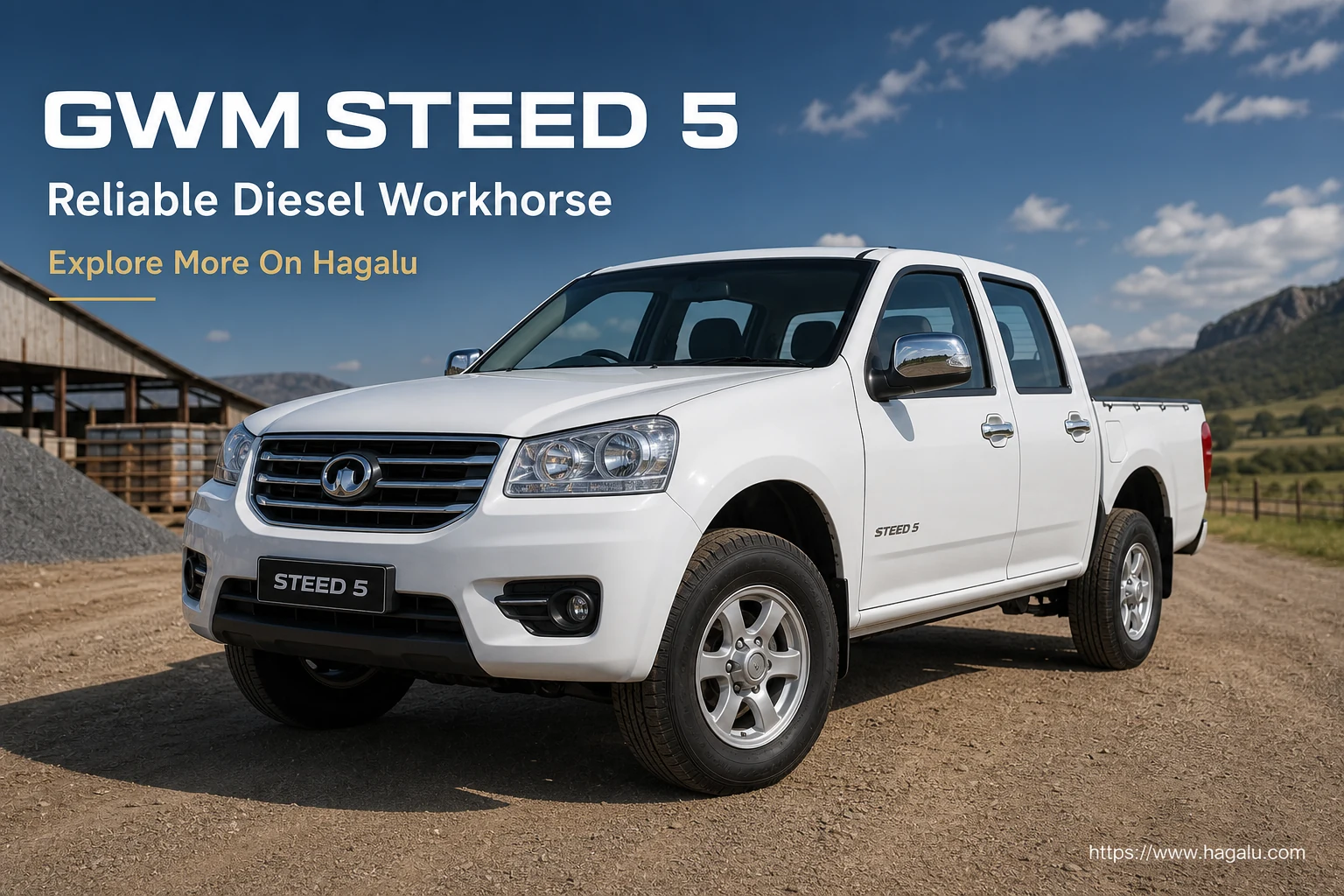
A GWM Steed 5 buyer will usually care about more than the monthly instalment: insurance, tyres, servicing, resale confidence, parts availability and dealer proximity all affect the real value of the car. In city use, the Steed 5 should be judged on loading needs, parking length, rear visibility and how easily it copes with tight streets. Picture the Steed 5 doing the school run, sitting in peak traffic, carrying luggage or tools, taking a weekend road, and returning for routine service. The sensible shortlist for Steed 5 also includes the things that are easy to postpone: service intervals, roadside support, brake and tyre replacement, storage, child-seat access and resale timing. The final check on Steed 5 is ordinary but important. Confirm engine of 2.0-litre turbo diesel, a power output of 110 kW, a Manual transmission and a two-wheel drive drivetrain on the written South African quotation. For a useful Steed 5 ownership decision, compare the version immediately below and above it using the same deposit, term, annual distance and insurance assumptions. The gap in local history of Model-year updates can affect trim, wheels, screens, safety equipment and colours for Steed 5. Use the latest South African price list when checking a specific vehicle may be worth paying when it removes a daily inconvenience, but not when it adds capability that will never be used for Steed 5. The same discipline applies to range layout of Derivative availability, pricing and equipment should be checked against the latest South African price list before purchase: treat a claimed consumption, range, payload or clearance figure as a planning reference and test the real vehicle with a normal load for Steed 5. A written quote should make clear what belongs to the car and what belongs to optional products for Steed 5. That is where the headline 307950 becomes a meaningful South African buying figure rather than a search-result number for Steed 5. Check the exact manual and 4x2 arrangement rather than relying on the model name for Steed 5. A vehicle can be perfectly suitable for the stated route while still being the wrong choice for a buyer who needs a different body, load limit or drivetrain for Steed 5. The best result is a clearly understood compromise, supported by the local specification and a drive that resembles real life for Steed 5