Sedan Hybrid ECVT FWD 5-seat

Lexus ES

Price in South Africa, real specs & fuel economy — 2026

Model year 2026 Generation Current seventh-generation Lexus ES executive sedan Current version Current South African ES range; the next-generation local range has not yet received final derivative confirmation Body style Sedan
Lexus ES offers 3 current South African derivatives from R851 500.
ZAR 1,138,800
On-road in
ZAR 1,163,465
Ex-showroom ZAR 1,138,800
Finance estimate from ZAR 14,955/month Based on ES 250 EX Ex-showroom basis · approx. 20% deposit · 11.5% p.a. · 60 months · no balloon
Engine:2500cc (2.5L) Torque:221Nm (163 lb-ft) Ground Clearance:158mm (6.2″) Power:160kW (215 bhp) Boot454L (16.0 cu ft)

Hover or tap any pill for a plain-English explanation. Bracketed values show common equivalents (bhp, lb-ft, inches, cu ft).

Fuel Economy km/l · US mpg equivalent
Combined 21.7 km/l (51 mpg)
City 17.5 km/l (41 mpg)
Highway 25.2 km/l (59 mpg)

On-road pricing varies by dealer. Fuel figures are manufacturer claims or source-backed estimates where a separate city/highway cycle is not published; your real numbers depend on traffic, terrain and driving style.

Model Range PDF
₿ Pay with crypto BTC · ETH · USDT · USDC

Estimate monthly vehicle finance for the Lexus ES in South Africa. The default illustration uses the ex-showroom price, approximately 20% deposit, 11.5% nominal annual interest over 60 months and no balloon payment.

Estimated monthly instalment
ZAR 14,955
Total Interest
ZAR 217,298
Total Payable
ZAR 897,298
Principal Interest

* Illustrative estimate based on the ex-showroom price, approximately 20% deposit, 11.5% nominal annual interest, 60 months and no balloon payment, using the ES 250 EX. Excludes initiation fees, monthly service fees, credit-life insurance and vehicle insurance. Your lender quotation may differ.

Source-backed vehicle data • Verified by the Hagalu team

Lexus ES

Lexus ES offers 3 current South African derivatives from R851 500.

The Lexus ES occupies a specific place in the South African range: it is designed for an executive-sedan buyer who values low-noise comfort, rear-seat space and restrained ownership costs over an SUV driving position. The current range contains 3 confirmed derivatives, priced from R851 500 to R1 138 800. Those figures are recommended vehicle prices checked on 2026-07-17; finance interest, registration, insurance, paint, dealer accessories and optional plans can change the amount a buyer ultimately pays. The derivative list is ES 250 EX, ES 300h EX, ES 300h SE. Reading that list as a price ladder is more useful than treating every version as the same vehicle, because powertrain, drivetrain, seating, tyres and cabin equipment can alter both the weekly experience and the ownership budget. The ES range separates the conventional 2.5-litre ES 250 from two ES 300h self-charging hybrids. The petrol derivative uses an eight-speed automatic, while the hybrids use E-CVT and prioritise lower combined consumption. This engineering spread should define the shortlist before colour or monthly instalment. Buyers should identify the normal passenger count, annual distance, charging access where relevant, towing or luggage requirement and the worst road used in an ordinary month. A powertrain that looks impressive in isolation can be the wrong choice if it raises fuel, electricity, insurance or tyre cost without solving a recurring need. Equally, an entry grade can become poor value when it omits assistance, seating or traction equipment that the owner will need every week. The current generation context is important. Current seventh-generation Lexus ES executive sedan. Current South African ES range; the next-generation local range has not yet received final derivative confirmation. A quotation should carry the full derivative name and match the current vehicle rather than relying on a model badge alone. This matters most when a range is moving through a facelift or generation change, because an outgoing vehicle may remain in stock while publicity already shows its replacement. Build date, model year, fitted wheel, infotainment version and standard safety equipment should therefore be checked on the physical vehicle before finance is signed. Cabin quality in a premium vehicle should be judged through use, not only finish. The driver's seating position, adjustment range, screen placement, physical controls, phone integration and camera view affect every trip. Rear-seat buyers should sit behind their normal front-seat position, test child-seat access where relevant and load the luggage they actually carry. A larger wheel can sharpen appearance while raising replacement cost and reducing impact compliance. Audio, roof, upholstery and parking equipment should be compared derivative by derivative because they are often responsible for large price jumps. Safety equipment also needs derivative-level reading. The presence of a broad assistance suite does not mean every function behaves identically in local traffic, and a model-family brochure can describe equipment that is optional or grade-specific. Check the exact vehicle for adaptive cruise behaviour, lane support, blind-spot coverage, rear cross-traffic assistance, camera resolution, parking sensors and child-seat anchorage positions. Drivers who regularly travel before sunrise, after dark or through heavy summer rain should include lighting and wiper operation in the test. Assistance systems remain support tools: tyre condition, visibility, braking distance and driver attention still determine the safety margin. Specification numbers become useful only when connected to a routine. Power and torque describe potential, while kerb mass, gearing, driven wheels and tyre choice influence how easily that potential is delivered. A boot-volume figure should be checked against its measuring method and the shape of the opening. Ground clearance does not by itself prove underbody protection or off-road ability. Claimed consumption is a controlled comparison value, not a promise for a specific commute. Buyers should retain a written copy of the derivative specification and quotation because online equipment and prices can change during a model-year transition. Ownership arithmetic should use a complete monthly figure. Apply the same deposit, interest rate, term and balloon to every shortlisted derivative, then add insurance, expected energy use, tyres and the service or maintenance cover shown on the sales contract. A lower instalment supported by a large final balloon is not a lower purchase cost. Buyers trading after three or four years should also consider generation timing, market demand for the exact powertrain and whether expensive optional equipment will retain value. The strongest purchase is the derivative that remains affordable under a less optimistic resale or fuel scenario.

Lexus ES — Quick Facts

Lexus ES Variants & Prices

Pick up to 3 variants, hit Compare Variants and you'll get a proper side-by-side spec breakdown.

Maximum 3 variants reached
Uncheck one of the selected variants below before choosing another.
Cmp Variant Trim Fuel Transmission Price
ES 250 EX Base Petrol Direct Shift Automatic 8-speed ZAR 851,500
ES 300h EX Base Hybrid ECVT ZAR 925,400
ES 300h SE Top Hybrid ECVT ZAR 1,138,800
Cmp Variant Trim Fuel Transmission Price
ES 250 EX Base Petrol Direct Shift Automatic 8-speed ZAR 851,500
Cmp Variant Trim Fuel Transmission Price
ES 300h EX Base Hybrid ECVT ZAR 925,400
ES 300h SE Top Hybrid ECVT ZAR 1,138,800
2 variants selected

Lexus ES Specifications

Length
4975 mm
Width
1865 mm
Height
1445 mm
Wheelbase
2870 mm
Ground Clearance (Default)
158 mm
Fuel Tank Capacity
50 l
Boot/Cargo Space
454 l
Kerb Weight
1740 kg
Gross Vehicle Weight (GVW)
2150 kg
Payload Capacity
410 kg
Seating Capacity
5 seats
Doors
4 doors
Minimum Turning Radius
5.9 m
Driving fit

Where the Lexus ES Fits Best

A practical view of the buyer and roads this model is best suited to.

Who buys this

The Lexus ES best suits an executive-sedan buyer who values low-noise comfort, rear-seat space and restrained ownership costs over an SUV driving position. It rewards a buyer who defines passenger, route, luggage, charging, towing and terrain needs before choosing a trim. It is less suitable when selected mainly for badge or styling without a realistic running-cost and space check.

City
In city use, Its long body needs deliberate parking, but the light controls, camera and assistance equipment make daily business travel calm. The hybrid grades are the natural fit for repeated urban traffic because low-speed electric assistance reduces engine activity. Parking dimensions, camera coverage, low-speed ride and transmission response should be tested on familiar roads. Heat, potholes, steep ramps and short trips can expose a poor derivative choice more quickly than a smooth demonstration route.
Highway
On South African highways, The ES earns its place on long routes through seat comfort, low cabin noise and stable cruising rather than overt sportiness. Buyers who carry clients or family should compare rear-seat comfort and audio specification as carefully as engine output. A useful test includes a merge, an overtake and rough tar at cruising speed with realistic passenger load. Seat support, wind noise, spare-wheel provision and range between fuel or charging stops deserve equal weight with peak output.
Off-Road
For gravel and rough-road use, The ES is a low-slung road sedan. It suits maintained gravel only at restrained speed, and its tyres, overhangs and 160 mm clearance should rule it out for recurring farm tracks or damaged access roads. Buyers should distinguish occasional maintained gravel from genuine off-road work. Tyre construction, sidewall depth, driven wheels, underbody exposure and recovery access are more meaningful than SUV styling or an adventurous trim name.

Lexus ES — Should You Buy It?

Choose the ES by required capability and total ownership cost, then select the trim.

The Lexus ES is convincing when the chosen derivative solves a defined ownership problem. Start with the correct body and powertrain, compare neighbouring grades at the same finance assumptions, and pay extra only for capability or equipment that will be used repeatedly. The price range of R851 500 to R1 138 800 is broad enough that a disciplined trim decision matters.

What's Good
  • Current South African derivative and price coverage
  • Clear powertrain and trim choices
  • Detailed derivative specifications
  • Buyer role is easy to define
  • Strong safety and convenience coverage
  • Useful city and highway ownership fit
  • Current generation context recorded
  • Local warranty information by derivative
  • Best when chosen for a defined routine
Watch Out For
  • Upper grades materially increase finance cost
  • Tyre and insurance costs vary by derivative
  • Real energy use changes with route and load
  • Optional equipment can obscure base price
  • A short showroom route is not enough
  • The flagship is not automatically best value
  • Stock colour and equipment combinations can change
  • Generation timing may affect resale
  • Exact sales-contract cover must be checked

Lexus ES FAQs

Current recommended retail prices for the Lexus ES run from R851,500 to R1,138,800, depending on the derivative. Compare the exact trim before calculating finance because options, insurance and dealer charges can change the final monthly cost.

The current South African range comprises ES 250 EX, ES 300h EX, ES 300h SE. Prices and equipment are shown by derivative so buyers can compare the actual local range rather than specifications from another market.

Ground clearance differs across the Lexus ES range: ES 250 EX: 160 mm; ES 300h EX, ES 300h SE: 158 mm. Compare the exact derivative for steep driveways, gravel roads and uneven parking areas.

The Lexus ES engine specification depends on derivative: ES 250 EX: 2500 cc, 152 kW (204 bhp); ES 300h EX, ES 300h SE: 2500 cc, 160 kW (215 bhp). Compare the exact trim because its gearbox and equipment may also differ.

Combined fuel-economy figures differ across the Lexus ES range: ES 250 EX: 15.2 km/l; ES 300h EX, ES 300h SE: 21.7 km/l.

The Lexus ES best suits an executive-sedan buyer who values low-noise comfort, rear-seat space and restrained ownership costs over an SUV driving position. It rewards a buyer who defines passenger, route, luggage, charging, towing and terrain needs before choosing a trim. It is less suitable when selected mainly for badge or styling without a realistic running-cost and space check.

In city use, Its long body needs deliberate parking, but the light controls, camera and assistance equipment make daily business travel calm. The hybrid grades are the natural fit for repeated urban traffic because low-speed electric assistance reduces engine activity. Parking dimensions, camera coverage, low-speed ride and transmission response should be tested on familiar roads. Heat, potholes, steep ramps and short trips can expose a poor derivative choice more quickly than a smooth demonstration route.

On South African highways, The ES earns its place on long routes through seat comfort, low cabin noise and stable cruising rather than overt sportiness. Buyers who carry clients or family should compare rear-seat comfort and audio specification as carefully as engine output. A useful test includes a merge, an overtake and rough tar at cruising speed with realistic passenger load. Seat support, wind noise, spare-wheel provision and range between fuel or charging stops deserve equal weight with peak output.

Compare Lexus ES with Similar Sedans

Tap any card to see a full head-to-head — specs, scores and a clear verdict on which one's worth your money.

Lexus ES
VS
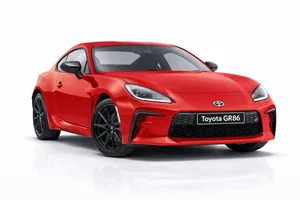
Toyota GR86
ES vs GR86
Petrol Sedan 2 Variants
Toyota GR86 from ZAR 749,900
See full specs & who wins →
Lexus ES
VS
Honda Civic RS
ES vs Civic RS
Petrol Sedan 1 Variant
Honda Civic RS from ZAR 725,000
See full specs & who wins →
Lexus ES
VS
BYD SEAL
ES vs SEAL
Electric Sedan 2 Variants
BYD SEAL from ZAR 1,007,900
See full specs & who wins →
Lexus ES
VS
Honda Civic Type R
ES vs Civic Type R
Petrol Sedan 1 Variant
Honda Civic Type R from ZAR 1,021,600
See full specs & who wins →

Also Worth Exploring in South Africa

Different body types — refreshed every visit so you discover something new.

Chery Tiggo 8 Pro Max Petrol
Chery Tiggo 8 Pro Max
Suv 2 Variants
From R609,900
Mazda CX-5 Petrol
Mazda CX-5
Suv 3 Variants
From R570,500
GWM Ora 03 Electric
GWM Ora 03
Hatchback 3 Variants
From R686,950
Mazda Mazda2 Petrol
Mazda Mazda2
Hatchback 3 Variants
From R336,000

Other Current Lexus Models in South Africa

Models currently listed for sale in the South African range.

Lexus GX Petrol
Lexus
GX
SUV 3 Variants
Starting from ZAR 1,856,600
Lexus LX diesel and hybrid
Lexus
LX
SUV 5 Variants
Starting from ZAR 2,687,500
Lexus NX petrol, hybrid and plug-in hybrid
Lexus
NX
SUV 5 Variants
Starting from ZAR 1,074,200
Lexus RX petrol, hybrid and plug-in hybrid
Lexus
RX
SUV 5 Variants
Starting from ZAR 1,516,500

Data verified against: Lexus Official South Africa Website

More from Lexus