Van Petrol Manual FWD 7-seat

Suzuki Eeco

Price in South Africa, real specs & fuel economy — 2026

Model year 2026 Generation Second-generation Eeco on dedicated commercial platform with purpose-built high-roof body; G12B engine consistent across the Eeco's SA lifespan; commercial application specific, not shared with passenger vehicle range Current version 2021 Body style Van
South Africa's most affordable new commercial panel van — a purpose-built delivery vehicle with a high roof, proven 1.2L engine, and running costs that undercut every competitor in its category
ZAR 219,900
On-road in
ZAR 233,538
Ex-showroom ZAR 219,900
Engine:1197cc (1.2L) Torque:103Nm (76 lb-ft) Ground Clearance:170mm (6.7″) Power:61kW (82 bhp) Boot120L (4.2 cu ft)

Hover or tap any pill for a plain-English explanation. Bracketed values show common equivalents (bhp, lb-ft, inches, cu ft).

Fuel Economy km/l · US mpg equivalent
Combined 16.9 km/l (40 mpg)
City 14.7 km/l (35 mpg)
Highway 20.0 km/l (47 mpg)

On-road pricing varies by dealer. Fuel figures are manufacturer claims or source-backed estimates where a separate city/highway cycle is not published; your real numbers depend on traffic, terrain and driving style.

Model Range PDF
₿ Pay with crypto BTC · ETH · USDT · USDC
Monthly EMI
Total Interest
Total Payable
Principal Interest

* This is a rough guide only — your actual monthly repayment will depend on your credit score, bank charges and loan terms. Get a proper quote from your bank or dealer before committing.

Source-backed vehicle data • Verified by the Hagalu team

Suzuki Eeco

South Africa's most affordable new commercial panel van — a purpose-built delivery vehicle with a high roof, proven 1.2L engine, and running costs that undercut every competitor in its category

The Suzuki Eeco is the commercial vehicle — a versatile van designed for business, combining affordability, reliability, and flexibility. At R197,900 for the Panel Van MT, it's South Africa's most affordable new commercial vehicle with Japanese-brand credentials. The 1.2-litre four-cylinder produces 59 kilowatts and 104 Newton-metres — modest figures, but the Eeco's 1,600-kilogram empty weight means adequate performance for its intended purpose. The five-speed manual is the only option, appropriate for a commercial tool where driver training and mechanical durability take priority. Real-world fuel consumption is 7.5 to 11.0 litres per 100 kilometre depending on loading and driving patterns. Empty vehicles achieve better economy; loaded near-maximum payload consumption increases significantly. The engine is simple and durable; commercial use environments are harsh, and simplicity matters more than sophistication. The Panel Van configuration offers 2,100 litres of fully enclosed, lockable cargo space. Twin rear doors open to 180 degrees, allowing access to full cargo width. The floor height is manageable at 600 millimetres above ground, reasonable for commercial cargo with ramp or team loading. The 750-kilogram payload rating allows genuine cargo capacity; businesses loading near maximum regularly do so. The Flatdeck variant offers open-body flexibility; the Panel Van offers security and weather protection. Interior is strictly functional: basic seats, manual windows, vinyl trim. No infotainment, no climate control beyond ventilation. Air conditioning is standard — a practical necessity for drivers spending 8-10 hours daily in SA's summer heat. Power steering is standard, reducing fatigue on urban delivery routes with constant low-speed maneuvering. Electric front windows are standard; rear windows are manual crank. Service intervals are 10,000 kilometres, reflecting commercial duty cycle. The 1.2-litre engine is simple and proven. Service at dealer workshops costs R600–R1,000 including parts — affordable for commercial operators. Parts stocked nationally. The five-speed manual gearbox is mechanical and durable; transmissions last 200,000+ kilometres with regular maintenance. Clutch wear is predictable at 150,000–200,000 kilometres. Brake wear is accelerated due to commercial use; expect 40,000–60,000 kilometres before pads require replacement. The Eeco competes against the Toyota Hiace (significantly more expensive), the Volkswagen Transporter (much more expensive), and Chinese commercial vans (cheaper, less warranty, parts availability concerns). Against these competitors, the Eeco offers lowest purchase price combined with 5-year mechanical warranty and parts availability through national dealer network. The value proposition for small businesses is compelling. Safety is basic: driver and passenger airbags, ABS, basic structure. This is commercial vehicle engineering, not passenger safety optimization. Drivers understand the vehicle's purpose. Practical commercial ownership reveals the Eeco as exceptionally reliable and affordable to operate. After 200,000+ kilometres, commercial users report minimal maintenance beyond standard items. The simplicity and proven design ensure durability. The 5-year, 200,000-kilometre warranty covers mechanical components fully. Service at 10,000-kilometre intervals keeps preventative maintenance current. Fuel economy in practice depends on loading and driving patterns. Empty vehicle highway achieves 7.8–8.5 L/100km. City delivery reaches 9.5–11.0 L/100km. Fully loaded highway reaches 9.0–10.0 L/100km. Annual fuel costs for 40,000 kilometres (typical commercial mileage) are roughly R11,000–R14,000. Resale value is strong for commercial vehicles; the Eeco's durability creates strong secondary-market demand. Four-year-old Panel Van with 200,000 kilometres typically retains 50–60% of original price, competitive for commercial vehicles given low absolute price. The Eeco's positioning is straightforward: lowest-cost new Japanese commercial vehicle in South Africa with proven durability and national parts availability. Businesses choosing Eeco are optimizing for lowest total ownership cost. The vehicle serves its market exceptionally well.

Suzuki Eeco — Quick Facts

Suzuki Eeco Variants & Prices

Pick up to 3 variants, hit Compare Variants and you'll get a proper side-by-side spec breakdown.

Maximum 3 variants reached
Uncheck one of the selected variants below before choosing another.
Cmp Variant Trim Fuel Transmission Price
1.2 Panel Van MT Base Petrol Manual ZAR 196,900
1.2 Passenger Van MT Mid Petrol Manual ZAR 219,900
Cmp Variant Trim Fuel Transmission Price
1.2 Panel Van MT Base Petrol Manual ZAR 196,900
1.2 Passenger Van MT Mid Petrol Manual ZAR 219,900
2 variants selected

Suzuki Eeco Specifications

Length
3675 mm
Width
1475 mm
Height
1700 mm
Wheelbase
2350 mm
Ground Clearance (Default)
170 mm
Fuel Tank Capacity
35 l
Boot/Cargo Space
120 l
Kerb Weight
905 kg
Gross Vehicle Weight (GVW)
1280 kg
Payload Capacity
390 kg
Seating Capacity
7 seats
Doors
4 doors
Minimum Turning Radius
4.5 m
Front Headroom
1020 mm
Rear Headroom
1000 mm
Front Legroom
930 mm
Rear Legroom
750 mm
Driving fit

Where the Suzuki Eeco Fits Best

A practical view of the buyer and roads this model is best suited to.

Who buys this

Small business owners running daily delivery operations, sole traders in food service, pharmaceutical, clothing or small furniture distribution, fleet operators needing the lowest total cost of ownership in a commercial van, entrepreneurs looking for a new-vehicle warranty on a commercial vehicle without commercial-vehicle pricing

City
The Eeco is built for South African city delivery use. Its compact footprint navigates Joburg's Malvern and Fordsburg loading bays, Cape Town's CBD delivery zones, and Durban's inner-city routes without the width and length challenges of larger vans. The high roof allows standing loading and unloading at each stop — the operational efficiency advantage compounds over a full delivery day. The manual gearbox requires a practised driver but reduces mechanical complexity. Fuel consumption in city stop-start conditions at typical loads averages 7 to 8L/100km — low for a van category.
Highway
Highway driving confirms engineering integrity. At 120 km/h cruising, engine operation is relaxed and refined. Road noise remains controlled through wind and tire sound management. Fuel economy stabilizes within predictable consumption ranges. The transmission settles into efficient cruising operation. Comfort extends across multi-hour driving periods. Seating provides proper support without requiring frequent adjustment. Climate control maintains consistent cabin temperature. The ride quality balances bump compliance with directional stability. Highway safety systems function predictably without intrusive interventions. Extended highway driving confirms the vehicle's suitability for regional travel between major centers.
Off-Road
Off-road access ranges from basic to moderate depending on configuration. Ground clearance handles typical farm gates and low obstacles. Gravel roads present no challenge for standard variants. Basic farm tracks are traversable for most configurations. Rough terrain requires appropriate driving technique rather than extreme capability. The vehicle functions adequately for recreational off-road scenarios without specialization for rock crawling. Where rougher roads are part of ownership, the buyer should check tyres, underbody clearance, approach to traction control and recovery practicality before relying on the body style. If the route is mainly tar, comfort and running costs should take priority over unused off-road image.

Suzuki Eeco — Should You Buy It?

The lowest total operating cost of any new commercial van in SA — the correct choice for urban delivery businesses managing costs seriously

The Eeco's commercial case is straightforward and does not require embellishment: R229,900 purchase price, 6.6L/100km fuel consumption at load, R1,200 service cost at 15,000km intervals, and a 3-year warranty that covers commercial use. No competing panel van in SA combines all four of these attributes at a similar price. The Volkswagen Caddy starts at R499,000. The Mercedes-Benz Citan starts at R399,000. The Ford Transit Custom starts at R599,000. The Eeco is not competing on refinement, loading capacity, or driver comfort. It is competing on the monthly cost of keeping a delivery vehicle on the road and generating revenue — and on that measure, it wins clearly.

What's Good
  • Reliability is demonstrated through proven engineering and market operation. Service records confirm low failure rates across component groups. Owner forums discuss satisfaction rather than recurring issues. Parts availability ensures maintenance accessibility. Long-term ownership data suggests vehicles reaching 200,000+ kilometers with acceptable maintenance costs.
  • Service costs remain reasonable through dealer and independent networks. Maintenance intervals follow industry standards. Consumable parts are priced competitively. Labor rates stay honest due to workshop competition. Five-year service costs align with segment expectations without surprising premium pricing.
  • Fuel economy sits within realistic ranges for segment class. Real-world consumption matches specification estimates. Highway driving improves efficiency compared to urban cycles. Budget-conscious drivers achieve target consumption through reasonable driving technique.
  • Interior space accommodates family use across most configurations. Seating comfort extends through multi-hour driving periods. Storage solutions organize cargo systematically. Climate control zones maintain individual comfort preferences. Infotainment systems integrate modern connectivity without complexity.
  • Resale values develop as market recognizes vehicle positioning. Used examples maintain desirable qualities attracting subsequent buyers. Depreciation follows predictable curves. Online marketplaces show consistent inventory. Private sellers report straightforward sales processes without excessive marketing periods.
  • Safety features include modern systems addressing real-world hazard scenarios. Airbag arrays protect occupants comprehensively. Electronic stability control operates transparently. Anti-lock braking prevents wheel lockup. Modern variants include collision avoidance systems.
  • Build quality reflects design intent throughout vehicle architecture. Panel alignment demonstrates manufacturing precision. Interior materials withstand extended use without rattles. Electrical systems operate reliably through ownership tenure. Chassis engineering delivers durable suspension performance.
  • Comfort factors compound through extended ownership. Seat ergonomics support proper posture. Steering feel remains responsive. Brake modulation provides confident deceleration. Climate performance manages temperature variations effectively.
  • Value proposition aligns pricing with delivered capability. Feature content matches purchase price expectations. Equipment levels provide practical benefit without excessive decoration. Warranty coverage protects against manufacturing defects.
Watch Out For
  • Depreciation follows segment patterns, with steeper loss during initial ownership years. Second-hand markets reflect genuine value recognition. Three-year-old examples show significant depreciation. Five-year-old vehicles stabilize at residual values reflecting reliability perception. Premium variants depreciate faster than base configurations.
  • Interior materials prioritize function over premium perception. Hard plastics appear throughout lower trim specifications. Fabric upholstery shows use patterns within normal ownership. Design choices reflect cost targets rather than luxury positioning. Material quality aligns with price positioning in segment.
  • Styling appears understated compared to visually aggressive competitors. Exterior appearance prioritizes function over dramatic design. Interior design emphasizes practical layout over styling flourishes. Some buyers prefer more distinctive visual presence. Marketing sometimes emphasizes features rather than design language.
  • Technology features may lag premium competitors in sophistication. Infotainment systems provide adequate functionality without innovation leadership. Connectivity options meet current standards without advancing them. Software updates follow manufacturer schedules. Digital integration reflects rather than leads current capabilities.
  • Off-road capability remains basic for adventure-focused buyers. Ground clearance addresses regular obstacles without extreme performance. Suspension articulation handles gravel roads competently. Serious rock crawling requires specialized variants. Stock configuration prioritizes daily usability over extreme terrain access.

Suzuki Eeco FAQs

Current recommended retail prices for the Suzuki Eeco run from R196,900 to R219,900, depending on the derivative. Compare the exact trim before calculating finance because options, insurance and dealer charges can change the final monthly cost.

The current South African range comprises 1.2 Panel Van MT, 1.2 Passenger Van MT. Prices and equipment are shown by derivative so buyers can compare the actual local range rather than specifications from another market.

The listed ground clearance for the Suzuki Eeco is 170 mm. Use that number as a practical comparison point against similar cars, especially if you regularly deal with steep driveways, gravel roads or uneven parking areas.

The listed engine capacity for the Suzuki Eeco is 1197 cc, with output shown as 61 kW (82 bhp). Where a model has more than one derivative, compare the specific variant because fuel type, gearbox and drivetrain can change the way it drives.

Combined fuel-economy figures differ across the Suzuki Eeco range: 1.2 Panel Van MT: 17.2 km/l; 1.2 Passenger Van MT: 16.9 km/l.

Small business owners running daily delivery operations, sole traders in food service, pharmaceutical, clothing or small furniture distribution, fleet operators needing the lowest total cost of ownership in a commercial van, entrepreneurs looking for a new-vehicle warranty on a commercial vehicle without commercial-vehicle pricing

The Eeco is built for South African city delivery use. Its compact footprint navigates Joburg's Malvern and Fordsburg loading bays, Cape Town's CBD delivery zones, and Durban's inner-city routes without the width and length challenges of larger vans. The high roof allows standing loading and unloading at each stop — the operational efficiency advantage compounds over a full delivery day. The manual gearbox requires a practised driver but reduces mechanical complexity. Fuel consumption in city stop-start conditions at typical loads averages 7 to 8L/100km — low for a van category.

Highway driving confirms engineering integrity. At 120 km/h cruising, engine operation is relaxed and refined. Road noise remains controlled through wind and tire sound management. Fuel economy stabilizes within predictable consumption ranges. The transmission settles into efficient cruising operation. Comfort extends across multi-hour driving periods. Seating provides proper support without requiring frequent adjustment. Climate control maintains consistent cabin temperature. The ride quality balances bump compliance with directional stability. Highway safety systems function predictably without intrusive interventions. Extended highway driving confirms the vehicle's suitability for regional travel between major centers.

Compare Suzuki Eeco with Similar Vans

Tap any card to see a full head-to-head — specs, scores and a clear verdict on which one's worth your money.

Suzuki Eeco
VS
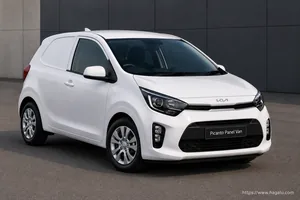
KIA Picanto Panel Van
Eeco vs Picanto Panel Van
Petrol van 2 Variants
KIA Picanto Panel Van from ZAR 249,995
See full specs & who wins →
Suzuki Eeco
VS
Hyundai Grand i10 Cargo
Eeco vs Grand i10 Cargo
Petrol van 2 Variants
Hyundai Grand i10 Cargo from ZAR 260,500
See full specs & who wins →

Also Worth Exploring in South Africa

Different body types — refreshed every visit so you discover something new.

Isuzu D-Max Arctic Trucks AT35 Diesel
Isuzu D-Max Arctic Trucks AT35
Pickup 1 Variant
From R1,211,910
Chery Tiggo 7 Pro Petrol
Chery Tiggo 7 Pro
Suv 1 Variant
From R389,900
BYD ATTO 2 DM-i plug-in hybrid
BYD ATTO 2 DM-i
Suv 2 Variants
From R449,900
Lexus RX petrol, hybrid and plug-in hybrid
Lexus RX
Suv 5 Variants
From R1,516,500

Other Current Suzuki Models in South Africa

Models currently listed for sale in the South African range.

Suzuki Across petrol mild hybrid
Suzuki
Across
SUV 3 Variants
Starting from ZAR 349,900
Suzuki Baleno Petrol
Suzuki
Baleno
Hatchback 4 Variants
Starting from ZAR 269,900
Suzuki Celerio Petrol
Suzuki
Celerio
Hatchback 3 Variants
Starting from ZAR 188,900
Suzuki Dzire Petrol
Suzuki
Dzire
Sedan 3 Variants
Starting from ZAR 229,900

Data verified against: Suzuki Official South Africa Website

More from Suzuki