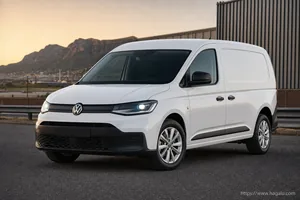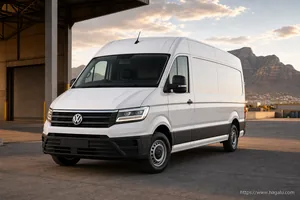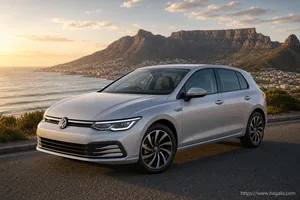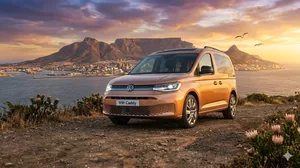
Van Diesel Manual 7-seat

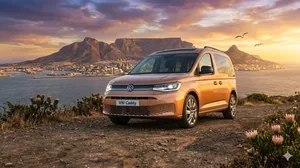
Volkswagen Caddy

Price in South Africa, real specs & fuel economy — 2026

Model year Current Generation SA5 fifth generation on MQB platform – major improvement over previous generation Current version 2021 Body style Van
Volkswagen Caddy is a South African Van range with 3 confirmed local derivatives.
ZAR 722,650
On-road in
ZAR 742,321
Ex-showroom ZAR 722,650
Finance estimate from ZAR 10,117/month Based on 1.6i Manual Ex-showroom basis · approx. 20% deposit · 11.5% p.a. · 60 months · no balloon
Engine:1968cc (2.0L) Torque:300Nm (221 lb-ft) Ground Clearance:144mm (5.7″) Power:81kW (109 bhp) Boot446L (15.7 cu ft)

Hover or tap any pill for a plain-English explanation. Bracketed values show common equivalents (bhp, lb-ft, inches, cu ft).

Fuel Economy km/l · US mpg equivalent
Combined 18.2 km/l (43 mpg)
City 14.8 km/l (35 mpg)
Highway 21.3 km/l (50 mpg)

On-road pricing varies by dealer. Fuel figures are manufacturer claims or source-backed estimates where a separate city/highway cycle is not published; your real numbers depend on traffic, terrain and driving style.

Model Range PDF
₿ Pay with crypto BTC · ETH · USDT · USDC
Estimate monthly vehicle finance for the Volkswagen Caddy in South Africa. The default illustration uses the ex-showroom price, approximately 20% deposit, 11.5% nominal annual interest over 60 months and no balloon payment.

Estimated monthly instalment
ZAR 10,117
Total Interest
ZAR 146,996
Total Payable
ZAR 606,996
Principal Interest

* Illustrative estimate based on the ex-showroom price, approximately 20% deposit, 11.5% nominal annual interest, 60 months and no balloon payment, using the 1.6i Manual. Excludes initiation fees, monthly service fees, credit-life insurance and vehicle insurance. Your lender quotation may differ.

Source-backed vehicle data • Verified by the Hagalu team

Volkswagen Caddy

Volkswagen Caddy is a South African Van range with 3 confirmed local derivatives.

The Volkswagen Caddy is a current South African Van positioned for work, fleet and practical ownership. It is represented locally by 3 confirmed derivatives. Confirmed South African pricing runs from R573 200 to R722 650, so the range covers both the cost-sensitive entry decision and the better-equipped upper grades. That makes it useful to read the range as a real buying ladder, not just as one badge on a showroom menu. The South African range uses Petrol and Diesel power with Manual choices. Available engine references include 2 l. Drivetrain coverage includes 4x2, which is important when separating daily commuter trims from rough-road or load-focused derivatives. The derivative walk is central to the buying decision. Confirmed local versions include 1.6i Manual, 2.0 TDI Manual, and Caddy Maxi 2.0 TDI Manual. The lower grades make sense for buyers who want the body style and warranty position at the lowest realistic monthly cost, while the higher grades are aimed at shoppers who want more cabin comfort, convenience equipment or drivetrain capability from the factory. The packaging facts that shape daily ownership include seating listed as 5 seats and 7; door layouts listed as 5; boot or cargo figures around 191 l and 446 l; payload references around 591 kg and 543 kg; towing references around 1500 kg; ground-clearance references around 144 mm. These are the numbers buyers should compare before choosing between body styles or trims. Cabin and safety equipment should be compared by derivative, because entry grades usually protect affordability while upper grades add the comfort, convenience and driver-assistance items that private buyers notice every day. In South African use, the Caddy has to deal with short urban trips, hot-weather highway running, rougher suburban surfaces and the cost discipline that comes with finance, insurance and tyres. The best version is therefore not automatically the cheapest or the most expensive one. It is the derivative whose engine, transmission, seating, load space and equipment match the owner's normal week. Fleet and business buyers should focus on uptime, load needs and service cover; private buyers should compare comfort, safety equipment, fuel use and resale appeal. The main caution is to avoid treating every Caddy derivative as the same car. Price, transmission, drivetrain, cabin specification and practical measurements can shift the ownership case materially. A careful buyer should shortlist by use case first, then compare the confirmed variant price and specification against rivals in the same South African segment. A useful ownership check for the Volkswagen Caddy is to separate the emotional appeal of the Van shape from the weekly jobs it must do. A local buyer should write down the normal passenger count, parking conditions, monthly distance, holiday luggage, work equipment and the worst road surface the vehicle will realistically see. That list quickly shows whether the entry derivative is enough, whether a middle grade is the sensible comfort point, or whether the top grade adds hardware that will actually be used. With 3 confirmed local derivatives, the smartest comparison is usually within the range first and against rivals second. Finance cost, insurance, tyres and service cover should be checked at the same time as the brochure features, because a small jump in purchase price can become meaningful over a normal ownership term.

Volkswagen Caddy — Quick Facts

Volkswagen Caddy Variants & Prices

Pick up to 3 variants, hit Compare Variants and you'll get a proper side-by-side spec breakdown.

Maximum 3 variants reached
Uncheck one of the selected variants below before choosing another.
Cmp Variant Trim Fuel Transmission Price
1.6i Manual Base Petrol Manual ZAR 573,200
2.0 TDI Manual Mid Diesel Manual ZAR 685,300
Caddy Maxi 2.0 TDI Manual Top Diesel Manual ZAR 722,650
Cmp Variant Trim Fuel Transmission Price
1.6i Manual Base Petrol Manual ZAR 573,200
Cmp Variant Trim Fuel Transmission Price
2.0 TDI Manual Mid Diesel Manual ZAR 685,300
Caddy Maxi 2.0 TDI Manual Top Diesel Manual ZAR 722,650
2 variants selected

Volkswagen Caddy Specifications

Length
4853 mm
Width
1855 mm
Height
1823 mm
Wheelbase
2970 mm
Ground Clearance (Default)
144 mm
Fuel Tank Capacity
50 l
Boot/Cargo Space
446 l
Kerb Weight
1707 kg
Gross Vehicle Weight (GVW)
2250 kg
Payload Capacity
543 kg
Towing Capacity
1500 kg
Seating Capacity
7 seats
Doors
5 doors
Minimum Turning Radius
12.1 m
Driving fit

Where the Volkswagen Caddy Fits Best

A practical view of the buyer and roads this model is best suited to.

Who buys this

The Volkswagen Caddy suits work, fleet and practical ownership. It is strongest for buyers who already know the body format works for their parking, family, business or leisure needs, and who now need to choose the right derivative by monthly cost, transmission, equipment and practical capability. It is less suited to shoppers who only want the lowest advertised price without checking what changes between trims.

City
In city use the Caddy should be judged by visibility, parking effort, stop-start comfort and the way the manual transmission behaves in traffic. A Van with a sensible seating position can make daily errands easier, but buyers should still check wheel size, camera availability and low-speed ride comfort on the exact derivative they intend to buy. For the Caddy, city use also means potholes, tight shopping-centre ramps, speed humps, heat-soaked traffic and short trips where fuel use can rise. The most comfortable derivative is the one that combines the right gearbox response, seating position and parking support with tyre sizes that do not punish everyday surfaces.
Highway
On longer South African routes the Caddy needs stable cruising manners, predictable overtaking and a cabin that does not become tiring after several hours. Fuel and tyre costs should be checked against the exact derivative. Buyers who travel with passengers or cargo should compare the loaded feel and not rely only on solo test-drive impressions. A buyer who drives between provinces or carries family on holiday should also consider noise, seat support, spare-wheel arrangements, overtaking response and how confidently the vehicle holds speed when loaded. Those details often separate two trims that look similar on paper.
Off-Road
The Caddy is best treated as a road-biased vehicle for tar, suburban streets and occasional well-kept gravel. It can handle normal South African surface changes when driven sensibly, but buyers who regularly travel on sand, mud or rocky access roads should choose a purpose-built SUV or bakkie instead. Where rougher roads are part of ownership, the buyer should check tyres, underbody clearance, approach to traction control and recovery practicality before relying on the body style. If the route is mainly tar, comfort and running costs should take priority over unused off-road image.

Volkswagen Caddy — Should You Buy It?

Volkswagen Caddy is strongest when the chosen derivative matches the buyer's real Van use case.

The Volkswagen Caddy is not a one-line recommendation; it is a range that needs to be matched carefully to the buyer. Confirmed South African pricing runs from R573 200 to R722 650, so the range covers both the cost-sensitive entry decision and the better-equipped upper grades. The sensible approach is to start with body style and seating or load requirements, then choose the variant whose price, transmission, drivetrain and equipment fit the weekly routine. That keeps the decision grounded in ownership reality rather than showroom appeal. The fairest verdict on the Volkswagen Caddy is therefore use-case driven. It can be a strong South African choice when the buyer chooses the correct derivative for the intended mix of city driving, freeway work, passengers, cargo and rough-road exposure. It becomes less convincing when bought only for styling or badge appeal without checking the practical numbers and ownership costs that will matter after delivery.

What's Good
  • Clear local range structure
  • Confirmed South African variant coverage
  • Useful price ladder for comparison
  • Powertrain choices documented by derivative
  • Useful load and work-focused body choices
  • Ownership cover can be compared by trim
  • Good fit for business, fleet or utility use
  • Specification depth supports detailed comparisons
  • Strongest when bought by need rather than badge
Watch Out For
  • Best value depends heavily on trim choice
  • Upper grades need careful price justification
  • Some equipment can vary by derivative
  • Real-world fuel use depends on load and route
  • Tyre and insurance costs should be checked
  • Loaded ride and payload needs must be checked
  • Entry versions may miss comfort features
  • Stock and colour availability can change
  • Buyers must compare rivals at the same price

Volkswagen Caddy FAQs

Current recommended retail prices for the Volkswagen Caddy run from R573,200 to R722,650, depending on the derivative. Compare the exact trim before calculating finance because options, insurance and dealer charges can change the final monthly cost.

The current South African range comprises 1.6i Manual, 2.0 TDI Manual, Caddy Maxi 2.0 TDI Manual. Prices and equipment are shown by derivative so buyers can compare the actual local range rather than specifications from another market.

The listed ground clearance for the Volkswagen Caddy is 144 mm. Use that number as a practical comparison point against similar cars, especially if you regularly deal with steep driveways, gravel roads or uneven parking areas.

The Volkswagen Caddy engine specification depends on derivative: 1.6i Manual: 1598 cc, 81 kW (109 bhp); 2.0 TDI Manual, Caddy Maxi 2.0 TDI Manual: 1968 cc, 81 kW (109 bhp). Compare the exact trim because its gearbox and equipment may also differ.

Combined fuel-economy figures differ across the Volkswagen Caddy range: 1.6i Manual: 14.9 km/l; 2.0 TDI Manual, Caddy Maxi 2.0 TDI Manual: 18.2 km/l.

The Volkswagen Caddy suits work, fleet and practical ownership. It is strongest for buyers who already know the body format works for their parking, family, business or leisure needs, and who now need to choose the right derivative by monthly cost, transmission, equipment and practical capability. It is less suited to shoppers who only want the lowest advertised price without checking what changes between trims.

In city use the Caddy should be judged by visibility, parking effort, stop-start comfort and the way the manual transmission behaves in traffic. A Van with a sensible seating position can make daily errands easier, but buyers should still check wheel size, camera availability and low-speed ride comfort on the exact derivative they intend to buy. For the Caddy, city use also means potholes, tight shopping-centre ramps, speed humps, heat-soaked traffic and short trips where fuel use can rise. The most comfortable derivative is the one that combines the right gearbox response, seating position and parking support with tyre sizes that do not punish everyday surfaces.

On longer South African routes the Caddy needs stable cruising manners, predictable overtaking and a cabin that does not become tiring after several hours. Fuel and tyre costs should be checked against the exact derivative. Buyers who travel with passengers or cargo should compare the loaded feel and not rely only on solo test-drive impressions. A buyer who drives between provinces or carries family on holiday should also consider noise, seat support, spare-wheel arrangements, overtaking response and how confidently the vehicle holds speed when loaded. Those details often separate two trims that look similar on paper.

Compare Volkswagen Caddy with Similar Vans

Tap any card to see a full head-to-head — specs, scores and a clear verdict on which one's worth your money.

Volkswagen Caddy
VS
LDV G10+ Van
Caddy vs G10+ Van
Diesel Van 1 Variant
LDV G10+ Van from ZAR 565,200
See full specs & who wins →
Volkswagen Caddy
VS
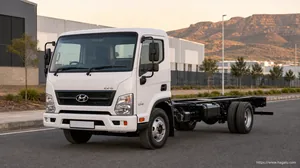
Hyundai EX-8 Chassis Cab
Caddy vs EX-8 Chassis Cab
Diesel Van 1 Variant
Hyundai EX-8 Chassis Cab from ZAR 581,900
See full specs & who wins →
Volkswagen Caddy
VS
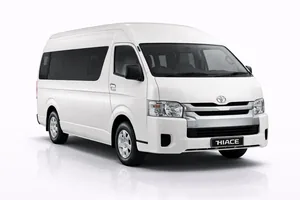
Toyota Hiace Ses'fikile
Caddy vs Hiace Ses'fikile
Diesel Van 1 Variant
Toyota Hiace Ses'fikile from ZAR 549,300
See full specs & who wins →
Volkswagen Caddy
VS
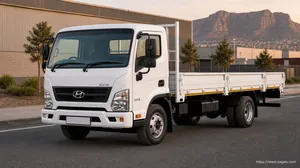
Hyundai EX-8 Dropside
Caddy vs EX-8 Dropside
Diesel Van 1 Variant
Hyundai EX-8 Dropside from ZAR 656,500
See full specs & who wins →
Volkswagen Caddy
VS
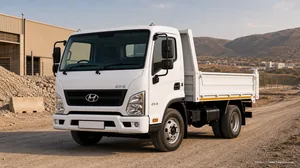
Hyundai EX-8 Tipper
Caddy vs EX-8 Tipper
Diesel Van 1 Variant
Hyundai EX-8 Tipper from ZAR 679,500
See full specs & who wins →

Also Worth Exploring in South Africa

Different body types — refreshed every visit so you discover something new.

GWM P500 Diesel
GWM P500
Pickup 3 Variants
From R799,900
Suzuki Across petrol mild hybrid
Suzuki Across
Suv 3 Variants
From R349,900
Foton Tunland G7 Double Cab Diesel
Foton Tunland G7 Double Cab
Pickup 5 Variants
From R399,900
MG HS Petrol
MG HS
Suv 4 Variants
From R499,900

Other Current Volkswagen Models in South Africa

Models currently listed for sale in the South African range.

Volkswagen Amarok Diesel
Volkswagen
Amarok
Pickup 16 Variants
Starting from ZAR 596,800
Volkswagen Caddy Cargo Petrol
Volkswagen
Caddy Cargo
Van 3 Variants
Starting from ZAR 466,700
Volkswagen Crafter Diesel
Volkswagen
Crafter
Van 11 Variants
Starting from ZAR 861,200
Volkswagen Golf 1.4 TSI Petrol
Volkswagen
Golf 1.4 TSI
Hatchback 4 Variants
Starting from ZAR 580,900
Archive

Discontinued & Earlier Volkswagen Models

Historical model pages remain available without competing with vehicles currently on sale.

Full Volkswagen range
Volkswagen Golf discontinued model reference in South Africa Golf Discontinued Hatchback Volkswagen Tiguan Allspace discontinued model reference in South Africa Tiguan Allspace Discontinued SUV

Data verified against: Volkswagen Official South Africa Website

More from Volkswagen