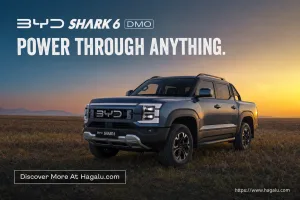
The BYD SHARK 6 DMO is a five-seat double-cab pickup that combines electric drive, a turbocharged petrol engine and all-wheel drive. Premium launched locally in 2025 and is currently listed at R989,900. Performance joined the range in July 2026 at R1,149,900, bringing a separate 2.0-litre turbocharged powertrain, 350 kW and 700 Nm. The two derivatives share the SHARK's plug-in-hybrid idea but use slightly different published battery figures: 29.58 kWh for Premium and 29.6 kWh for Performance. They also serve different workloads. Premium is the lifestyle-led entry with a published 321 kW system and 2,500 kg braked-towing capacity. Performance increases towing to 3,500 kg and is the derivative for buyers whose trailers genuinely require that rating. A tow limit is not the only number that matters: payload, tow-ball mass, combined vehicle-and-trailer limits, trailer brakes and licence requirements must all be verified from the specific derivative's documentation. Performance's current launch specification includes an 80 km electric range claim, 640 km combined WLTP range, 5.5-second 0-100 km/h time, 7 kW AC charging and 55 kW DC charging. Premium's official sheet lists an 85 km WLTP electric claim. Real electric distance changes with load, tyres, surface, weather, accessory use and trailer drag. Charging regularly is necessary to obtain the quiet low-speed operation and fuel-saving benefit that distinguish this pickup from a conventional petrol double cab. Owners who never plug in will carry a substantial battery without exploiting it fully. The body and chassis are designed around double-cab versatility. Performance is published with 230 mm ground clearance, approach, departure and breakover angles of 31, 19.3 and 17 degrees, a 700 mm wading figure and 265/65 R18 tyres. Those are useful off-road indicators, but they do not remove the need to inspect water depth, current, underbody obstacles and recovery options. Electronic all-wheel drive can react quickly, while the instant response of electric motors must be applied gently on loose surfaces. Premium's specification must be read separately rather than assuming every Performance value transfers to it. Inside, the SHARK 6 aims to give passengers an SUV-like environment rather than a stripped work-truck cabin. That helps family touring and daily use, though exterior size and turning space remain double-cab realities. A showroom check should cover rear-seat comfort, child-seat access, load-bin dimensions, tie-down points, tonneau compatibility and camera visibility with a towbar fitted. Accessories can alter payload, airflow, warranty obligations and insurance, so every planned canopy, suspension change or electrical addition should be discussed before installation. Highway performance is exceptionally strong. Even the Premium's 321 kW headline is far beyond basic transport requirements, and the Performance's 350 kW and 700 Nm demand restraint. All-wheel drive assists traction but cannot shorten physics. A loaded pickup or attached trailer needs conservative following distances, correct tyre pressures and speed appropriate to conditions. Owners should confirm how commercial use, towing, water exposure, modifications and charging equipment affect cover. The SHARK 6 is compelling for a buyer who needs a double cab and can make use of plug-in charging. Premium is the rational lifestyle choice. Performance is justified by its 3,500 kg tow rating, stronger 2.0-litre system and published terrain figures, not simply by being the newer flagship. BYD South Africa's published warranty table lists five-year or 100,000 km complete-vehicle cover, eight-year or 200,000 km power-battery cover and five-year or 100,000 km drive-unit cover for the SHARK 6. BYD South Africa separately publishes roadside-assistance coverage for five years or 100,000 km, whichever comes first. BYD's model-specific South African booklet includes a five-year or 100,000 km maintenance plan covering the listed brake, wiper and other wear items; buyers should follow its schedule and exclusions.