Pickup Diesel Manual RWD 2-seat

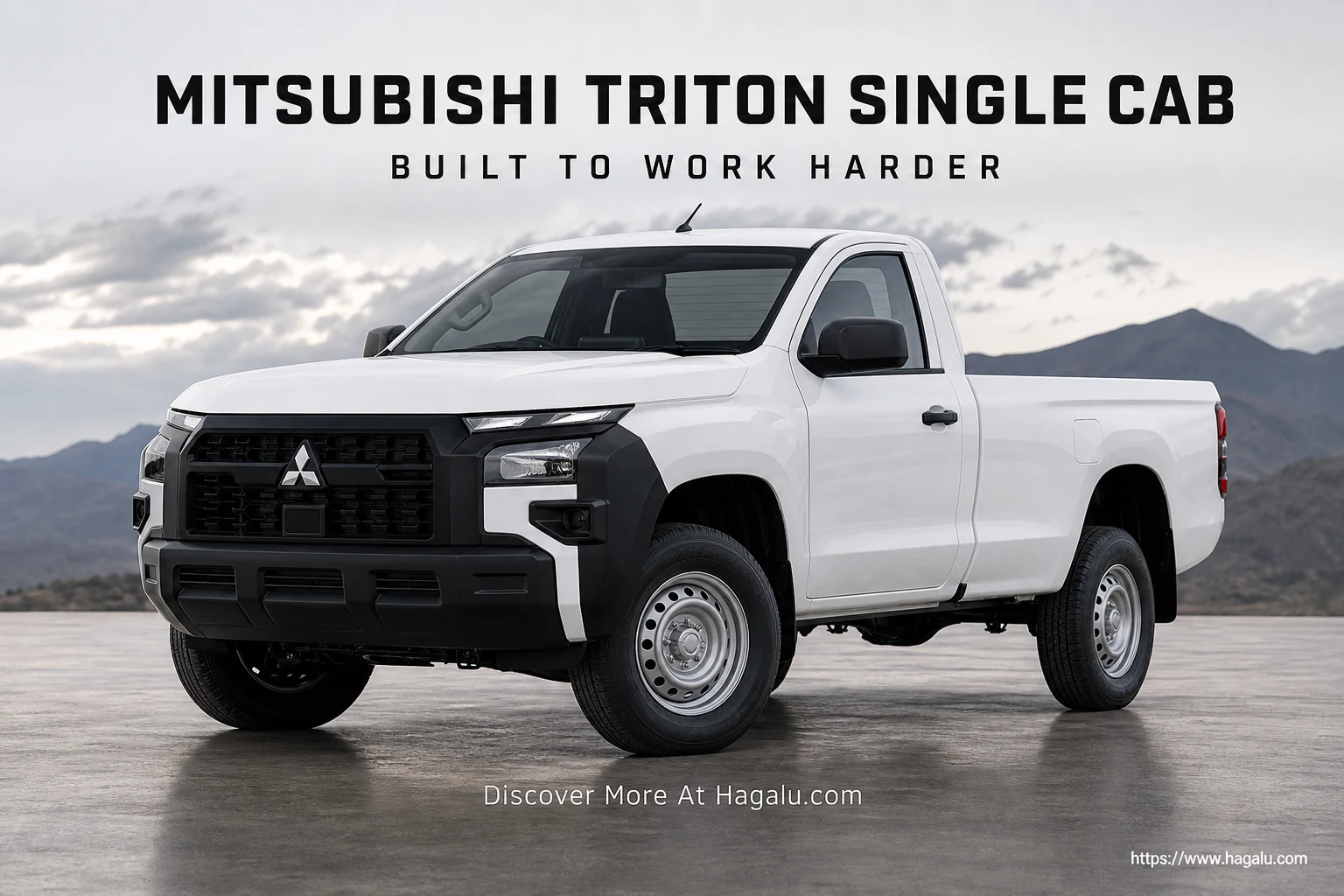
Mitsubishi Triton Single Cab

Price in South Africa, real specs & fuel economy — 2026

Model year 2026 Generation Sixth-generation Triton Current version Current specification Body style Single-cab pickup
The Mitsubishi Triton Single Cab is a current South African one-ton single-cab pickup offered in 2 clearly positioned derivatives.
ZAR 499,990
On-road in
ZAR 516,989
Ex-showroom ZAR 499,990
Engine:2442cc (2.4L) Torque:200Nm (148 lb-ft) Ground Clearance:200mm (7.9″) Power:81kW (109 bhp) Boot1904L (67.2 cu ft)

Hover or tap any pill for a plain-English explanation. Bracketed values show common equivalents (bhp, lb-ft, inches, cu ft).

Fuel Economy km/l · US mpg equivalent
Combined 12.5 km/l (29 mpg)
City 10 km/l (24 mpg)
Highway 14.4 km/l (34 mpg)

On-road pricing varies by dealer. Fuel figures are manufacturer claims or source-backed estimates where a separate city/highway cycle is not published; your real numbers depend on traffic, terrain and driving style.

Model Range PDF
₿ Pay with crypto BTC · ETH · USDT · USDC
Monthly EMI
Total Interest
Total Payable
Principal Interest

* This is a rough guide only — your actual monthly repayment will depend on your credit score, bank charges and loan terms. Get a proper quote from your bank or dealer before committing.

Source-backed vehicle data • Verified by the Hagalu team

Mitsubishi Triton Single Cab

The Mitsubishi Triton Single Cab is a current South African one-ton single-cab pickup offered in 2 clearly positioned derivatives.

The Mitsubishi Triton Single Cab range is a current South African one-ton single-cab pickup with a published retail position from R499,990. Its core specification is easy to explain: 81 kW, 200 Nm, 2 seats, a 75-litre tank and 200 mm of default ground clearance. Those numbers help a buyer answer the first questions before looking at styling. Power describes how quickly the engine can do work, while torque is the turning force that helps the vehicle move with passengers, cargo or a trailer. Ground clearance is the space beneath the vehicle; more clearance can help on rough entrances, but it does not by itself create four-wheel-drive ability. The current South African derivative range is separated clearly from older vehicles, helping buyers compare the relevant model and trim without confusing it with a previous generation. Equipment and pricing differ by trim, so buyers should compare the exact derivative and ask the dealer to confirm any feature that matters before signing. Published combined consumption gives buyers a useful comparison point, while the city and highway planning figures help set a realistic fuel budget. Neither is a promise for every journey. Real driving varies with speed, traffic, weather, altitude, tyre pressure, payload and driving style. The correct choice begins with the actual job: count people, measure cargo, confirm towing mass where relevant and test the route that will be driven most often. Triton Single Cab is aimed at the working owner who needs a durable load carrier. Buyers should compare the written derivative specification rather than assuming every trim has the same cameras, airbags, upholstery, screen or four-wheel-drive hardware. A dealer quotation should confirm the on-road amount, paint premium, registration, finance charges and fitted accessories. A test drive on familiar roads remains essential because seat comfort, visibility, ride quality and control feel cannot be decided from numbers alone.

Mitsubishi Triton Single Cab — Quick Facts

Mitsubishi Triton Single Cab Variants & Prices

Pick up to 3 variants, hit Compare Variants and you'll get a proper side-by-side spec breakdown.

Maximum 3 variants reached
Uncheck one of the selected variants below before choosing another.
Cmp Variant Trim Fuel Transmission Price
2.4L 4x2 GL M/T Workhorse Diesel Manual ZAR 499,990
2.4L 4x4 GL M/T Workhorse Diesel Manual ZAR 559,990
Cmp Variant Trim Fuel Transmission Price
2.4L 4x2 GL M/T Workhorse Diesel Manual ZAR 499,990
2.4L 4x4 GL M/T Workhorse Diesel Manual ZAR 559,990
2 variants selected

Mitsubishi Triton Single Cab Specifications

Length
5320 mm
Width
1865 mm
Height
1700 mm
Wheelbase
3130 mm
Ground Clearance (Default)
200 mm
Ground Clearance (With Full Seating Load)
Not Officially Disclosed
Fuel Tank Capacity
75 l
Boot/Cargo Space
1904 l
Kerb Weight
1625 kg
Gross Vehicle Weight (GVW)
2570 kg
Payload Capacity
945 kg
Towing Capacity
0 kg
Seating Capacity
2 seats
Number of Rows
1 rows
Doors
2 doors
Minimum Turning Radius
6.35 m
Front Headroom
1007 mm
Rear Headroom
Not Applicable
Front Legroom
1059 mm
Rear Legroom
Not Applicable
Driving fit

Where the Mitsubishi Triton Single Cab Fits Best

A practical view of the buyer and roads this model is best suited to.

Who buys this

The best buyer for the Triton Single Cab range knows the weekly job before choosing. Start by listing the largest normal passenger group, the heaviest regular cargo, the longest repeated trip and any trailer. A family should place child seats in the real vehicle, check access to each row and load the stroller or luggage it actually uses. A business owner should compare payload, gross vehicle mass and towing limits rather than judging capability from body size. The gross figure is the maximum permitted mass of vehicle, occupants and payload together; adding accessories reduces the remaining payload. A working owner who needs a durable load carrier should also ask for an insurance quotation and a written service schedule. The published 200 mm ground-clearance figure describes the vehicle in its normal condition. With passengers and luggage aboard, drivers should allow extra room over ridges, steep entrances and uneven tracks because real clearance can reduce under load. Buyers who share the vehicle should all test steering reach, seat travel, visibility and parking aids. The correct derivative is the one whose sourced hardware fits the job without paying for capability that will never be used or omitting safety and convenience that matters every day.

City
In town, the Triton Single Cab range should be judged by visibility, turning space, low-speed response, braking feel and how easily every passenger enters. The recorded turning radius, camera and sensor specifications matter in parking areas, while length and width matter in a home garage. A small child can understand the practical rule: a longer vehicle needs more room to turn, just as a long school bus does. The claimed combined fuel figure is a comparison tool, not a promise for congested traffic. Idling, short cold trips and repeated acceleration normally increase litres per 100 km. Use the city-mileage figure as a planning value, then track actual fill-to-fill use. Keep tyres at the door-label pressure, remove unnecessary mass and operate phone and climate controls before moving. Features and driver aids vary by derivative, so confirm the chosen trim rather than assuming every vehicle carries the same equipment. If the driver relies on a camera, still look around: lenses cannot see every child, bicycle, kerb or low object.
Highway
On a highway, the important questions are overtaking reserve, stability, seat support, luggage security and realistic range. The 81 kW and 200 Nm figures describe the engine, but mass and load determine how lively the complete vehicle feels. Leave a larger passing gap when fully loaded and remember that strong wind, hills and roof cargo increase fuel use. Use the highway mileage and range figures as planning guidance alongside the published combined consumption, and keep a margin for wind, hills, traffic and a full passenger or cargo load. Keep an emergency fuel reserve and plan breaks before fatigue builds. Check tyre load ratings before towing or carrying maximum payload, and never add the maximum trailer and maximum payload without confirming gross combination limits. Driver aids support attention but do not replace it. Even when adaptive cruise or lane alerts are fitted, the driver remains responsible for speed, following distance and steering.
Off-Road
For rough roads, read the drivetrain and clearance rows together. A front- or rear-wheel-drive derivative can use a maintained gravel road slowly, but it is not transformed into a technical off-roader by an SUV shape. A selectable 4WD derivative adds traction hardware; low range, a differential lock and terrain modes must still be confirmed by exact trim. Approach, departure and breakover angles describe whether bumpers or the middle of the vehicle may touch an obstacle. Only a vehicle with a stated wading depth should be considered for shallow water, and even then depth, current, surface grip and hidden damage must be assessed carefully. Protect tyres on sharp stone, slow before corrugations and do not enter a route without recovery planning. A heavily loaded vehicle can sit lower than an empty one, so leave extra clearance over crests, ruts and steep entrances.

Mitsubishi Triton Single Cab — Should You Buy It?

4.3/5
Mitsubishi Triton Single Cab South Africa expert rating

Mitsubishi Triton Single Cab South Africa receives 4.3 out of 5 after weighing the current South African range's safety equipment, value, practicality, ownership cover, powertrain suitability and comfort technology. This is a transparent Hagalu desk-research rating based on Mitsubishi's published local material; Hagalu did not road-test this exact model.

Desk research: Scored from verified published sources and Hagalu's South African buyer analysis; this vehicle was not road-tested for this review. This is a Hagalu editorial score, not a customer rating.

Safety 4.3/5 · 20%
4.3/5
Value 4.2/5 · 20%
4.2/5
Practicality 4.4/5 · 20%
4.4/5
Ownership 4.3/5 · 15%
4.3/5
Powertrain suitability 4.2/5 · 15%
4.2/5
Comfort & technology 4.2/5 · 10%
4.2/5

Evidence reviewed: Hagalu maintains the detailed source record internally so this page does not promote third-party vehicle websites.

How this score is calculated · Methodology v1.0

A practical Triton Single Cab range that should be selected by exact derivative and job.

The Mitsubishi Triton Single Cab range is a coherent choice when its exact derivative hardware matches the buyer's route and load. Its strongest case combines a clear South African price, the published 81 kW/200 Nm output and a clearly described ownership package. The limits are equally important: claimed consumption changes in real use, equipment differs by trim, and the absence of a manufacturer-rated feature must not be replaced by a guess. For a shopper, the sensible process is simple. Shortlist the derivative, read the full specification, test the real seats and cargo, drive on a representative road, obtain an itemised quote and confirm warranty exclusions in writing. That process is more useful than choosing from a badge alone. The current derivative list keeps the available choices together, while older or different-generation vehicles remain separate so that prices, equipment and capability are not confused.

What's Good
  • Clear current South African range
  • Published South African pricing
  • Broad equipment and specification coverage
  • Clear power and torque figures
  • Current derivative choices clearly separated
  • Useful dimensions for everyday planning
  • Ownership package documented
  • Safety equipment mapped by trim
  • Trim equipment is easy to compare
Watch Out For
  • Real fuel use varies
  • Load and accessories can reduce clearance
  • Equipment differs by trim
  • Accessories can reduce payload
  • Paint and on-road costs can change
  • Performance varies with load and conditions
  • Road tests remain essential
  • Driver aids do not replace attention
  • Live price should be reconfirmed

Mitsubishi Triton Single Cab FAQs

Current recommended retail prices for the Mitsubishi Triton Single Cab run from R499,990 to R559,990, depending on the derivative. Compare the exact trim before calculating finance because options, insurance and dealer charges can change the final monthly cost.

The current South African range comprises 2.4L 4x2 GL M/T, 2.4L 4x4 GL M/T. Prices and equipment are shown by derivative so buyers can compare the actual local range rather than specifications from another market.

Ground clearance differs across the Mitsubishi Triton Single Cab range: 2.4L 4x2 GL M/T: 200 mm; 2.4L 4x4 GL M/T: 221 mm. Compare the exact derivative for steep driveways, gravel roads and uneven parking areas.

The listed engine capacity for the Mitsubishi Triton Single Cab is 2442 cc, with output shown as 81 kW (109 bhp). Where a model has more than one derivative, compare the specific variant because fuel type, gearbox and drivetrain can change the way it drives.

The combined fuel-economy figure shown for the Mitsubishi Triton Single Cab is around 12.5 km/l.

The best buyer for the Triton Single Cab range knows the weekly job before choosing. Start by listing the largest normal passenger group, the heaviest regular cargo, the longest repeated trip and any trailer. A family should place child seats in the real vehicle, check access to each row and load the stroller or luggage it actually uses. A business owner should compare payload, gross vehicle mass and towing limits rather than judging capability from body size. The gross figure is the maximum permitted mass of vehicle, occupants and payload together; adding accessories reduces the remaining payload. A working owner who needs a durable load carrier should also ask for an insurance quotation and a written service schedule. The published 200 mm ground-clearance figure describes the vehicle in its normal condition. With passengers and luggage aboard, drivers should allow extra room over ridges, steep entrances and uneven tracks because real clearance can reduce under load. Buyers who share the vehicle should all test steering reach, seat travel, visibility and parking aids. The correct derivative is the one whose sourced hardware fits the job without paying for capability that will never be used or omitting safety and convenience that matters every day.

In town, the Triton Single Cab range should be judged by visibility, turning space, low-speed response, braking feel and how easily every passenger enters. The recorded turning radius, camera and sensor specifications matter in parking areas, while length and width matter in a home garage. A small child can understand the practical rule: a longer vehicle needs more room to turn, just as a long school bus does. The claimed combined fuel figure is a comparison tool, not a promise for congested traffic. Idling, short cold trips and repeated acceleration normally increase litres per 100 km. Use the city-mileage figure as a planning value, then track actual fill-to-fill use. Keep tyres at the door-label pressure, remove unnecessary mass and operate phone and climate controls before moving. Features and driver aids vary by derivative, so confirm the chosen trim rather than assuming every vehicle carries the same equipment. If the driver relies on a camera, still look around: lenses cannot see every child, bicycle, kerb or low object.

On a highway, the important questions are overtaking reserve, stability, seat support, luggage security and realistic range. The 81 kW and 200 Nm figures describe the engine, but mass and load determine how lively the complete vehicle feels. Leave a larger passing gap when fully loaded and remember that strong wind, hills and roof cargo increase fuel use. Use the highway mileage and range figures as planning guidance alongside the published combined consumption, and keep a margin for wind, hills, traffic and a full passenger or cargo load. Keep an emergency fuel reserve and plan breaks before fatigue builds. Check tyre load ratings before towing or carrying maximum payload, and never add the maximum trailer and maximum payload without confirming gross combination limits. Driver aids support attention but do not replace it. Even when adaptive cruise or lane alerts are fitted, the driver remains responsible for speed, following distance and steering.

Compare Mitsubishi Triton Single Cab with Similar Pickups

Tap any card to see a full head-to-head — specs, scores and a clear verdict on which one's worth your money.

Mitsubishi Triton Single Cab
VS
Mahindra S4 Game Viewer
Triton Single Cab vs S4 Game Viewer
Diesel Pickup 2 Variants
Mahindra S4 Game Viewer from ZAR 503,749
See full specs & who wins →
Mitsubishi Triton Single Cab
VS
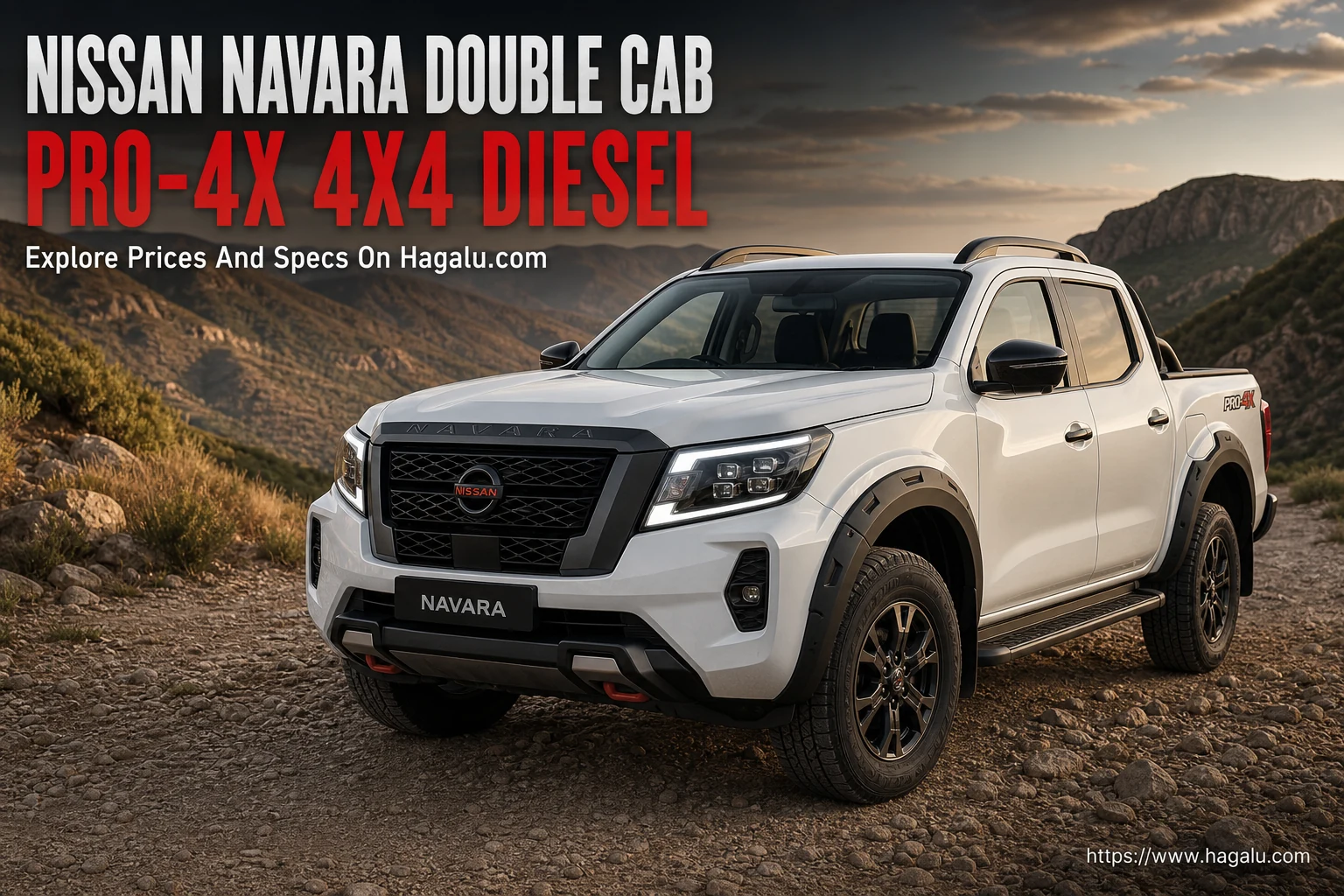
Nissan Navara Double Cab
Triton Single Cab vs Navara Double Cab
Diesel Pickup 13 Variants
Nissan Navara Double Cab from ZAR 493,000
See full specs & who wins →
Mitsubishi Triton Single Cab
VS
Mahindra S6 Mining
Triton Single Cab vs S6 Mining
Diesel Pickup 3 Variants
Mahindra S6 Mining from ZAR 478,649
See full specs & who wins →
Mitsubishi Triton Single Cab
VS
Isuzu D-Max Extended Cab
Triton Single Cab vs D-Max Extended Cab
Diesel Pickup 4 Variants
Isuzu D-Max Extended Cab from ZAR 533,690
See full specs & who wins →
Mitsubishi Triton Single Cab
VS
Isuzu D-Max Single Cab
Triton Single Cab vs D-Max Single Cab
Diesel Pickup 5 Variants
Isuzu D-Max Single Cab from ZAR 463,860
See full specs & who wins →

Also Worth Exploring in South Africa

Different body types — refreshed every visit so you discover something new.

Volkswagen Golf 1.4 TSI Petrol
Volkswagen Golf 1.4 TSI
Hatchback 4 Variants
From R580,900
GWM Jolion Pro Limited Petrol
GWM Jolion Pro Limited
Suv 1 Variant
From R431,450
Suzuki Fronx Petrol
Suzuki Fronx
Suv 4 Variants
From R303,900
Suzuki Across petrol mild hybrid
Suzuki Across
Suv 3 Variants
From R349,900

Other Current Mitsubishi Models in South Africa

Models currently listed for sale in the South African range.

Mitsubishi Destinator Petrol
Mitsubishi
Destinator
SUV 2 Variants
Starting from ZAR 489,990
Mitsubishi Eclipse Cross Petrol
Mitsubishi
Eclipse Cross
SUV 3 Variants
Starting from ZAR 534,990
Mitsubishi Outlander Petrol
Mitsubishi
Outlander
SUV 5 Variants
Starting from ZAR 759,995
Mitsubishi Outlander Sport Petrol
Mitsubishi
Outlander Sport
SUV 2 Variants
Starting from ZAR 449,990

Data verified against: Mitsubishi Official South Africa Website

More from Mitsubishi