BMW M3 Sedan
M3 Competition Sedan with M xDrive
Read this variant's specsThe best cabin feature is often the one you stop noticing because it works so naturally. Try the controls, sightlines and seats—not just the screen's diagonal size.
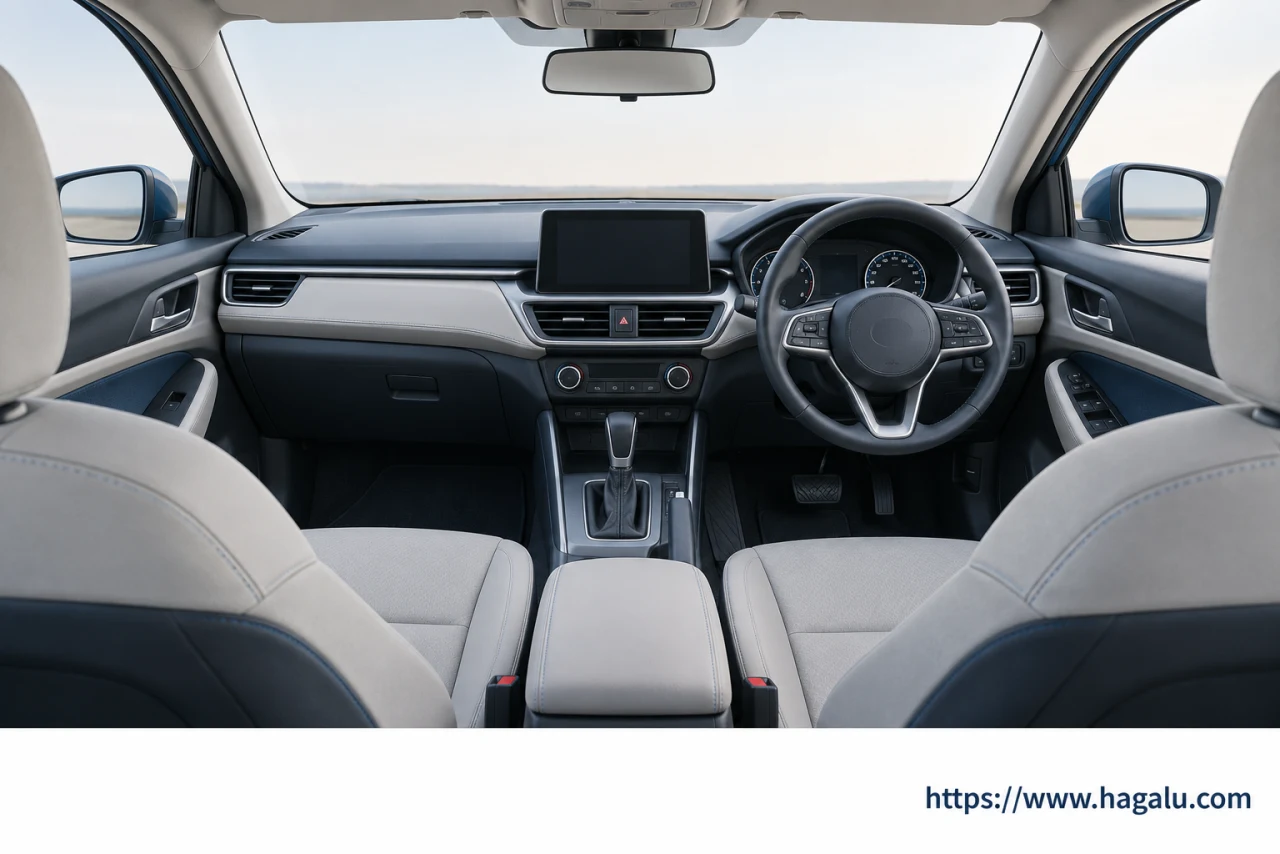
Start hereThe system does not pour 'cold' into the car. It transfers heat away from the air you want to cool.

A conventional vapour-compression circuit uses a compressor, condenser, expansion device and evaporator. Refrigerant releases heat at the condenser and absorbs heat at the evaporator. The blower moves air; it is not the same component as the compressor.
Demisting can combine cooling/dehumidification with reheating and controlled airflow. An EV may use a heat pump for some thermal functions, but that is not fitted to every electric car. The refrigerant, oil, electrical supply and service procedure are system-specific.
Start hereManual controls ask you to adjust the system. Automatic climate control tries to maintain your chosen temperature.
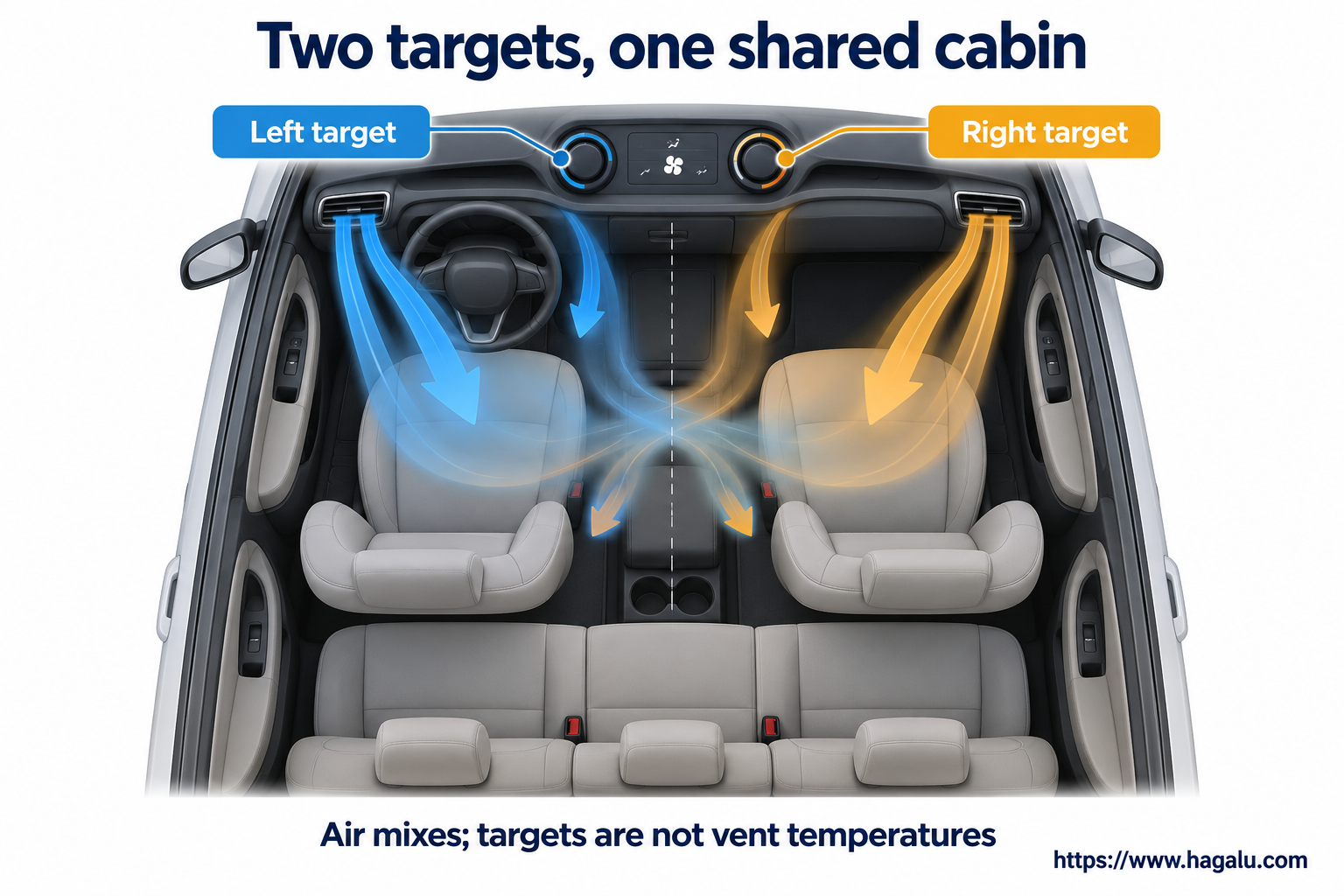
Automatic control uses sensor information and actuators to manage functions such as temperature mixing and fan operation. A selected temperature is a target, not the temperature of every vent at every moment. Dual-zone systems can target different conditions for two zones, but air still mixes in a shared cabin.
More zones do not prove stronger cooling or better comfort. Outlet location, solar load, cabin design, controls and rear-passenger provision matter. Test the physical control layout and safe visibility of essential settings rather than assuming a touchscreen interface is inherently better.
Start hereThe light source is one ingredient. Where the beam goes is just as important.
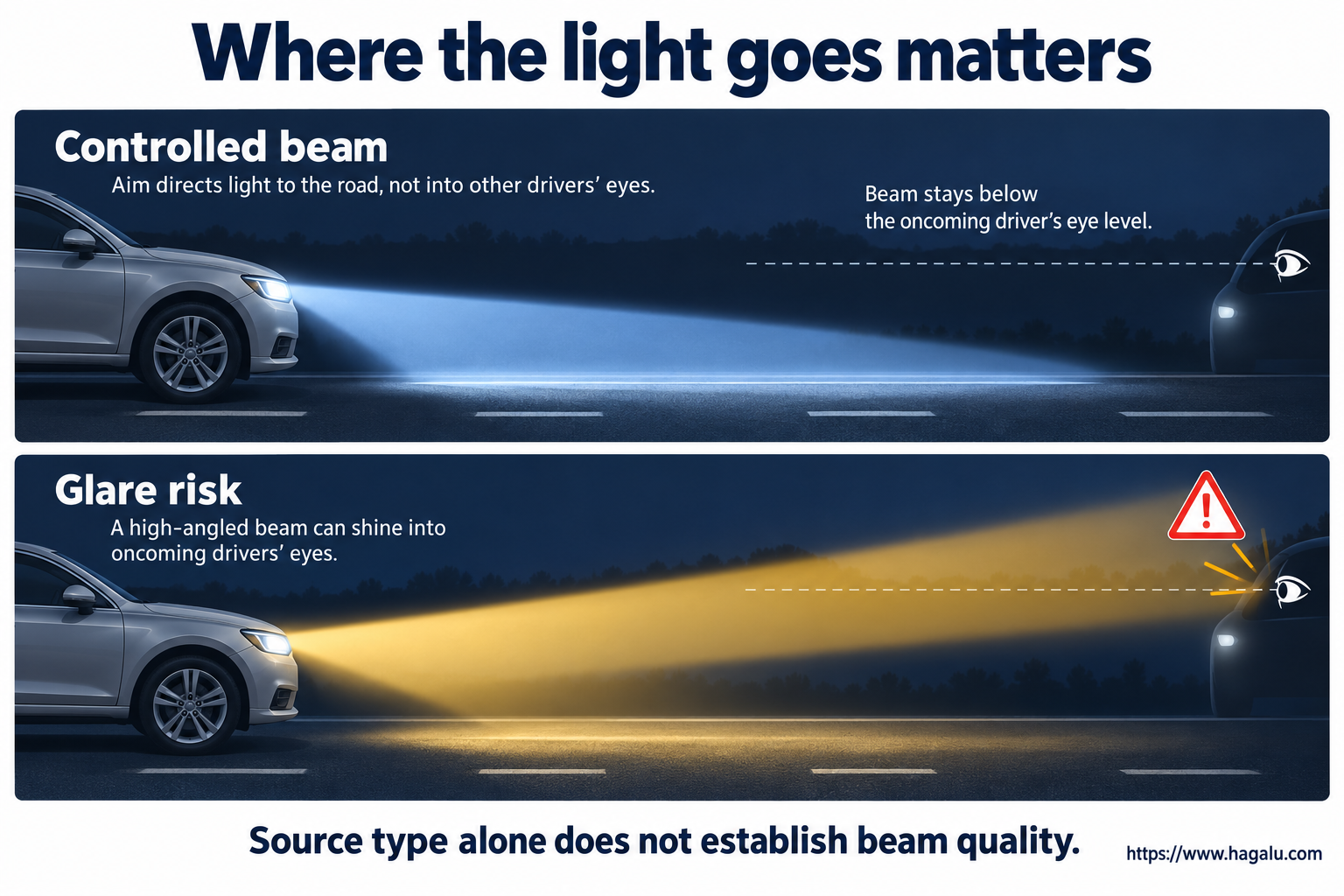
Halogen, LED and other light sources use different technologies, but optics, aiming, beam control and the complete approved assembly determine useful road illumination and glare. An LED badge does not prove every function uses LEDs or that a replacement bulb is approved for that lamp.
Automatic high beams switch supported beam settings under detected conditions; adaptive or matrix functions require their own hardware and control. Dipped-beam patterns are market-specific. Keep lenses clear and use the vehicle's inspection and aiming procedures instead of adding unapproved lighting.
Start hereA camera can help you look, but it cannot turn the whole car into a transparent window.
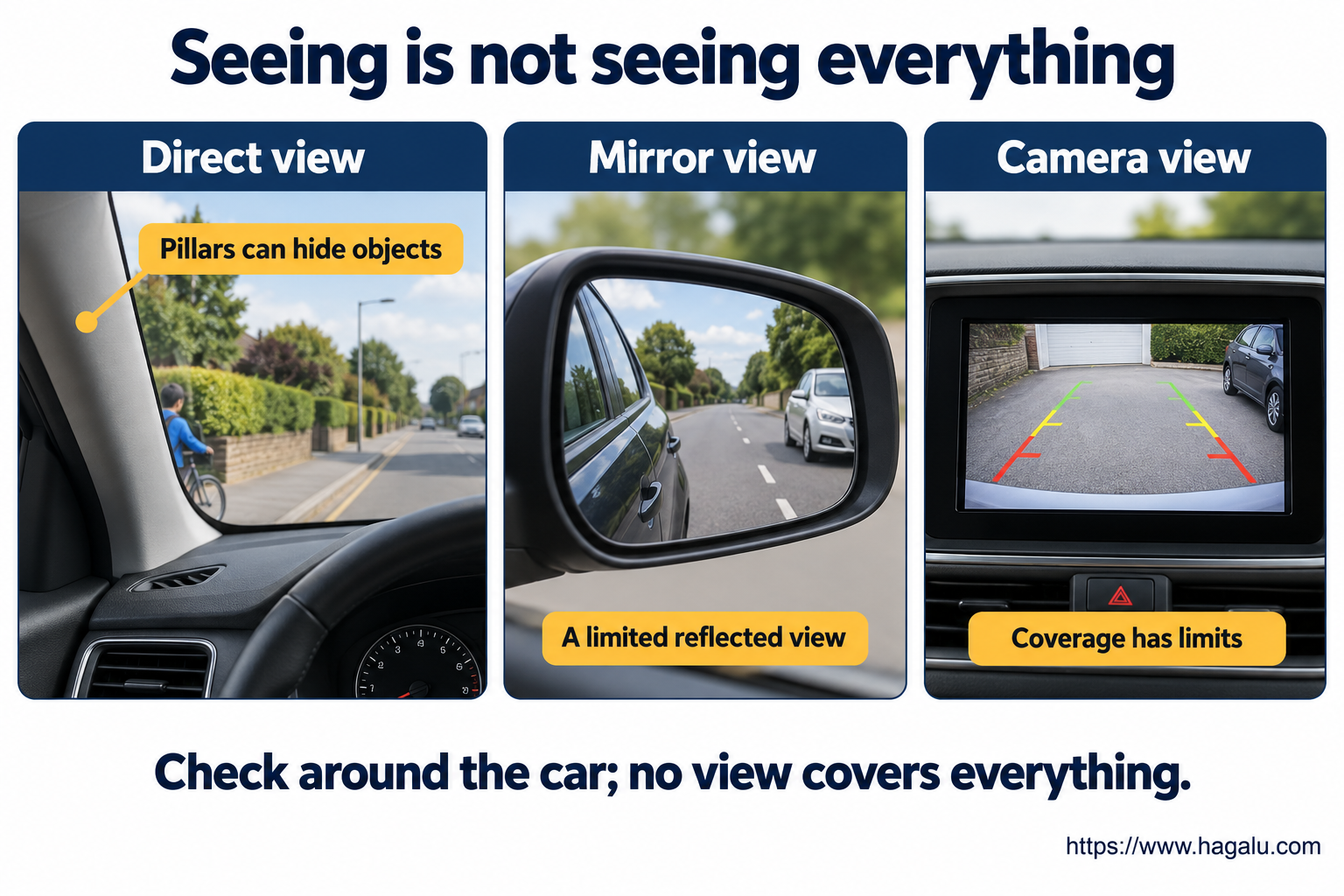
Driver eye position, seat height, pillar width, mirror adjustment and body shape affect direct sightlines. A stitched surround image can distort distance and conceal small or elevated objects. Camera coverage, sensors and automatic intervention are separate features.
Try a comfortable driving position before judging visibility. Check junction views, mirror reach, rear-quarter sightlines and close manoeuvring at low speed in a safe area. Never set mirrors or interact with a screen while moving merely to reproduce this guide's illustration.
Start hereConnecting a phone for music does not mean its navigation apps appear on the screen, or that its battery is charging.
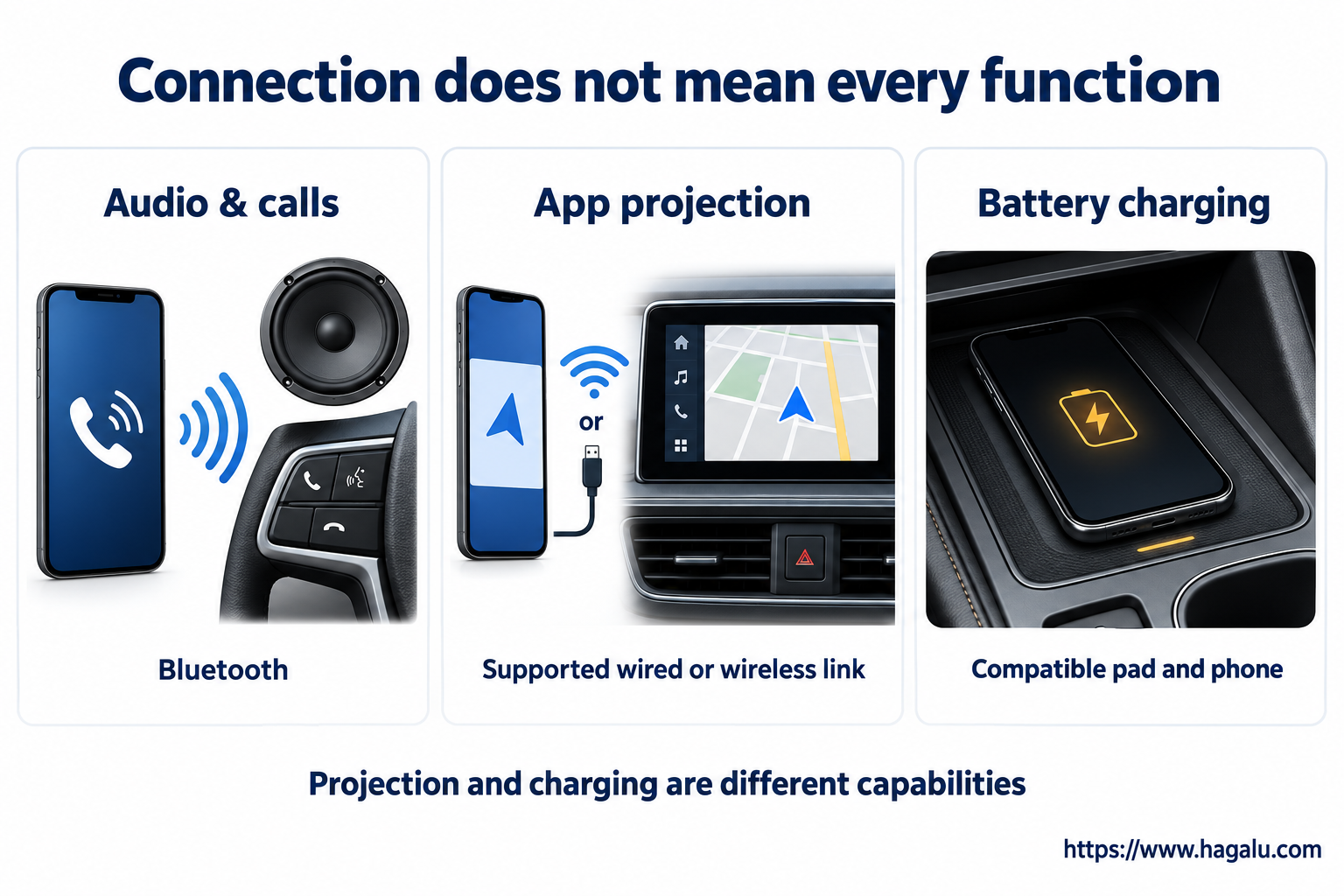
Bluetooth can support functions such as calls and audio. Android Auto or Apple CarPlay uses a supported projection connection and compatible phone/software. A USB socket can offer power without the data support needed by a particular function. Wireless projection and wireless charging are separate capabilities.
Check your own phone, cable, app availability and the exact derivative's software. Built-in connected services may need a subscription or mobile coverage; availability can differ by market. Display size, number of speakers and a brand label do not independently establish audio quality or safe usability.
| Feature | Main question | Do not assume |
|---|---|---|
| Bluetooth | Calls/audio supported? | Phone-app projection |
| USB | Power, data or both? | Every port supports every app |
| CarPlay / Android Auto | Wired/wireless and compatible? | A separate charging capability |
| Wireless charging | Compatible phone and pad? | Wireless phone projection |
Start hereA comfortable seat lets you reach the controls without stretching or losing a clear view.
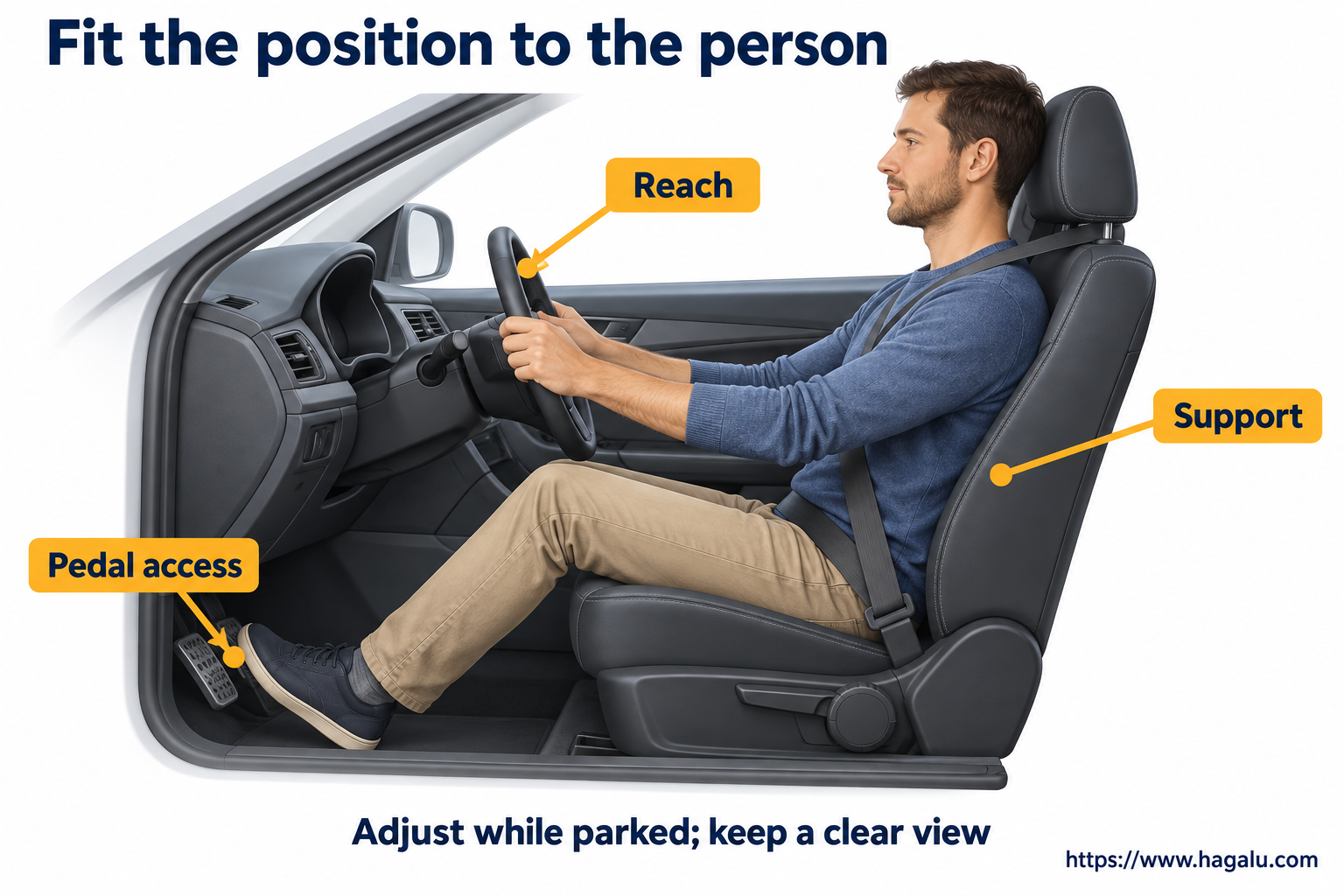
Adjustment range, support shape and the relationship between seat, wheel and pedals matter more than counting electric adjustment directions. Memory, heating, ventilation and massage are separate features. Ventilated seats are not necessarily air-conditioned seats.
Try the driving position and then the space behind it. Check physical access, rear air outlets, seat folding and child-seat requirements. Upholstery names describe materials or marketing categories; durability, cleaning advice and the actual surfaces need separate checking.
This is educational context, not an OEM service procedure. Use current instructions for the exact vehicle and market before measurements, repairs or safety-critical work.
These links rotate within your selected country. Open an exact variant to check its recorded specifications; the teaching diagrams above do not represent these models.
M3 Competition Sedan with M xDrive
Read this variant's specs1.0L
Read this variant's specs1.5 Xi Manual
Read this variant's specsStyle
Read this variant's specsAir conditioning is the cooling/dehumidifying system; automatic climate control manages available functions toward a chosen temperature target.
Not necessarily. The system can regulate different cabin zones while sharing components and a cabin where air mixes.
No. Bluetooth audio/calls and phone projection are distinct capabilities. Check the supported connection for the exact car and phone.
No. Charging a phone's battery and projecting its apps require different capabilities.
Source type alone does not establish beam quality, aiming, glare control or approved fitment.
These references support the principles, not the specifications of every car. Regional manuals and test protocols have their own scope; never transfer one vehicle's limits or legal rules to another.
All numerical examples in this guide are labelled illustrations. Technical images simplify the mechanism; they are original Hagalu teaching artwork, not manufacturer-approved parts drawings.