BMW X6 M
X6 M Competition
Read this variant's specsA warning beep and an automatic brake application are not the same feature. Read the action behind the badge before deciding what a car can do.
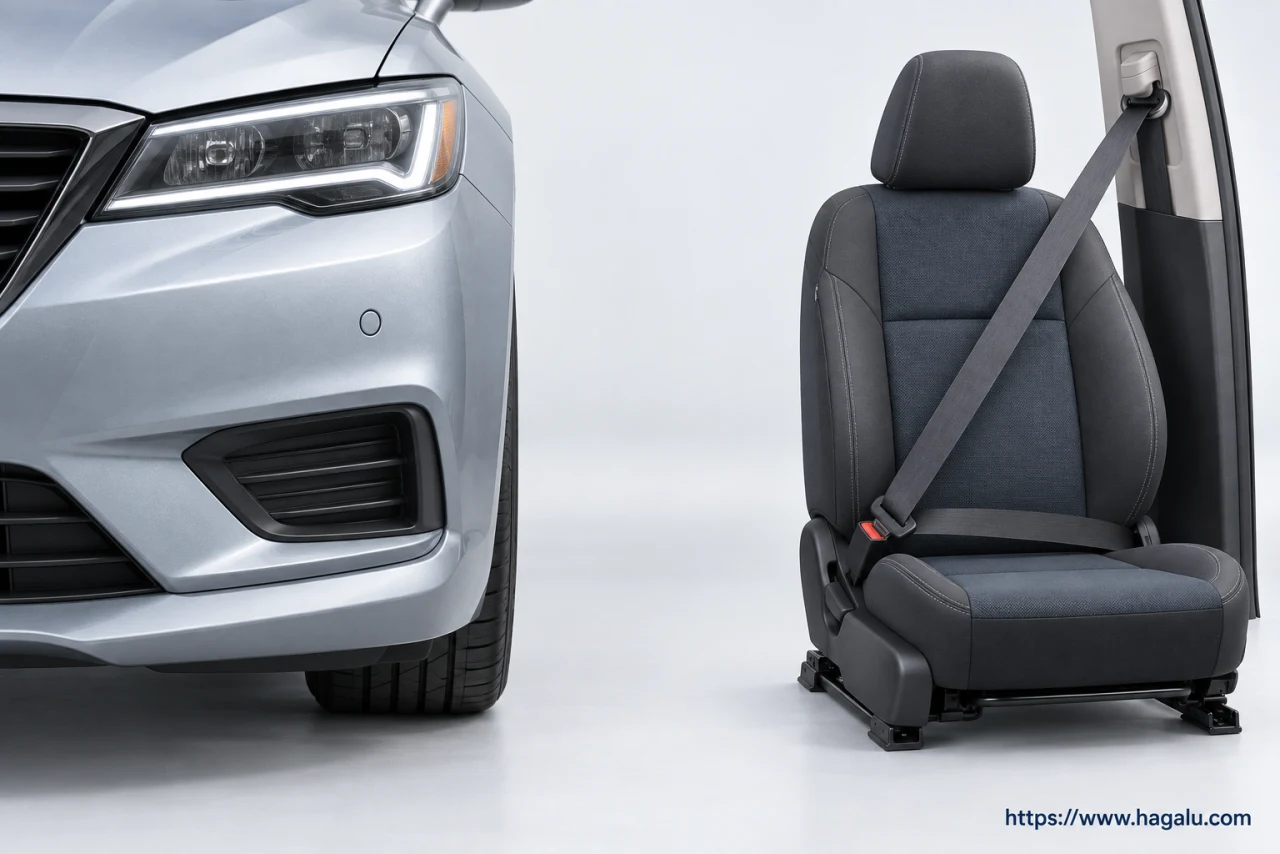
Start hereThe car has several helpers looking in different directions—not one all-seeing eye.
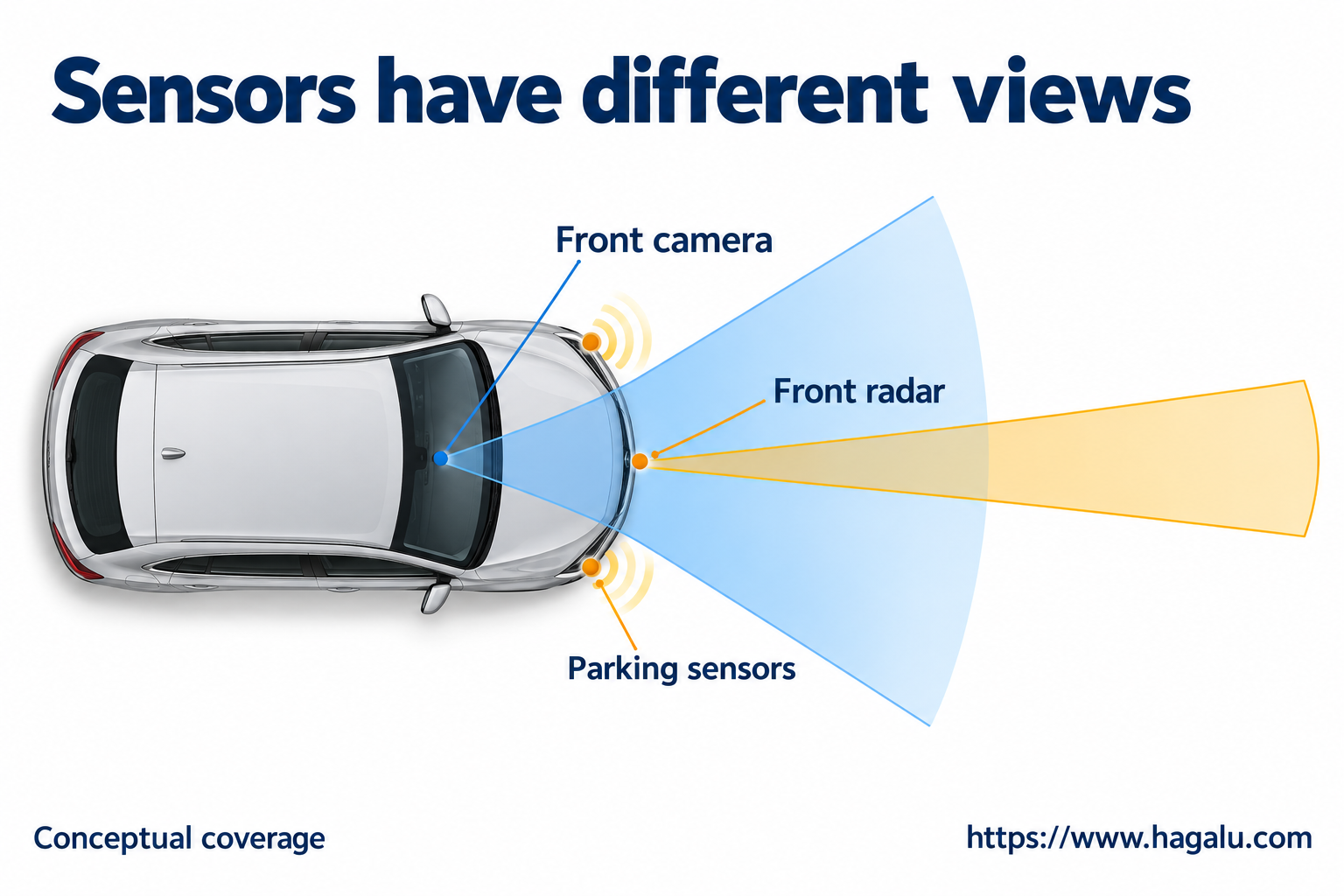
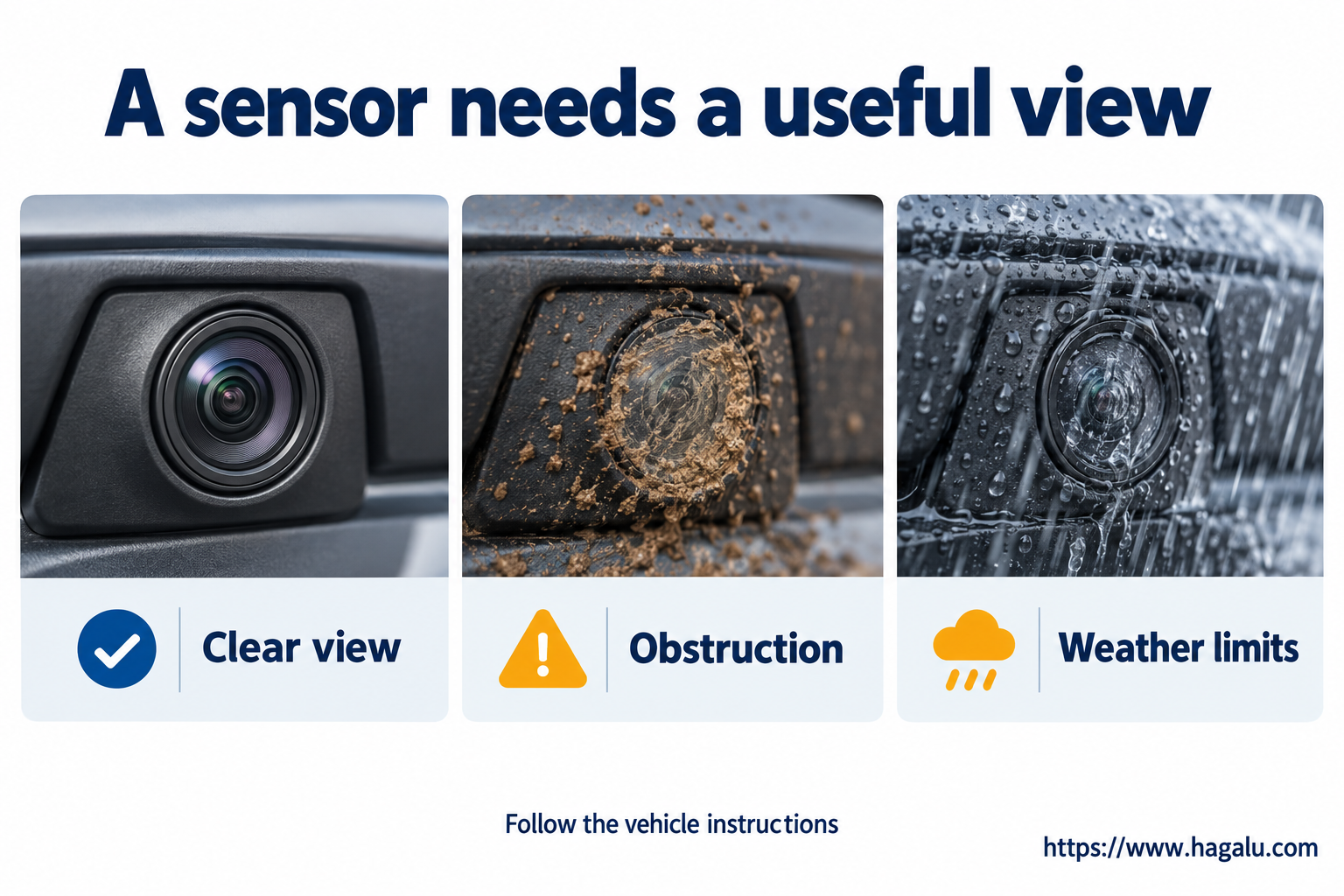
A forward camera, radar unit or ultrasonic sensor has a particular field of view, operating range and processing role. A parking sensor does not automatically provide high-speed emergency braking. A camera display can show a stitched view without detecting every object in it.
Dirt, weather, glare, road markings, installation changes and damage can affect performance. Location varies by vehicle; this guide's zones are conceptual, not a claim about a specific car. Read the exact system's operating limitations and warning messages.
Start hereA seat belt holds you in the intended place; an airbag adds protection under conditions where it is designed to deploy.
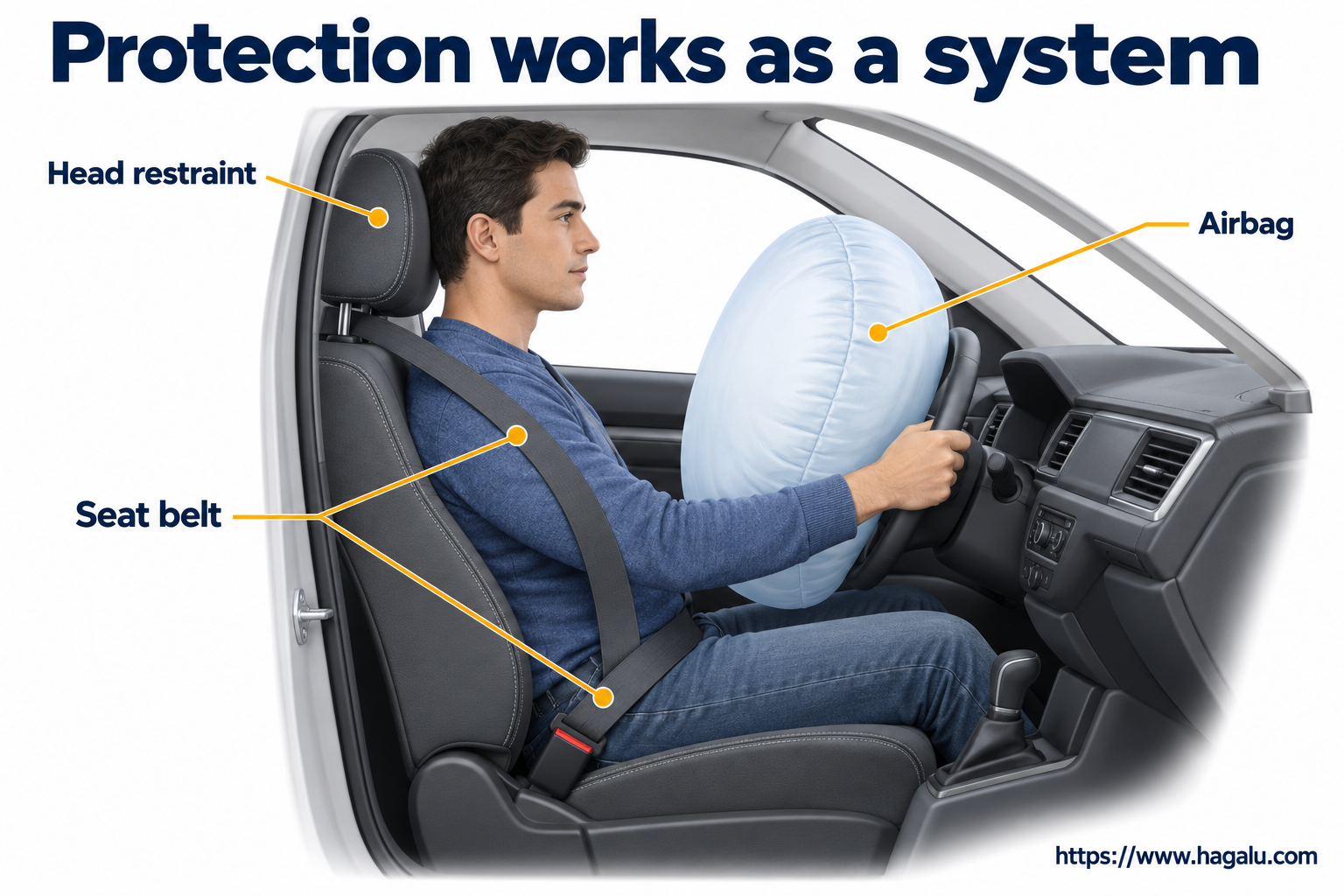
Airbags supplement restraints rather than replace them. Number, location, deployment logic and occupant compatibility matter. An airbag count cannot predict protection on its own, and a side-curtain airbag does a different job from a frontal airbag.
ISOFIX identifies a child-restraint attachment interface, not approval for every child seat in every position. Some seats need a top tether or support leg. Confirm the child, restraint, vehicle seating position and applicable installation instructions. Never place a rear-facing child seat in front of an active frontal passenger airbag.
Start hereA locked wheel cannot roll normally. ABS adjusts braking pressure to help manage that situation.
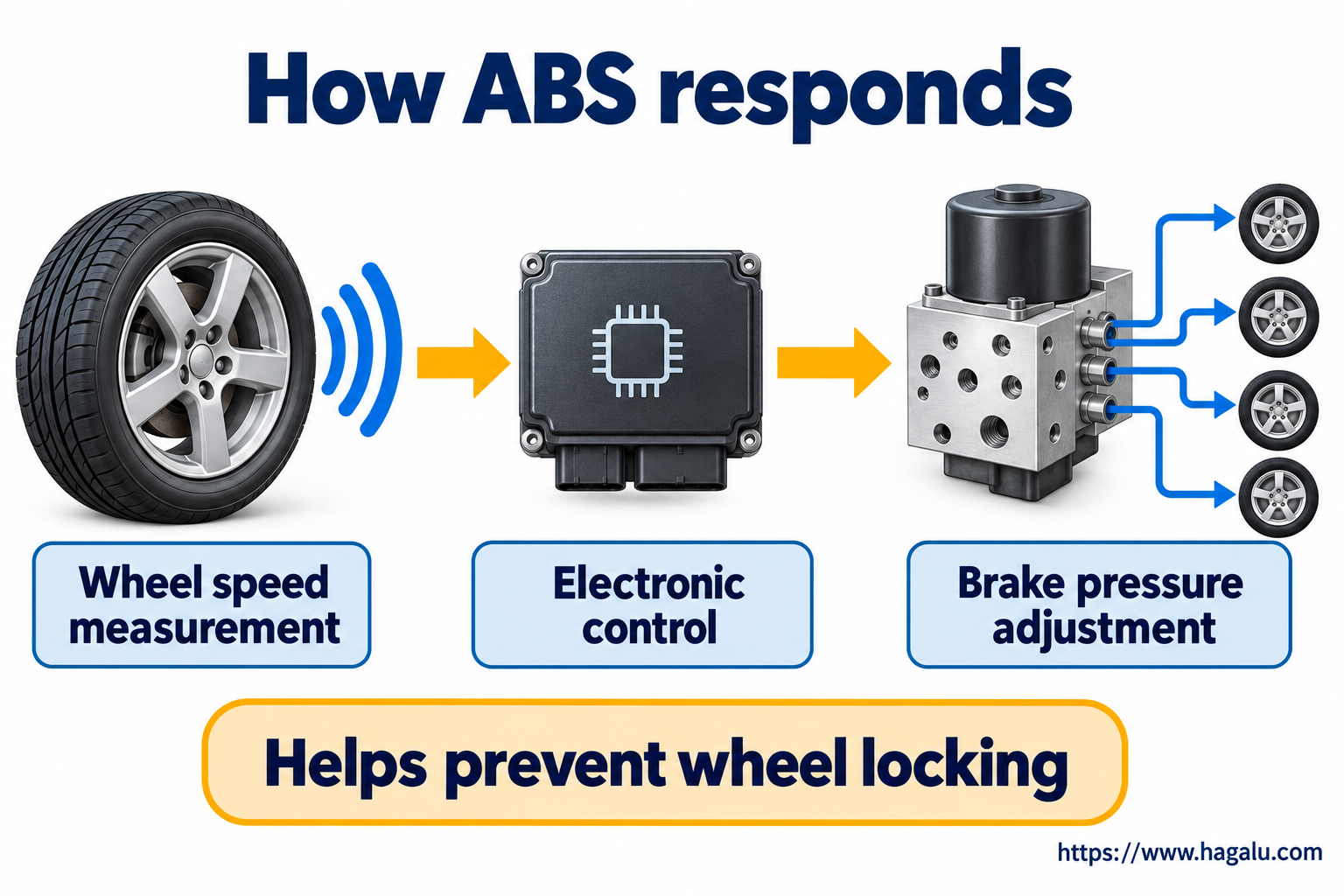
Wheel-speed information helps an antilock braking system recognise an approaching wheel lock and modulate hydraulic braking. The aim includes maintaining useful control during hard braking; it is not a promise of the shortest possible stop on every surface.
ABS, electronic brake-force distribution and brake assist are separate functions even when they share hardware. A warning lamp needs the manual's response and a proper diagnosis. Do not conduct an emergency-braking experiment on a public road to test the system.
Start hereIf the car starts moving differently from the direction you are asking for, stability control can try to help.
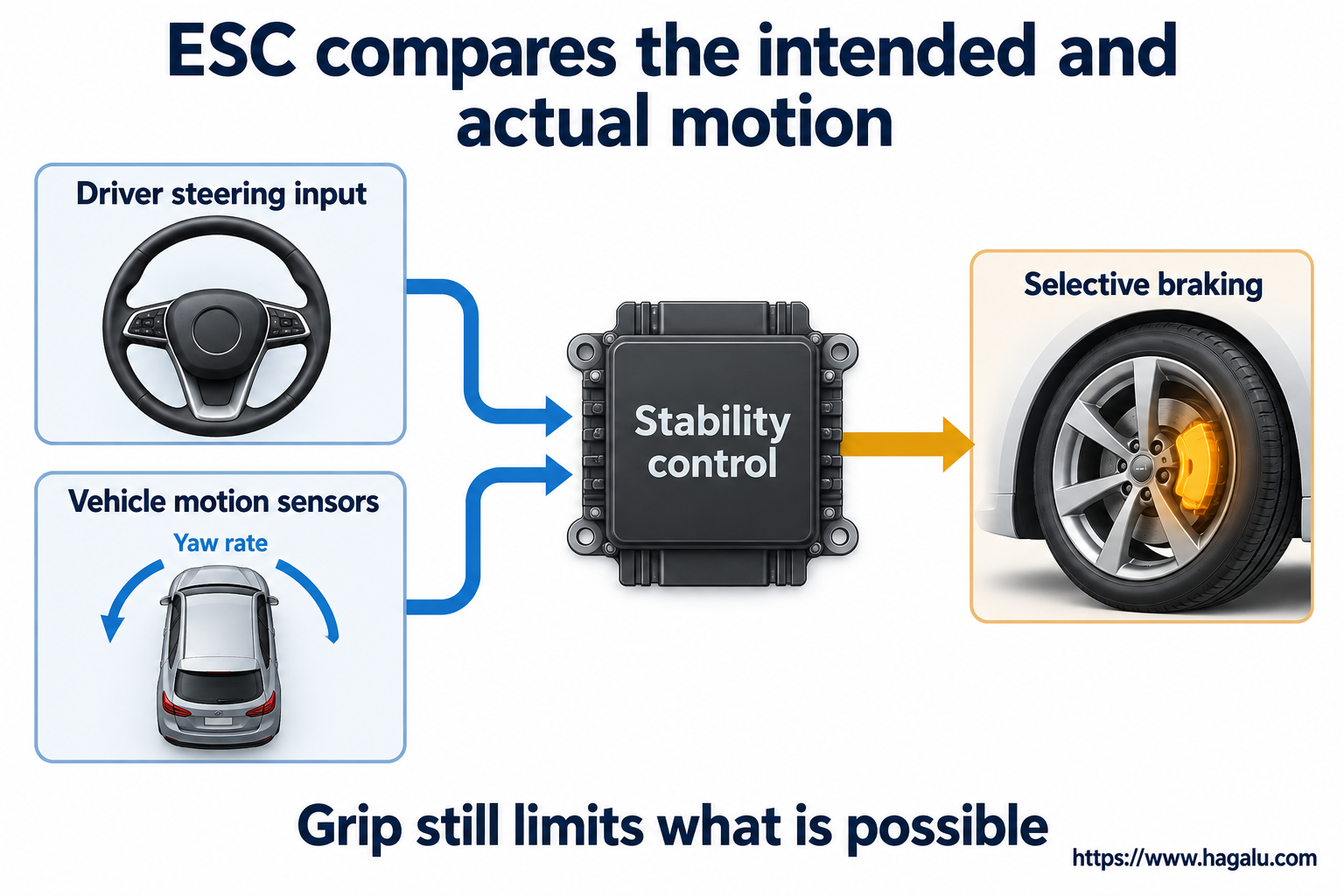
Electronic stability control uses inputs such as steering angle, wheel speeds and yaw motion to assess a developing instability. Selective braking and, where supported, power reduction can create a corrective effect. It cannot exceed available tyre grip or make an unsuitable entry speed safe.
Traction control mainly addresses drive-wheel slip under acceleration. ESC addresses the vehicle's directional stability. Names and calibrations vary; don't treat a shared dashboard icon as proof that two cars have identical functionality.
Start hereOne system says 'look out'; another may also apply the brakes.
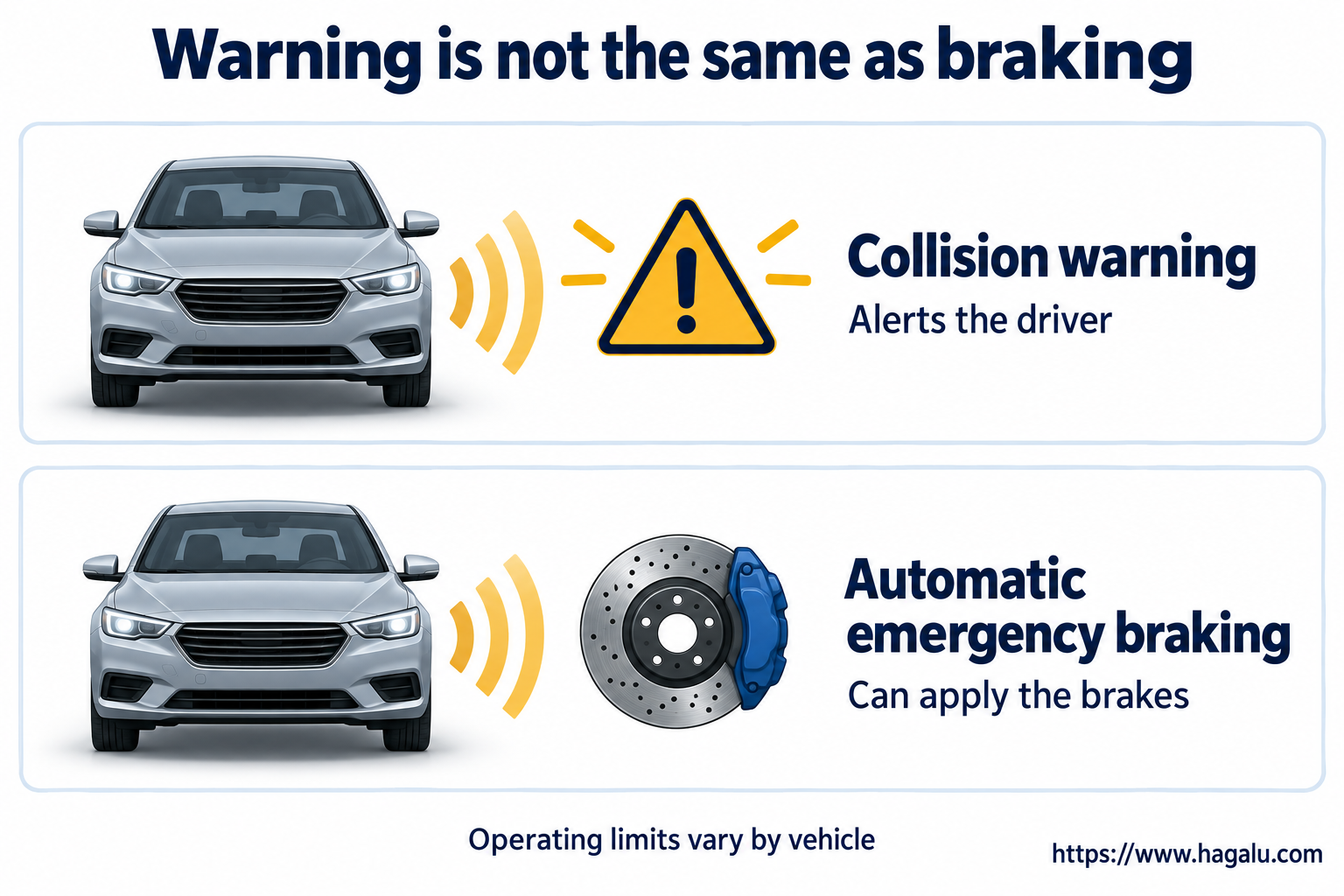
Forward collision warning alerts the driver to a detected risk. AEB can apply braking in supported scenarios when a collision risk is identified. Detection classes, speeds, lighting and intervention conditions vary. Pedestrian, cyclist, junction and reversing functions should be checked separately.
Adaptive cruise control follows a selected speed and supported following gap; lane assistance can warn or influence steering. These functions are not evidence of autonomous driving. The driver must supervise and remain ready to act whenever the manual requires it.
| Feature | Typical action | Question to ask |
|---|---|---|
| Collision warning | Alerts the driver | Which hazards and speeds? |
| AEB | Can apply braking | Which targets and operating limits? |
| Lane departure warning | Warns about lane departure | Which markings and conditions? |
| Lane assistance | Can influence steering | What supervision is required? |
| Adaptive cruise | Adjusts speed/gap when supported | When does it stop operating? |
Start hereThe safety equipment on the exact version matters more than a badge shared by the whole range.
A crash-test rating belongs to its test protocol, date, tested specification and stated applicability. A rating from another region or earlier protocol is not automatically a rating for the local derivative. Ask which equipment is standard, optional or absent.
Sensor calibration may be required after relevant glass, body, suspension or sensor work. The trigger and procedure are vehicle-specific. A clear camera image or absence of a warning does not prove calibration is correct. For a used car, inspect repair records and seek a suitably qualified assessment.
This is educational context, not an OEM service procedure. Use current instructions for the exact vehicle and market before measurements, repairs or safety-critical work.
These links rotate within your selected country. Open an exact variant to check its recorded specifications; the teaching diagrams above do not represent these models.
X6 M Competition
Read this variant's specs2.8 GD Single Cab MT
Read this variant's specsGLS 1.5T CVT
Read this variant's specsA 200 d Sedan
Read this variant's specsNo. Traction control addresses drive-wheel slip; ESC also monitors and helps control directional instability.
No. Its detection, speeds and operating conditions are limited, and braking is still constrained by traction and distance.
Count alone is insufficient. Placement, restraint design, body structure, test performance and the exact specification matter.
Not necessarily. A displayed image and a system that detects or intervenes are different features.
No. Read its operating limits and required driver supervision; a convenience feature is not permission to stop paying attention.
These references support the principles, not the specifications of every car. Regional manuals and test protocols have their own scope; never transfer one vehicle's limits or legal rules to another.
All numerical examples in this guide are labelled illustrations. Technical images simplify the mechanism; they are original Hagalu teaching artwork, not manufacturer-approved parts drawings.