Chery Tiggo 7 PHEV
PHEV Plus
Read this variant's specsThink of a battery as an energy cupboard and charging power as the rate at which it is filled. Cupboard size and filling speed are separate questions.
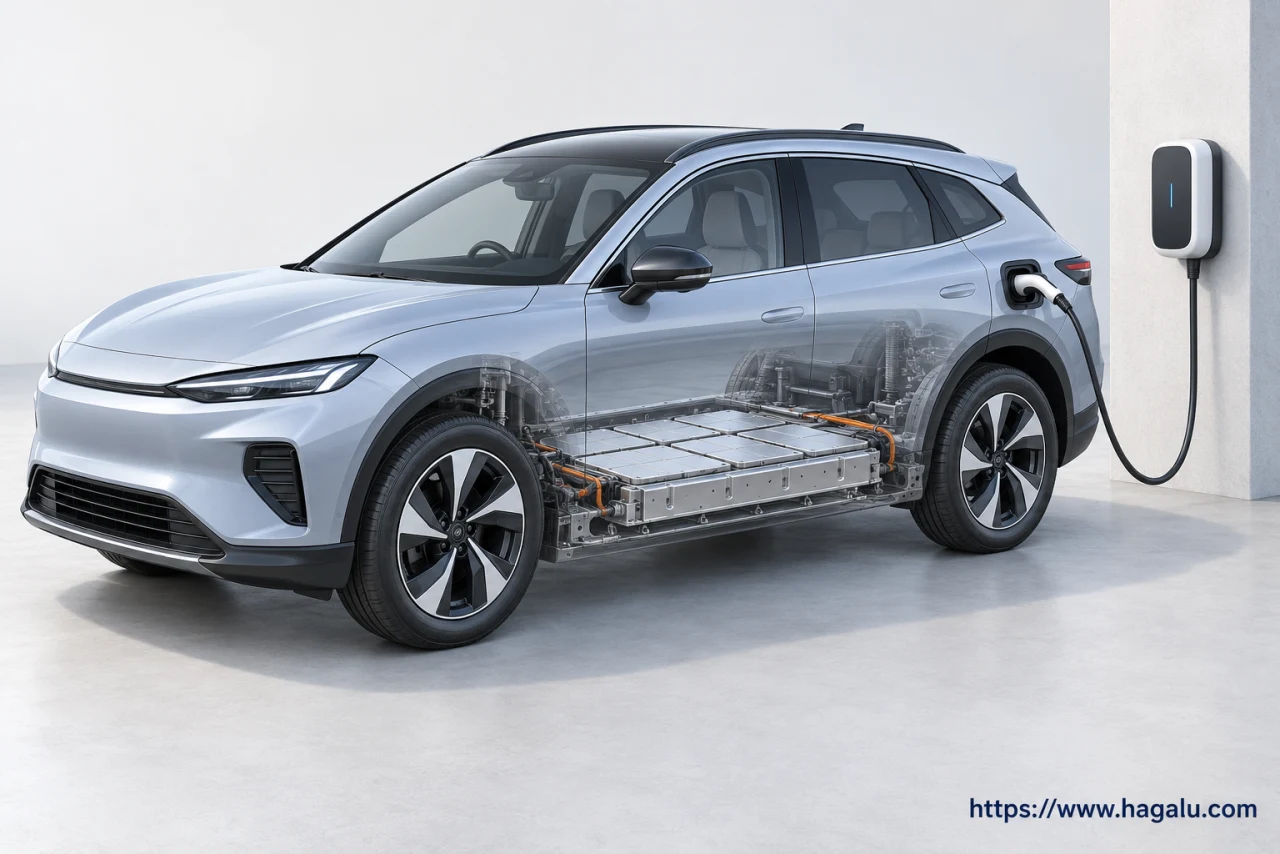
Start hereThe battery stores energy, electronics control it, and the motor turns it into movement.
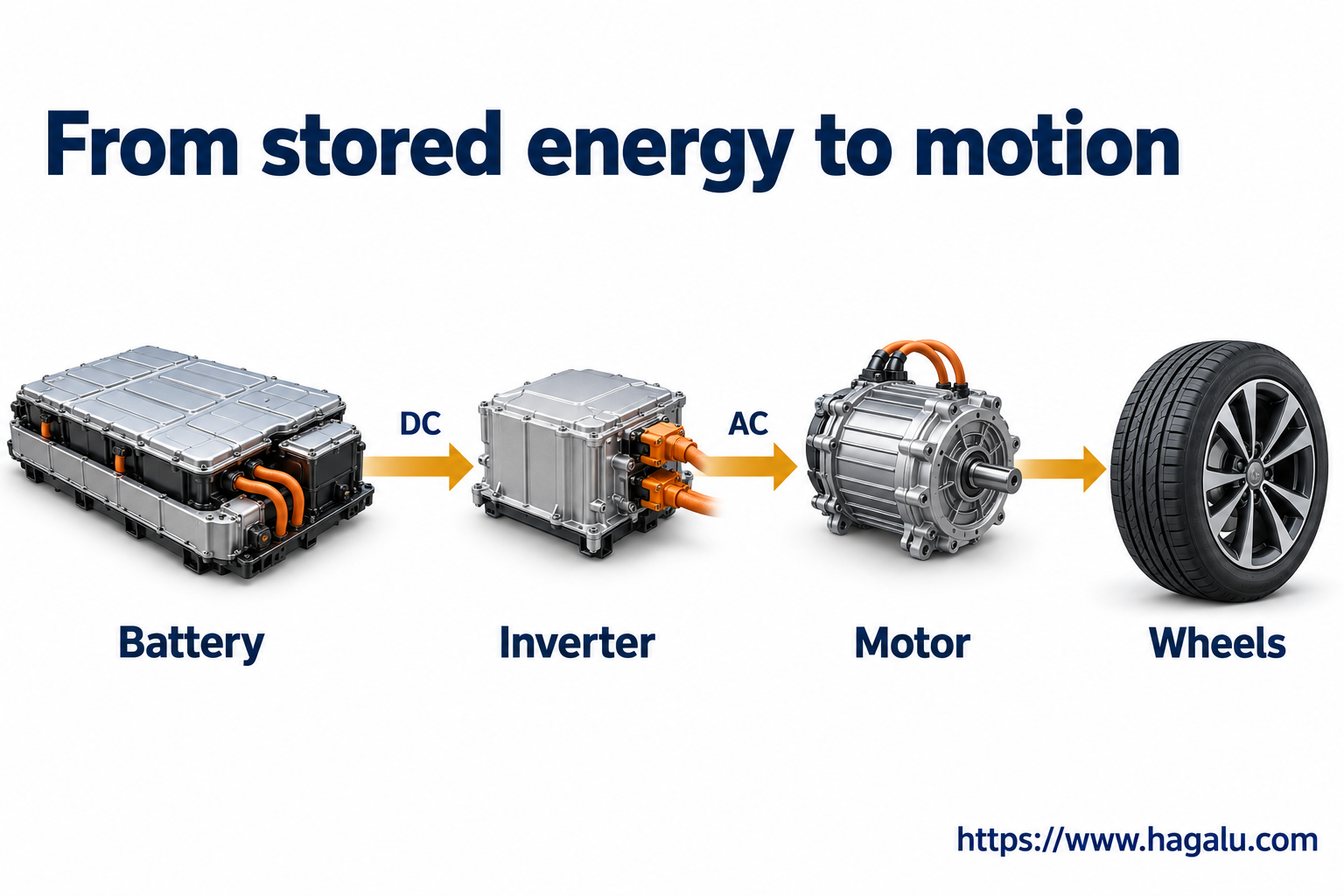
A traction battery supplies DC electrical energy. An inverter controls the electrical supply to an AC traction motor; architectures and motor types vary. Reduction gearing and a differential pass motor output to the driven wheels. A separate low-voltage system powers many controls and accessories.
Packaging is not universal. A BEV may use an underfloor pack, while a PHEV also carries combustion and fuel systems. A range-extender layout differs again. Use the actual architecture, not a generic EV cutaway, when discussing a named vehicle.
Start hereSmall cells are grouped into a battery system. The driver normally cannot use every bit of its total stored energy.
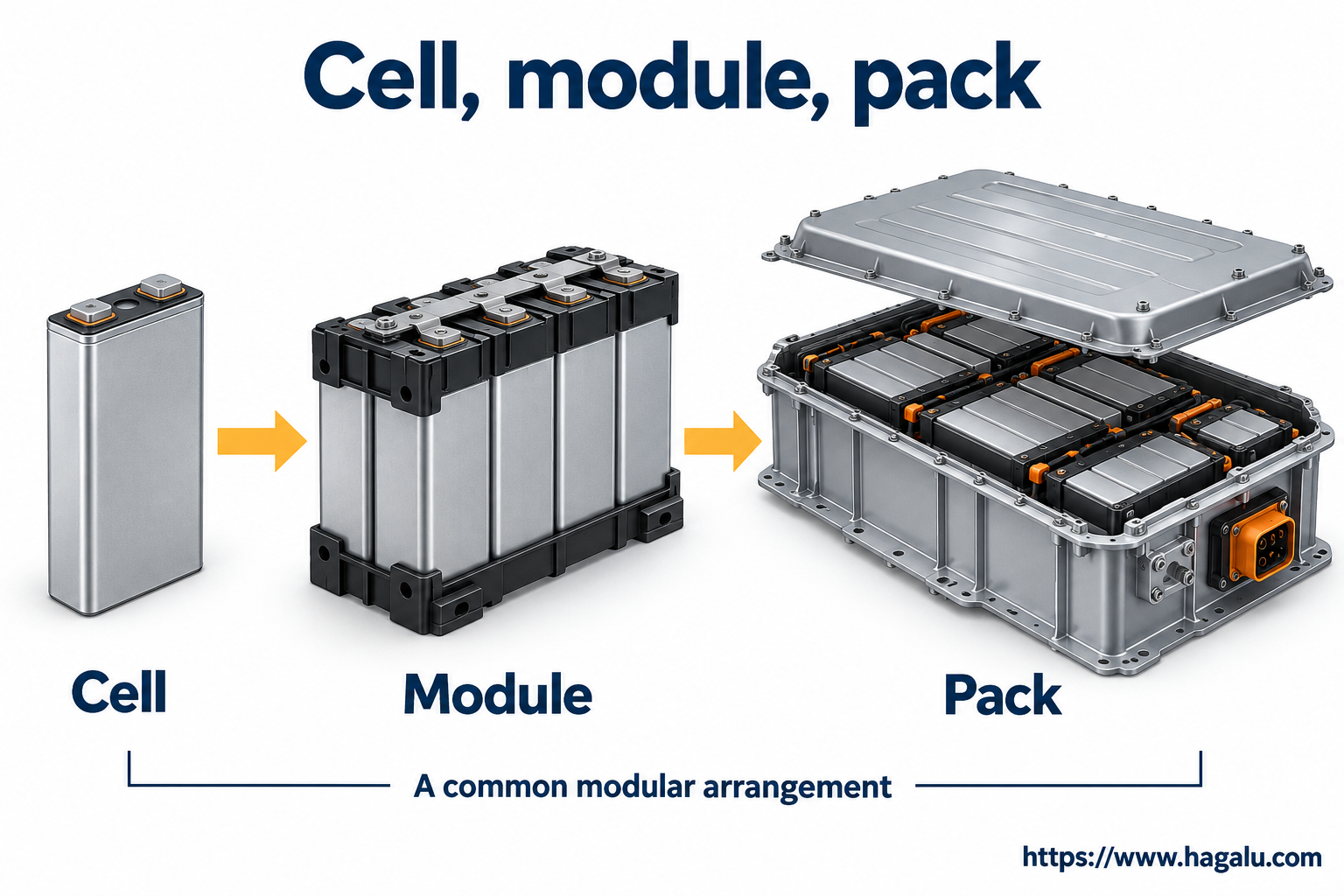
Gross or total capacity and net or usable capacity describe different boundaries. Protective buffers and control limits can restrict the accessible portion. Some designs arrange cells directly in the pack rather than using conventional separate modules, so 'cell–module–pack' is one architecture, not a rule for every EV.
The battery-management system monitors and controls operation. State of charge estimates how full the accessible battery is; state of health assesses aspects of its condition relative to a defined baseline. A dashboard at 100% is not a laboratory claim that every cell has its maximum theoretical energy.
Start hereDivide the energy you can use by how much the car needs for each kilometre.
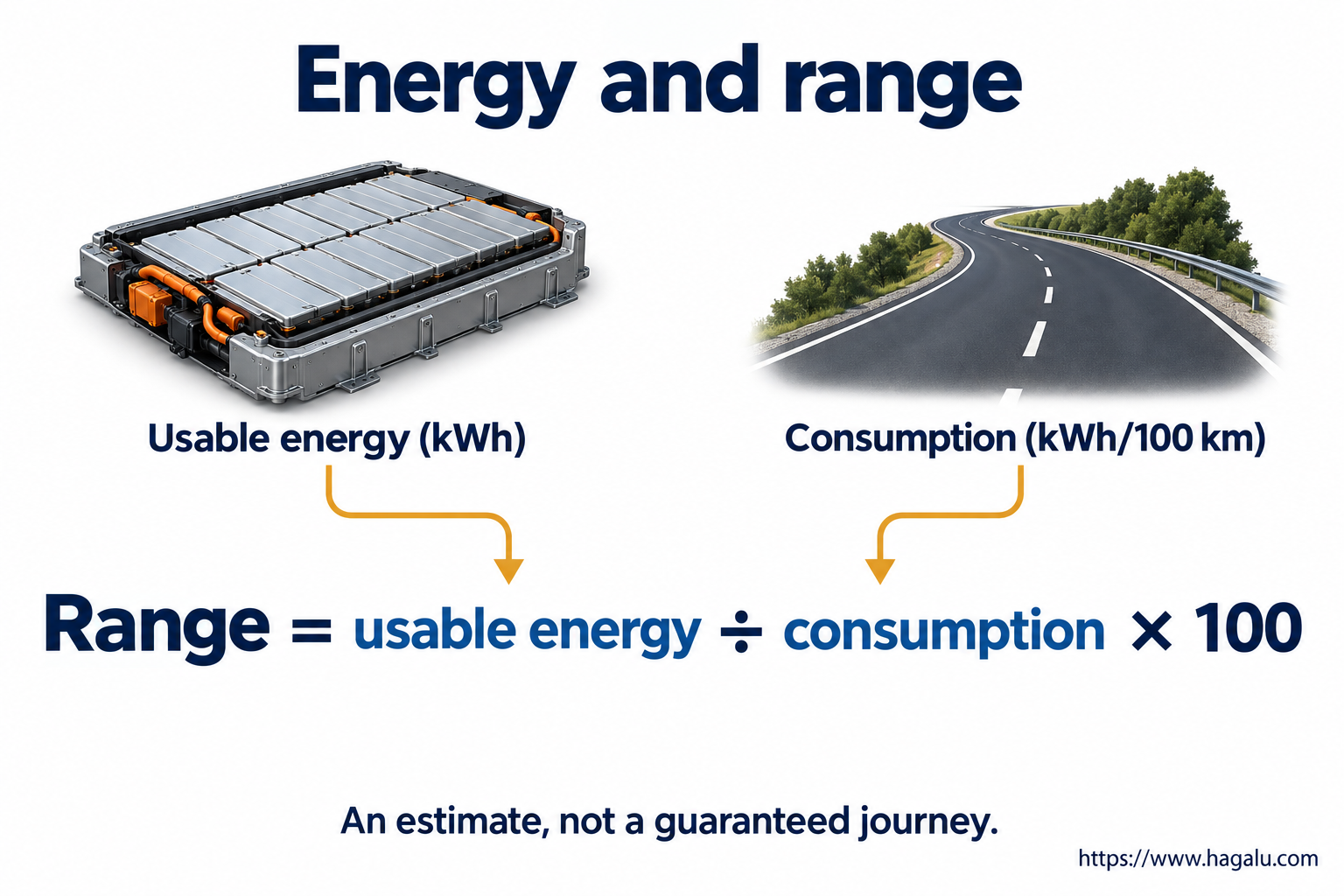
An illustrative 60 usable kWh at 15 kWh/100 km gives 400 km by simple division. At 20 kWh/100 km the same energy gives 300 km. These examples exclude any extra reserve and are not predictions for a named car. Speed, temperature, gradients, tyres, load and cabin conditioning can change consumption.
Use a reserve and a route-specific estimate for trip planning. A homologated range remains a test-cycle result. A PHEV or range extender's electric-only distance and its combined petrol-plus-battery distance must never be placed in the same 'EV range' column without explanation.
Start hereWith AC charging, the car's onboard charger does the conversion. With DC charging, that conversion happens in the charging equipment.
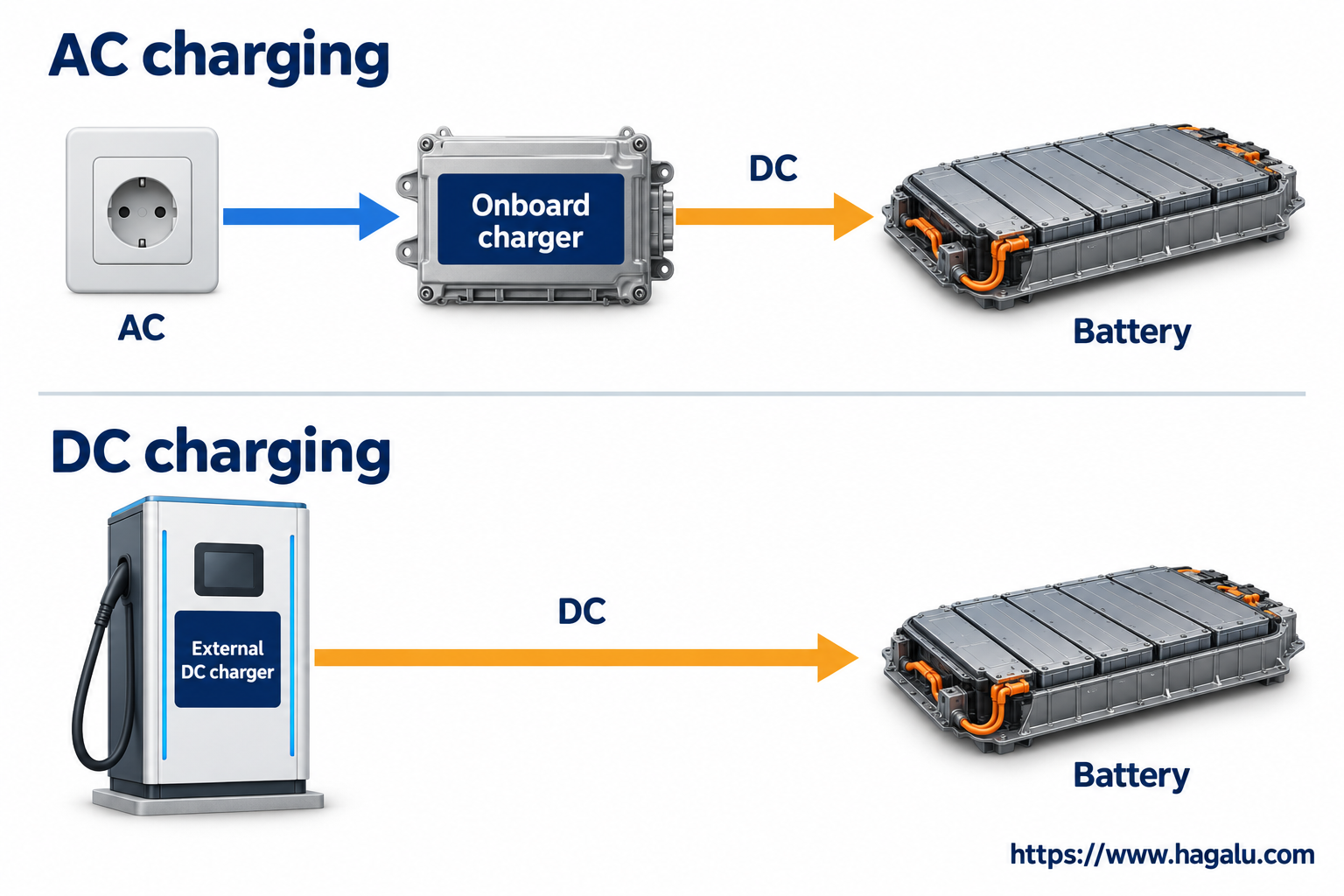
For AC charging, the vehicle's onboard charger converts incoming AC to battery-compatible DC under system control. DC equipment supplies controlled DC through the vehicle's supported DC charging path. The vehicle still regulates the requested power and protects the battery; bypassing the onboard AC charger does not bypass battery protection.
Useful power is constrained by the vehicle, charging equipment, supply, cable and operating conditions. Connector shape alone does not establish charging speed, electrical compatibility or communication support. Check the exact market version; not every PHEV supports DC charging.
Start hereA peak is the fastest moment. Your whole charging stop includes slower moments too.
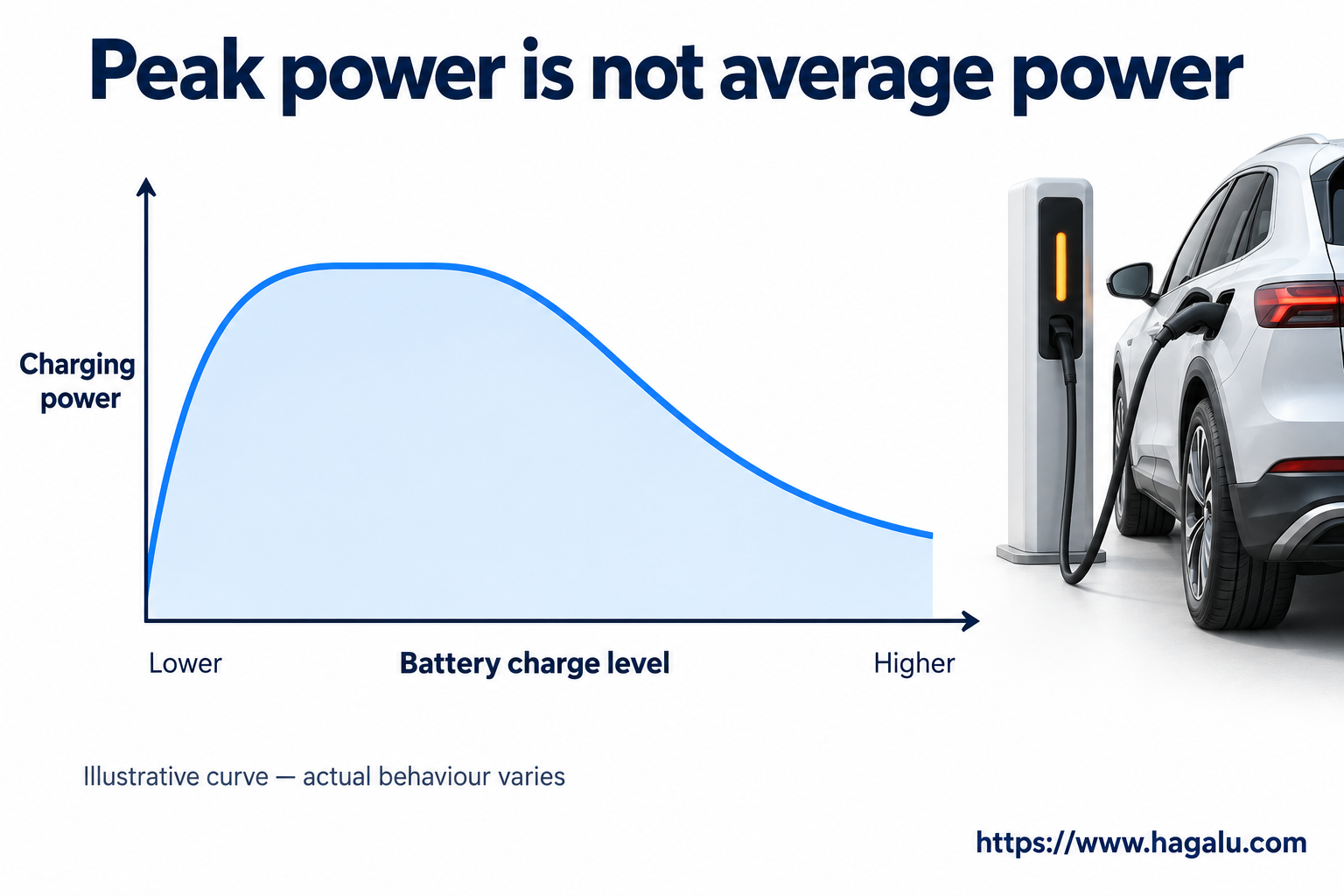
Approximate battery charging time is energy added divided by average battery-side power. Adding an illustrative 30 kWh at an average 60 kW takes about 0.5 hours. The charger's nameplate power is not necessarily the session average, and wall energy can exceed energy stored because of losses and conditioning loads.
DC power commonly changes with state of charge, temperature and battery limits. A 10–80% claim needs its stated conditions; it is not a 0–100% promise. A flat calculation using the peak kW often understates time. Compare the complete relevant window and include arrival, connection and queuing in your travel plan.
Start hereDuring slowing, the motor can work as a generator and put some energy back into the battery.
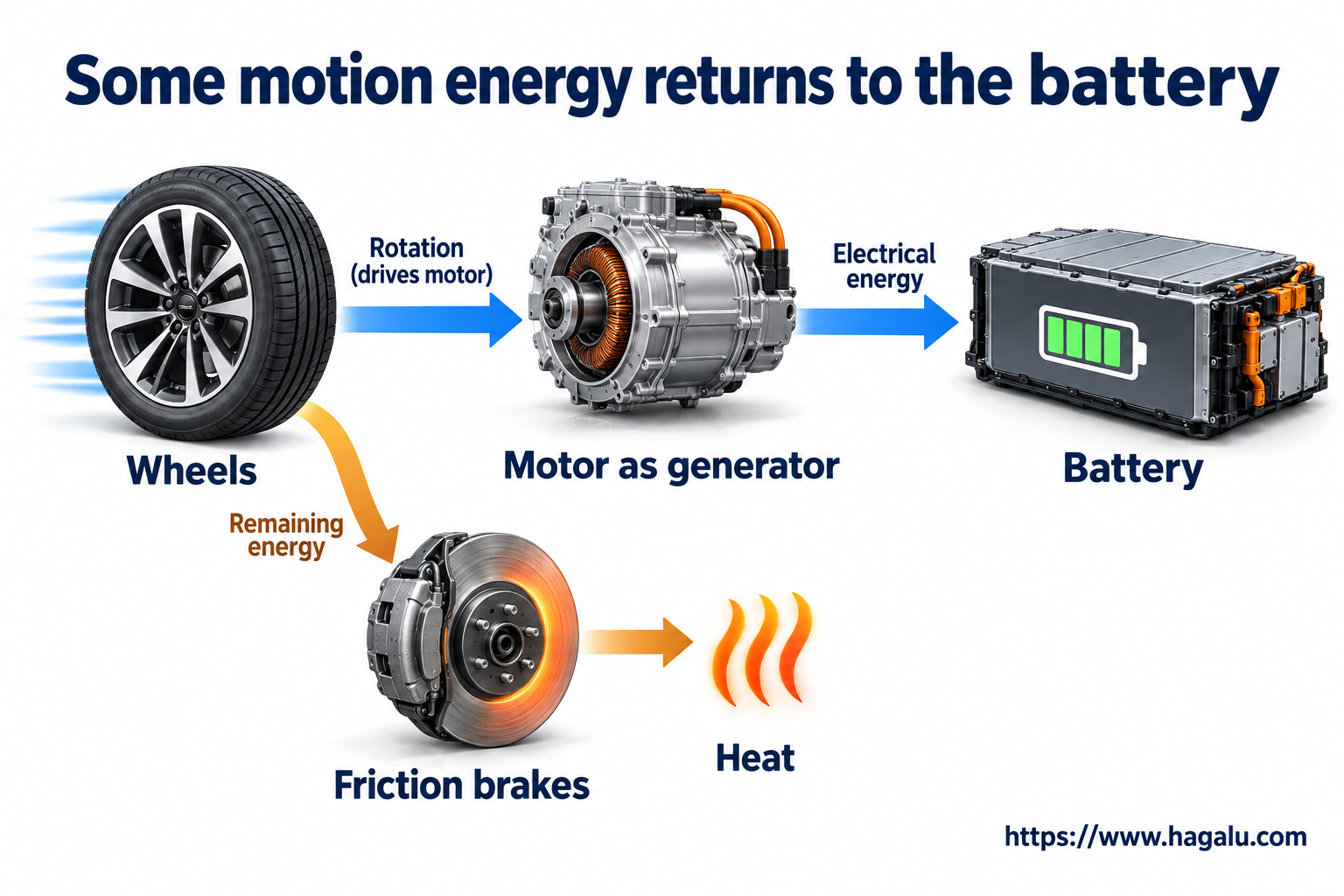
Regeneration recovers part of the vehicle's kinetic or downhill potential energy. Tyre grip, motor/inverter limits, charge acceptance, temperature and state of charge can constrain it. Friction brakes still provide braking where needed; a full or cold battery can change the feel and available regeneration.
A safe, smooth driving routine helps avoid unnecessary energy demand. Regeneration does not create a perpetual-motion car: conversion losses and road resistance remain. Follow the manufacturer's driving and charging advice rather than treating one-pedal operation as a substitute for understanding the brake pedal.
This is educational context, not an OEM service procedure. Use current instructions for the exact vehicle and market before measurements, repairs or safety-critical work.
These links rotate within your selected country. Open an exact variant to check its recorded specifications; the teaching diagrams above do not represent these models.
PHEV Plus
Read this variant's specseTruckMate
Read this variant's specsBOX E2 430
Read this variant's specsPremium EV RWD
Read this variant's specskW is power: the rate of energy transfer or work. kWh is an amount of energy. One kW maintained for one hour transfers one kWh.
No. The car, connector, equipment, supply and battery conditions can limit the actual power, which may also change throughout the session.
No. Usable capacity describes the accessible energy under a defined operating boundary; total capacity can be larger.
No. Friction brakes remain necessary and regeneration can be limited by grip, battery state and operating conditions.
Consumption changes with speed, temperature, terrain, load and conditioning. Use a journey-specific estimate and reserve rather than assuming a test-cycle figure is guaranteed.
These references support the principles, not the specifications of every car. Regional manuals and test protocols have their own scope; never transfer one vehicle's limits or legal rules to another.
All numerical examples in this guide are labelled illustrations. Technical images simplify the mechanism; they are original Hagalu teaching artwork, not manufacturer-approved parts drawings.