Mercedes-Benz A-Class
A 200 d Sedan
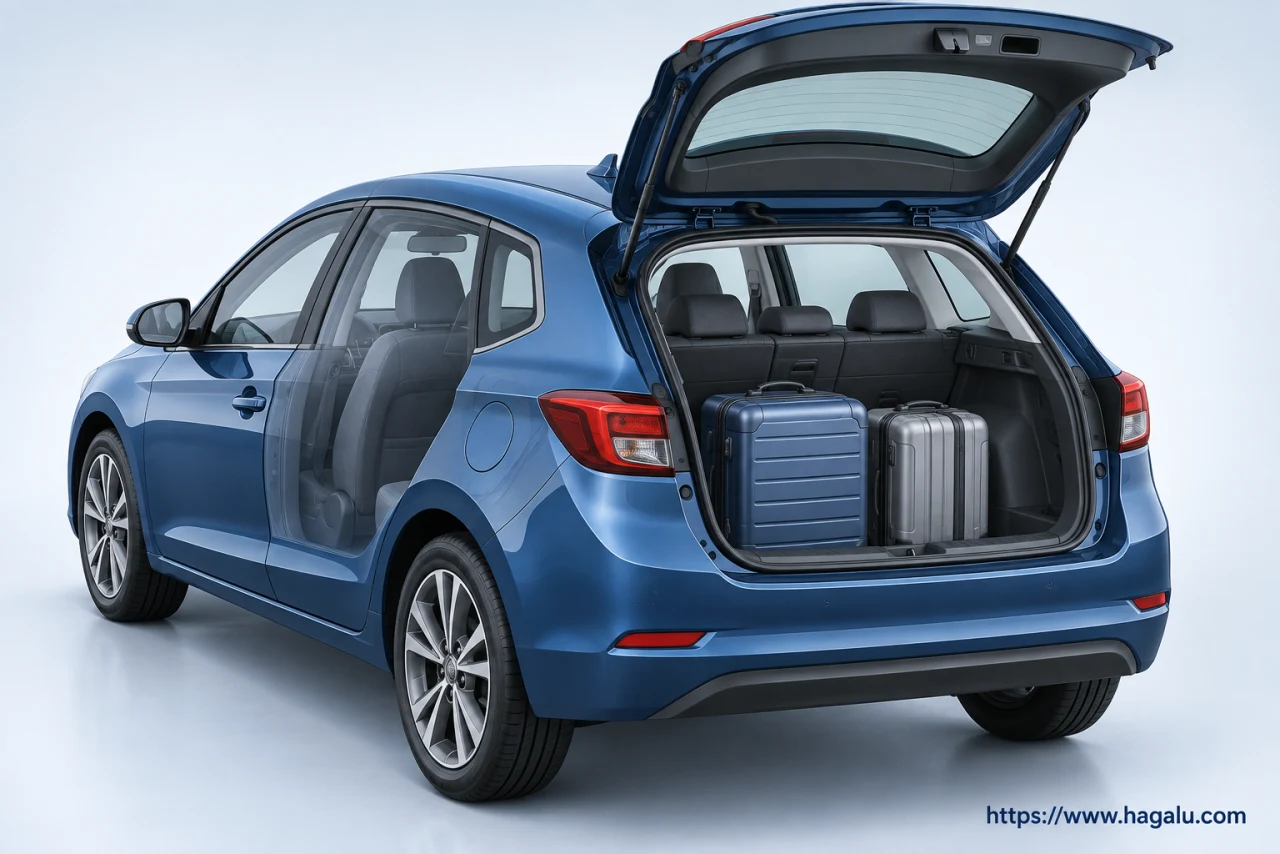
Read this variant's specsA suitcase can fit in the boot while still making the car overloaded. Separate the shape of the space from the weight it is allowed to hold.
Start hereLength is nose to tail. Wheelbase is the distance between the front and rear axle centres.
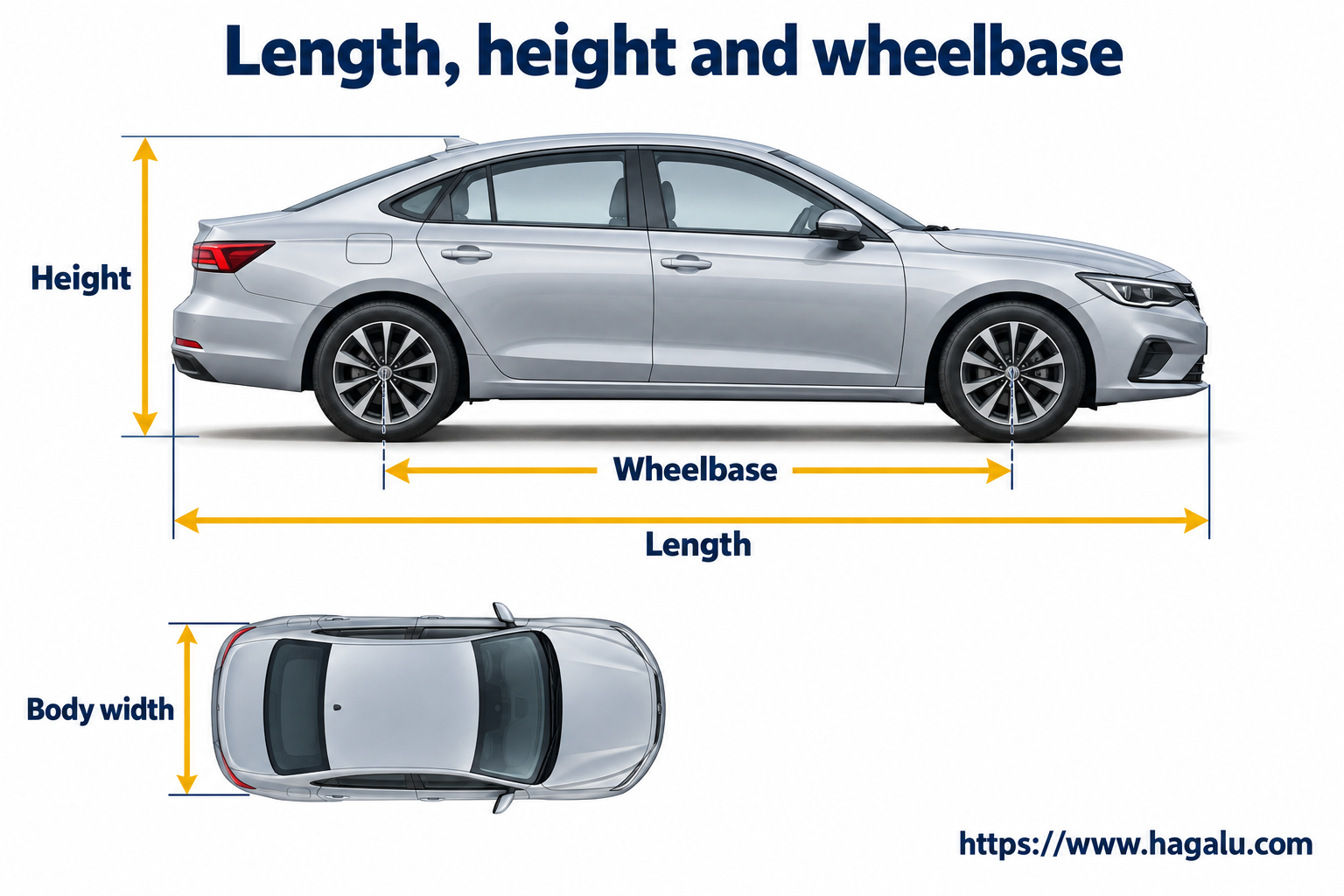
Published width may exclude mirrors, include them unfolded, or describe them folded. Check which definition you are reading before measuring a gate or garage. Overall height can also depend on roof rails, antennas, suspension setting and the stated measurement condition.
A long wheelbase can give designers room for occupants, but engine packaging, seat positions, body shape and battery placement also matter. Do not turn a wheelbase measurement into a guaranteed legroom result. Record body style and generation: a familiar name can describe very different dimensions over time.
Start hereRoom for your knees depends on where both your seat and the seat ahead are set.
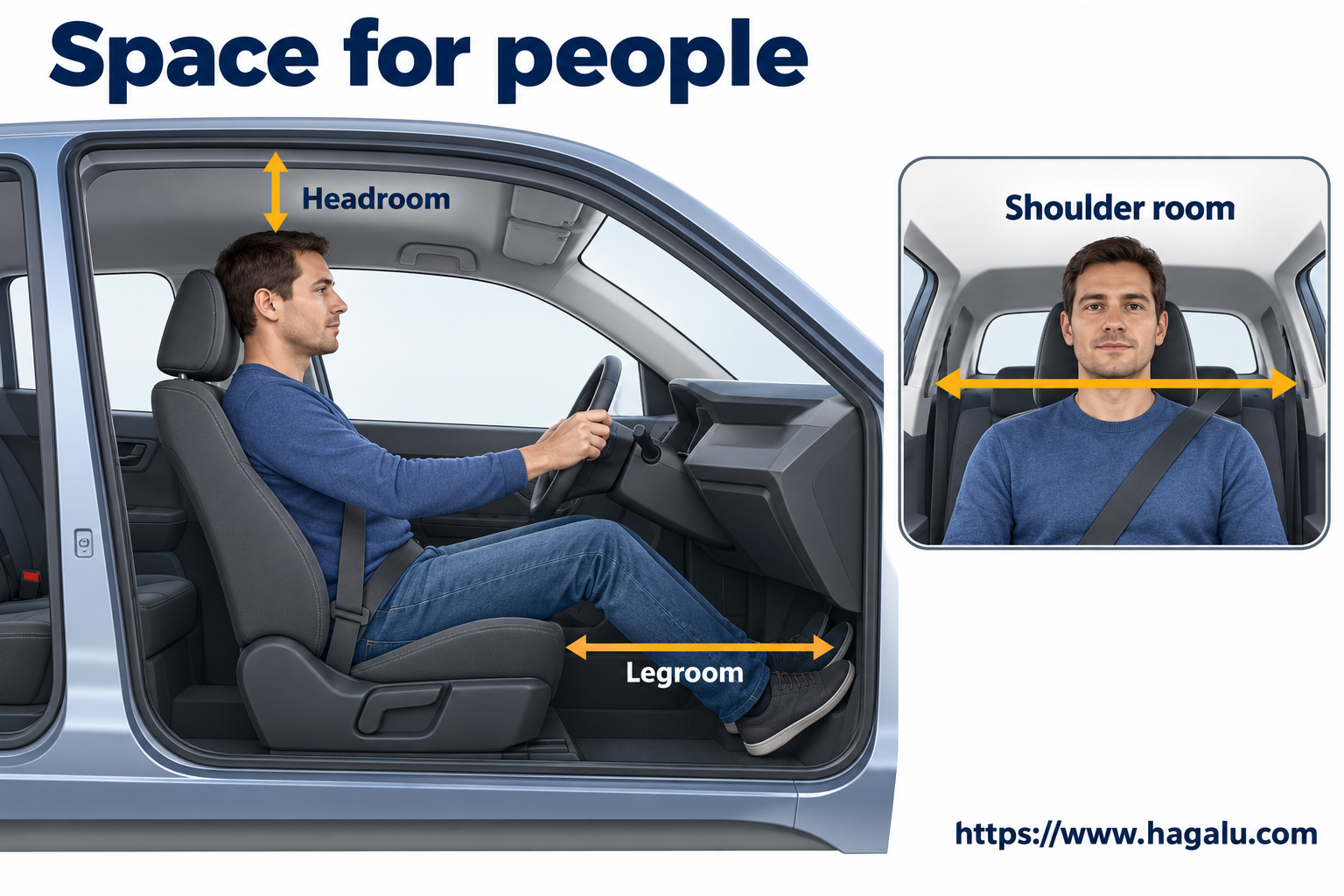
Interior dimensions use specified reference points and seating positions. Seat cushion travel, backrest angle, roof shape and optional sunroofs can change usable room. A rear legroom figure from one measurement system may not be directly comparable with another.
Try the car with the driver set comfortably, then sit behind that position. Check shoulder space, foot space beneath the front seat, head clearance, entry and child-seat access. Never infer safe child-restraint compatibility from a seating-capacity number alone; confirm the restraint, vehicle manual and mounting arrangement.
Start hereA tall narrow box and a wide shallow box can hold the same volume but fit different luggage.
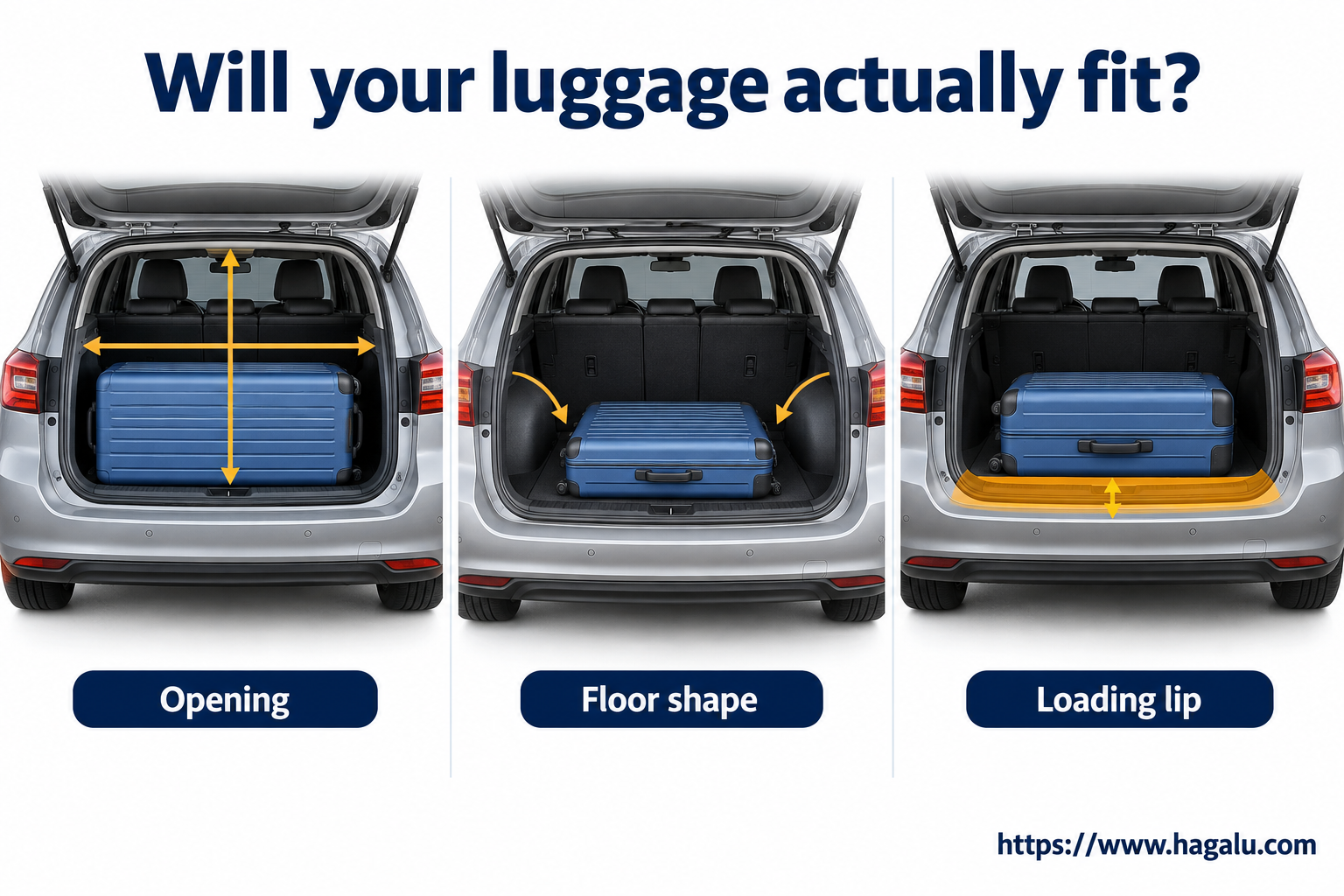
Cargo volume can be measured with standard blocks or another defined method, and may be quoted to the parcel shelf, window line or roof. Rear-seat position, underfloor storage and whether seats are folded change the result. Keep the method and seating state beside the number.
Measure the opening, width between wheel housings, floor length, loading lip and the height available with the hatch closed. Try your own pram or bags. A pickup load-bed dimension is not interchangeable with a hatchback's boot-litres figure.
Start hereThe loaded car has to stay below its permitted mass, including its passengers and luggage.
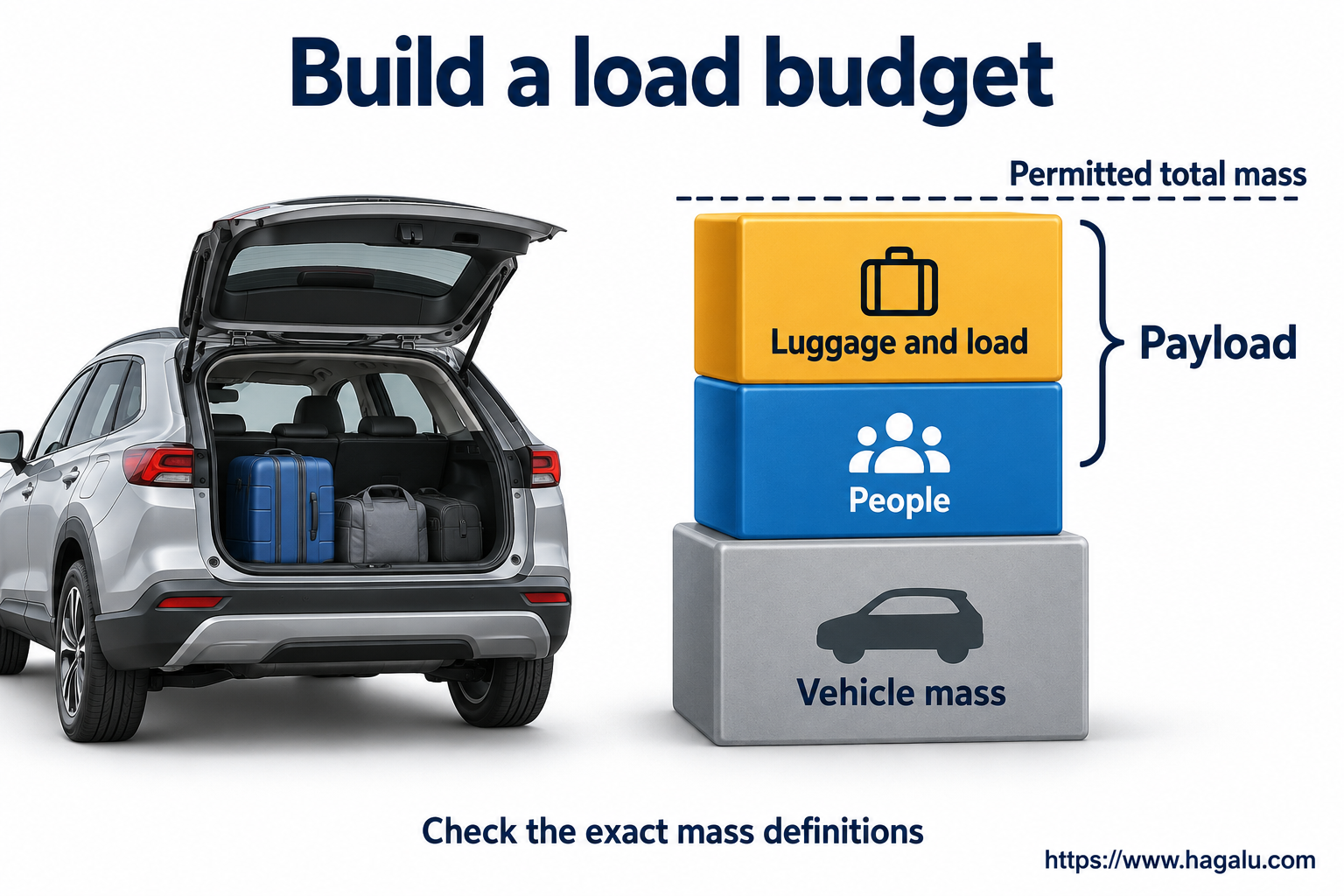
Kerb/curb or unladen mass definitions vary by jurisdiction and manufacturer, including fuel and sometimes a driver allowance. GVWR or the corresponding permitted maximum vehicle mass is a limit, not the car's current mass. Actual loaded mass is what the vehicle weighs in its present state.
Using compatible definitions, permitted maximum mass minus the vehicle's relevant baseline mass gives a theoretical carrying allowance. An illustrative 2,000 kg limit minus a 1,500 kg baseline gives 500 kg. People, accessories, luggage and trailer nose load can all use that allowance. Axle limits also apply; spare overall capacity does not permit an overloaded axle.
| Term | Meaning | Common mistake |
|---|---|---|
| Kerb/unladen mass | A defined baseline condition | Assuming every source includes the same fuel/driver |
| Actual loaded mass | What the vehicle presently weighs | Treating it as the manufacturer's maximum |
| GVWR / maximum permitted mass | A vehicle mass ceiling | Ignoring a lower axle or tyre limit |
| Payload allowance | Carrying allowance under compatible definitions | Counting luggage but not people or accessories |
Start hereThe trailer's load, the car's load and the weight pressing on the towball all have to fit their own rules.
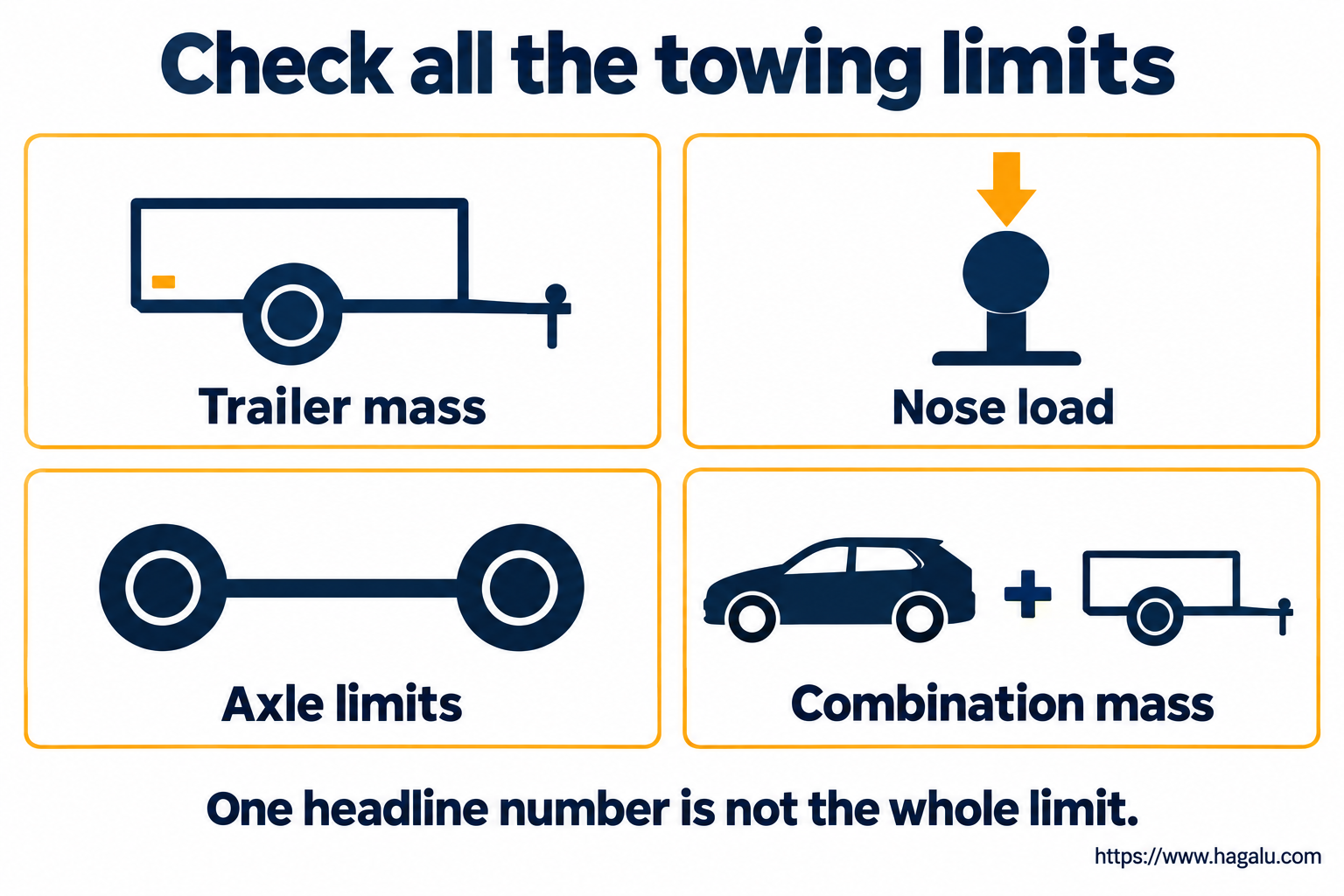
Check the exact derivative's braked or unbraked trailer limit, gross combination rating, vehicle and axle limits, coupling limit and permitted nose weight. Trailer nose load becomes load carried by the tow vehicle; it is not free capacity outside the payload budget.
A headline trailer rating does not mean the fully laden car can tow that trailer in every configuration. Equipment, cooling, gradient, altitude and legal conditions may matter. Use a current local manual, the vehicle plates and applicable rules. A weighbridge can establish actual masses; a boot-volume figure cannot.
Start hereThe diameter is the whole circle across. The radius is only half of it.
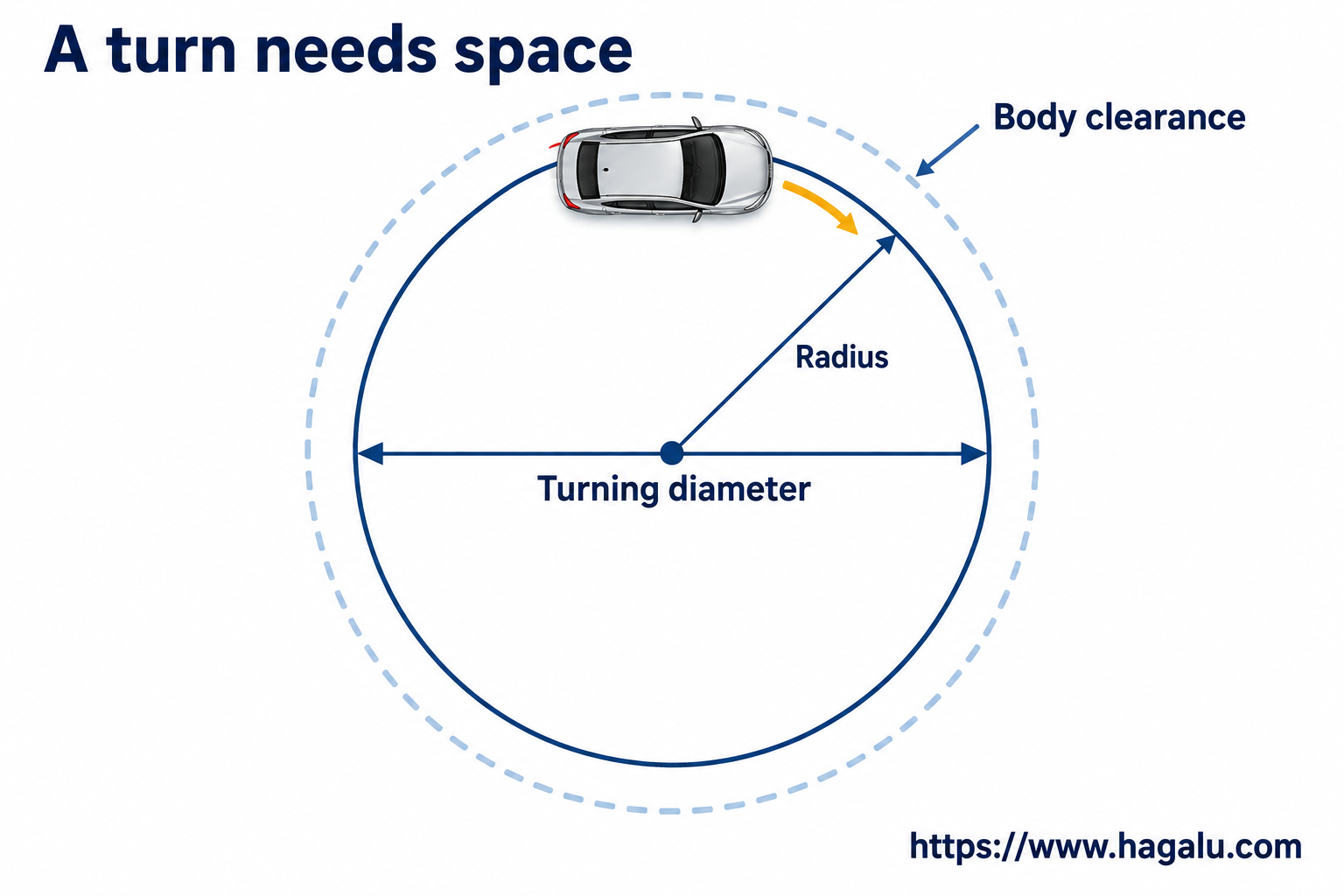
A turning figure may describe kerb-to-kerb tyre travel or wall-to-wall body clearance. Those differ because the body and mirrors can extend outside the wheel path. Confirm whether the source reports radius or diameter before judging a parking space.
Real manoeuvres also need room for the nose swing, visibility and steering reversals. A small published circle helps, but it does not guarantee that a particular gate or bay is easy to negotiate. Check the car's actual path at walking pace in a safe area.
This is educational context, not an OEM service procedure. Use current instructions for the exact vehicle and market before measurements, repairs or safety-critical work.
These links rotate within your selected country. Open an exact variant to check its recorded specifications; the teaching diagrams above do not represent these models.
A 200 d Sedan
Read this variant's specs2.0T City Edition
Read this variant's specs1.0 AT
Read this variant's specsFlat Roof
Read this variant's specsNot necessarily. Interior packaging and seating positions decide the usable space. Sit behind a correctly set driver's seat and check the exact version.
No. GVWR is a permitted maximum; actual weight changes with passengers, cargo, fuel and equipment.
Normally the carrying allowance must account for people as well as cargo and additional equipment, but check the exact manufacturer's baseline definition.
Not automatically. Combination, vehicle, axle, towbar and trailer limits must all be respected together.
Not if 'circle' means diameter. A 5 m radius has a 10 m diameter; also distinguish tyre-path and body-clearance measurements.
These references support the principles, not the specifications of every car. Regional manuals and test protocols have their own scope; never transfer one vehicle's limits or legal rules to another.
All numerical examples in this guide are labelled illustrations. Technical images simplify the mechanism; they are original Hagalu teaching artwork, not manufacturer-approved parts drawings.