GWM H6 GT PHEV
1.5T Ultra Luxury 4WD PHEV DHT
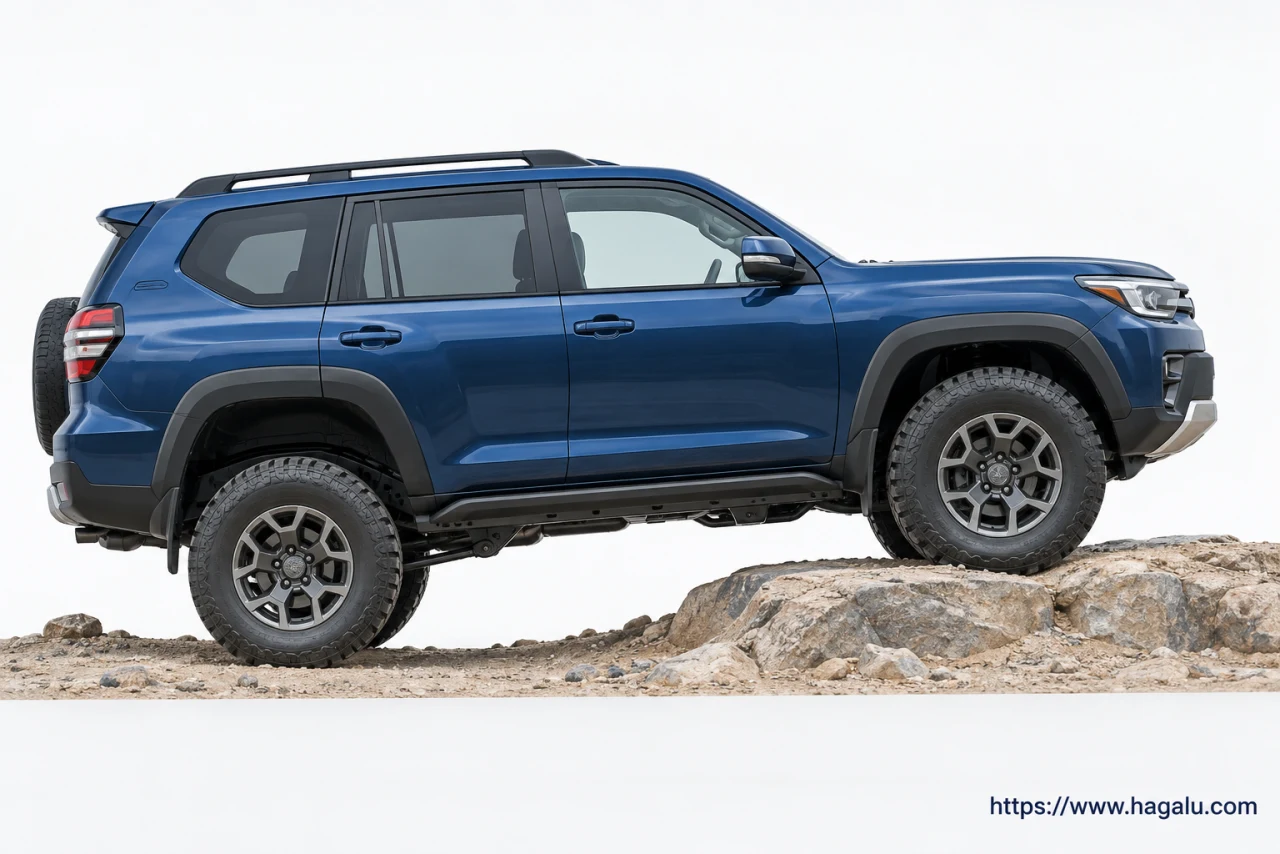
Read this variant's specsThe first question on a rocky track is not how many screens the SUV has. It is what will touch the rock, which wheels can keep working and whether the route is safe at all.
Start hereThe important gap is between the ground and the part underneath that can hit it.
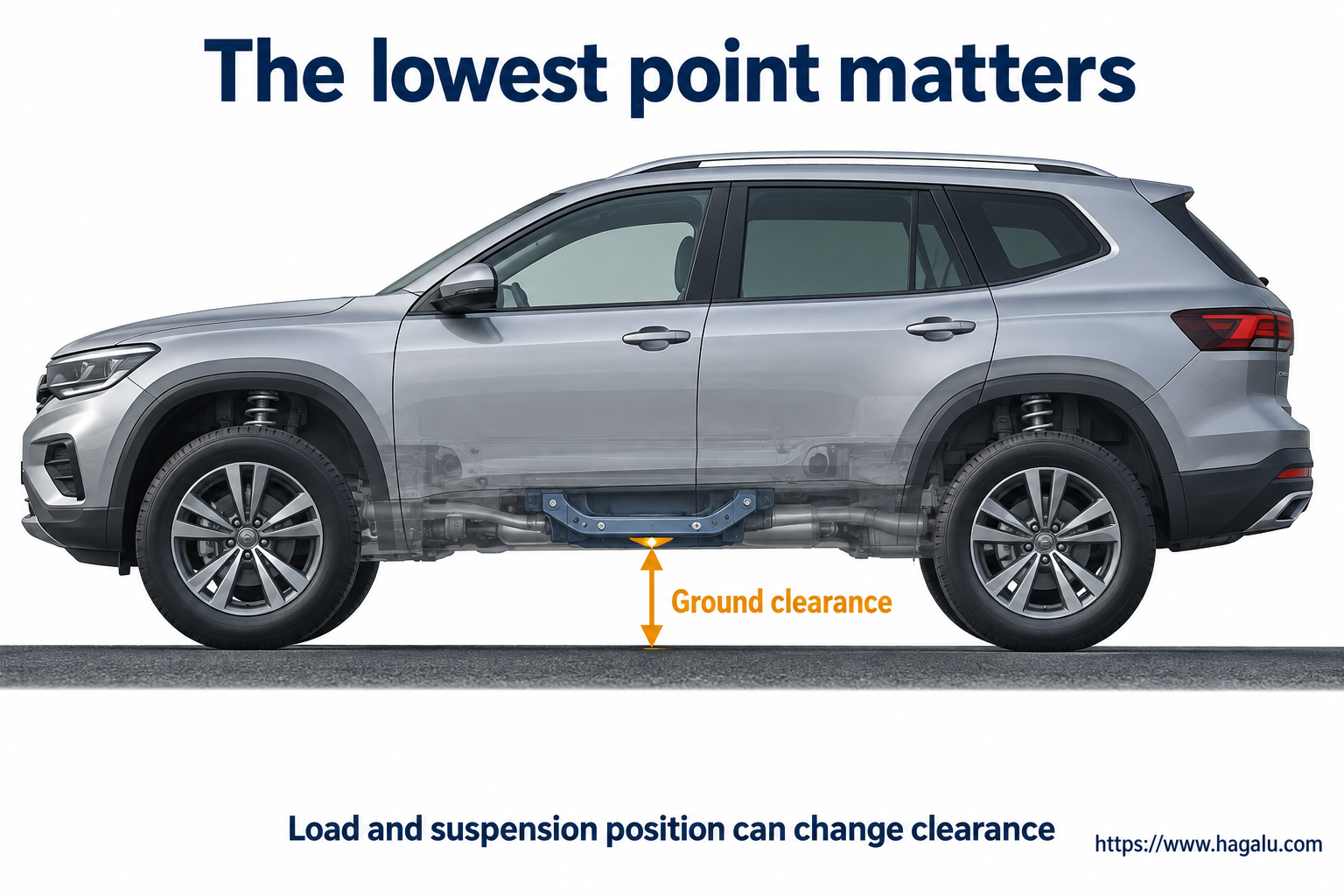
A published clearance figure needs a reference condition: tyre fitment, suspension setting, load and measurement point. Full passenger or cargo load can reduce sprung-body clearance; an axle-mounted differential can behave differently. A body lift is not the same as raising every underbody component.
Look at the protected and vulnerable areas, not only the headline mm. Rocks can strike suspension, drivetrain, exhaust or an EV battery enclosure. A protection plate does not authorise an impact. Use the exact local specification and inspect the route before attempting it.
Start hereA long nose or tail can touch a slope before the tyres climb it.
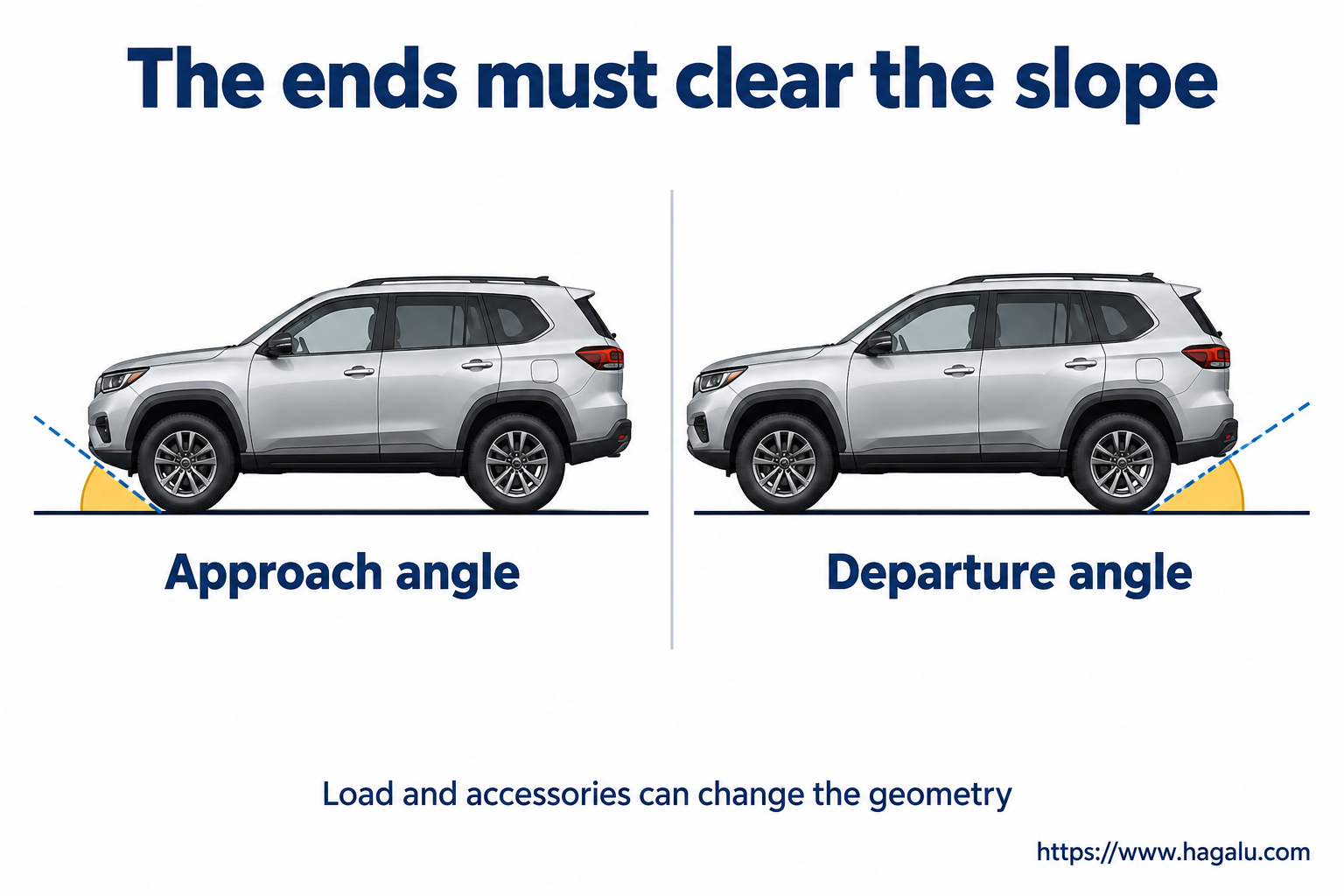
Approach angle relates the front tyre contact region to the limiting forward body point; departure angle does the corresponding job at the rear. Bumpers, tow hardware and accessories can change the effective geometry. A static brochure angle is not a guarantee under load or suspension movement.
Angles do not describe tyre grip or surface strength. A favourable approach angle still cannot make unstable terrain safe. Slow controlled assessment, a permitted route and the manufacturer's operating instructions matter more than trying to 'beat' a published number.
Start hereThe tyres can be on opposite sides of a hump while the car's belly touches the top.
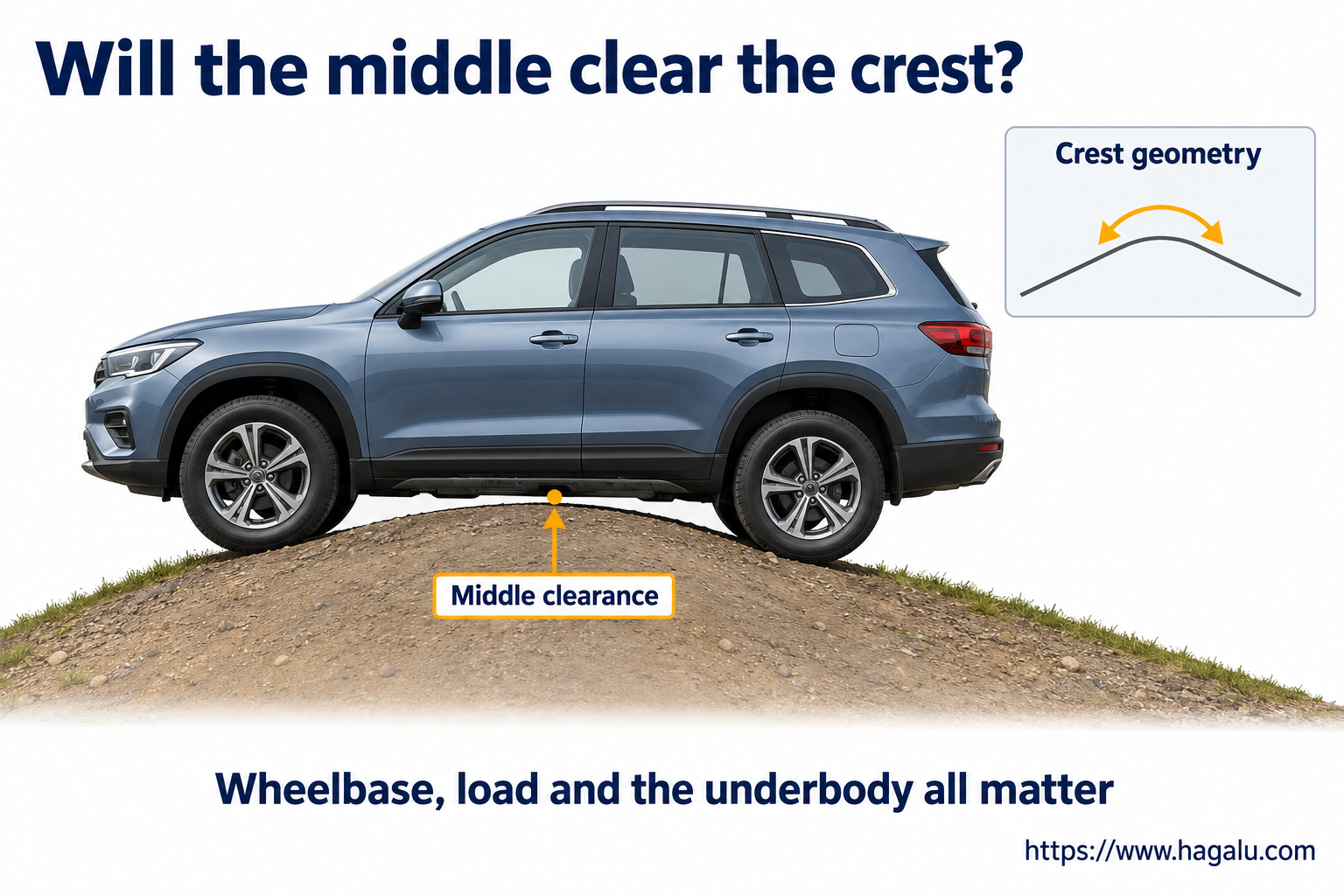
Wheelbase and the underbody envelope influence crest clearance. Longer wheelbase can reduce breakover capability when other geometry is comparable. Actual limiting points and suspension travel complicate a simple triangle model, so use the manufacturer's measured definition rather than treating a sketch as a certified angle.
A short body is not automatically superior everywhere: stability, cargo space, ride and axle placement also matter. Plan a route around the vehicle's complete geometry and load rather than shopping from one isolated angle.
Start hereKeeping tyres in contact helps—but tyres still need a surface they can grip.
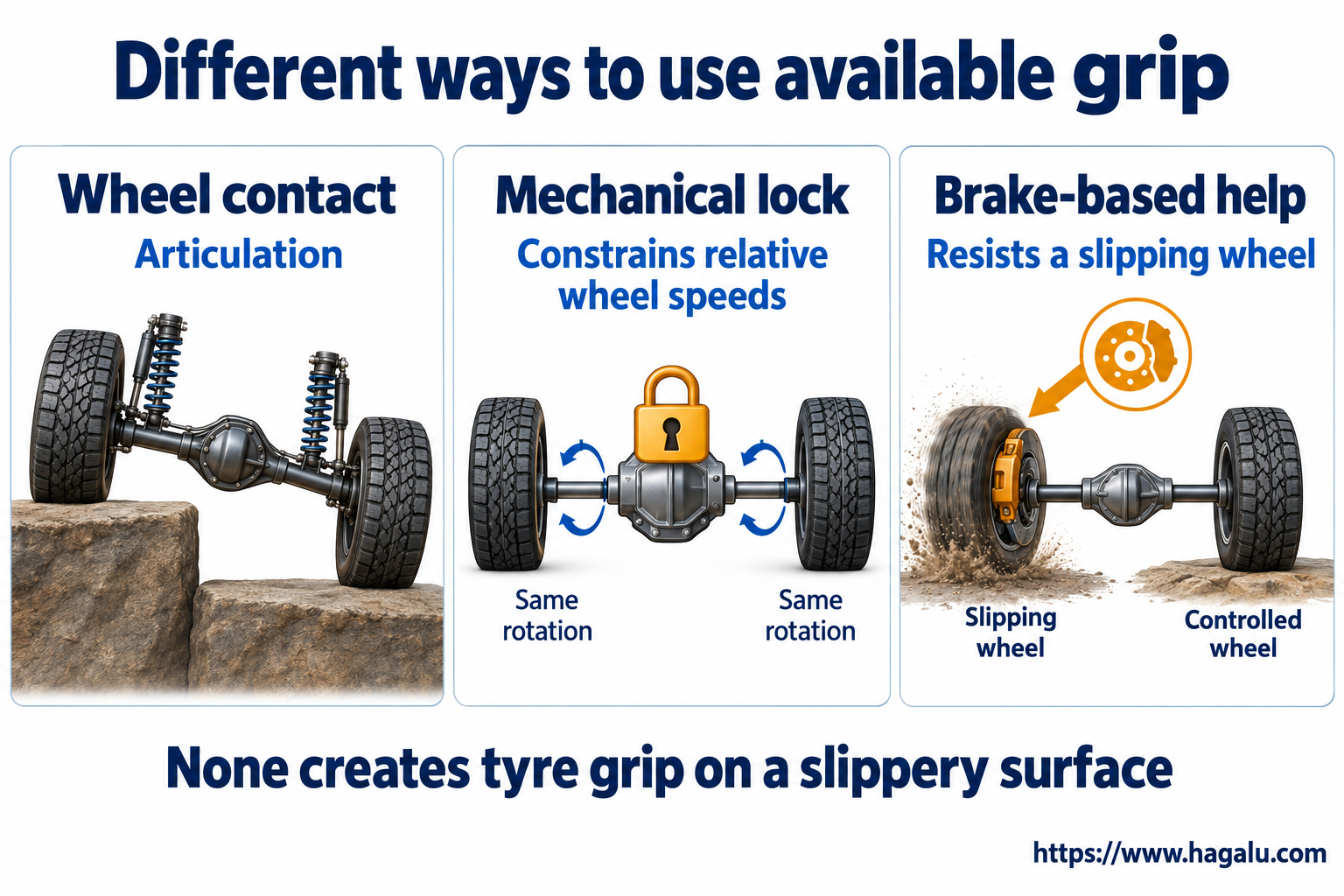
Articulation describes relative wheel or axle movement that can preserve contact over uneven terrain. A differential lock constrains relative wheel speeds; brake-based traction control can resist a slipping wheel to help develop drive at another wheel. These are different mechanisms with different limits.
A lock is not a general road-handling improvement. It can affect steering and load the drivetrain when wheel paths differ on high-grip surfaces. Activation conditions, permitted speed and use differ. Never infer locking axles from 'AWD', '4WD' or a terrain-mode menu alone.
Start hereMore shaft turns for one wheel turn can give useful control at a lower road speed.
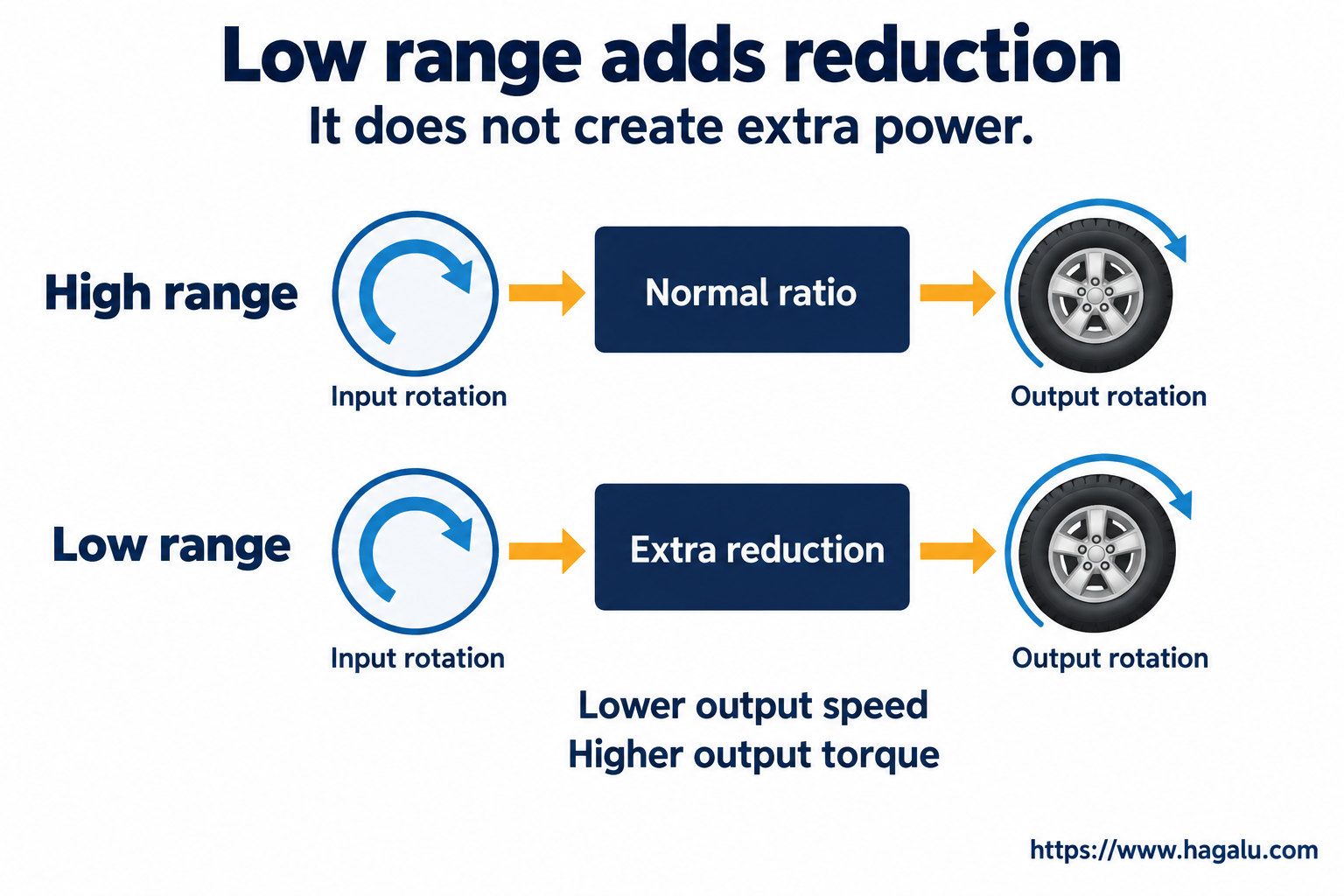
A low-range transfer ratio adds reduction downstream of the main gearbox in systems that provide it. It can improve slow-speed control and torque multiplication, within the limits of traction and hardware. It is not extra engine power or a substitute for suitable tyres.
Terrain modes change control strategies and are not necessarily mechanical low range. Hill-descent control applies supported braking control; engine braking depends on drivetrain and gear selection. Learn the exact engagement procedure from the manual instead of trying to change modes at an invented universal speed.
Start hereDepth alone cannot tell you how fast water is flowing or whether the road is still underneath it.
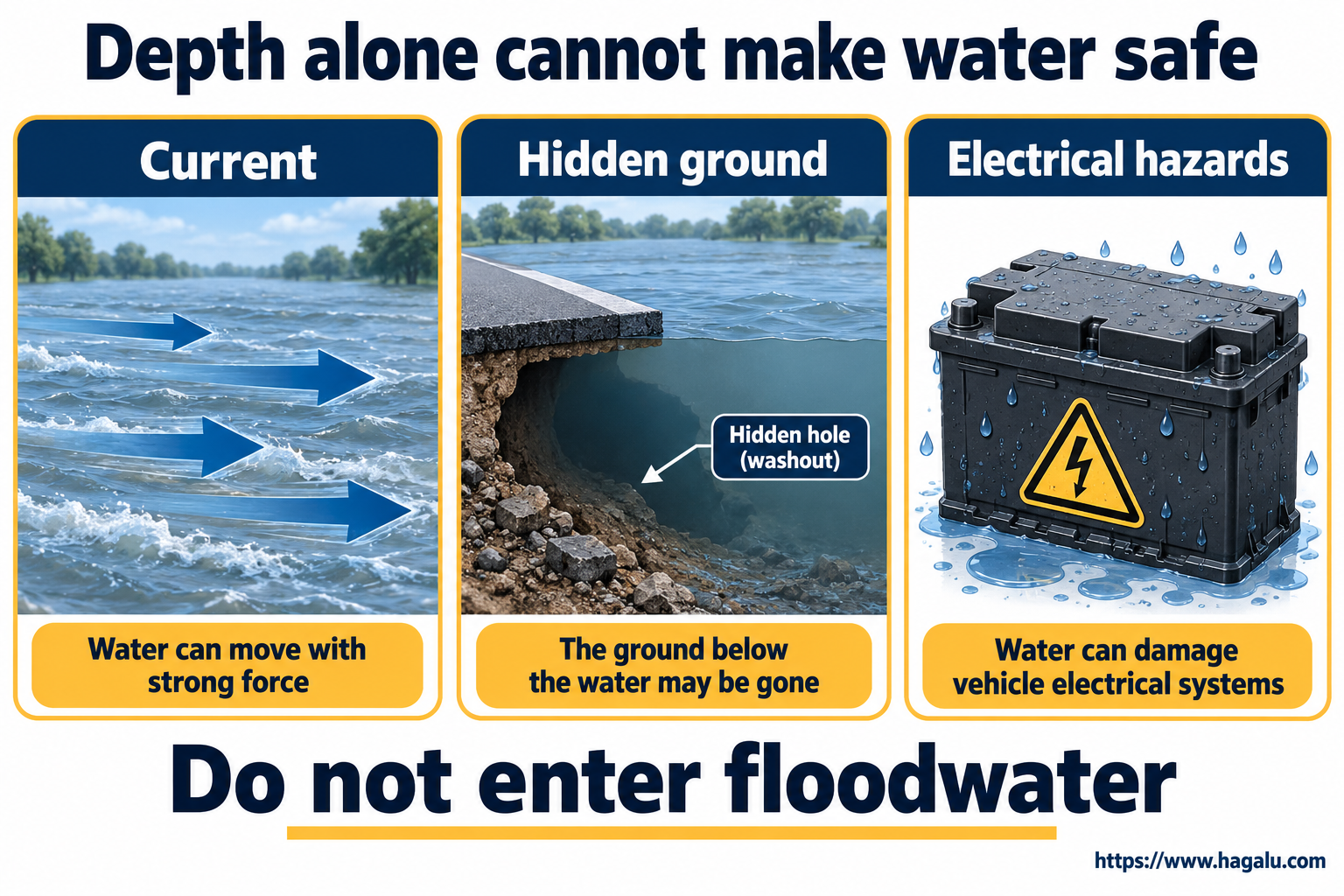
Published wading capability belongs to defined conditions and procedures. Current, hidden holes, floating debris, water contamination and vehicle damage can make a crossing dangerous even below a stated depth. An intake modification does not waterproof electrical systems, bearings, breathers or the cabin.
Do not enter floodwater or moving water based on a specification. Water-exposed vehicles need an appropriate inspection, especially with electrical/high-voltage systems. Recovery forces are hazardous too: tow points and rated recovery points are not interchangeable, and a towball is not a snatch-recovery point.
This is educational context, not an OEM service procedure. Use current instructions for the exact vehicle and market before measurements, repairs or safety-critical work.
These links rotate within your selected country. Open an exact variant to check its recorded specifications; the teaching diagrams above do not represent these models.
1.5T Ultra Luxury 4WD PHEV DHT
Read this variant's specs3.0TD V6 Double Cab Platinum 10AT 4x4
Read this variant's specsT60 Utility Single Cab 4x4
Read this variant's specs2.5 Individual Edition Auto AWD
Read this variant's specsNo. The drivetrain badge does not establish transfer-case reduction or locking equipment.
No. Approach concerns the front end entering a slope; breakover concerns the vehicle's middle clearing a crest.
It can help use available traction by restricting relative wheel speed, but it cannot create tyre adhesion where the surface provides none.
Do not use that number as permission. Current, hidden ground, damage and stated conditions can make a crossing dangerous; avoid floodwater.
Not necessarily. Body, suspension and axle-mounted parts respond differently, and fitment can introduce other limits.
These references support the principles, not the specifications of every car. Regional manuals and test protocols have their own scope; never transfer one vehicle's limits or legal rules to another.
All numerical examples in this guide are labelled illustrations. Technical images simplify the mechanism; they are original Hagalu teaching artwork, not manufacturer-approved parts drawings.