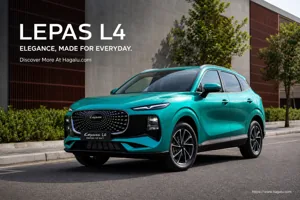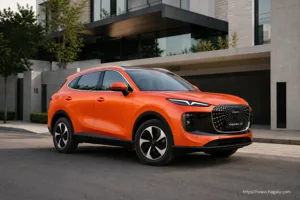
Suv Petrol

LEPAS L6

Price in South Africa, real specs & fuel economy — 2026

LEPAS L6: compact-to-mid-size suv buying guidance, local lineup facts and practical South African ownership trade-offs.

Hover or tap any pill for a plain-English explanation. Bracketed values show common equivalents (bhp, lb-ft, inches, cu ft).

On-road varies by dealer. Fuel figures are manufacturer claims or source-backed estimates where a separate city/highway cycle is not published; your real numbers depend on traffic, terrain and driving style.

Brochure (PDF)
₿ Pay with crypto BTC · ETH · USDT · USDC

Last checked on 2026-07-21 • Verified by the Hagalu team

About the LEPAS L6

LEPAS L6: compact-to-mid-size suv buying guidance, local lineup facts and practical South African ownership trade-offs.

The LEPAS L6 fills a specific place in the South African market: an upcoming LEPAS SUV for buyers who find the L4 too compact and are willing to wait for confirmed local pricing, drivetrain details and after-sales terms. It is a compact-to-mid-size suv with petrol power. The confirmed launch position is clear, but local derivative names and prices remain pending ahead of launch. That range structure matters because a useful buying decision starts with the locally offered product, not a foreign configurator or an estimated price. The L6 sits between the entry L4 and larger L8 in the planned LEPAS family. Its July timing and open pre-order channel confirm local intent, but a reservation should not be treated as a substitute for a derivative sheet. The decisive facts will be engine output, gearbox, safety allocation, service cover and final transaction price. The result is a vehicle that should be shortlisted according to the work it must do every week, the roads it will use and the ownership costs that continue after delivery. The mechanical proposition is equally important. LEPAS South Africa has confirmed an internal-combustion version for the initial local launch but has not yet published final engine, transmission or derivative details. A buyer should read those facts together with transmission, driven wheels, kerb mass, tyre size and official consumption or range. A strong output figure can be diluted by a heavy body, while an apparently modest engine can be entirely suitable when the vehicle is lightly loaded and used mainly in town. South African altitude also changes naturally aspirated performance, and regular highveld users should carry their normal passengers on a test drive before committing. Where electrification is involved, access to home or workplace charging is part of the vehicle decision, not an afterthought. Practicality is more than the number of seats on a brochure. The local model page presents the L6 as a technology- and comfort-focused SUV, but the final South African trim matrix remains pending. Buyers should take the largest pram, travel case, work crate or sports bag they regularly carry and check the opening as well as the quoted volume. Rear-seat access, child-seat anchor placement, headroom with a sunroof, USB access and air-vent coverage matter on every school run. The same applies to visibility: a camera is useful, but clear glass areas, predictable steering and well-positioned mirrors reduce effort on every trip. Equipment should therefore be valued by frequency of use rather than by the length of the feature list. Ownership planning separates a good test drive from a good purchase. The advertised price is only the first number. Finance interest, deposit, balloon exposure, insurance, tyres, fuel or electricity, scheduled servicing and likely resale all affect the monthly burden. Buyers comparing the L6 should request a written quotation for the exact derivative, ask whether paint or dealer accessories change the financed amount and check that warranty and service-plan start dates are recorded correctly. A lower trim can be the stronger decision when it preserves cash flow; a higher trim earns its premium only when its safety, comfort or capability equipment is genuinely needed. The final check should reproduce real use. Drive the route that exposes low-speed gearbox behaviour, broken tar, a steep merge and an emergency stop. Set the driver's seat first, then sit behind it. Pair the phone, use navigation, reverse into a narrow bay and inspect the spare-wheel arrangement. For an upcoming vehicle, the same discipline means waiting for a South African derivative sheet and binding quotation before comparing instalments. For a current vehicle, it means checking that the dealer car's build and equipment match the official local specification. This process gives the L6 a fair assessment without relying on launch-day excitement or badge preference.

Who buys this: The natural buyer is someone seeking an upcoming LEPAS SUV for buyers who find the L4 too compact and are willing to wait for confirmed local pricing, drivetrain details and after-sales terms. They should know their annual distance, normal passenger load, charging access where relevant, insurance budget and whether the car will spend most of its life in traffic, on national roads or on gravel. The L6 makes most sense when its confirmed drivetrain and equipment solve those repeated needs without forcing the household to finance capability it will rarely use.

City
The expected role is daily family use with more cabin space than L4, but urban suitability cannot be judged properly until dimensions, parking equipment, camera coverage and fuel consumption are published for the local derivatives. For city ownership, compare the turning circle, parking aids, low-speed drivetrain response and real garage dimensions. Air-conditioning, phone integration and seat comfort should be tested during a realistic commute. Short-trip fuel use can differ materially from a combined claim, while an electrified L6 only delivers its best operating-cost case when charging is convenient and consistently used.
Highway
Prospective long-distance owners should wait for local power, torque, tank, consumption, tyre and assistance specifications. These details will determine whether the L6 is a relaxed touring alternative or primarily an urban family SUV. On faster roads in the L6, the useful questions are stability in wind, passing response at altitude, braking with a full passenger load and how often its drivetrain changes gear or calls on a range extender. Service-plan distance, roadside assistance, spare-wheel type and tyre availability deserve attention before frequent inter-provincial travel in this compact-to-mid-size suv. A calm 120 km/h test is more revealing than a short burst of acceleration.
Off-Road
No South African clearance, drivetrain or off-road specification has been issued. Buyers who regularly travel on gravel should reserve judgement until tyre profile, ground clearance, traction systems and underbody protection are confirmed. Ground clearance alone does not establish the L6's off-road ability. Tyre sidewall, approach and departure angles, cooling, traction hardware and underbody protection define its safe envelope. Owners who regularly visit farms, sites or lodges should use the exact local figures and choose a L6 derivative whose driven wheels and tyres suit those routes. For ordinary damaged tar, controlled speed remains more valuable than a styling package.

LEPAS L6 — Quick Facts

LEPAS L6 Specifications

Should You Buy It?

A focused compact-to-mid-size suv that should be chosen by exact local derivative, real weekly use and complete ownership cost.

The LEPAS L6 deserves consideration for its clearly defined role as an upcoming LEPAS SUV for buyers who find the L4 too compact and are willing to wait for confirmed local pricing, drivetrain details and after-sales terms. Its strongest qualities are confirmed south african launch, pre-orders already open, positioned above the l4, while the main cautions are no final price, no local derivative names, no confirmed engine output. The correct derivative is the one that covers the buyer's regular safety, space and drivetrain needs at a sustainable total cost. Current buyers should compare written on-road quotations and exact build specifications. Pre-launch buyers should keep a place on the shortlist but delay any firm value judgement until South African variants, prices and warranty terms are published.

What's Good
  • Confirmed South African launch
  • Pre-orders already open
  • Positioned above the L4
  • SUV body style
  • Local LEPAS support structure
  • Potential broader family role
  • Official local model page
  • July 2026 timing
  • Opportunity to compare final launch packages
Watch Out For
  • No final price
  • No local derivative names
  • No confirmed engine output
  • No published transmission detail
  • No final safety matrix
  • No local consumption figure
  • No confirmed dimensions
  • No colour list
  • Pre-launch specification can change

LEPAS L6 FAQs

A final South African retail price for the LEPAS L6 has not been announced. Pricing will only be comparable once the local distributor publishes the derivative list, standard equipment and recommended prices.

Final South African derivatives for the LEPAS L6 have not been announced. Engine, battery, drivetrain and trim details can differ by market, so the local range should not be inferred from overseas catalogues.

The LEPAS L6 is an upcoming South African model. LEPAS South Africa has confirmed an internal-combustion version for the initial local launch but has not yet published final engine, transmission or derivative details. Final availability remains subject to the local launch announcement and published dealer ordering information.

The natural buyer is someone seeking an upcoming LEPAS SUV for buyers who find the L4 too compact and are willing to wait for confirmed local pricing, drivetrain details and after-sales terms. They should know their annual distance, normal passenger load, charging access where relevant, insurance budget and whether the car will spend most of its life in traffic, on national roads or on gravel. The L6 makes most sense when its confirmed drivetrain and equipment solve those repeated needs without forcing the household to finance capability it will rarely use.

The expected role is daily family use with more cabin space than L4, but urban suitability cannot be judged properly until dimensions, parking equipment, camera coverage and fuel consumption are published for the local derivatives. For city ownership, compare the turning circle, parking aids, low-speed drivetrain response and real garage dimensions. Air-conditioning, phone integration and seat comfort should be tested during a realistic commute. Short-trip fuel use can differ materially from a combined claim, while an electrified L6 only delivers its best operating-cost case when charging is convenient and consistently used.

Prospective long-distance owners should wait for local power, torque, tank, consumption, tyre and assistance specifications. These details will determine whether the L6 is a relaxed touring alternative or primarily an urban family SUV. On faster roads in the L6, the useful questions are stability in wind, passing response at altitude, braking with a full passenger load and how often its drivetrain changes gear or calls on a range extender. Service-plan distance, roadside assistance, spare-wheel type and tyre availability deserve attention before frequent inter-provincial travel in this compact-to-mid-size suv. A calm 120 km/h test is more revealing than a short burst of acceleration.

Also Worth Exploring in South Africa

Different body types — refreshed every visit so you discover something new.

Ford Mustang Petrol
Ford Mustang
Sedan 2 Variants
From R1,340,000
Toyota GR Supra Petrol
Toyota GR Supra
Sedan 2 Variants
From R1,524,800
KIA Picanto Panel Van Petrol
KIA Picanto Panel Van
Van 2 Variants
From R249,995
Suzuki Dzire Petrol
Suzuki Dzire
Sedan 3 Variants
From R229,900

Other LEPAS Models in South Africa

LEPAS L4 Petrol
LEPAS
L4
SUV 3 Variants
Starting from ZAR 299,900

Data verified against: LEPAS Official South Africa Website

More from LEPAS