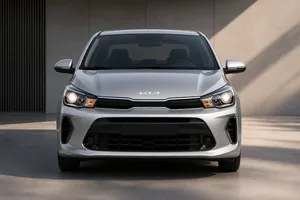
Sedan Petrol Automatic FWD 5-seat

KIA Pegas

Price in South Africa, real specs & fuel economy — 2026

Model year 2026 Generation First generation; purpose-designed for emerging markets Current version 2022 Body style Sedan
KIA's budget sedan delivers genuine three-box practicality and a separate boot at an entry-level price, competing directly with the Toyota Starlet sedan in South Africa's cost-conscious family segment.
ZAR 274,995
On-road in
ZAR 289,294
Ex-showroom ZAR 274,995
Finance estimate from ZAR 4,179/month Based on 1.4 LX Manual Ex-showroom basis · approx. 20% deposit · 11.5% p.a. · 60 months · no balloon
Engine:1368cc (1.4L) Torque:132Nm (97 lb-ft) Ground Clearance:148mm (5.8″) Power:73kW (98 bhp) Boot475L (16.8 cu ft)

Hover or tap any pill for a plain-English explanation. Bracketed values show common equivalents (bhp, lb-ft, inches, cu ft).

Fuel Economy km/l · US mpg equivalent
Combined 16.9 km/l (40 mpg)
City 13.9 km/l (33 mpg)
Highway 19.6 km/l (46 mpg)

On-road pricing varies by dealer. Fuel figures are manufacturer claims or source-backed estimates where a separate city/highway cycle is not published; your real numbers depend on traffic, terrain and driving style.

Model Range PDF
₿ Pay with crypto BTC · ETH · USDT · USDC

Estimate monthly vehicle finance for the KIA Pegas in South Africa. The default illustration uses the ex-showroom price, approximately 20% deposit, 11.5% nominal annual interest over 60 months and no balloon payment.

Estimated monthly instalment
ZAR 4,179
Total Interest
ZAR 60,716
Total Payable
ZAR 250,716
Principal Interest

* Illustrative estimate based on the ex-showroom price, approximately 20% deposit, 11.5% nominal annual interest, 60 months and no balloon payment, using the 1.4 LX Manual. Excludes initiation fees, monthly service fees, credit-life insurance and vehicle insurance. Your lender quotation may differ.

Source-backed vehicle data • Verified by the Hagalu team

KIA Pegas

KIA's budget sedan delivers genuine three-box practicality and a separate boot at an entry-level price, competing directly with the Toyota Starlet sedan in South Africa's cost-conscious family segment.

South Africa's sedan market below R300,000 has contracted over the past decade, squeezed by the rise of compact crossovers and lifted hatchbacks that captured buyer preference with their elevated ride heights and lifestyle positioning. But the three-box sedan has not disappeared — fleet buyers, rural families who need genuine boot separation for security, and urban buyers who associate sedan ownership with a specific social statement continue to drive meaningful demand for affordable four-door designs. The KIA Pegas occupies this space with a value-focused proposition that pairs the brand's warranty advantage with an honest, unflashy specification suited to the buyers who actually need what a sedan provides. The Pegas arrived in South Africa as a model developed specifically for emerging-market buyers — not a hand-me-down from a discontinued global model but a purpose-engineered vehicle for price-sensitive markets where durability, fuel economy and low maintenance costs outweigh infotainment sophistication or dynamic performance. South Africa fits that buyer profile precisely, and the Pegas's design reflects a clear-eyed understanding of what its target customer actually values. Power comes from the 1.4-litre G4FA four-cylinder petrol engine — a naturally aspirated 1,368cc unit producing 73kW at 6,000rpm and 132Nm of torque at 4,200rpm. The G4FA is a known quantity in South Africa. This basic engine architecture underpins multiple KIA and Hyundai models that have accumulated hundreds of thousands of kilometres in South African service over the past fifteen years. Fleet operators, used-car dealers and independent mechanics are uniformly familiar with it. Its reliability record is strong, its service intervals are accessible, and its parts availability through KIA's dealer network is not a concern in any South African province. Mated to either a five-speed manual or four-speed automatic gearbox, the 1.4 moves the Pegas from rest to 100km/h in approximately eleven seconds — not quick by any absolute measure, but entirely adequate for a vehicle that will spend most of its life on urban municipal roads and secondary routes rather than attacking the Franschhoek Pass. Real-world fuel consumption in South African conditions — mixed Johannesburg urban commuting with occasional Highveld highway sections — comes in around 6.5 litres per 100km in manual trim, slightly higher with the automatic. The Pegas carries a 45-litre fuel tank, giving a practical range of roughly 650km between fill-ups in mixed driving. That range number is not incidental — for buyers in rural provinces like Limpopo, the Northern Cape or North West, where petrol stations can be separated by sixty or more kilometres and the uncertainty of fuel availability is a real operational consideration rather than an abstract possibility, a 650km range provides a genuine safety margin. The Pegas body is a conventional three-box sedan with a 460-litre boot — one of the largest storage volumes in the sub-R280k passenger vehicle class. This is not a specification irrelevancy. For buyers who routinely carry extended-family luggage for KZN holiday trips, who transport business stock between depot and client, who need to move camping gear for Kruger National Park overnights, or who simply do a substantial weekly grocery shop at Game or Makro, 460 litres of boot space is a daily-life advantage that hatchbacks in the same price range cannot match. The separate boot lid also provides a security dimension: goods stored in the rear cannot be accessed by a smash-and-grab attack through a rear window, a consideration that South African buyers in higher-crime urban environments weigh seriously against the convenience of a hatchback tailgate. Interior dimensions are appropriate for the price point. Front seat occupants are well accommodated — adequate headroom and legroom for adults to 190cm, with front seats that offer reasonable lateral support for the Pegas's target use profile of commuting and family transport. The rear seat offers more knee room than most sub-compact hatchbacks at similar pricing, reflecting the sedan body's inherent packaging advantage: with the boot as a separate structural element, the rear seat can use more of the wheelbase for passenger accommodation rather than sharing the loading envelope with luggage. Three rear seat occupants of average build can manage the Johannesburg-to-Pretoria run comfortably; the R561 to Durban with three adults and their luggage in a full Pegas is a manageable, if not spacious, experience. The cabin materials are straightforward — hard plastics dominate, with fabric seat trim rather than synthetic leather or vinyl. The switchgear has a positive-action quality that does not feel as cost-conscious as it looks in photos; KIA's ergonomic standards ensure that controls are logically positioned and the infotainment interface is operable without reference to the owner's manual. The touchscreen unit is sized appropriately for the vehicle class — neither the miserly small units some budget rivals fit, nor the oversized tablet-style screens that recent models have used to compensate for interior quality deficiencies with technology theatre. The Pegas LX at R239,995 represents the entry point with air conditioning, electric front windows, touchscreen infotainment with Bluetooth, a reverse camera and the full KIA warranty package. The EX at R274,995 adds rear electric windows, alloy wheels, a larger touchscreen, cruise control and Apple CarPlay and Android Auto on both grades. These are not optional extras — they come standard. Cruise control at sub-R275k is genuinely unusual in South Africa's budget sedan market and reflects KIA's decision to equip the Pegas for the actual roads South African buyers use, not just the cities where the marketing photographs are taken. The ride quality deserves specific attention in a South African road context. The Pegas is tuned for surfaces that are not uniformly smooth, and its suspension compliance over broken urban tarmac is adequate without being exceptional. It is softer than a European compact sedan of similar price, which suits the corrugated surfaces encountered on the R24 entering Johannesburg's East Rand, the municipal roads around Buffalo City, the peri-urban approach roads in Polokwane and the tar-chip provincial roads of the Karoo. Body roll in cornering is present but not alarming — this is a family sedan, not a hot hatch, and its chassis behaviour reflects that priority clearly and honestly. The Pegas's competitive position requires honest engagement with its direct rivals. The Toyota Starlet sedan is the closest competitor on price and use case, and it carries Toyota's reliability mythology — which has genuine substance in South Africa's used-car market and fleet procurement culture. The Chery Tiggo 2 Pro sedan adds crossover-adjacent styling at aggressive pricing but with less established after-sales infrastructure. The Volkswagen Polo Vivo sedan carries the aspirational VW badge that still motivates purchase decisions among South African buyers who prioritise badge perception over specification analysis. Against all three, the Pegas argues on warranty length, standard equipment depth and the established reliability of the G4FA engine in South African commercial conditions. Safety equipment is adequate rather than generous at this price point. Dual airbags, ABS with EBD and stability control are standard across the range. The Pegas has not been subjected to current Global NCAP protocols, which limits objective safety benchmarking. The two-airbag standard is a cost concession that is understandable in context — the G4FA engine budget and the 460-litre boot engineering leave less room for premium safety specification than the larger Sonet or Seltos deliver at their price points. It is an honest limitation for buyers who weight safety ratings heavily. The Pegas makes its strongest case in secondary cities and rural areas where road conditions prioritise ride quality and fuel range over dynamic refinement, where boot separation from the cabin addresses real security concerns, and where the 73kW engine's modest output is adequate because journeys are rarely sustained at the high speeds of the Gauteng freeway network. A Limpopo small-business owner transporting stock between Polokwane and Tzaneen, a North West family making the monthly Mahikeng-to-Rustenburg run, a KZN teacher commuting between Durban's suburbs and their school in Pinetown — these are the Pegas buyers for whom it delivers exactly what they need without asking them to pay for what they don't. The sedan body's inherent practicality advantages deserve more credit in a market that has become infatuated with raised ride heights and plastic body cladding. A 460-litre lockable boot, more rear seat space than a Sonet, a proven engine, competitive running costs and the best warranty in its class form a package that addresses real requirements rather than aspirational ones. At the right buyer profile and use case, the Pegas is unambiguously good value — and recognising when a vehicle is right for its intended purpose is the beginning of a good purchase decision. The Pegas's positioning in South Africa's rural and secondary city market reveals important characteristics about how the sedan body style continues to serve specific buyer needs that the hatchback or crossover cannot replicate. In towns like Upington, Moorreesburg, Kroonstad, Middelburg (Eastern Cape) and Thohoyandou, the sedan's formal body shape carries a social signification that hatchbacks do not. The three-box sedan reads as a vehicle bought with intention and permanence — the car of a professional, a business owner, a household head who has made a considered purchase rather than a student or young driver making a value choice. This cultural dimension of sedan ownership in South Africa's smaller cities and towns is not reflected in specification comparisons but influences purchase decisions meaningfully. The 45-litre fuel tank deserves reemphasis in the context of South Africa's rural fuel infrastructure. The Western Cape's wine estates and Overberg farming communities, the Northern Cape's vast Karoo distances, North West's farmlands and Limpopo's bushveld regions all have petrol station intervals that urban buyers rarely encounter. A buyer in the Kgalagadi district or the Richtersveld may face 80km between fill opportunities on their regular routes. A 650km range on a full tank provides the buffer that makes the Pegas genuinely appropriate for these environments in ways that vehicles with smaller tanks or higher consumption rates are not. The practical utility of adequate range is invisible in urban markets and visible daily in rural ones. KIA's expanded dealer network now covers all nine provinces, including dedicated service points in secondary cities that did not have KIA representation five years ago. In terms of accessibility for rural and semi-urban Pegas buyers, this dealer expansion means that scheduled services and warranty claim management are accessible without requiring a 200km trip to the nearest provincial capital. The three-year/45,000km service plan reduces the financial friction of these service interactions for rural buyers who face additional travel costs to access authorised workshops. As the dealer network continues to expand, the Pegas's total cost of ownership case in secondary markets will only strengthen. The Pegas's resale market in South Africa's secondary cities and rural areas reflects the vehicle's utility positioning: it holds its value in markets where practical utility is the primary valuation criterion, and where the Toyota Starlet's resale premium — built on Toyota's reliability mythology — is the primary competitive challenge. As KIA accumulates service history in South African rural commercial conditions and as more Pegas vehicles pass through their first full ownership cycles without significant reliability incidents, the brand's rural residual value should improve toward the segment average. The Pegas's boot lid design — a separate hinged panel rather than a hatchback tailgate — creates a specific vulnerability exposure reduction in South Africa's vehicle crime context. Smash-and-grab crime in South Africa's urban and suburban environments is concentrated around visible goods in vehicle cabins. The sedan's boot is structurally invisible to external view — goods stored in the boot cannot be seen through any window and are protected by the locked boot lid that requires either the key or the fuel cap release lever to open. For buyers who regularly transport electronics, laptops, camera equipment or business stock in their vehicle, the sedan boot's visual and physical separation from the cabin is a security feature that insurance companies in South Africa recognise with premium reductions for vehicles with low cargo-visibility profiles. The Pegas's automatic transmission variant is worth reconsidering in the context of South Africa's urban driver preferences. The four-speed automatic is older generation by current standards, but it serves the Pegas's urban family application without significant penalty in conditions where maximum efficiency is not the priority. For first-time automatic car buyers — a substantial portion of the South African first-time new-car buyer segment, where many buyers have learned to drive on manual cars and are buying their first automatic — the Pegas automatic's torque converter-based simplicity is a friendlier introduction to automatic driving than the dual-clutch or CVT alternatives, which have distinct engagement characteristics that can confuse drivers accustomed to either manual or traditional automatic operation. The Pegas's position in South Africa's BBBEE fleet vehicle procurement context is specifically relevant for companies procuring entry-level staff transport vehicles or providing vehicle allowances to employees in lower-to-middle income bands. The Pegas's pricing within the approved government and corporate fleet vehicle categories makes it accessible for company-allocated transport programmes where individual employee cost-to-company thresholds constrain the vehicle specification available. For a logistics company with forty regional representatives whose vehicle allowance amounts to R3,200 per month, a Pegas on a 60-month finance contract at R3,000-R3,500 per month is the most complete sedan package available within that budget constraint. The three-year service plan inclusion reduces the employee's maintenance liability and the company's reimbursement obligation simultaneously.

KIA Pegas — Quick Facts

KIA Pegas Variants & Prices

Pick up to 3 variants, hit Compare Variants and you'll get a proper side-by-side spec breakdown.

Maximum 3 variants reached
Uncheck one of the selected variants below before choosing another.
Cmp Variant Trim Fuel Transmission Price
1.4 LX Manual Base Petrol Manual ZAR 239,995
1.4 LX Auto Mid Petrol Automatic ZAR 254,995
1.4 EX Manual Top Petrol Manual ZAR 259,995
1.4 EX Auto Flagship Petrol Automatic ZAR 274,995
Cmp Variant Trim Fuel Transmission Price
1.4 LX Manual Base Petrol Manual ZAR 239,995
1.4 LX Auto Mid Petrol Automatic ZAR 254,995
1.4 EX Manual Top Petrol Manual ZAR 259,995
1.4 EX Auto Flagship Petrol Automatic ZAR 274,995
2 variants selected

KIA Pegas Specifications

Length
4400 mm
Width
1700 mm
Height
1470 mm
Wheelbase
2570 mm
Ground Clearance (Default)
148 mm
Ground Clearance (With Full Seating Load)
150 mm
Fuel Tank Capacity
40 l
Boot/Cargo Space
475 l
Kerb Weight
1130 kg
Gross Vehicle Weight (GVW)
1450 kg
Payload Capacity
425 kg
Towing Capacity
1000 kg
Seating Capacity
5 seats
Number of Rows
2 rows
Doors
4 doors
Minimum Turning Radius
10.4 m
Front Headroom
990 mm
Rear Headroom
950 mm
Front Legroom
1030 mm
Rear Legroom
860 mm
Driving fit

Where the KIA Pegas Fits Best

A practical view of the buyer and roads this model is best suited to.

Who buys this

Budget-conscious family buyer needing sedan practicality; rural and secondary-city buyers; fleet operators requiring basic reliable transport. For the Kia Pegas, the best buyer is someone who can match the vehicle to a known routine instead of shopping only by advertised price or exterior style.

City
Good — adequate power for urban use, comfortable ride on imperfect municipal roads. For the Pegas, city use also means potholes, tight shopping-centre ramps, speed humps, heat-soaked traffic and short trips where fuel use can rise. The most comfortable derivative is the one that combines the right gearbox response, seating position and parking support with tyre sizes that do not punish everyday surfaces.
Highway
Adequate — 73kW is sufficient for national road cruising; better suited to secondary roads than sustained 120km/h Gauteng freeway. A buyer who drives between provinces or carries family on holiday should also consider noise, seat support, spare-wheel arrangements, overtaking response and how confidently the vehicle holds speed when loaded. Those details often separate two trims that look similar on paper.
Off-Road
Not suited. Where rougher roads are part of ownership, the buyer should check tyres, underbody clearance, approach to traction control and recovery practicality before relying on the body style. If the route is mainly tar, comfort and running costs should take priority over unused off-road image. Buyers who regularly use gravel, farm roads or damaged suburbs should compare tyre size, clearance and suspension comfort before assuming the body style alone is enough.

KIA Pegas — Should You Buy It?

Honest budget sedan value: big boot, low running costs and KIA's class-leading warranty make the Pegas a sensible choice for buyers who need three-box practicality on a tight budget.

The Pegas earns its place by doing unfashionable things well. The 460L boot outclasses every sub-R280k hatchback, the 1.4L engine is proven reliable, and the seven-year warranty removes the financial fear that accompanies entry-level vehicle purchases. It is not exciting, not dynamic, not technologically advanced — but for the buyer who needs dependable daily transport with genuine cargo separation, it is excellent value. The fairest verdict on the Kia Pegas is therefore use-case driven. It can be a strong South African choice when the buyer chooses the correct derivative for the intended mix of city driving, freeway work, passengers, cargo and rough-road exposure. It becomes less convincing when bought only for styling or badge appeal without checking the practical numbers and ownership costs that will matter after delivery.

What's Good
  • 460L boot — one of the largest in the sub-R280k class — ideal for families and business use
  • 7-year/150,000km warranty provides exceptional financial security for entry-level buyers
  • 1.4L G4FA engine has a strong reliability record across South African KIA/Hyundai fleet
  • Apple CarPlay and Android Auto standard on both grades
  • 45L fuel tank gives ~650km range, valuable for rural buyers in petrol-sparse provinces
  • Separate boot lid improves cargo security vs hatchbacks in higher-crime areas
  • Rear seat offers noticeably more knee room than sub-compact hatchback rivals
  • 3-year/45,000km service plan reduces predictable maintenance costs
  • Reverse camera standard — useful given sedan's longer rear overhang in urban parking
Watch Out For
  • Only two airbags standard — safety equipment below class best (Picanto offers 6)
  • 1.4L naturally aspirated feels breathless on sustained Highveld freeway overtaking
  • Four-speed automatic transmission is a generation behind modern efficiency
  • Hard plastic cabin materials feel below KIA's own Sonet/Seltos interior standard
  • No NCAP safety rating available — limits ability to benchmark safety objectively
  • Body roll is pronounced in quick directional changes — sedan dynamics, not sporty
  • Limited colour palette — fewer personalisation options than Picanto
  • Alloy wheels only from EX grade — base LX rides on steel wheels with covers
  • Brand perception still trails Toyota Starlet in used-car residual value markets

KIA Pegas FAQs

Current recommended retail prices for the KIA Pegas run from R239,995 to R274,995, depending on the derivative. Compare the exact trim before calculating finance because options, insurance and dealer charges can change the final monthly cost.

The current South African range comprises 1.4 LX Manual, 1.4 LX Auto, 1.4 EX Manual, 1.4 EX Auto. Prices and equipment are shown by derivative so buyers can compare the actual local range rather than specifications from another market.

The listed ground clearance for the KIA Pegas is 148 mm. Use that number as a practical comparison point against similar cars, especially if you regularly deal with steep driveways, gravel roads or uneven parking areas.

The listed engine capacity for the KIA Pegas is 1368 cc, with output shown as 73 kW (98 bhp). Where a model has more than one derivative, compare the specific variant because fuel type, gearbox and drivetrain can change the way it drives.

The combined fuel-economy figure shown for the KIA Pegas is around 16.9 km/l.

Budget-conscious family buyer needing sedan practicality; rural and secondary-city buyers; fleet operators requiring basic reliable transport. For the Kia Pegas, the best buyer is someone who can match the vehicle to a known routine instead of shopping only by advertised price or exterior style.

Good — adequate power for urban use, comfortable ride on imperfect municipal roads. For the Pegas, city use also means potholes, tight shopping-centre ramps, speed humps, heat-soaked traffic and short trips where fuel use can rise. The most comfortable derivative is the one that combines the right gearbox response, seating position and parking support with tyre sizes that do not punish everyday surfaces.

Adequate — 73kW is sufficient for national road cruising; better suited to secondary roads than sustained 120km/h Gauteng freeway. A buyer who drives between provinces or carries family on holiday should also consider noise, seat support, spare-wheel arrangements, overtaking response and how confidently the vehicle holds speed when loaded. Those details often separate two trims that look similar on paper.

Compare KIA Pegas with Similar Sedans

Tap any card to see a full head-to-head — specs, scores and a clear verdict on which one's worth your money.

KIA Pegas
VS
Changan Alsvin
Pegas vs Alsvin
Petrol Sedan 2 Variants
Changan Alsvin from ZAR 249,900
See full specs & who wins →
KIA Pegas
VS
Suzuki Dzire
Pegas vs Dzire
Petrol Sedan 3 Variants
Suzuki Dzire from ZAR 229,900
See full specs & who wins →
KIA Pegas
VS
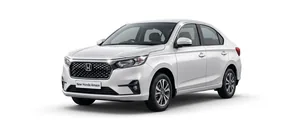
Honda Amaze
Pegas vs Amaze
Petrol Sedan 3 Variants
Honda Amaze from ZAR 254,900
See full specs & who wins →
KIA Pegas
VS
Hyundai Grand i10 Sedan
Pegas vs Grand i10 Sedan
Petrol Sedan 2 Variants
Hyundai Grand i10 Sedan from ZAR 279,900
See full specs & who wins →

Also Worth Exploring in South Africa

Different body types — refreshed every visit so you discover something new.

Toyota Coaster Diesel
Toyota Coaster
Bus 1 Variant
From R1,207,600
Renault Captur Petrol
Renault Captur
Suv 3 Variants
From R515,999
Tata Harrier Diesel
Tata Harrier
Suv 3 Variants
From R549,900
BYD ATTO 2 DM-i plug-in hybrid
BYD ATTO 2 DM-i
Suv 2 Variants
From R449,900

Other Current KIA Models in South Africa

Models currently listed for sale in the South African range.

KIA Carens Diesel
KIA
Carens
MPV 4 Variants
Starting from ZAR 399,995
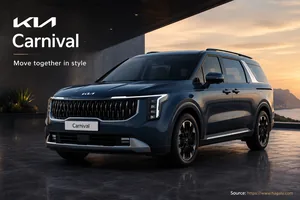
KIA Carnival Diesel
KIA
Carnival
MPV 2 Variants
Starting from ZAR 1,049,995
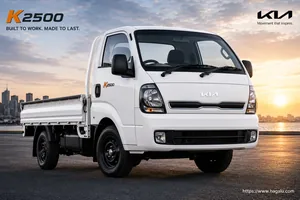
KIA K2500 Diesel
KIA
K2500
Van 3 Variants
Starting from ZAR 424,995
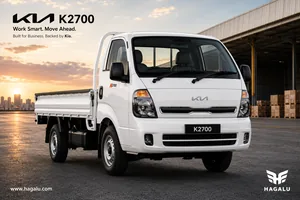
KIA K2700 Diesel
KIA
K2700
Van 4 Variants
Starting from ZAR 351,995

Data verified against: KIA Official South Africa Website

More from KIA