Hatchback Petrol Automatic FWD 5-seat

Suzuki Baleno

Price in South Africa, real specs & fuel economy — 2026

Model year 2026 Generation Second generation globally launched in 2022; entirely new platform and body compared to the first-generation Baleno; shares K15B engine with Fronx, Ertiga, XL6, and Grand Vitara for parts commonality Current version 2022 Body style Hatchback
The roomiest hatchback in Suzuki's SA range — a practical, feature-rich car that offers 318L of boot space, a panoramic sunroof, and a heads-up display at a price most rivals cannot match for comparable specification
ZAR 341,900
On-road in
ZAR 357,002
Ex-showroom ZAR 341,900
Finance estimate from ZAR 4,728/month Based on 1.5 GL MT Ex-showroom basis · approx. 20% deposit · 11.5% p.a. · 60 months · no balloon
Engine:1462cc (1.5L) Torque:138Nm (102 lb-ft) Ground Clearance:150mm (5.9″) Power:77kW (103 bhp) Boot314L (11.1 cu ft)

Hover or tap any pill for a plain-English explanation. Bracketed values show common equivalents (bhp, lb-ft, inches, cu ft).

Fuel Economy km/l · US mpg equivalent
Combined 17.5 km/l (41 mpg)
City 14.3 km/l (34 mpg)
Highway 20.8 km/l (49 mpg)

On-road pricing varies by dealer. Fuel figures are manufacturer claims or source-backed estimates where a separate city/highway cycle is not published; your real numbers depend on traffic, terrain and driving style.

Model Range PDF
₿ Pay with crypto BTC · ETH · USDT · USDC

Estimate monthly vehicle finance for the Suzuki Baleno in South Africa. The default illustration uses the ex-showroom price, approximately 20% deposit, 11.5% nominal annual interest over 60 months and no balloon payment.

Estimated monthly instalment
ZAR 4,728
Total Interest
ZAR 68,705
Total Payable
ZAR 283,705
Principal Interest

* Illustrative estimate based on the ex-showroom price, approximately 20% deposit, 11.5% nominal annual interest, 60 months and no balloon payment, using the 1.5 GL MT. Excludes initiation fees, monthly service fees, credit-life insurance and vehicle insurance. Your lender quotation may differ.

Source-backed vehicle data • Verified by the Hagalu team

Suzuki Baleno

The roomiest hatchback in Suzuki's SA range — a practical, feature-rich car that offers 318L of boot space, a panoramic sunroof, and a heads-up display at a price most rivals cannot match for comparable specification

The Suzuki Baleno is Suzuki's mainstream sedan, positioned above Celerio but below vehicles like Toyota Corolla or Hyundai Elantra. At R329,900 for the GL MT base variant, it targets buyers wanting sedan practicality without premium pricing or premium complexity. After five years in the market, it's proven to be exactly what Suzuki intended: a solid, dependable sedan that works without drama. The 1.5-litre four-cylinder produces 77 kilowatts and 138 Newton-metres — modest figures that nonetheless feel adequate in a 980-kilogram vehicle. The engine is naturally aspirated, meaning no turbo lag, no turbo maintenance, just straightforward combustion. Real-world fuel consumption ranges from 4.9 to 5.5 litres per 100 kilometre depending on driving patterns. Highway at steady speeds achieves best economy; city stop-start pushes toward 5.8–6.2 L/100km. The five-speed manual on base and GL is straightforward; drivers select gears manually, which some find engaging, others tedious. Automatic variants (AT) use traditional planetary automatic for smooth gear changes without driver input. Fuel economy on automatics is marginally higher — 5.0 to 5.6 L/100km versus manual's 4.9 to 5.5. The Baleno's practical advantage over Celerio is sedan space: a proper trunk for luggage, rear seats with excellent leg room, and overall cabin dimensions making the car feel less cramped on long drives. The disadvantage is that the trunk opens via sedan latch only, not hatchback aperture; loading bulky items is less convenient. For luggage space and rear-passenger comfort priority, Baleno is better. For flexibility and load-bay access, Swift hatchback is superior. Interior quality steps up versus Celerio. Dashboard is more thoughtfully designed; the plastic feels basic but is shaped and finished with more care. Touchscreen on GL and above is larger and more responsive than base variants. Climate control is manual on GL MT/AT, automatic on GLX variants. Seats are decently supportive; long drives don't feel fatiguing. Storage is practical: cup holders, phone slots, water-resistant door pockets. The interior doesn't feel premium, but it does feel like engineers cared about usability. Safety includes dual front airbags across the range, side airbags on GL+ and above, curtain airbags on GLX. ABS is standard with electronic brakeforce distribution. Stability control (vehicle dynamics control) helps prevent skids. The Baleno hasn't been formally crash-tested by ASEAN NCAP recently, but it shares platform lineage with other Suzuki sedans that performed well. All-around design is orthodox and well-executed. Service intervals are 15,000 kilometres, keeping maintenance straightforward. The 1.5-litre engine is simple and proven. Oil changes, filter replacement, and basic checks are standard. Parts stocked nationally. Service costs at independent shops range R1,000–R1,500 per service including parts; authorized Suzuki dealers charge more. The automatic transmission on AT variants requires fluid checks at regular intervals; transmission fluid change is recommended at 60,000 kilometres as preventative. On manuals, clutch wear is predictable — 80,000–120,000 km before replacement. Clutch replacement costs modestly at independent shops (roughly R1,500–R2,200 in parts and labor). Practical ownership reveals the Baleno as robust and low-maintenance. After 100,000 kilometres, owners report zero major mechanical issues as the pattern. The simplicity of the four-cylinder and transmission means reliability is excellent with basic maintenance. Rust protection is adequate but not exceptional; vehicles regularly exposed to coastal salt or heavy rain develop surface rust after three years. Paint protection film on vulnerable areas helps significantly. Interior durability is good; hard plastics don't fade or crack excessively. Seat fabric holds up well with regular cleaning. Fuel economy in practice matches claims closely for disciplined drivers. Real-world testing over 5,000+ kilometre intervals shows 5.0–5.2 L/100km on mixed routes for drivers not habitually accelerating aggressively. City-heavy driving pushes toward 5.8–6.2 L/100km. Highway cruise at steady speeds achieves 4.8–5.0 L/100km. High-mileage drivers quickly understand their vehicle's characteristics and adjust expectations. The Baleno competes directly against the Hyundai i20, Toyota Corolla, and Volkswagen Polo. Against the i20, the Baleno offers lower service costs and better fuel economy; the i20 offers more modern features and larger touchscreen. Against the Corolla, the Baleno undercuts on price while the Corolla offers brand prestige and higher resale value. Most choosing Baleno over competitors are optimizing for lowest total ownership cost rather than premium feel. Resale value is competitive. A four-year-old Baleno with 80,000 km typically retains 60–65% of original price, reflecting practical value proposition but narrower appeal than premium competitors. The lower purchase price helps offset lower retained value; buyers' interest-adjusted total cost is competitive. The Baleno's best positioning is the GLX AT at R429,900 for buyers wanting automatic convenience combined with comprehensive equipment. For manual enthusiasts, the GLX MT at R389,900 offers sunroof, reversing camera, and full equipment without automatic complexity. The entire range represents straightforward, dependable sedans running reliably for 150,000+ kilometres with proper maintenance.

Suzuki Baleno — Quick Facts

Suzuki Baleno Variants & Prices

Pick up to 3 variants, hit Compare Variants and you'll get a proper side-by-side spec breakdown.

Maximum 3 variants reached
Uncheck one of the selected variants below before choosing another.
Cmp Variant Trim Fuel Transmission Price
1.5 GL MT Base Petrol Manual ZAR 269,900
1.5 GL AT Mid Petrol Automatic ZAR 291,900
1.5 GLX MT Top Petrol Manual ZAR 321,900
1.5 GLX AT Flagship Petrol Automatic ZAR 341,900
Cmp Variant Trim Fuel Transmission Price
1.5 GL MT Base Petrol Manual ZAR 269,900
1.5 GL AT Mid Petrol Automatic ZAR 291,900
1.5 GLX MT Top Petrol Manual ZAR 321,900
1.5 GLX AT Flagship Petrol Automatic ZAR 341,900
2 variants selected

Suzuki Baleno Specifications

Length
3990 mm
Width
1745 mm
Height
1500 mm
Wheelbase
2520 mm
Ground Clearance (Default)
150 mm
Fuel Tank Capacity
37 l
Boot/Cargo Space
314 l
Kerb Weight
985 kg
Gross Vehicle Weight (GVW)
1430 kg
Payload Capacity
445 kg
Seating Capacity
5 seats
Number of Rows
2 rows
Doors
5 doors
Minimum Turning Radius
5.1 m
Front Headroom
993 mm
Rear Headroom
985 mm
Front Legroom
1043 mm
Rear Legroom
900 mm
Driving fit

Where the Suzuki Baleno Fits Best

A practical view of the buyer and roads this model is best suited to.

Who buys this

Buyers who want a practical spacious hatchback with premium features at a realistic price, couples needing a comfortable daily driver with genuine boot space, buyers who compare the Baleno against the VW Polo Life and Toyota Starlet Glide at similar prices. For the Suzuki Baleno, the best buyer is someone who can match the vehicle to a known routine instead of shopping only by advertised price or exterior style.

City
The Baleno GL+ AT is an excellent city car for South African urban use. The 4-speed automatic keeps revs low and fuel consumption manageable in stop-start traffic; real-world city consumption runs around 7 to 8 litres per 100km — higher than the Swift's DualJet but appropriate for a larger automatic. The panoramic roof makes city driving noticeably more pleasant on clear Highveld and Western Cape days. Parking is straightforward — the car is compact despite the larger boot, and the rear sensors make parallel parking in tight Cape Town street bays manageable.
Highway
Comfortable highway cruiser at normal SA national road speeds. The K15B at 120km/h in the 4-speed automatic's top ratio runs at approximately 3,100rpm — audible but not strained, and refined enough for two-hour highway stints. The cabin is quieter than the Swift at speed; the longer wheelbase absorbs road surface variations more smoothly. The Baleno is not a performance car but it is a relaxed and agreeable highway companion. Fuel economy improves noticeably at constant highway speeds — expect around 6 to 7 litres per 100km at consistent 110km/h.
Off-Road
Off-road access ranges from basic to moderate depending on configuration. Ground clearance handles typical farm gates and low obstacles. Gravel roads present no challenge for standard variants. Basic farm tracks are traversable for most configurations. Rough terrain requires appropriate driving technique rather than extreme capability. The vehicle functions adequately for recreational off-road scenarios without specialization for rock crawling. Where rougher roads are part of ownership, the buyer should check tyres, underbody clearance, approach to traction control and recovery practicality before relying on the body style. If the route is mainly tar, comfort and running costs should take priority over unused off-road image.

Suzuki Baleno — Should You Buy It?

Best-equipped hatchback under R330,000 in SA — the GL+ panoramic roof and HUD alone justify the price over the GL

The Baleno GL+ at R329,900 offers a specification that is genuinely difficult to match at the price. Panoramic sunroof, heads-up display, dual-zone climate control, 9-inch touchscreen with Android Auto, and 318L of boot space — itemise that specification list against rival offerings in SA and you reach R380,000 to R420,000 before finding comparable standard equipment. The 4-speed automatic is the car's genuine weakness: it is functional but not sophisticated, and a 6-speed CVT would transform the fuel economy and refinement. Buyers who can tolerate the 4-speed — and most city buyers can, because the car never feels urgently in need of a lower gear in urban conditions — get exceptional equipment return on their R329,900.

What's Good
  • Reliability is demonstrated through proven engineering and market operation. Service records confirm low failure rates across component groups. Owner forums discuss satisfaction rather than recurring issues. Parts availability ensures maintenance accessibility. Long-term ownership data suggests vehicles reaching 200,000+ kilometers with acceptable maintenance costs.
  • Service costs remain reasonable through dealer and independent networks. Maintenance intervals follow industry standards. Consumable parts are priced competitively. Labor rates stay honest due to workshop competition. Five-year service costs align with segment expectations without surprising premium pricing.
  • Fuel economy sits within realistic ranges for segment class. Real-world consumption matches specification estimates. Highway driving improves efficiency compared to urban cycles. Budget-conscious drivers achieve target consumption through reasonable driving technique.
  • Interior space accommodates family use across most configurations. Seating comfort extends through multi-hour driving periods. Storage solutions organize cargo systematically. Climate control zones maintain individual comfort preferences. Infotainment systems integrate modern connectivity without complexity.
  • Resale values develop as market recognizes vehicle positioning. Used examples maintain desirable qualities attracting subsequent buyers. Depreciation follows predictable curves. Online marketplaces show consistent inventory. Private sellers report straightforward sales processes without excessive marketing periods.
  • Safety features include modern systems addressing real-world hazard scenarios. Airbag arrays protect occupants comprehensively. Electronic stability control operates transparently. Anti-lock braking prevents wheel lockup. Modern variants include collision avoidance systems.
  • Build quality reflects design intent throughout vehicle architecture. Panel alignment demonstrates manufacturing precision. Interior materials withstand extended use without rattles. Electrical systems operate reliably through ownership tenure. Chassis engineering delivers durable suspension performance.
  • Comfort factors compound through extended ownership. Seat ergonomics support proper posture. Steering feel remains responsive. Brake modulation provides confident deceleration. Climate performance manages temperature variations effectively.
  • Value proposition aligns pricing with delivered capability. Feature content matches purchase price expectations. Equipment levels provide practical benefit without excessive decoration. Warranty coverage protects against manufacturing defects.
Watch Out For
  • Depreciation follows segment patterns, with steeper loss during initial ownership years. Second-hand markets reflect genuine value recognition. Three-year-old examples show significant depreciation. Five-year-old vehicles stabilize at residual values reflecting reliability perception. Premium variants depreciate faster than base configurations.
  • Interior materials prioritize function over premium perception. Hard plastics appear throughout lower trim specifications. Fabric upholstery shows use patterns within normal ownership. Design choices reflect cost targets rather than luxury positioning. Material quality aligns with price positioning in segment.
  • Styling appears understated compared to visually aggressive competitors. Exterior appearance prioritizes function over dramatic design. Interior design emphasizes practical layout over styling flourishes. Some buyers prefer more distinctive visual presence. Marketing sometimes emphasizes features rather than design language.
  • Technology features may lag premium competitors in sophistication. Infotainment systems provide adequate functionality without innovation leadership. Connectivity options meet current standards without advancing them. Software updates follow manufacturer schedules. Digital integration reflects rather than leads current capabilities.
  • Off-road capability remains basic for adventure-focused buyers. Ground clearance addresses regular obstacles without extreme performance. Suspension articulation handles gravel roads competently. Serious rock crawling requires specialized variants. Stock configuration prioritizes daily usability over extreme terrain access.

Suzuki Baleno FAQs

Current recommended retail prices for the Suzuki Baleno run from R269,900 to R341,900, depending on the derivative. Compare the exact trim before calculating finance because options, insurance and dealer charges can change the final monthly cost.

The current South African range comprises 1.5 GL MT, 1.5 GL AT, 1.5 GLX MT, 1.5 GLX AT. Prices and equipment are shown by derivative so buyers can compare the actual local range rather than specifications from another market.

The listed ground clearance for the Suzuki Baleno is 150 mm. Use that number as a practical comparison point against similar cars, especially if you regularly deal with steep driveways, gravel roads or uneven parking areas.

The listed engine capacity for the Suzuki Baleno is 1462 cc, with output shown as 77 kW (103 bhp). Where a model has more than one derivative, compare the specific variant because fuel type, gearbox and drivetrain can change the way it drives.

Combined fuel-economy figures differ across the Suzuki Baleno range: 1.5 GL MT, 1.5 GLX MT: 18.5 km/l; 1.5 GL AT, 1.5 GLX AT: 17.5 km/l.

Buyers who want a practical spacious hatchback with premium features at a realistic price, couples needing a comfortable daily driver with genuine boot space, buyers who compare the Baleno against the VW Polo Life and Toyota Starlet Glide at similar prices. For the Suzuki Baleno, the best buyer is someone who can match the vehicle to a known routine instead of shopping only by advertised price or exterior style.

The Baleno GL+ AT is an excellent city car for South African urban use. The 4-speed automatic keeps revs low and fuel consumption manageable in stop-start traffic; real-world city consumption runs around 7 to 8 litres per 100km — higher than the Swift's DualJet but appropriate for a larger automatic. The panoramic roof makes city driving noticeably more pleasant on clear Highveld and Western Cape days. Parking is straightforward — the car is compact despite the larger boot, and the rear sensors make parallel parking in tight Cape Town street bays manageable.

Comfortable highway cruiser at normal SA national road speeds. The K15B at 120km/h in the 4-speed automatic's top ratio runs at approximately 3,100rpm — audible but not strained, and refined enough for two-hour highway stints. The cabin is quieter than the Swift at speed; the longer wheelbase absorbs road surface variations more smoothly. The Baleno is not a performance car but it is a relaxed and agreeable highway companion. Fuel economy improves noticeably at constant highway speeds — expect around 6 to 7 litres per 100km at consistent 110km/h.

Compare Suzuki Baleno with Similar Hatchbacks

Tap any card to see a full head-to-head — specs, scores and a clear verdict on which one's worth your money.

Suzuki Baleno
VS
MG MG3
Baleno vs MG3
petrol / hybrid Hatchback 4 Variants
MG MG3 from ZAR 269,900
See full specs & who wins →
Suzuki Baleno
VS
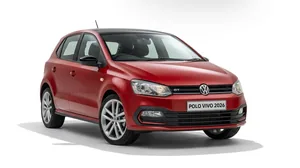
Volkswagen Polo-Vivo
Baleno vs Polo-Vivo
Petrol Hatchback 5 Variants
Volkswagen Polo-Vivo from ZAR 271,900
See full specs & who wins →
Suzuki Baleno
VS
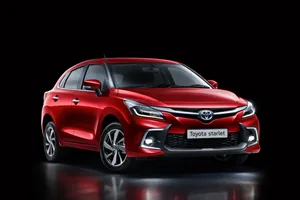
Toyota Starlet
Baleno vs Starlet
Petrol Hatchback 3 Variants
Toyota Starlet from ZAR 244,900
See full specs & who wins →
Suzuki Baleno
VS
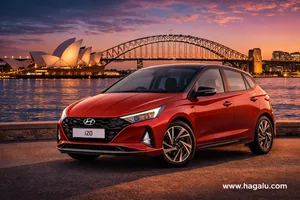
Hyundai i20
Baleno vs i20
Petrol Hatchback 2 Variants
Hyundai i20 from ZAR 296,900
See full specs & who wins →
Suzuki Baleno
VS
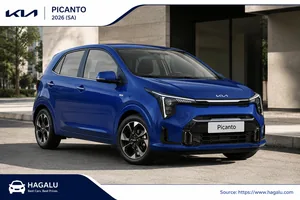
KIA Picanto
Baleno vs Picanto
Petrol Hatchback 8 Variants
KIA Picanto from ZAR 236,995
See full specs & who wins →

Also Worth Exploring in South Africa

Different body types — refreshed every visit so you discover something new.

Volkswagen Tiguan Petrol
Volkswagen Tiguan
Suv 6 Variants
From R668,100
Suzuki Jimny Petrol
Suzuki Jimny
Suv 2 Variants
From R444,900
LDV D90 Diesel
LDV D90
Suv 1 Variant
From R899,900
Omoda C5-X Petrol
Omoda C5-X
Suv 3 Variants
From R374,900

Other Current Suzuki Models in South Africa

Models currently listed for sale in the South African range.

Suzuki Across petrol mild hybrid
Suzuki
Across
SUV 3 Variants
Starting from ZAR 349,900
Suzuki Celerio Petrol
Suzuki
Celerio
Hatchback 3 Variants
Starting from ZAR 188,900
Suzuki Dzire Petrol
Suzuki
Dzire
Sedan 3 Variants
Starting from ZAR 229,900
Suzuki Eeco Petrol
Suzuki
Eeco
Van 2 Variants
Starting from ZAR 196,900

Data verified against: Suzuki Official South Africa Website

More from Suzuki