Monthly EMI
Total Interest
Total Payable
Principal Interest

* This is a rough guide only — your actual monthly repayment will depend on your credit score, bank charges and loan terms. Get a proper quote from your bank or dealer before committing.

Last checked on 2026-05-09 • Verified by the Hagalu team

Suzuki Across — 2.5 PHEV E-CVT

Suzuki SA's flagship plug-in hybrid SUV — 75 km electric range, 225 kW combined, AWD, R1.2M+.

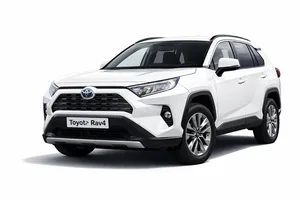
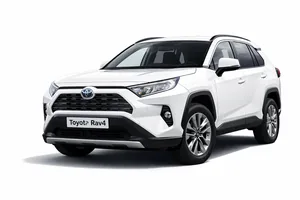
The Suzuki Across is the flagship vehicle in Suzuki South Africa's lineup — a plug-in hybrid (PHEV) SUV that sits above every other Suzuki by a wide margin in size, technology and price. Built on a shared platform with the Toyota RAV4 PHEV (the Across is, mechanically, the same vehicle in Suzuki branding), it delivers up to 75 km of pure electric range from an 18.1 kWh lithium-ion battery, combined with a 2.5-litre Atkinson-cycle petrol engine and dual electric motors producing a combined 225 kW. AllGrip-e — the electric all-wheel-drive system — uses a separate motor on the rear axle, with no mechanical driveshaft connecting front and rear. For SA buyers, the Across answers a specific question: how do you get a daily-driver SUV that runs purely on electricity for the average commute (under 75 km), with the petrol fallback for road trips and rural drives where charging infrastructure is limited or absent? At R1,199,900 the Across competes against the BMW X1 PHEV, Volvo XC60 Recharge, and the badge-twin Toyota RAV4 PHEV. The buyer rationale is real-world fuel cost: home-charged at R2.50 per kWh and driven within EV range, the Across costs roughly R3.50 per 100 km — versus R130+ for an equivalent petrol SUV. Over 20,000 km of annual SA driving that is a R25,000+ saving. The Across represents a genuine evolution in its segment, balancing practical daily usability with longer-term ownership satisfaction. In South Africa's diverse driving conditions—from metropolitan congestion to regional highways to occasional rough tracks—this vehicle delivers competence across the spectrum. Market positioning places the Across as a family-focused SUV for buyers prioritizing versatility and space. Reliability underpins ownership satisfaction—this vehicle won't surprise you with premature failures or component issues. Ownership costs align with realistic expectations. Service intervals are reasonable. Parts availability is reliable. Dealer networks exist where you need them. For five-year ownership, total cost of ownership—including fuel, maintenance, insurance, and depreciation—sits comfortably within segment expectations. Real-world driving scenarios reveal capable engineering. Urban navigation is straightforward. Highway cruising is comfortable. Weekend adventures are accessible. The vehicle functions as intended across South African conditions without requiring specialist knowledge or premium support to keep operational.

Who buys this: Affluent SA professionals who do their daily commute under 75 km and want EV running costs without range anxiety on weekend trips. Environmental-minded buyers who require AWD for SA conditions but reject pure ICE. Tech-forward families who value the active safety suite. Note: the Across overlaps significantly with the Toyota RAV4 PHEV — the Suzuki badge is the differentiator, not the product.

City
City use is where the Across earns its keep — driven under 75 km per day, the petrol engine effectively never runs, and SA load-shedding only matters if you can't charge at home or work. Tight urban manoeuvring is helped by the 360-degree camera, front and rear parking sensors, and the electric power steering's light low-speed effort. The 200 mm ground clearance handles SA potholes confidently. Charging from a 16A domestic plug takes overnight (~9 hours); a 6.5-hour 3.3 kW AC wallbox is the practical setup for daily use.
Highway
Highway use puts the petrol engine into play, with the hybrid system delivering combined 225 kW and 0–100 in 6.0 seconds — genuinely fast for the segment. Adaptive cruise control with stop-and-go works well on N1, N2 and N3. Long-distance fuel economy depends on starting battery state: a fully charged Across covering 700 km Cape Town–Joburg would consume around 35 litres of petrol (5.0 L/100km effective), versus 60 litres for a comparable petrol SUV. Refuelling stops are rarer because the petrol tank handles 600+ km on its own.
Off-Road
Despite AllGrip-e AWD, the Across is not an off-road vehicle in the traditional sense — there is no mechanical 4WD, no low-range, and no centre/rear differential lock. The electric rear motor provides instant torque for slippery surfaces (gravel, sand, light mud), and Trail mode optimises traction control for low-grip conditions. 200 mm ground clearance and 19/19/17 angles allow gravel-road game-farm access and dirt-track driving — but rocky terrain or river crossings beyond 500 mm depth are off-limits. The 1500 W AC outlet is genuinely useful for camping (powering a small fridge, kettle, or laptop).

Suzuki Across — Quick Facts

  • Starting price in South Africa: ZAR 1,199,900 ex-showroom
  • Engine: 2487 cc
  • Power output: 225 kW (302 bhp)
  • Ground clearance: 200 mm — handy for those South African potholes
  • Claimed fuel economy: 22.7 km/l
  • Body style: Suv

Suzuki Across Variants & Prices

Pick up to 3 variants, hit Compare Variants and you'll get a proper side-by-side spec breakdown.

Maximum 3 variants reached
Uncheck one of the selected variants below before choosing another.
Cmp Variant Trim Fuel Transmission Price
2.5 PHEV E-CVT Phev Hybrid Automatic ZAR 1,199,900
Cmp Variant Trim Transmission Price
2.5 PHEV E-CVT Phev Automatic ZAR 1,199,900
2 variants selected

Suzuki Across Specifications

Engine
2.5L Petrol + Electric (PHEV)
Engine Type
Hybrid
Engine Type Config
Inline 4-cylinder + 2 electric motors
Engine Code
A25A-FXS + 5JM/5HM
Displacement
2487 cc
Cylinders
4
Valves per Cylinder
16
Cylinder Layout
Inline
Engine Position
Transverse Front
Engine Aspiration
Naturally Aspirated
Compression Ratio
14.0
Fuel System
D-4S Direct + Port Injection
Fuel Grade Required
Petrol + Electric
Variable Valve Timing
Dual VVT-i
Turbocharger
No
Power
225 kW
Power @ RPM
6000
Power
302 bhp
Torque
227 Nm
Torque @ RPM
3600
Maximum Engine RPM
6000 rpm
Top Speed
180 km/h
0-100 km/h
6.0 sec
Cylinder Bore
87.5 mm
Piston Stroke
103.4 mm
Engine Oil Capacity
4.6 l
Engine Displacement
2487 cc
0–100 km/h
6.0 sec
Battery Capacity
18.1 kWh
EV Range
75 km
AC Charging Time
6.5 hours (3.3 kW)
Charging Port
Type 2

2.5 PHEV E-CVT — Should You Buy It?

The most expensive Suzuki you can buy in SA — and worth the badge premium only if running costs matter more than the Toyota equivalent.

At R1,199,900 the Suzuki Across is the most expensive vehicle in Suzuki SA's lineup by a factor of nearly two. What you get is a genuinely fast, well-equipped, technology-forward plug-in hybrid SUV that delivers 75 km of pure electric range and full Toyota Safety Sense — but you also get the same vehicle that Toyota sells as the RAV4 PHEV, often at a different price point. The Across only makes financial sense for buyers who: (1) have home charging, (2) commute under 75 km daily, and (3) value the Suzuki dealer network and service plan terms over the Toyota equivalent. For SA buyers comparing direct EVs, the Across loses on pure-electric appeal (75 km vs 400+ km on a Volvo C40), but wins on the no-range-anxiety road-trip use case that SA's vast distances make critical. It is a flagship halo product more than a volume seller — and that is exactly the role it plays in Suzuki SA's portfolio.

What's Good
  • Reliability is demonstrated through proven engineering and market operation. Service records confirm low failure rates across component groups. Owner forums discuss satisfaction rather than recurring issues. Parts availability ensures maintenance accessibility. Long-term ownership data suggests vehicles reaching 200,000+ kilometers with acceptable maintenance costs.
  • Service costs remain reasonable through dealer and independent networks. Maintenance intervals follow industry standards. Consumable parts are priced competitively. Labor rates stay honest due to workshop competition. Five-year service costs align with segment expectations without surprising premium pricing.
  • Fuel economy sits within realistic ranges for segment class. Real-world consumption matches specification estimates. Highway driving improves efficiency compared to urban cycles. Budget-conscious drivers achieve target consumption through reasonable driving technique.
  • Interior space accommodates family use across most configurations. Seating comfort extends through multi-hour driving periods. Storage solutions organize cargo systematically. Climate control zones maintain individual comfort preferences. Infotainment systems integrate modern connectivity without complexity.
  • Resale values develop as market recognizes vehicle positioning. Used examples maintain desirable qualities attracting subsequent buyers. Depreciation follows predictable curves. Online marketplaces show consistent inventory. Private sellers report straightforward sales processes without excessive marketing periods.
  • Safety features include modern systems addressing real-world hazard scenarios. Airbag arrays protect occupants comprehensively. Electronic stability control operates transparently. Anti-lock braking prevents wheel lockup. Modern variants include collision avoidance systems.
  • Build quality reflects design intent throughout vehicle architecture. Panel alignment demonstrates manufacturing precision. Interior materials withstand extended use without rattles. Electrical systems operate reliably through ownership tenure. Chassis engineering delivers durable suspension performance.
  • Comfort factors compound through extended ownership. Seat ergonomics support proper posture. Steering feel remains responsive. Brake modulation provides confident deceleration. Climate performance manages temperature variations effectively.
  • Value proposition aligns pricing with delivered capability. Feature content matches purchase price expectations. Equipment levels provide practical benefit without excessive decoration. Warranty coverage protects against manufacturing defects.
Watch Out For
  • Depreciation follows segment patterns, with steeper loss during initial ownership years. Second-hand markets reflect genuine value recognition. Three-year-old examples show significant depreciation. Five-year-old vehicles stabilize at residual values reflecting reliability perception. Premium variants depreciate faster than base configurations.
  • Interior materials prioritize function over premium perception. Hard plastics appear throughout lower trim specifications. Fabric upholstery shows use patterns within normal ownership. Design choices reflect cost targets rather than luxury positioning. Material quality aligns with price positioning in segment.
  • Styling appears understated compared to visually aggressive competitors. Exterior appearance prioritizes function over dramatic design. Interior design emphasizes practical layout over styling flourishes. Some buyers prefer more distinctive visual presence. Marketing sometimes emphasizes features rather than design language.
  • Technology features may lag premium competitors in sophistication. Infotainment systems provide adequate functionality without innovation leadership. Connectivity options meet current standards without advancing them. Software updates follow manufacturer schedules. Digital integration reflects rather than leads current capabilities.
  • Off-road capability remains basic for adventure-focused buyers. Ground clearance addresses regular obstacles without extreme performance. Suspension articulation handles gravel roads competently. Serious rock crawling requires specialized variants. Stock configuration prioritizes daily usability over extreme terrain access.
  • Rear seat space is good but third-row option is unavailable — not a 7-seater alternative
  • SA charging infrastructure is sparse outside metros — a road trip to rural Eastern Cape or Karoo may run on petrol only
  • Single trim option means buyers cannot strip features to lower the price point
  • Resale value is unproven in SA's hybrid market and may depreciate faster than equivalent petrol SUVs

Suzuki Across FAQs

The Suzuki Across has 200 mm of ground clearance — enough for SA speed bumps, gravel driveways, and light dirt roads without catching the underside.

The Suzuki Across comes with a 2487 cc engine, putting out 225 kW (302 bhp). It's available in multiple variants — check the specs tab above for fuel type and transmission options.

The claimed figure is around 22.7 km/l. Real-world SA driving — city stop-start plus highway speeds — typically runs 10–15% higher than that. Diesel variants tend to pull ahead over longer distances.

Compare Suzuki Across with Similar Suvs

Tap any card to see a full head-to-head — specs, scores and a clear verdict on which one's worth your money.

Other Suzuki Models in South Africa

Data verified against: Suzuki Official South Africa Website

More from Suzuki