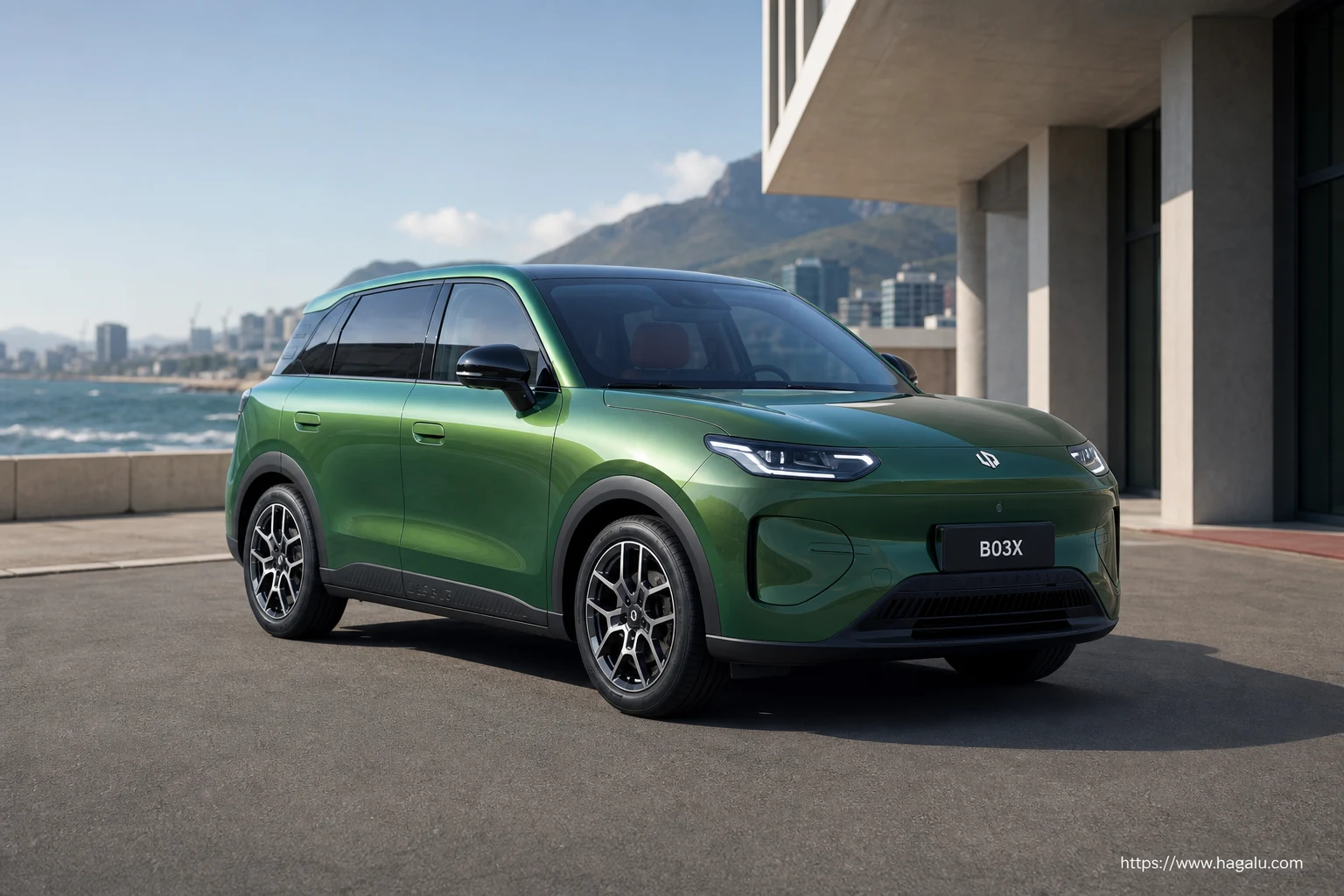
Verify battery, motor, range, charging, size, tyres, safety, software, warranties and roadside recovery on the exact grade. Confirm property charging before ordering. Drive city and highway routes, complete a public charge and compare full ownership costs. Only the final local evidence can show whether B03X delivers practical compact-EV value. Keep the dated brochure, quotation and warranty registration together, and match cables, software and promised equipment at handover. Recheck the plan after the first representative week of driving so charging time and energy cost reflect the owner's real pattern. Check how the small SUV manages daily heat: inspect rear vents, sun protection, battery cooling messages and the energy effect of air conditioning. Ask whether the navigation recognises charger availability and whether the owner can export trip and battery data. An emergency plan should include a failed charger, power outage and roadside recovery without damaging the battery. At handover, test both supplied cables, pair every normal phone, check child locks and confirm that safety warnings can be understood without disabling useful systems. These mundane details determine whether an affordable EV remains easy for the entire household. Confirm the supplied portable cable's current limit, storage location and compatibility with the household socket. Ask how the car records charging faults and where the nearest trained high-voltage workshop is located. Repeat the final range calculation with the normal passenger load, air conditioning and a safe reserve. These checks protect a first-time EV buyer from basing the decision on an ideal journey that the household rarely makes.