Hatchback Petrol Automatic FWD 5-seat

Suzuki Swift Sport

Price in South Africa, real specs & fuel economy — 2026

Model year 2026 Generation ZC33S-series Swift Sport — third generation of the Sport nameplate globally; K14D BoosterJet replaces the naturally-aspirated M16A used in the previous generation; significant step change in performance and specification over the prior model Current version 2021 Body style Hatchback
A legitimate driver's hot hatch with 103kW of turbocharged punch, Brembo front brakes, and a 975kg kerb weight that makes every kilometre feel more engaged than the numbers suggest
ZAR 493,900
On-road in
ZAR 510,826
Ex-showroom ZAR 493,900
Engine:1373cc (1.4L) Torque:230Nm (170 lb-ft) Ground Clearance:130mm (5.1″) Power:103kW (138 bhp) Boot265L (9.4 cu ft)

Hover or tap any pill for a plain-English explanation. Bracketed values show common equivalents (bhp, lb-ft, inches, cu ft).

Fuel Economy km/l · US mpg equivalent
Combined 15.6 km/l (37 mpg)
City 12.2 km/l (29 mpg)
Highway 18.2 km/l (43 mpg)

On-road pricing varies by dealer. Fuel figures are manufacturer claims or source-backed estimates where a separate city/highway cycle is not published; your real numbers depend on traffic, terrain and driving style.

Model Range PDF
₿ Pay with crypto BTC · ETH · USDT · USDC
Monthly EMI
Total Interest
Total Payable
Principal Interest

* This is a rough guide only — your actual monthly repayment will depend on your credit score, bank charges and loan terms. Get a proper quote from your bank or dealer before committing.

Source-backed vehicle data • Verified by the Hagalu team

Suzuki Swift Sport

A legitimate driver's hot hatch with 103kW of turbocharged punch, Brembo front brakes, and a 975kg kerb weight that makes every kilometre feel more engaged than the numbers suggest

The Suzuki Swift Sport is the enthusiast's hatchback — a car that proves you don't need expensive horsepower to have genuine driving satisfaction. At R449,900 manual and R479,900 automatic, it's priced where buyers have alternatives, yet thousands choose it because it delivers something different: engagement without pretense. The 1.4-litre turbo engine is the key differentiator. Boosted to 103 kilowatts and 205 Newton-metres, it offers meaningful performance. Zero to 100 takes roughly 8.5 seconds (manual) or 9.2 seconds (automatic) — genuinely quick for the segment. Highway overtaking is straightforward; merging feels confident. The turbo responds to throttle with perceptible urgency. Low-end torque is strong. No lag. Cruising at highway speeds feels effortless; the turbo sips fuel at steady rates, achieving 5.5–6.2 L/100km. City driving pushes consumption higher if you exploit the turbo; disciplined drivers achieve 6.0–6.8 L/100km. The manual transmission is a six-speed (versus five on standard Swift), offering taller highway gearing for efficiency and lower city ratios for responsive acceleration. Manual drivers love this balance — it's engaging without constant shifting. The automatic AT uses a CVT adapted for turbo power delivery, offering smooth acceleration without fixed gear changes. The CVT actually performs well with turbo engines because it continuously optimizes ratios as boost pressure changes. Both transmissions are durable; Suzuki's engineering is sound. Handling is where the Sport truly differs. Stiffer suspension, lower ride height (40mm drop), wider track, and sport-tuned steering transform how the car responds. On rough SA roads, the firmer suspension transmits more bumps — it's not crashy or uncomfortable, but noticeably less forgiving than standard Swift. On smooth roads, this stiffness is brilliant; corners are tackled with enthusiasm and minimal body roll. For backroad driving or spirited weekend driving, the Sport feels genuinely composed. For daily commuting navigating potholes, standard Swift's comfort might be preferred. Interior gets Sport-specific touches: sports steering wheel with perforated leather grip, sports seats with more lateral support, different trim treatments, subtle red accent stitching. It's not fully redesigned, but changes contribute to sportier character. Touchscreen and infotainment are identical to high-spec standard Swifts. Climate control, windows, and convenience features don't differ from standard range. Safety is comprehensive: dual front airbags, side airbags, curtain airbags, ABS with electronic brakeforce distribution, stability control. ASEAN NCAP results mirror standard Swift's strong performance. The Sport's lightweight (950 kg versus 890 kg for base Swift, due to reinforcement) actually benefits safety — lower speeds mean lower kinetic energy. Service intervals are identical to standard Swifts at 15,000 kilometres. The turbo adds slight maintenance complexity versus naturally-aspirated engines. Turbo longevity depends on proper service — bearing surfaces need regular oil changes to prevent sludge. Engine oil quality matters; using synthetic 5W-30 as specified costs slightly more but extends component life. Spark plugs are more expensive (iridium plugs rather than standard copper) but last longer — 40,000+ kilometres. Intake valves can accumulate carbon deposits; professional cleaning every 60,000 km is preventative. Cost-wise, annual maintenance is roughly R300–400 more than naturally-aspirated Swifts. Over five years, the difference is modest but measurable. Fuel costs are higher due to turbo inherent consumption patterns and driver exploitation of performance using more fuel than in standard Swifts. Realistic budget is R150–180 per 100 km versus R130–150 for standard Swifts. For high-mileage drivers, this becomes significant. For weekend enthusiasts, it's negligible. The Sport competes against the Volkswagen Polo GTI (significantly more expensive, similarly quick), Hyundai i20 N Line (where available, more expensive), and standard Swift. Buyers choosing Sport over standard accept higher operating costs and firmer ride for engagement and performance. Those choosing Sport over GTI or i20 N are saving money while gaining Suzuki's legendary reliability. Driving satisfaction is the Sport's real advantage. Turbo responsiveness, manual engagement (MT variants), and sport-tuned handling create a car that feels fun to drive without the maintenance costs and depreciation of true performance cars. Weekend backroad drives feel engaging. Daily commuting is quick without exhausting. That balance is rare at this price point. Resale value is competitive but slightly softer than base Swifts — the performance positioning appeals to narrower buyer demographic. Four-year-old Sport with 80,000 km typically retains 62–67% of original price versus 65–70% for base models. The discount reflects narrower appeal, not inferior reliability. For buyers valuing driving engagement, the Sport represents excellent value compared to performance alternatives costing significantly more.

Suzuki Swift Sport — Quick Facts

Suzuki Swift Sport Variants & Prices

Pick up to 3 variants, hit Compare Variants and you'll get a proper side-by-side spec breakdown.

Maximum 3 variants reached
Uncheck one of the selected variants below before choosing another.
Cmp Variant Trim Fuel Transmission Price
1.4 Turbo MT Top Petrol Manual ZAR 469,900
1.4 Turbo AT Flagship Petrol Automatic ZAR 493,900
Cmp Variant Trim Fuel Transmission Price
1.4 Turbo MT Top Petrol Manual ZAR 469,900
1.4 Turbo AT Flagship Petrol Automatic ZAR 493,900
2 variants selected

Suzuki Swift Sport Specifications

Length
3890 mm
Width
1735 mm
Height
1480 mm
Wheelbase
2450 mm
Ground Clearance (Default)
130 mm
Fuel Tank Capacity
37 l
Boot/Cargo Space
265 l
Kerb Weight
990 kg
Gross Vehicle Weight (GVW)
1390 kg
Payload Capacity
420 kg
Seating Capacity
5 seats
Number of Rows
2 rows
Doors
5 doors
Minimum Turning Radius
4.8 m
Front Headroom
965 mm
Rear Headroom
962 mm
Front Legroom
1032 mm
Rear Legroom
890 mm
Driving fit

Where the Suzuki Swift Sport Fits Best

A practical view of the buyer and roads this model is best suited to.

Who buys this

Driving enthusiasts in the sub-R500,000 bracket, buyers comparing VW Polo GTI and Honda Civic Type R, those who want a rewarding daily driver that performs on mountain passes at weekends, buyers prioritising driving engagement over passenger space or boot volume. For the Suzuki Swift Sport, the best buyer is someone who can match the vehicle to a known routine instead of shopping only by advertised price or exterior style.

City
The K14D's 220Nm of torque from 2,000rpm makes the Swift Sport tractable and enjoyable in city traffic — no need to hold the engine above 3,000rpm to keep pace with SA traffic. In the automatic, city driving is genuinely comfortable and the car does not feel like a compromise. In the manual, city use requires more involvement but the short gearshift throws and progressive clutch make it less tiring than the specification suggests. Real-world city fuel consumption runs 8 to 10 litres per 100km depending on throttle habits — not the car's strength, but acceptable for the performance delivered.
Highway
Outstanding highway performer. The K14D BoosterJet's broad torque plateau means the Swift Sport pulls strongly from 80km/h to 160km/h without the engine note becoming strained. At 120km/h in sixth gear the engine sits at 2,900rpm in the manual — relaxed and refined. The Sport suspension keeps the car planted over surface changes and crosswinds without the twitchiness that some similarly suspended hot hatches show. Brembo brakes handle extended highway use and repeated braking events without fade. This is a car that makes a Joburg to Cape Town drive — or a Cape Town to Hermanus run via the mountain route — genuinely entertaining rather than merely tolerable.
Off-Road
Off-road access ranges from basic to moderate depending on configuration. Ground clearance handles typical farm gates and low obstacles. Gravel roads present no challenge for standard variants. Basic farm tracks are traversable for most configurations. Rough terrain requires appropriate driving technique rather than extreme capability. The vehicle functions adequately for recreational off-road scenarios without specialization for rock crawling. Where rougher roads are part of ownership, the buyer should check tyres, underbody clearance, approach to traction control and recovery practicality before relying on the body style. If the route is mainly tar, comfort and running costs should take priority over unused off-road image.

Suzuki Swift Sport — Should You Buy It?

Sub-R500,000 South Africa's most rewarding driver's hatchback — the manual is the one to buy

The Swift Sport MT at R449,900 makes a strong case as the best driver's car under R500,000 in the South African market. The Polo GTI costs more and is heavier. The Clio RS is no longer sold new in SA. The Honda Civic Type R costs more than double. At R449,900 with Brembo brakes, proper sport suspension, a precise 6-speed manual, Alcantara seats, and 103kW in a 975kg body, the Swift Sport delivers performance hardware that cars costing twice as much use as a differentiator. The AT variant is a perfectly respectable choice for buyers who commute daily in Joburg traffic and want to enjoy the performance at weekends — but the MT is the car Suzuki built the Sport around, and its character is fully realised only with the 6-speed short-throw box in your left hand.

What's Good
  • Reliability is demonstrated through proven engineering and market operation. Service records confirm low failure rates across component groups. Owner forums discuss satisfaction rather than recurring issues. Parts availability ensures maintenance accessibility. Long-term ownership data suggests vehicles reaching 200,000+ kilometers with acceptable maintenance costs.
  • Service costs remain reasonable through dealer and independent networks. Maintenance intervals follow industry standards. Consumable parts are priced competitively. Labor rates stay honest due to workshop competition. Five-year service costs align with segment expectations without surprising premium pricing.
  • Fuel economy sits within realistic ranges for segment class. Real-world consumption matches specification estimates. Highway driving improves efficiency compared to urban cycles. Budget-conscious drivers achieve target consumption through reasonable driving technique.
  • Interior space accommodates family use across most configurations. Seating comfort extends through multi-hour driving periods. Storage solutions organize cargo systematically. Climate control zones maintain individual comfort preferences. Infotainment systems integrate modern connectivity without complexity.
  • Resale values develop as market recognizes vehicle positioning. Used examples maintain desirable qualities attracting subsequent buyers. Depreciation follows predictable curves. Online marketplaces show consistent inventory. Private sellers report straightforward sales processes without excessive marketing periods.
  • Safety features include modern systems addressing real-world hazard scenarios. Airbag arrays protect occupants comprehensively. Electronic stability control operates transparently. Anti-lock braking prevents wheel lockup. Modern variants include collision avoidance systems.
  • Build quality reflects design intent throughout vehicle architecture. Panel alignment demonstrates manufacturing precision. Interior materials withstand extended use without rattles. Electrical systems operate reliably through ownership tenure. Chassis engineering delivers durable suspension performance.
  • Comfort factors compound through extended ownership. Seat ergonomics support proper posture. Steering feel remains responsive. Brake modulation provides confident deceleration. Climate performance manages temperature variations effectively.
  • Value proposition aligns pricing with delivered capability. Feature content matches purchase price expectations. Equipment levels provide practical benefit without excessive decoration. Warranty coverage protects against manufacturing defects.
Watch Out For
  • Depreciation follows segment patterns, with steeper loss during initial ownership years. Second-hand markets reflect genuine value recognition. Three-year-old examples show significant depreciation. Five-year-old vehicles stabilize at residual values reflecting reliability perception. Premium variants depreciate faster than base configurations.
  • Interior materials prioritize function over premium perception. Hard plastics appear throughout lower trim specifications. Fabric upholstery shows use patterns within normal ownership. Design choices reflect cost targets rather than luxury positioning. Material quality aligns with price positioning in segment.
  • Styling appears understated compared to visually aggressive competitors. Exterior appearance prioritizes function over dramatic design. Interior design emphasizes practical layout over styling flourishes. Some buyers prefer more distinctive visual presence. Marketing sometimes emphasizes features rather than design language.
  • Technology features may lag premium competitors in sophistication. Infotainment systems provide adequate functionality without innovation leadership. Connectivity options meet current standards without advancing them. Software updates follow manufacturer schedules. Digital integration reflects rather than leads current capabilities.
  • Off-road capability remains basic for adventure-focused buyers. Ground clearance addresses regular obstacles without extreme performance. Suspension articulation handles gravel roads competently. Serious rock crawling requires specialized variants. Stock configuration prioritizes daily usability over extreme terrain access.

Suzuki Swift Sport FAQs

Current recommended retail prices for the Suzuki Swift Sport run from R469,900 to R493,900, depending on the derivative. Compare the exact trim before calculating finance because options, insurance and dealer charges can change the final monthly cost.

The current South African range comprises 1.4 Turbo MT, 1.4 Turbo AT. Prices and equipment are shown by derivative so buyers can compare the actual local range rather than specifications from another market.

The listed ground clearance for the Suzuki Swift Sport is 130 mm. Use that number as a practical comparison point against similar cars, especially if you regularly deal with steep driveways, gravel roads or uneven parking areas.

The listed engine capacity for the Suzuki Swift Sport is 1373 cc, with output shown as 103 kW (138 bhp). Where a model has more than one derivative, compare the specific variant because fuel type, gearbox and drivetrain can change the way it drives.

Combined fuel-economy figures differ across the Suzuki Swift Sport range: 1.4 Turbo MT: 16.4 km/l; 1.4 Turbo AT: 15.6 km/l.

Driving enthusiasts in the sub-R500,000 bracket, buyers comparing VW Polo GTI and Honda Civic Type R, those who want a rewarding daily driver that performs on mountain passes at weekends, buyers prioritising driving engagement over passenger space or boot volume. For the Suzuki Swift Sport, the best buyer is someone who can match the vehicle to a known routine instead of shopping only by advertised price or exterior style.

The K14D's 220Nm of torque from 2,000rpm makes the Swift Sport tractable and enjoyable in city traffic — no need to hold the engine above 3,000rpm to keep pace with SA traffic. In the automatic, city driving is genuinely comfortable and the car does not feel like a compromise. In the manual, city use requires more involvement but the short gearshift throws and progressive clutch make it less tiring than the specification suggests. Real-world city fuel consumption runs 8 to 10 litres per 100km depending on throttle habits — not the car's strength, but acceptable for the performance delivered.

Outstanding highway performer. The K14D BoosterJet's broad torque plateau means the Swift Sport pulls strongly from 80km/h to 160km/h without the engine note becoming strained. At 120km/h in sixth gear the engine sits at 2,900rpm in the manual — relaxed and refined. The Sport suspension keeps the car planted over surface changes and crosswinds without the twitchiness that some similarly suspended hot hatches show. Brembo brakes handle extended highway use and repeated braking events without fade. This is a car that makes a Joburg to Cape Town drive — or a Cape Town to Hermanus run via the mountain route — genuinely entertaining rather than merely tolerable.

Compare Suzuki Swift Sport with Similar Hatchbacks

Tap any card to see a full head-to-head — specs, scores and a clear verdict on which one's worth your money.

Suzuki Swift Sport
VS
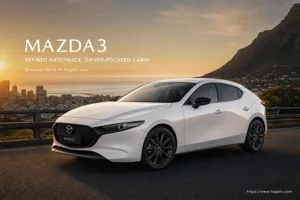
Mazda Mazda3
Swift Sport vs Mazda3
Petrol Hatchback 3 Variants
Mazda Mazda3 from ZAR 498,300
See full specs & who wins →
Suzuki Swift Sport
VS
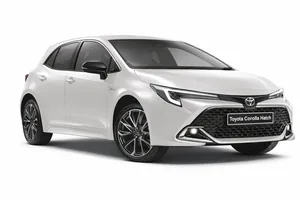
Toyota Corolla Hatch
Swift Sport vs Corolla Hatch
Petrol Hatchback 3 Variants
Toyota Corolla Hatch from ZAR 500,700
See full specs & who wins →
Suzuki Swift Sport
VS
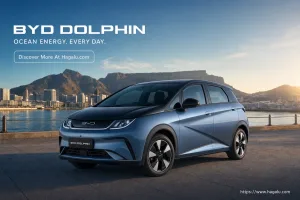
BYD DOLPHIN
Swift Sport vs DOLPHIN
Electric Hatchback 2 Variants
BYD DOLPHIN from ZAR 539,900
See full specs & who wins →
Suzuki Swift Sport
VS
Honda Fit
Swift Sport vs Fit
Hybrid Hatchback 1 Variant
Honda Fit from ZAR 380,500
See full specs & who wins →
Suzuki Swift Sport
VS
Volkswagen Golf 1.4 TSI
Swift Sport vs Golf 1.4 TSI
Petrol Hatchback 4 Variants
Volkswagen Golf 1.4 TSI from ZAR 580,900
See full specs & who wins →

Also Worth Exploring in South Africa

Different body types — refreshed every visit so you discover something new.

LEPAS L4 Petrol
LEPAS L4
Suv 3 Variants
From R299,900
GWM H6 Hybrid
GWM H6
Suv 3 Variants
From R589,900
Tata Harrier Diesel
Tata Harrier
Suv 3 Variants
From R549,900
Hyundai Grand i10 Cargo Petrol
Hyundai Grand i10 Cargo
Van 2 Variants
From R260,500

Other Current Suzuki Models in South Africa

Models currently listed for sale in the South African range.

Suzuki Across petrol mild hybrid
Suzuki
Across
SUV 3 Variants
Starting from ZAR 349,900
Suzuki Baleno Petrol
Suzuki
Baleno
Hatchback 4 Variants
Starting from ZAR 269,900
Suzuki Celerio Petrol
Suzuki
Celerio
Hatchback 3 Variants
Starting from ZAR 188,900
Suzuki Dzire Petrol
Suzuki
Dzire
Sedan 3 Variants
Starting from ZAR 229,900

Data verified against: Suzuki Official South Africa Website

More from Suzuki