Van Petrol Manual FWD 2-seat

KIA Picanto Panel Van 1.0 LS Panel Van Manual

Price in South Africa, real specs & fuel economy — 2026

Model year 2026 Generation Based on third-generation JA Picanto platform; commercial derivative Current version 2021 Body style Van
The Kia Picanto Panel Van LS Manual is a two-seat commercial derivative of the Picanto city car, built for South African small businesses seeking VAT-reclaimable urban delivery transport. Powered by the 1.0-litre three-cylinder producing 49 kW and returning 5.6 L/100km, it carries a five-year, 150,000km commercial warranty and qualifies for VAT input claims when used exclusively for commercial purposes.
ZAR 249,995
On-road in
ZAR 263,994
Ex-showroom ZAR 249,995
Estimated finance from ZAR 4,399/month Ex-showroom basis · approx. 20% deposit · 11.5% p.a. · 60 months · no balloon
Engine:998cc (1.0L) Torque:94Nm (69 lb-ft) Ground Clearance:155mm (6.1″) Power:49kW (66 bhp) Boot620L (21.9 cu ft)

Hover or tap any pill for a plain-English explanation. Bracketed values show common equivalents (bhp, lb-ft, inches, cu ft).

Fuel Economy km/l · US mpg equivalent
Combined 17.9 km/l (42 mpg)
City 14.7 km/l (35 mpg)
Highway 22.2 km/l (52 mpg)

On-road pricing varies by dealer. Fuel figures are manufacturer claims or source-backed estimates where a separate city/highway cycle is not published; your real numbers depend on traffic, terrain and driving style.

Model Range PDF
₿ Pay with crypto BTC · ETH · USDT · USDC

Estimate monthly vehicle finance for the KIA Picanto Panel Van 1.0 LS Panel Van Manual in South Africa. The default illustration uses the ex-showroom price, approximately 20% deposit, 11.5% nominal annual interest over 60 months and no balloon payment.

Estimated monthly instalment
ZAR 4,399
Total Interest
ZAR 63,911
Total Payable
ZAR 263,911
Principal Interest

* Illustrative estimate based on the ex-showroom price, approximately 20% deposit, 11.5% nominal annual interest, 60 months and no balloon payment. Excludes initiation fees, monthly service fees, credit-life insurance and vehicle insurance. Your lender quotation may differ.

Source-backed vehicle data • Verified by the Hagalu team

KIA Picanto Panel Van 1.0 LS Panel Van Manual

The Kia Picanto Panel Van LS Manual is a two-seat commercial derivative of the Picanto city car, built for South African small businesses seeking VAT-reclaimable urban delivery transport. Powered by the 1.0-litre three-cylinder producing 49 kW and returning 5.6 L/100km, it carries a five-year, 150,000km commercial warranty and qualifies for VAT input claims when used exclusively for commercial purposes.

South Africa's small business economy runs in significant part on light commercial vehicles — the bakkie, the panel van, the delivery hatch that moves goods, documents, and materials through the congested urban arteries of Johannesburg, Cape Town, Durban, and Pretoria. The Kia Picanto Panel Van LS Manual enters this segment from an unusual angle: it is a city-car-derived panel van that offers the smallest physical footprint of any commercial van on the South African market, combined with fuel consumption that undercuts dedicated commercial alternatives significantly, and a VAT input-claim eligibility that makes its effective acquisition cost lower than the list price for registered VAT vendors. The conversion from passenger Picanto to Panel Van is straightforward and honest. The rear seat is removed completely. The rear windows are blanked with opaque panels — a requirement for SARS's commercial vehicle VAT treatment. The load floor runs flat from the rear of the front seats to the tailgate, creating a defined cargo area that is larger than the standard Picanto boot by virtue of the additional floor space previously occupied by the rear seat structure. The load volume is rated at approximately 620 litres in the panel van configuration, a meaningful increase over the standard 255-litre boot and a practical number for the light goods delivery use cases that define this vehicle's target market. The 1.0-litre G3LA three-cylinder petrol engine producing 49 kW at 6000 rpm and 94 Nm at 3500 rpm is unchanged from the passenger Picanto LS. This is appropriate for the panel van's commercial mission: the vehicle is designed for urban and suburban delivery routes in South Africa's cities, not for heavy load-carrying or regional freight. The five-speed manual gearbox — light, precise, with short throws — is the right choice for a delivery driver who stops and starts dozens of times per shift in Johannesburg's northern suburbs corporate parks, Cape Town's city bowl commercial district, or Durban's Point Road business area. The manual keeps acquisition cost down, maximises fuel economy at the stated 5.6 litres per 100 kilometres, and requires the driver engagement that keeps a delivery professional alert and aware over a long operating day. The VAT input-claim eligibility is the Picanto Panel Van's most commercially significant attribute. Under South African Revenue Service rules, motor vehicles used exclusively for commercial purposes — and panel vans with blanked rear windows and removed rear seats are classified as commercial vehicles — qualify for VAT input tax claims on the purchase price. For a business registered as a VAT vendor in South Africa, this effectively reduces the net acquisition cost by the 15 percent VAT component, which represents a meaningful financial benefit compared to purchasing the passenger Picanto equivalent or a conventional light delivery van. The SARS commercial vehicle classification requirement is satisfied by the blanked windows and two-seat configuration; businesses should confirm their specific tax treatment with their accountant before purchase, but the general eligibility is well-established for this type of derivative. The five-year, 150,000km commercial warranty is an important distinguishing factor from the passenger Picanto's seven-year coverage. The reduction from seven to five years reflects the commercial use cycle: commercial vehicles typically accumulate higher annual mileages than private passenger cars, and the 150,000km kilometre limit is maintained to reflect expected commercial service intensity. For a small business operating a delivery vehicle in Johannesburg that covers 40,000 to 60,000 kilometres per year, the five-year warranty would elapse at the kilometre limit well within the third year of operation. Businesses with lower annual mileage profiles — urban local delivery routes of 15,000 to 25,000 kilometres per year — may find the five-year time limit is the binding constraint. Either way, the warranty covers the vehicle through its highest-risk mechanical period comprehensively. Service intervals for the Picanto Panel Van align with the passenger variant: every 15,000 kilometres or 12 months. Parts pricing for commercial operators — filters, brake pads, tyres — is at the lower end of the commercial van market, a meaningful ongoing operating cost advantage over purpose-built light commercial vehicles that use more expensive proprietary components. The Picanto Panel Van's urban manoeuvrability is its primary physical competitive advantage over conventional panel vans. At 3595mm overall length and with the passenger car's steering and turning circle, the Panel Van navigates Johannesburg's suburban side streets, Cape Town's city bowl back lanes, and Durban's Point Road commercial loading bays with an ease that a Toyota Quantum shuttle or a Ford Transit Custom cannot replicate. Parking in standard commercial building bays, reversing down narrow service lanes, and turning around in dead-end commercial estates are executed without the multiple-point manoeuvre strategy that larger vehicles require. For businesses whose delivery routes are predominantly urban, this physical agility translates directly to time savings per delivery cycle. Interior for the driver is identical to the passenger Picanto LS: cloth seating, Bluetooth audio for hands-free phone operation during deliveries, ABS with EBD, dual front airbags. The instrument cluster shows standard trip data including fuel consumption, which is relevant for delivery route cost analysis. The single remaining front passenger seat allows the driver to carry a delivery assistant or colleague when operational requirements demand. The Picanto Panel Van LS Manual competes in South Africa's light commercial urban delivery market against significantly larger and more expensive alternatives. There is no direct A-segment panel van competitor in the local market — the Picanto effectively creates its own niche, occupying the space between a conventional passenger city car and a traditional light commercial van. For the right business application — urban parcel delivery, estate agency document transport, pharmacy and medical supply delivery, catering supply runs in city centres — the Panel Van's combination of sub-6.0 L/100km economy, VAT reclaim eligibility, and agile urban footprint is commercially compelling without direct equivalent in the current South African market.

KIA Picanto Panel Van — Quick Facts

KIA Picanto Panel Van Variants & Prices

Pick up to 3 variants, hit Compare Variants and you'll get a proper side-by-side spec breakdown.

Maximum 3 variants reached
Uncheck one of the selected variants below before choosing another.
Cmp Variant Trim Fuel Transmission Price
1.0 LS Panel Van Manual Base Petrol Manual ZAR 249,995
1.0 LS Panel Van Auto Mid Petrol Automatic ZAR 269,995
Cmp Variant Trim Fuel Transmission Price
1.0 LS Panel Van Manual Base Petrol Manual ZAR 249,995
1.0 LS Panel Van Auto Mid Petrol Automatic ZAR 269,995
2 variants selected

KIA Picanto Panel Van Specifications

Length
3595 mm
Width
1595 mm
Height
1480 mm
Wheelbase
2400 mm
Ground Clearance (Default)
155 mm
Ground Clearance (With Full Seating Load)
151 mm
Fuel Tank Capacity
35 l
Boot/Cargo Space
620 l
Kerb Weight
925 kg
Gross Vehicle Weight (GVW)
1375 kg
Payload Capacity
450 kg
Towing Capacity
0 kg
Seating Capacity
2 seats
Number of Rows
1 rows
Doors
3 doors
Minimum Turning Radius
4.8 m
Front Headroom
970 mm
Rear Headroom
Not Applicable
Front Legroom
1040 mm
Rear Legroom
Not Applicable
Driving fit

Where the KIA Picanto Panel Van Fits Best

A practical view of the buyer and roads this model is best suited to.

Who buys this

The Picanto Panel Van LS Manual targets South African small business owners and sole traders in the VAT-registered business community who need a cost-efficient, urban-capable commercial delivery vehicle. The typical operator runs a business with annual revenues between R500,000 and R5,000,000 in a service or retail category that requires regular local delivery or goods transport — medical supply distribution, estate agency document and signage transport, flower and plant nursery delivery, catering supply runs, pharmacy courier services, small parts logistics in industrial areas around Johannesburg's Industria or Cape Town's Parow. The VAT vendor status is usually a prerequisite for the effective cost calculation that makes the Panel Van financially compelling; non-VAT businesses still benefit from the fuel economy and warranty but lose the acquisition cost advantage. The operator typically drives the vehicle personally or assigns it to a regular driver on a defined urban route, covering between 20,000 and 50,000 kilometres per year. Fuel cost consciousness is a primary purchase driver; the ability to sustain a reliable commercial vehicle without unexpected repair bills during the five-year warranty period is equally important.

City
In South Africa's urban commercial environment, the Picanto Panel Van LS Manual operates with a confidence and ease that larger panel vans cannot match. Johannesburg's industrial areas — Industria, Wynberg, Selby — present a mix of wide factory approach roads and narrow service lane access routes where the Panel Van's 3595mm body fits comfortably. Cape Town's city bowl delivery windows — loading zones on Buitenkant Street, St Georges Mall commercial access, the V&A Waterfront service roads — are managed without the backing manoeuvres that a Caddy Cargo or Kangoo requires. Durban's beachfront commercial streets and the Pavilion shopping centre service access are similarly accommodating of the Picanto's small footprint. The five-speed manual's light clutch reduces fatigue on the 30-to-50 stop delivery route that characterises urban parcel and goods distribution. Fuel consumption of 5.6 L/100km in this urban delivery application is realistic, though aggressive stop-go delivery patterns with frequent cold starts may push real-world consumption slightly higher — approximately 6.0 to 6.5 L/100km in very dense urban stop-go use.

Highway
On South African suburban delivery routes that incorporate highway sections — the N1 connecting commercial areas between Johannesburg's CBD and Midrand, the N2 between Cape Town Airport and the city bowl, the N3 between Durban's harbour and the Pinetown industrial areas — the Panel Van LS Manual holds highway speed at 120 km/h in fifth gear without strain. Fuel consumption on a mixed delivery route with 20-30 percent highway content improves toward the combined 5.6 L/100km figure. Commercial operators using the Panel Van for regional distribution between cities should note that the 1.0-litre engine's modest 49 kW output makes sustained high-speed loaded highway travel less comfortable than a larger commercial vehicle; the Panel Van is optimised for urban and suburban use rather than regional freight logistics.
Off-Road
No off-road capability is expected or appropriate for the Picanto Panel Van. Ground clearance of 145mm covers rough industrial estate roads and light gravel service access routes adequately. On rougher routes, buyers should match the 1.0 LS Panel Van Manual's tyres, clearance and drivetrain to the road rather than assuming the body shape alone will be enough. Occasional gravel and daily off-road work are very different ownership cases.

KIA Picanto Panel Van 1.0 LS Panel Van Manual — Should You Buy It?

South Africa's most fuel-efficient VAT-reclaimable urban delivery vehicle — the Panel Van LS Manual delivers sub-6.0 L/100km commercial transport with a five-year warranty and the city car agility that traditional panel vans cannot match.

The Picanto Panel Van LS Manual fills a genuine gap in South Africa's commercial vehicle market: a factory-converted, VAT-reclaimable, urban-scale panel van with sub-6.0 L/100km fuel consumption and a five-year commercial warranty. For the right business operator — VAT-registered, urban delivery-focused, fuel-cost-conscious — the effective net acquisition cost after VAT recovery makes this one of the most financially compelling commercial vehicle purchases in the South African market. The five-speed manual gearbox is the right choice for delivery operators who want the lowest possible per-kilometre running cost and who are accustomed to manual operation in urban stop-go environments.

What's Good
  • VAT input-claim eligibility for registered South African VAT vendors effectively reduces the Panel Van's net acquisition cost by 15 percent compared to the non-reclaimable passenger vehicle purchase price.
  • Fuel consumption of 5.6 L/100km makes the Panel Van LS Manual one of the most economical commercial vehicles available to South African businesses, significantly undercutting larger panel vans at 7.5-9.0 L/100km.
  • The 3595mm overall length and city-car turning circle navigate South Africa's narrow urban service lanes, industrial estate access roads, and tight commercial loading bays without multi-point manoeuvres.
  • Five-year, 150,000km commercial warranty provides comprehensive mechanical coverage through the primary commercial operating period without requiring budget allocation for uncertain repair costs.
  • A flat load floor with approximately 620 litres of commercial space handles parcel delivery, estate agency supplies, catering materials, and small parts logistics that define the urban delivery business segment.
  • Kia South Africa's nationwide dealer network services the Panel Van in all major commercial centres, ensuring warranty compliance and servicing access for businesses based outside metropolitan areas.
  • The five-speed manual gearbox's light, precise shift action reduces driver fatigue on 30-to-50 stop urban delivery routes where constant gear engagement is a standard operating requirement.
  • Factory conversion — not aftermarket modification — of the commercial configuration ensures SARS commercial vehicle classification eligibility and maintains manufacturer warranty validity.
  • Dual front airbags and ABS with EBD provide standard passive safety equipment for the commercial driver operating in South Africa's complex urban traffic environments.
Watch Out For
  • The five-year commercial warranty is two years shorter than the passenger Picanto's seven-year coverage, which may leave high-mileage commercial operators without warranty protection before the vehicle's operating life concludes.
  • The 1.0-litre engine's 49 kW output limits the Panel Van's effectiveness on regional delivery routes requiring sustained highway operation at full load; it is optimised for urban and suburban use profiles.
  • The blanked rear windows eliminate rear visibility completely, requiring the driver to rely entirely on the wing mirrors for reversing — a limitation that may increase parking time and accident risk without rear sensors.
  • Load floor space of approximately 620 litres is smaller than dedicated commercial panel vans in the Caddy Cargo and Kangoo class, limiting the Panel Van to light goods and document-scale delivery missions.
  • No rear parking sensors in the Panel Van LS Manual configuration, combined with completely blanked rear windows, creates a reversing blind spot that drivers must compensate for through careful mirror use.
  • Commercial insurance classifications for panel vans may produce higher premium costs than equivalent passenger vehicle insurance, partially offsetting the running cost advantages of the commercial configuration.
  • The rubber load floor liner requires proper securing of goods to prevent shifting during urban stop-go driving; inadequate load securing risks damage to carried items or distraction for the driver.
  • Single front passenger seat limits the Panel Van's utility for delivery operations that require a driver's assistant; the two-seat configuration is a structural limitation of the commercial conversion.
  • Steel wheels at LS Panel Van level are appropriate for commercial use but lack the visual professional presentation that some business operators require for client-facing delivery applications.

KIA Picanto Panel Van FAQs

The current recommended retail price listed for the KIA Picanto Panel Van 1.0 LS Panel Van Manual is R249,995. This is the vehicle price before finance interest, insurance, registration and any dealer-added options.

The current South African range comprises 1.0 LS Panel Van Manual, 1.0 LS Panel Van Auto. Prices and equipment are shown by derivative so buyers can compare the actual local range rather than specifications from another market.

The listed ground clearance for the KIA Picanto Panel Van 1.0 LS Panel Van Manual is 155 mm. Use that number as a practical comparison point against similar cars, especially if you regularly deal with steep driveways, gravel roads or uneven parking areas.

The listed engine capacity for the KIA Picanto Panel Van 1.0 LS Panel Van Manual is 998 cc, with output shown as 49 kW (66 bhp). Where a model has more than one derivative, compare the specific variant because fuel type, gearbox and drivetrain can change the way it drives.

The combined fuel-economy figure shown for the KIA Picanto Panel Van 1.0 LS Panel Van Manual is around 17.9 km/l.

The Picanto Panel Van LS Manual targets South African small business owners and sole traders in the VAT-registered business community who need a cost-efficient, urban-capable commercial delivery vehicle. The typical operator runs a business with annual revenues between R500,000 and R5,000,000 in a service or retail category that requires regular local delivery or goods transport — medical supply distribution, estate agency document and signage transport, flower and plant nursery delivery, catering supply runs, pharmacy courier services, small parts logistics in industrial areas around Johannesburg's Industria or Cape Town's Parow. The VAT vendor status is usually a prerequisite for the effective cost calculation that makes the Panel Van financially compelling; non-VAT businesses still benefit from the fuel economy and warranty but lose the acquisition cost advantage. The operator typically drives the vehicle personally or assigns it to a regular driver on a defined urban route, covering between 20,000 and 50,000 kilometres per year. Fuel cost consciousness is a primary purchase driver; the ability to sustain a reliable commercial vehicle without unexpected repair bills during the five-year warranty period is equally important.

In South Africa's urban commercial environment, the Picanto Panel Van LS Manual operates with a confidence and ease that larger panel vans cannot match. Johannesburg's industrial areas — Industria, Wynberg, Selby — present a mix of wide factory approach roads and narrow service lane access routes where the Panel Van's 3595mm body fits comfortably. Cape Town's city bowl delivery windows — loading zones on Buitenkant Street, St Georges Mall commercial access, the V&A Waterfront service roads — are managed without the backing manoeuvres that a Caddy Cargo or Kangoo requires. Durban's beachfront commercial streets and the Pavilion shopping centre service access are similarly accommodating of the Picanto's small footprint. The five-speed manual's light clutch reduces fatigue on the 30-to-50 stop delivery route that characterises urban parcel and goods distribution. Fuel consumption of 5.6 L/100km in this urban delivery application is realistic, though aggressive stop-go delivery patterns with frequent cold starts may push real-world consumption slightly higher — approximately 6.0 to 6.5 L/100km in very dense urban stop-go use.


On South African suburban delivery routes that incorporate highway sections — the N1 connecting commercial areas between Johannesburg's CBD and Midrand, the N2 between Cape Town Airport and the city bowl, the N3 between Durban's harbour and the Pinetown industrial areas — the Panel Van LS Manual holds highway speed at 120 km/h in fifth gear without strain. Fuel consumption on a mixed delivery route with 20-30 percent highway content improves toward the combined 5.6 L/100km figure. Commercial operators using the Panel Van for regional distribution between cities should note that the 1.0-litre engine's modest 49 kW output makes sustained high-speed loaded highway travel less comfortable than a larger commercial vehicle; the Panel Van is optimised for urban and suburban use rather than regional freight logistics.

Compare KIA Picanto Panel Van with Similar Vans

Tap any card to see a full head-to-head — specs, scores and a clear verdict on which one's worth your money.

KIA Picanto Panel Van
VS
Hyundai Grand i10 Cargo
Picanto Panel Van vs Grand i10 Cargo
Petrol Van 2 Variants
Hyundai Grand i10 Cargo from ZAR 260,500
See full specs & who wins →
KIA Picanto Panel Van
VS
Mahindra XUV 3XO Xprez Panel Van
Picanto Panel Van vs XUV 3XO Xprez Panel Van
Petrol Van 1 Variant
Mahindra XUV 3XO Xprez Panel Van from ZAR 296,999
See full specs & who wins →
KIA Picanto Panel Van
VS
Hyundai Venue Cargo
Picanto Panel Van vs Venue Cargo
Petrol Van 1 Variant
Hyundai Venue Cargo from ZAR 309,900
See full specs & who wins →

Also Worth Exploring in South Africa

Different body types — refreshed every visit so you discover something new.

Honda HR-V Petrol
Honda HR-V
Suv 2 Variants
From R489,900
LDV T60 Double Cab Diesel
LDV T60 Double Cab
Pickup 10 Variants
From R480,000
Mitsubishi Pajero Sport Diesel
Mitsubishi Pajero Sport
Suv 3 Variants
From R789,990
Honda Elevate Petrol
Honda Elevate
Suv 2 Variants
From R369,900

Other Current KIA Models in South Africa

Models currently listed for sale in the South African range.

KIA Carens Diesel
KIA
Carens
MPV 4 Variants
Starting from ZAR 399,995
KIA Carnival Diesel
KIA
Carnival
MPV 2 Variants
Starting from ZAR 1,049,995
KIA K2500 Diesel
KIA
K2500
Van 3 Variants
Starting from ZAR 424,995
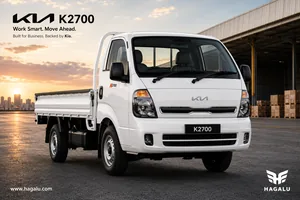
KIA K2700 Diesel
KIA
K2700
Van 4 Variants
Starting from ZAR 351,995

Data verified against: KIA Official South Africa Website

More from KIA