💡
Hover or tap any pill for a plain-English explanation. Bracketed values show common equivalents (bhp, lb-ft, inches, cu ft).
On-road pricing varies by dealer. Range and charging figures are manufacturer test claims; weather, speed, traffic, charger output, battery temperature and driving style affect real results.
* Illustrative estimate based on the ex-showroom price, approximately 20% deposit, 11.5% nominal annual interest, 60 months and no balloon payment, using the Econ 2WD Pro 63 kWh. Excludes initiation fees, monthly service fees, credit-life insurance and vehicle insurance. Your lender quotation may differ.
Source-backed vehicle data • Verified by the Hagalu team
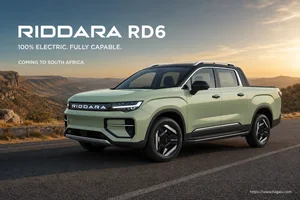
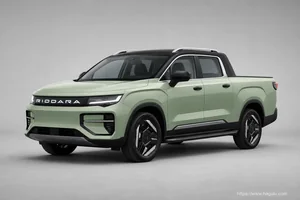
RIDDARA RD6
The current RIDDARA RD6 South African range pairs two value-led Econ electric double cabs with the quicker Horizon Pro 4WD.
The RIDDARA RD6 fills a specific place in the South African market: a current electric double cab for lifestyle and light-duty buyers who can charge predictably and need a load bed, rather than a direct replacement for every long-range diesel work route. It is an electric lifestyle pickup with a locally orderable three-derivative range. The current local matrix is clear: Econ 2WD Pro with a 63 kWh battery, Econ 4WD Pro with 73 kWh, and Horizon Pro 4WD with 73 kWh. Verified numeric South African retail prices are carried across all three derivatives, with Horizon Pro 4WD 73 kWh listed at R1,050,000. That range structure matters because a useful buying decision starts with the locally offered product, not a foreign configurator or an estimated price. The RD6 arrives in one of South Africa's most demanding categories. An electric bakkie must be judged not only by acceleration and cabin technology but by payload, towing, loaded range, charging access, dust sealing and fleet downtime. Local order and test-drive access confirms that RD6 is no longer merely a launch prospect. The derivative sheets now disclose range, output, payload, towing and charging facts, and the detailed data now includes exact mass figures and four cabin measurements that buyers should verify in the exact vehicle. The result is a vehicle that should be shortlisted according to the work it must do every week, the roads it will use and the ownership costs that continue after delivery.
The mechanical proposition is equally important. South Africa receives a 180 kW rear-motor Econ 2WD, a 280 kW dual-motor Econ 4WD and a 315 kW dual-motor Horizon Pro 4WD. Their stated NEDC ranges are 373 km, 424 km and 424 km respectively. The two Econ versions use lithium-iron-phosphate batteries; exact usable capacity and battery voltage are not publicly disclosed. A buyer should read those facts together with transmission, driven wheels, kerb mass, tyre size and official consumption or range. A strong output figure can be diluted by a heavy body, while an apparently modest engine can be entirely suitable when the vehicle is lightly loaded and used mainly in town. South African altitude also changes naturally aspirated performance, and regular highveld users should carry their normal passengers on a test drive before committing. Where electrification is involved, access to home or workplace charging is part of the vehicle decision, not an afterthought.
Practicality is more than the number of seats on a brochure. The RD6 combines a double-cab passenger compartment with a load bed and electric-vehicle architecture. Local sheets confirm derivative-specific utility and equipment facts. The Econ models use 17-inch wheels, synthetic-leather seats, a reversing camera and automatic air conditioning. Horizon Pro adds the 14.6-inch central screen, 10.2-inch driver display and a richer assistance package. Buyers should still match every fitted item to the written quotation. Buyers should take the largest pram, travel case, work crate or sports bag they regularly carry and check the opening as well as the quoted volume. Rear-seat access, child-seat anchor placement, headroom with a sunroof, USB access and air-vent coverage matter on every school run. The same applies to visibility: a camera is useful, but clear glass areas, predictable steering and well-positioned mirrors reduce effort on every trip. Equipment should therefore be valued by frequency of use rather than by the length of the feature list.
Ownership planning separates a good test drive from a good purchase. The advertised price is only the first number. Finance interest, deposit, balloon exposure, insurance, tyres, fuel or electricity, scheduled servicing and likely resale all affect the monthly burden. Buyers comparing the RD6 should request a written quotation for the exact derivative, ask whether paint or dealer accessories change the financed amount and check that warranty and service-plan start dates are recorded correctly. A lower trim can be the stronger decision when it preserves cash flow; a higher trim earns its premium only when its safety, comfort or capability equipment is genuinely needed.
The final check should reproduce real use. Drive the route that exposes low-speed gearbox behaviour, broken tar, a steep merge and an emergency stop. Set the driver's seat first, then sit behind it. Pair the phone, use navigation, reverse into a narrow bay and inspect the spare-wheel arrangement. For each current derivative, compare a binding quotation with the exact battery, driven wheels, charging hardware and equipment sheet. The Horizon Pro still requires price discipline: compare its R1,050,000 amount with the Econ 4WD, then verify finance terms, paint and accessories in the written quotation. This process gives the RD6 a fair assessment without relying on launch-day excitement or badge preference.
Engines: Econ 2WD Pro uses one rear motor rated at 180 kW and 309 Nm with a 63 kWh LFP battery. Econ 4WD Pro uses front and rear motors rated at 280 kW and 485 Nm with a 73 kWh LFP battery. Horizon Pro 4WD uses dual motors rated at 315 kW and 595 Nm with a 73 kWh battery.
Generation: Current first-generation South African RIDDARA RD6 electric double-cab range.
Updates: First South African RD6 retail range verified current in August 2026; no separately marketed local facelift has been announced.
RIDDARA RD6 — Quick Facts
Range starting price in South Africa: ZAR 747,500 ex-showroom
Power output: 180 kW (241 bhp)
Ground clearance: 225 mm — handy for those South African potholes
Published electric range: 373 km
Battery capacity: 63
Body style: Pickup
RIDDARA RD6 Variants & Prices
Pick up to 3 variants, hit Compare Variants and you'll get a proper side-by-side spec breakdown.
Maximum 3 variants reached Uncheck one of the selected variants below before choosing another.
Cmp
Variant
Trim
Fuel
Transmission
Price
Econ 2WD Pro 63 kWh
Econ 2wd Pro
Electric373 km (NEDC)
Single-Speed Reduction Gear
ZAR 747,500
Econ 4WD Pro 73 kWh
Econ 4wd Pro
Electric424 km (NEDC)
Single-Speed Reduction Gear
ZAR 900,000
Horizon Pro 4WD 73 kWh
Horizon Pro
Electric424 km (NEDC)
Single-Speed Reduction Gear
ZAR 1,050,000
Cmp
Variant
Trim
Fuel
Transmission
Price
Econ 2WD Pro 63 kWh
Econ 2wd Pro
Electric373 km (NEDC)
Single-Speed Reduction Gear
ZAR 747,500
Econ 4WD Pro 73 kWh
Econ 4wd Pro
Electric424 km (NEDC)
Single-Speed Reduction Gear
ZAR 900,000
Horizon Pro 4WD 73 kWh
Horizon Pro
Electric424 km (NEDC)
Single-Speed Reduction Gear
ZAR 1,050,000
2 variants selected
RIDDARA RD6 Specifications
Model Introduced Year
2026
Body Style
Double-cab pickup
Generation
First South African RIDDARA RD6 generation
Model Year
2026
Production Status
active
Segment
Electric double-cab pickup
Vehicle Type
Battery-electric light commercial vehicle
Facelift Version Ending
Current
Facelift Launched Since
Original current-generation version
Facelift History
No separately marketed South African facelift announced as at August 2026
Length
5260 mm
Width
1900 mm
Height
1865 mm
Wheelbase
3120 mm
Ground Clearance (Default)
225 mm
Ground Clearance (With Full Seating Load)
Not Officially Disclosed
Fuel Tank Capacity
0 l
Boot/Cargo Space
1200 l
Kerb Weight
2005 kg
Gross Vehicle Weight (GVW)
3120 kg
Payload Capacity
1115 kg
Towing Capacity
2500 kg
Seating Capacity
5 seats
Number of Rows
2 rows
Doors
4 doors
Minimum Turning Radius
6.1 m
Front Headroom
1033 mm
Rear Headroom
1028 mm
Front Legroom
912 mm
Rear Legroom
951 mm
Engine
Battery-electric powertrain
Engine Code
Not Applicable
Fuel Type
Electric
Hybrid System
Not Applicable
Engine Displacement
Not Applicable
Cylinders
Not Applicable
Cylinder Layout
Not Applicable
Valves
Not Applicable
Valves per Cylinder
Not Applicable
Aspiration
Not Applicable
Fuel System
Not Applicable
Compression Ratio
Not Applicable
Bore
Not Applicable
Stroke
Not Applicable
Maximum Power
180 kW
Maximum Torque
309 Nm
Combined Power
Not Applicable
Combined Torque
Not Applicable
Motor Type
Permanent Magnet Synchronous
Number of Motors
1
Motor Location
Rear
Drive Type
RWD
Transmission
Single-Speed Reduction Gear
Top Speed
160 km/h
0-100 km/h
8.0 sec
Quarter Mile
Not Officially Disclosed
Drive Modes
Economy, Comfort, Sport
Launch Control
Not Officially Disclosed
Rev Limiter
Not Applicable
Power-to-Weight Ratio
Not Officially Disclosed
Torque-to-Weight Ratio
Not Officially Disclosed
Battery Capacity
63 kWh
Usable Battery Capacity
Not Officially Disclosed
Battery Type
LFP
Battery Voltage
Not Officially Disclosed
Electric Range
373 km (NEDC)
AC Charging Power
6.6 kW
DC Charging Power
90 kW
AC Charging Time
10 h 0 min (0-100%)
DC Charging Time
32 min (30-80%)
Regenerative Braking
Yes
LSD Available
No
Gearbox
Single-Speed Reduction Gear
Drivetrain Layout
Rear motor, rear-wheel drive
Transfer Case
Not Applicable
Differential Lock
No
Paddle Shifters
Not Applicable
Transmission Speeds
1
Rear Differential Lock
No
Drivetrain
RWD
Axle Layout
4x2
Low Range
Not Applicable
Low Range Ratio
Not Applicable
Gearbox Type
Single-speed reduction gear
Front Differential Lock
No
Automatic Shift Paddles
Not Applicable
Final Drive Ratio
Single fixed reduction ratio
Number of Gears
1
Transmission Type
Automatic
Clutch Type
Not Applicable
4WD Selector
Not Applicable
4WD Lo Range
Not Applicable
4WD Hi Range
Not Applicable
4WD Engagement
Not Applicable
Gear Shift Type
Electronic selector
Gear Shift Indicator
Standard
Range Real World Mixed
330 km
Electric Consumption
16.2 kWh/100 km
Charging Type
AC and DC
Charging Port Type
Type 2 AC; CCS2 DC
Combined Driving Range
373 km (NEDC)
Range Real World Highway
250 km
Real-world Mileage
Not Applicable
Fuel Tank Litres
Not Applicable
Auto Start Stop
Not Applicable
AdBlue Tank Capacity
Not Applicable
Emission Standard
Not Applicable
Fuel Tank Capacity
Not Applicable
Highway Mileage
Not Applicable
City Mileage
Not Applicable
Claimed Mileage
Not Applicable
Brake Assist
Standard
ISOFIX Mounts
Standard
Child Safety Lock
Standard
Hill Start Assist
Standard
Hill Descent Control
Standard
Traction Control
Standard
Electronic Stability Control
Standard
ABS
Standard
Airbags
2
Engine Immobiliser
Standard
ABS EBD
Standard
BA
Standard
Seatbelt Warning All Seats
Standard
Front Parking Sensors
No
TCS
Standard
Stability Control
Standard
Side Airbags
No
Seatbelt Reminder
Standard
Brake Override System
Standard
Curtain Airbags
No
Seatbelt Pretensioners
Standard
Rear Cross Traffic Alert
No
Knee Airbag
No
Passenger Airbag
Standard
Hill Hold
Standard
AEB
No
Driver Airbag
Standard
EBD
Standard
Engine Immobiliser
Standard
Tyre Pressure Monitor
Indirect
Park Assist
No
Cruise Control
Standard
Adaptive Cruise Control
No
Lane Keep Assist
No
Lane Departure Warning
No
Blind Spot Monitoring
No
Rear Cross Traffic Alert
No
Parking Sensors
Rear
Rear View Camera
Standard
360 Degree Camera
No
Autonomous Emergency Braking
No
Driver Fatigue Alert
No
Traffic Sign Recognition
No
Auto Highbeam
No
Auto Wipers
No
Rear Parking Sensors
Standard
Reverse Camera
Standard
Adaptive Cruise Control
No
Around View Monitor
No
Blind Spot Warning
No
Forward Collision Warning
No
Ambient Lighting
No
Passenger Seat Adjustment
6-way electric
60 40 Split Seat
Standard
Driver Seat Adjustment
6-way electric
Seat Trim
Synthetic leather (PVC)
Steering Wheel Material
Foam
Heated Seats
No
Ventilated Seats
No
Seat Material
Synthetic leather (PVC)
Keyless Entry
No
Climate Control
Automatic
Power Windows
One-touch down on all four windows; no anti-pinch
Push Button Start
Standard
Wireless Charging
No
Sunroof
No
Electric Tailgate
Electric tailgate release
Rain Sensing Wipers
No
AC Type
Automatic air conditioning
Android Auto
No
Touchscreen
Standard
USB Ports
Standard
Infotainment System
8-inch central display
Bluetooth Connectivity
Standard
Number of Speakers
4
Apple CarPlay
Standard
Infotainment Screen
8
Digital Instrument Cluster
Full digital instrument cluster
Roof Rails
Standard
Exterior Colour Options
White, Black, Grey
Fog Lamps
No
Headlights
Halogen
Daytime Running Lamps
LED
LED Headlamps
No
Panoramic Sunroof
No
Terrain Modes
Not Applicable
Wading Depth
500 mm
4WD System Type
Not Applicable
Breakover Angle
16.0 deg
Approach Angle
23 deg
Departure Angle
26 deg
Locking Differential
No
Front Brake Type
Disc
Handbrake Type
Electronic parking brake
Tyre Size
225/65 R17
Rear Brake Type
Disc
Spare Wheel Type
T145/80 R18
Wheel Rim Size
17
Rear Suspension
Multi-link independent
Front Suspension
MacPherson independent
Service Plan
3 years/60000 km; maintenance every 12 months/20000 km
Warranty
5 years/150000 km vehicle; 8 years/200000 km high-voltage battery, motor and motor-control unit
CO2 Emissions
0 g/km
Pricing Role
Current South African retail derivative
Price Zar
747500 ZAR
Ownership Role
Electric double-cab utility and lifestyle derivative
Starting Price
747500
Starting Price Zar
747500
Driving fit
Where the RIDDARA RD6 Fits Best
A practical view of the buyer and roads this model is best suited to.
Who buys this
The natural buyer needs double-cab seating and a load bed, can install predictable home or workplace charging, and understands that rated range changes with payload, speed, temperature, towing and terrain. Econ 2WD Pro prioritises price, 1,115 kg published payload and simple rear-wheel drive. Econ 4WD Pro adds dual-motor traction, seven modes and a 1,235 kg published payload. Horizon Pro targets buyers who value 315 kW performance, the more sophisticated cabin and driver-assistance equipment. Long remote work routes still require a route-specific charging plan before purchase.
City
Electric drive can suit urban service work and commuting where daily distance is known and depot or home charging is reliable. Turning circle, body width, camera coverage and load-bed security will matter just as much as energy cost.
For city ownership, compare the turning circle, parking aids, low-speed drivetrain response and real garage dimensions. Air-conditioning, phone integration and seat comfort should be tested during a realistic commute. Short-trip fuel use can differ materially from a combined claim, while an electrified RD6 only delivers its best operating-cost case when charging is convenient and consistently used.
Highway
Loaded highway range, DC charging curve and charger placement will determine touring usefulness. Buyers should model headwinds, altitude, towing and payload rather than treating an unladen laboratory range as a guaranteed trip figure.
On faster roads in the RD6, the useful questions are stability in wind, passing response at altitude, braking with a full passenger load and how often its drivetrain changes gear or calls on a range extender. Service-plan distance, roadside assistance, spare-wheel type and tyre availability deserve attention before frequent inter-provincial travel in this electric lifestyle pickup. A calm 120 km/h test is more revealing than a short burst of acceleration.
Off-Road
The local launch must confirm driven wheels, ground clearance, wading protection, underbody protection, tyre specification and recovery points. An electric platform can provide precise low-speed torque, but those hardware details decide real trail durability.
Ground clearance alone does not establish the RD6's off-road ability. Tyre sidewall, approach and departure angles, cooling, traction hardware and underbody protection define its safe envelope. Owners who regularly visit farms, sites or lodges should use the exact local figures and choose a RD6 derivative whose driven wheels and tyres suit those routes. For ordinary damaged tar, controlled speed remains more valuable than a styling package.
RIDDARA RD6 — Should You Buy It?
4.3/5
RIDDARA RD6 South Africa review: three electric bakkies, three different jobs
RIDDARA's verified South African RD6 range now gives buyers a meaningful choice instead of a generic future-model promise. The Econ 2WD Pro is the value-led work-and-lifestyle option. Its single rear motor produces 180 kW and 309 Nm, the 63 kWh LFP battery carries a 373 km NEDC claim, and the local sheet publishes 1,115 kg payload and 2,500 kg towing. Econ 4WD Pro changes the duty profile with two motors, 280 kW, 485 Nm, seven drive modes, a 73 kWh LFP battery, 424 km NEDC range, 1,235 kg payload and 3,000 kg towing. Horizon Pro 4WD is the performance and technology choice: 315 kW, 595 Nm, 4.5-second 0-100 km/h claim, 424 km NEDC range, 3,000 kg towing, 14.6-inch central screen and 10.2-inch driver display. The numbers are impressive, but a good purchase depends on matching them to the job. NEDC should not be treated as a loaded highway or towing promise. Test the exact derivative with representative passengers or cargo, calculate the energy needed for the longest repeated route and confirm charging at both ends. Check tyre load ratings, the towbar specification, trailer electrical connection and the legal payload after accessories. The Econ equipment table is clear about several omissions: it does not claim the advanced assistance suite or a panoramic roof, and its reversing camera is simpler than Horizon's surround-view presentation. That can be a virtue for a cost-focused user, but the quotation must still confirm safety and convenience equipment. Ownership support also matters because this is a young local range. Record the vehicle and high-voltage warranty, service interval, roadside procedure, repair locations, cable allocation and parts process. Numeric pricing is verified across the range, with Horizon Pro 4WD 73 kWh at R1,050,000; compare every derivative on the same deposit, term, interest rate and balloon. Overall, RD6 earns a strong provisional score for capability, electric performance and differentiated derivatives. It stops short of a higher score because cabin dimensions should be verified in the exact vehicle, the R1,050,000 Horizon Pro price demands a clear use case, and loaded South African range still needs broader independent experience.
Desk research:
Scored from verified published sources and Hagalu's South African buyer analysis; this vehicle was not road-tested for this review.
This is a Hagalu editorial score, not a customer rating.
Safety4.2/5 · 20%
Value4.3/5 · 20%
Practicality4.5/5 · 20%
Ownership4.0/5 · 15%
Powertrain suitability4.6/5 · 15%
Comfort & technology4.3/5 · 10%
Evidence reviewed: Hagalu maintains the detailed source record internally so this page does not promote third-party vehicle websites.
RD6 is now a real three-derivative electric-bakkie choice, strongest when charging access and weekly duty match the exact battery and drivetrain.
The South African RD6 range is no longer an unnamed future model. Econ 2WD Pro offers the lowest verified entry price, 180 kW, a 63 kWh LFP battery, 373 km NEDC range, 1,115 kg published payload and 2,500 kg towing. Econ 4WD Pro adds dual motors, 280 kW, 485 Nm, a 73 kWh LFP battery, 424 km NEDC range, 1,235 kg published payload and 3,000 kg towing. Horizon Pro 4WD moves to 315 kW and 595 Nm, retains the 424 km NEDC headline and quotes 3,000 kg towing. These figures create useful separation, but NEDC range is a laboratory result rather than a loaded South African route promise. Compare the same payload, speed and charging conditions, obtain an insurance quote and confirm every price and fitted feature in writing.
What's Good
✓Three verified current South African derivatives
✓180 kW to 315 kW electric outputs
✓Published 373 km and 424 km NEDC ranges
✓Up to 1,235 kg published payload
✓Up to 3,000 kg towing
✓Fast DC charging supported
✓Quiet double-cab operation
✓Real-time electric 4WD choices
✓Long high-voltage-system warranty
Watch Out For
✕Horizon Pro is the highest-priced RD6
✕NEDC range needs real-route verification
✕Cabin dimensions should be verified in the exact vehicle
✕Loaded ground clearance not disclosed
✕Fixed reduction-ratio number is not published
✕Charging availability shapes remote travel
✕Payload and towing reduce practical range
✕New local support footprint needs checking
✕Exact insurance and resale costs remain young
Viewed as a complete ownership decision, the RD6 should be measured against two or three direct alternatives using the same deposit, finance term, balloon and annual distance. Put official consumption or range into a monthly energy estimate, then add insurance and a realistic tyre allowance. Check service coverage against expected mileage rather than simply counting years. This exposes a trim that looks affordable only because it carries a large residual, and it also shows when a better-equipped edition is worth paying for because it includes safety or parking equipment that would otherwise be missing.
The product case then comes back to use. A household that mostly travels alone may value compact dimensions and efficiency more than rear-seat width. A family that tours needs luggage space, rear comfort, stable braking and roadside support. A business user needs uptime, predictable charging or fuel access and a body that tolerates repeated loading. The RD6 is a sound shortlist candidate only where its confirmed local specification meets that dominant job. It should not be bought to satisfy an occasional scenario at the expense of daily cost and comfort.
There is also value in timing. A newly launched nameplate may bring modern equipment but less resale history; an outgoing generation may offer a sharper transaction price but face an imminent replacement. Ask the dealer to identify model year, build date and included cover in writing. When those checks are complete, the buyer can judge the RD6 on evidence: exact derivative, exact price, exact equipment and a test drive that mirrors South African use. That is a stronger basis for ownership than headline specifications alone.
RIDDARA RD6 FAQs
Current recommended retail prices for the RIDDARA RD6 run from R747,500 to R1,050,000, depending on the derivative. Compare the exact trim before calculating finance because options, insurance and dealer charges can change the final monthly cost.
The current South African range comprises Econ 2WD Pro 63 kWh, Econ 4WD Pro 73 kWh, Horizon Pro 4WD 73 kWh. Prices and equipment are shown by derivative so buyers can compare the actual local range rather than specifications from another market.
The listed ground clearance for the RIDDARA RD6 is 225 mm. Use that number as a practical comparison point against similar cars, especially if you regularly deal with steep driveways, gravel roads or uneven parking areas.
The natural buyer needs double-cab seating and a load bed, can install predictable home or workplace charging, and understands that rated range changes with payload, speed, temperature, towing and terrain. Econ 2WD Pro prioritises price, 1,115 kg published payload and simple rear-wheel drive. Econ 4WD Pro adds dual-motor traction, seven modes and a 1,235 kg published payload. Horizon Pro targets buyers who value 315 kW performance, the more sophisticated cabin and driver-assistance equipment. Long remote work routes still require a route-specific charging plan before purchase.
Electric drive can suit urban service work and commuting where daily distance is known and depot or home charging is reliable. Turning circle, body width, camera coverage and load-bed security will matter just as much as energy cost.
For city ownership, compare the turning circle, parking aids, low-speed drivetrain response and real garage dimensions. Air-conditioning, phone integration and seat comfort should be tested during a realistic commute. Short-trip fuel use can differ materially from a combined claim, while an electrified RD6 only delivers its best operating-cost case when charging is convenient and consistently used.
Loaded highway range, DC charging curve and charger placement will determine touring usefulness. Buyers should model headwinds, altitude, towing and payload rather than treating an unladen laboratory range as a guaranteed trip figure.
On faster roads in the RD6, the useful questions are stability in wind, passing response at altitude, braking with a full passenger load and how often its drivetrain changes gear or calls on a range extender. Service-plan distance, roadside assistance, spare-wheel type and tyre availability deserve attention before frequent inter-provincial travel in this electric lifestyle pickup. A calm 120 km/h test is more revealing than a short burst of acceleration.