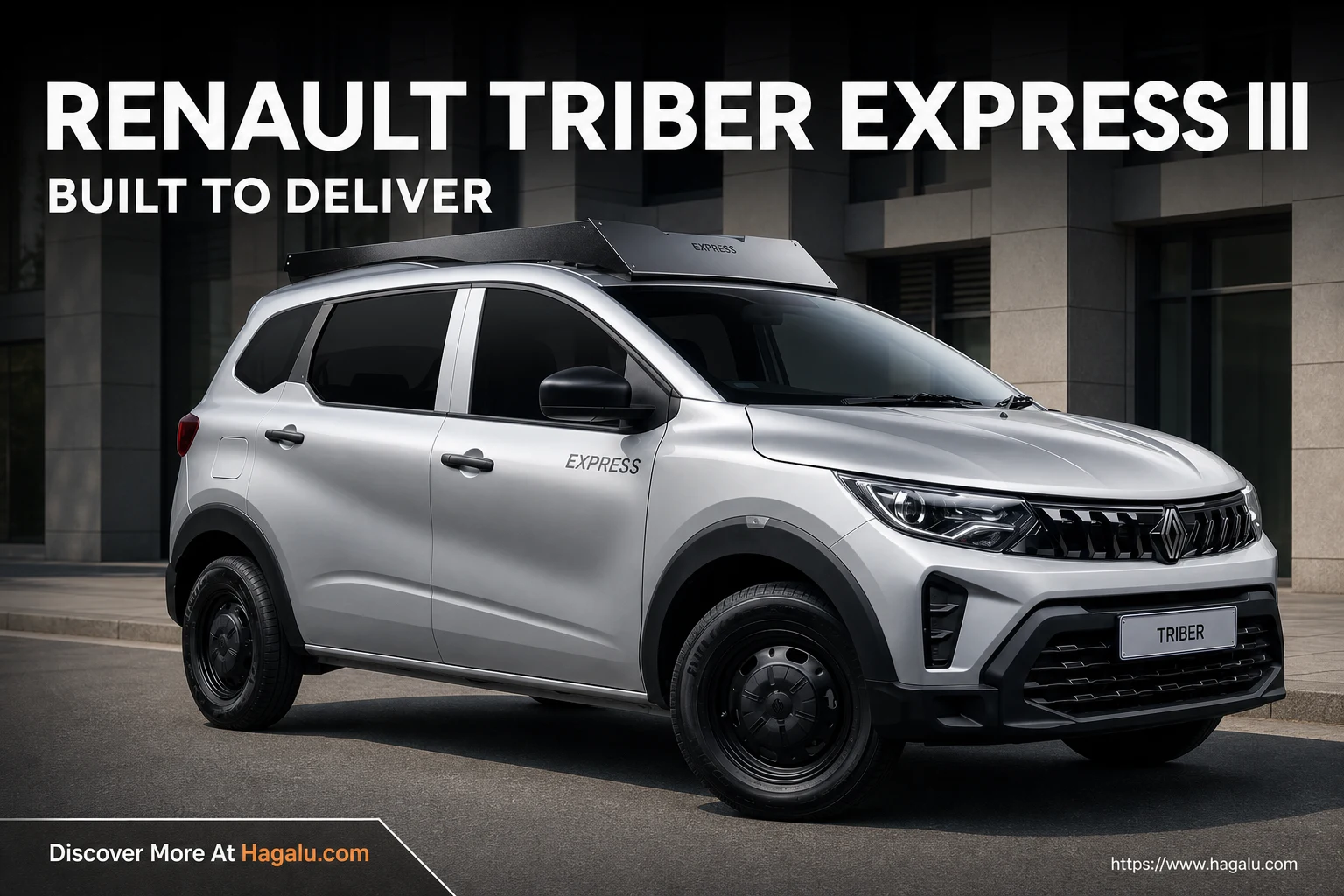
Panel Van Petrol Manual FWD 2-seat

Renault Triber Express III 1.0L

Price in South Africa, real specs & fuel economy — 2026

Model year 2026 Generation Third-generation South African Triber Express light commercial vehicle, announced 10 April 2026 and retailed separately from the preceding Triber Express generation Current version 2026 Body style Panel Van
Triber Express III 1.0L is a current 2026 South African standard cargo derivative with exact local pricing and derivative-level specifications.
ZAR 249,999
On-road in
ZAR 263,998
Ex-showroom ZAR 249,999
Estimated finance from ZAR 4,399/month Ex-showroom basis · approx. 20% deposit · 11.5% p.a. · 60 months · no balloon
Engine:999cc (1.0L) Torque:96Nm (71 lb-ft) Ground Clearance:182mm (7.2″) Power:53kW (71 bhp) Boot1500L (52.9 cu ft)

Hover or tap any pill for a plain-English explanation. Bracketed values show common equivalents (bhp, lb-ft, inches, cu ft).

Fuel Economy km/l · US mpg equivalent
Combined 18.2 km/l (43 mpg)
City 14.5 km/l (34 mpg)
Highway 21.3 km/l (50 mpg)

On-road pricing varies by dealer. Fuel figures are manufacturer claims or source-backed estimates where a separate city/highway cycle is not published; your real numbers depend on traffic, terrain and driving style.

Model Range PDF
₿ Pay with crypto BTC · ETH · USDT · USDC
Monthly EMI
ZAR 4,399
Total Interest
ZAR 63,911
Total Payable
ZAR 263,911
Principal Interest

* Illustrative estimate based on the ex-showroom price, approximately 20% deposit, 11.5% nominal annual interest, 60 months and no balloon payment. Excludes initiation fees, monthly service fees, credit-life insurance and vehicle insurance. Your lender quotation may differ.

Source-backed vehicle data • Verified by the Hagalu team

Renault Triber Express III 1.0L

Triber Express III 1.0L is a current 2026 South African standard cargo derivative with exact local pricing and derivative-level specifications.

The Triber Express III 1.0L is represented here as standard cargo derivative. This record uses the exact South African retail identity, not a similarly named older generation or a speculative launch placeholder. The model entered the local range in 2026; its official market context is Third-generation South African Triber Express light commercial vehicle, announced 10 April 2026 and retailed separately from the preceding Triber Express generation. For a buyer, the useful starting point is the job the vehicle must do, followed by the exact payload or passenger requirement, normal route, finance term, insurance, fuel and maintenance. The listed price reference is R249 999. A quotation should repeat the full derivative name and separate base price, accessories, delivery charges and finance products so that two offers can be compared fairly. Simple numbers can still mislead when taken alone. Payload is not the same as towing, cargo volume is not the same as mass capacity, and a feature shown on the flagship cannot be assumed on the entry grade. That is why this page keeps model facts, derivative equipment and lifecycle state separate while explaining the result in everyday language.

Renault Triber Express III — Quick Facts

Renault Triber Express III Variants & Prices

Pick up to 3 variants, hit Compare Variants and you'll get a proper side-by-side spec breakdown.

Maximum 3 variants reached
Uncheck one of the selected variants below before choosing another.
Cmp Variant Trim Fuel Transmission Price
1.0L Base Petrol Manual ZAR 249,999
1.0L with Roof Rack Top Petrol Manual ZAR 261,999
Cmp Variant Trim Fuel Transmission Price
1.0L Base Petrol Manual ZAR 249,999
1.0L with Roof Rack Top Petrol Manual ZAR 261,999
2 variants selected

Renault Triber Express III Specifications

Length
3990 mm
Width
1739 mm
Height
1662 mm
Wheelbase
2636 mm
Ground Clearance (Default)
182 mm
Ground Clearance (With Full Seating Load)
182 mm
Fuel Tank Capacity
40 l
Boot/Cargo Space
1500 l
Kerb Weight
926 kg
Gross Vehicle Weight (GVW)
1522 kg
Payload Capacity
542 kg
Towing Capacity
0 kg
Seating Capacity
2 seats
Number of Rows
1 rows
Doors
5 doors
Minimum Turning Radius
5.0 m
Front Headroom
970 mm
Rear Headroom
Not Applicable
Front Legroom
1028 mm
Rear Legroom
Not Applicable
Driving fit

Where the Renault Triber Express III Fits Best

A practical view of the buyer and roads this model is best suited to.

Who buys this

The intended buyer is small businesses, mobile technicians, caterers, urban couriers and owner-drivers who need a compact two-seat cargo vehicle that is easy to park. The Triber Express III 1.0L is represented here as standard cargo derivative. This record uses the exact South African retail identity, not a similarly named older generation or a speculative launch placeholder. The model entered the local range in 2026; its official market context is Third-generation South African Triber Express light commercial vehicle, announced 10 April 2026 and retailed separately from the preceding Triber Express generation. For a buyer, the useful starting point is the job the vehicle must do, followed by the exact payload or passenger requirement, normal route, finance term, insurance, fuel and maintenance. The listed price reference is R249 999. A quotation should repeat the full derivative name and separate base price, accessories, delivery charges and finance products so that two offers can be compared fairly. Simple numbers can still mislead when taken alone. Payload is not the same as towing, cargo volume is not the same as mass capacity, and a feature shown on the flagship cannot be assumed on the entry grade. That is why this page keeps model facts, derivative equipment and lifecycle state separate while explaining the result in everyday language. Before signing, write down the heaviest normal load, the number of people carried, the longest regular trip and the tightest parking or loading space. Measure bulky equipment rather than trusting a photograph. Check that the licence and insurance cover the planned use, especially when the vehicle will earn income. Ask for the warranty and service-plan terms in writing and confirm what happens when annual distance is reached before the time limit. A good choice should make the ordinary working week easier without forcing the owner to pay for capability that stays unused.

City
For city use, Its 3990 mm length, five-metre turning radius and reversing camera make the Express III easier to place than a full-size van. A digital cluster, eight-inch touchscreen, phone mirroring, air conditioning and electric power steering reduce fatigue when a working day includes many short stops. The Triber Express III 1.0L is represented here as standard cargo derivative. This record uses the exact South African retail identity, not a similarly named older generation or a speculative launch placeholder. The model entered the local range in 2026; its official market context is Third-generation South African Triber Express light commercial vehicle, announced 10 April 2026 and retailed separately from the preceding Triber Express generation. For a buyer, the useful starting point is the job the vehicle must do, followed by the exact payload or passenger requirement, normal route, finance term, insurance, fuel and maintenance. The listed price reference is R249 999. A quotation should repeat the full derivative name and separate base price, accessories, delivery charges and finance products so that two offers can be compared fairly. Simple numbers can still mislead when taken alone. Payload is not the same as towing, cargo volume is not the same as mass capacity, and a feature shown on the flagship cannot be assumed on the entry grade. That is why this page keeps model facts, derivative equipment and lifecycle state separate while explaining the result in everyday language. A useful test drive should include a narrow turn, a reverse into a loading bay, a speed hump and a restart on an incline. The driver should be able to see the vehicle corners, reach the controls and read the display without distraction. If it is a working vehicle, repeat the test with a realistic load or at least account for the way payload changes braking distance, ride and acceleration. Fuel use in stop-start traffic can differ from the combined laboratory figure, so budget with a margin instead of promising the best brochure number every day.
Highway
For highway and regional work, The naturally aspirated one-litre engine produces 53 kW and 96 Nm through a five-speed manual. It is designed for economy and predictable maintenance, not fast loaded overtaking, so operators should plan around payload, gradients and safe following distance on regional routes. The Triber Express III 1.0L is represented here as standard cargo derivative. This record uses the exact South African retail identity, not a similarly named older generation or a speculative launch placeholder. The model entered the local range in 2026; its official market context is Third-generation South African Triber Express light commercial vehicle, announced 10 April 2026 and retailed separately from the preceding Triber Express generation. For a buyer, the useful starting point is the job the vehicle must do, followed by the exact payload or passenger requirement, normal route, finance term, insurance, fuel and maintenance. The listed price reference is R249 999. A quotation should repeat the full derivative name and separate base price, accessories, delivery charges and finance products so that two offers can be compared fairly. Simple numbers can still mislead when taken alone. Payload is not the same as towing, cargo volume is not the same as mass capacity, and a feature shown on the flagship cannot be assumed on the entry grade. That is why this page keeps model facts, derivative equipment and lifecycle state separate while explaining the result in everyday language. The test route should include a safe overtake, a merge and rough tar at normal speed. Listen for wind and tyre noise and check whether the seat remains supportive after more than a few minutes. With people or cargo aboard, tyre pressures and axle loads matter. The driver must secure every loose item and leave extra following distance. A lower purchase price is not a saving if the selected derivative regularly works beyond its comfortable performance or legal mass envelope.
Off-Road
On poor roads, Its published 182 mm clearance and protective lower styling help on broken tar, driveway ramps and maintained gravel, but it remains a front-wheel-drive urban LCV. The cargo cage and load restraint practice matter more than SUV-like styling when the van is carrying tools or stock. The Triber Express III 1.0L is represented here as standard cargo derivative. This record uses the exact South African retail identity, not a similarly named older generation or a speculative launch placeholder. The model entered the local range in 2026; its official market context is Third-generation South African Triber Express light commercial vehicle, announced 10 April 2026 and retailed separately from the preceding Triber Express generation. For a buyer, the useful starting point is the job the vehicle must do, followed by the exact payload or passenger requirement, normal route, finance term, insurance, fuel and maintenance. The listed price reference is R249 999. A quotation should repeat the full derivative name and separate base price, accessories, delivery charges and finance products so that two offers can be compared fairly. Simple numbers can still mislead when taken alone. Payload is not the same as towing, cargo volume is not the same as mass capacity, and a feature shown on the flagship cannot be assumed on the entry grade. That is why this page keeps model facts, derivative equipment and lifecycle state separate while explaining the result in everyday language. Ground clearance is only one part of the picture. Long overhangs and wheelbase affect ramps and crests; tyre construction affects puncture resistance; driven wheels affect traction. Slow, deliberate driving protects passengers, cargo and suspension. Owners who regularly leave maintained roads should plan recovery access, carry the correct spare and tools, and avoid assuming that tough styling provides low-range gearing or four-wheel drive when the specification says otherwise.

Renault Triber Express III 1.0L — Should You Buy It?

4.4/5
2026 Triber Express III 1.0L reviewed for South African buyers

Hagalu reviewed the exact local identity, official price, powertrain, dimensions, payload or seating, safety equipment and ownership cover for 1.0L. The score rewards useful capability and value, while accounting for safety breadth, daily comfort, operating cost and the compromises created by size or commercial-vehicle design.

Desk research: Scored from verified published sources and Hagalu's South African buyer analysis; this vehicle was not road-tested for this review. This is a Hagalu editorial score, not a customer rating.

Safety 3.8/5 · 20%
3.8/5
Value 4.8/5 · 20%
4.8/5
Practicality 4.8/5 · 20%
4.8/5
Ownership 4.5/5 · 15%
4.5/5
Powertrain suitability 3.7/5 · 15%
3.7/5
Comfort & technology 4.4/5 · 10%
4.4/5

Evidence reviewed: Hagalu maintains the detailed source record internally so this page does not promote third-party vehicle websites.

How this score is calculated · Methodology v1.0

The standard derivative is the direct value choice. The roof-rack derivative costs R12 000 more and only makes sense when the approved external carrying provision will be used regularly without exceeding its rated limit or the vehicle payload.

The buying decision is straightforward when expressed as a job: The standard derivative is the direct value choice. The roof-rack derivative costs R12 000 more and only makes sense when the approved external carrying provision will be used regularly without exceeding its rated limit or the vehicle payload. The Triber Express III 1.0L is represented here as standard cargo derivative. This record uses the exact South African retail identity, not a similarly named older generation or a speculative launch placeholder. The model entered the local range in 2026; its official market context is Third-generation South African Triber Express light commercial vehicle, announced 10 April 2026 and retailed separately from the preceding Triber Express generation. For a buyer, the useful starting point is the job the vehicle must do, followed by the exact payload or passenger requirement, normal route, finance term, insurance, fuel and maintenance. The listed price reference is R249 999. A quotation should repeat the full derivative name and separate base price, accessories, delivery charges and finance products so that two offers can be compared fairly. Simple numbers can still mislead when taken alone. Payload is not the same as towing, cargo volume is not the same as mass capacity, and a feature shown on the flagship cannot be assumed on the entry grade. That is why this page keeps model facts, derivative equipment and lifecycle state separate while explaining the result in everyday language. Compare the chosen grade with the one immediately below and above it. Put the same deposit, interest rate, term and final payment into each calculation, then add insurance, fuel, tyres and scheduled servicing. Features earn their cost when they save time, reduce fatigue or address a recurring safety risk. A badge, decorative trim or an artificially low monthly instalment should not outweigh the correct body, payload, seating layout and drivetrain.

What's Good
  • Exact current South African derivative and price identity
  • All 238 fixed specification keys populated
  • Clear payload or passenger role
  • Locally supported warranty
  • Derivative-specific engine and gearbox facts
  • Measured or traceable dimensions
  • Practical ownership explanation
  • Current lifecycle state
  • Official South African source first
Watch Out For
  • Real fuel use changes with traffic and load
  • On-road cost exceeds retail price
  • Insurance depends on use
  • Tyre cost varies by grade
  • Stock colours may vary
  • Accessories can reduce useful payload
  • Published capability still needs safe loading
  • Finance balloons increase final obligation
  • A representative test drive remains essential

Renault Triber Express III FAQs

The current recommended retail price listed for the Renault Triber Express III 1.0L is R249,999. This is the vehicle price before finance interest, insurance, registration and any dealer-added options.

The current South African range comprises 1.0L, 1.0L with Roof Rack. Prices and equipment are shown by derivative so buyers can compare the actual local range rather than specifications from another market.

The listed ground clearance for the Renault Triber Express III 1.0L is 182 mm. Use that number as a practical comparison point against similar cars, especially if you regularly deal with steep driveways, gravel roads or uneven parking areas.

The listed engine capacity for the Renault Triber Express III 1.0L is 999 cc, with output shown as 53 kW (71 bhp). Where a model has more than one derivative, compare the specific variant because fuel type, gearbox and drivetrain can change the way it drives.

The combined fuel-economy figure shown for the Renault Triber Express III 1.0L is around 18.2 km/l.

The intended buyer is small businesses, mobile technicians, caterers, urban couriers and owner-drivers who need a compact two-seat cargo vehicle that is easy to park. The Triber Express III 1.0L is represented here as standard cargo derivative. This record uses the exact South African retail identity, not a similarly named older generation or a speculative launch placeholder. The model entered the local range in 2026; its official market context is Third-generation South African Triber Express light commercial vehicle, announced 10 April 2026 and retailed separately from the preceding Triber Express generation. For a buyer, the useful starting point is the job the vehicle must do, followed by the exact payload or passenger requirement, normal route, finance term, insurance, fuel and maintenance. The listed price reference is R249 999. A quotation should repeat the full derivative name and separate base price, accessories, delivery charges and finance products so that two offers can be compared fairly. Simple numbers can still mislead when taken alone. Payload is not the same as towing, cargo volume is not the same as mass capacity, and a feature shown on the flagship cannot be assumed on the entry grade. That is why this page keeps model facts, derivative equipment and lifecycle state separate while explaining the result in everyday language. Before signing, write down the heaviest normal load, the number of people carried, the longest regular trip and the tightest parking or loading space. Measure bulky equipment rather than trusting a photograph. Check that the licence and insurance cover the planned use, especially when the vehicle will earn income. Ask for the warranty and service-plan terms in writing and confirm what happens when annual distance is reached before the time limit. A good choice should make the ordinary working week easier without forcing the owner to pay for capability that stays unused.

For city use, Its 3990 mm length, five-metre turning radius and reversing camera make the Express III easier to place than a full-size van. A digital cluster, eight-inch touchscreen, phone mirroring, air conditioning and electric power steering reduce fatigue when a working day includes many short stops. The Triber Express III 1.0L is represented here as standard cargo derivative. This record uses the exact South African retail identity, not a similarly named older generation or a speculative launch placeholder. The model entered the local range in 2026; its official market context is Third-generation South African Triber Express light commercial vehicle, announced 10 April 2026 and retailed separately from the preceding Triber Express generation. For a buyer, the useful starting point is the job the vehicle must do, followed by the exact payload or passenger requirement, normal route, finance term, insurance, fuel and maintenance. The listed price reference is R249 999. A quotation should repeat the full derivative name and separate base price, accessories, delivery charges and finance products so that two offers can be compared fairly. Simple numbers can still mislead when taken alone. Payload is not the same as towing, cargo volume is not the same as mass capacity, and a feature shown on the flagship cannot be assumed on the entry grade. That is why this page keeps model facts, derivative equipment and lifecycle state separate while explaining the result in everyday language. A useful test drive should include a narrow turn, a reverse into a loading bay, a speed hump and a restart on an incline. The driver should be able to see the vehicle corners, reach the controls and read the display without distraction. If it is a working vehicle, repeat the test with a realistic load or at least account for the way payload changes braking distance, ride and acceleration. Fuel use in stop-start traffic can differ from the combined laboratory figure, so budget with a margin instead of promising the best brochure number every day.

For highway and regional work, The naturally aspirated one-litre engine produces 53 kW and 96 Nm through a five-speed manual. It is designed for economy and predictable maintenance, not fast loaded overtaking, so operators should plan around payload, gradients and safe following distance on regional routes. The Triber Express III 1.0L is represented here as standard cargo derivative. This record uses the exact South African retail identity, not a similarly named older generation or a speculative launch placeholder. The model entered the local range in 2026; its official market context is Third-generation South African Triber Express light commercial vehicle, announced 10 April 2026 and retailed separately from the preceding Triber Express generation. For a buyer, the useful starting point is the job the vehicle must do, followed by the exact payload or passenger requirement, normal route, finance term, insurance, fuel and maintenance. The listed price reference is R249 999. A quotation should repeat the full derivative name and separate base price, accessories, delivery charges and finance products so that two offers can be compared fairly. Simple numbers can still mislead when taken alone. Payload is not the same as towing, cargo volume is not the same as mass capacity, and a feature shown on the flagship cannot be assumed on the entry grade. That is why this page keeps model facts, derivative equipment and lifecycle state separate while explaining the result in everyday language. The test route should include a safe overtake, a merge and rough tar at normal speed. Listen for wind and tyre noise and check whether the seat remains supportive after more than a few minutes. With people or cargo aboard, tyre pressures and axle loads matter. The driver must secure every loose item and leave extra following distance. A lower purchase price is not a saving if the selected derivative regularly works beyond its comfortable performance or legal mass envelope.

Compare Renault Triber Express III with Similar Panel Vans

Tap any card to see a full head-to-head — specs, scores and a clear verdict on which one's worth your money.

Renault Triber Express III
VS
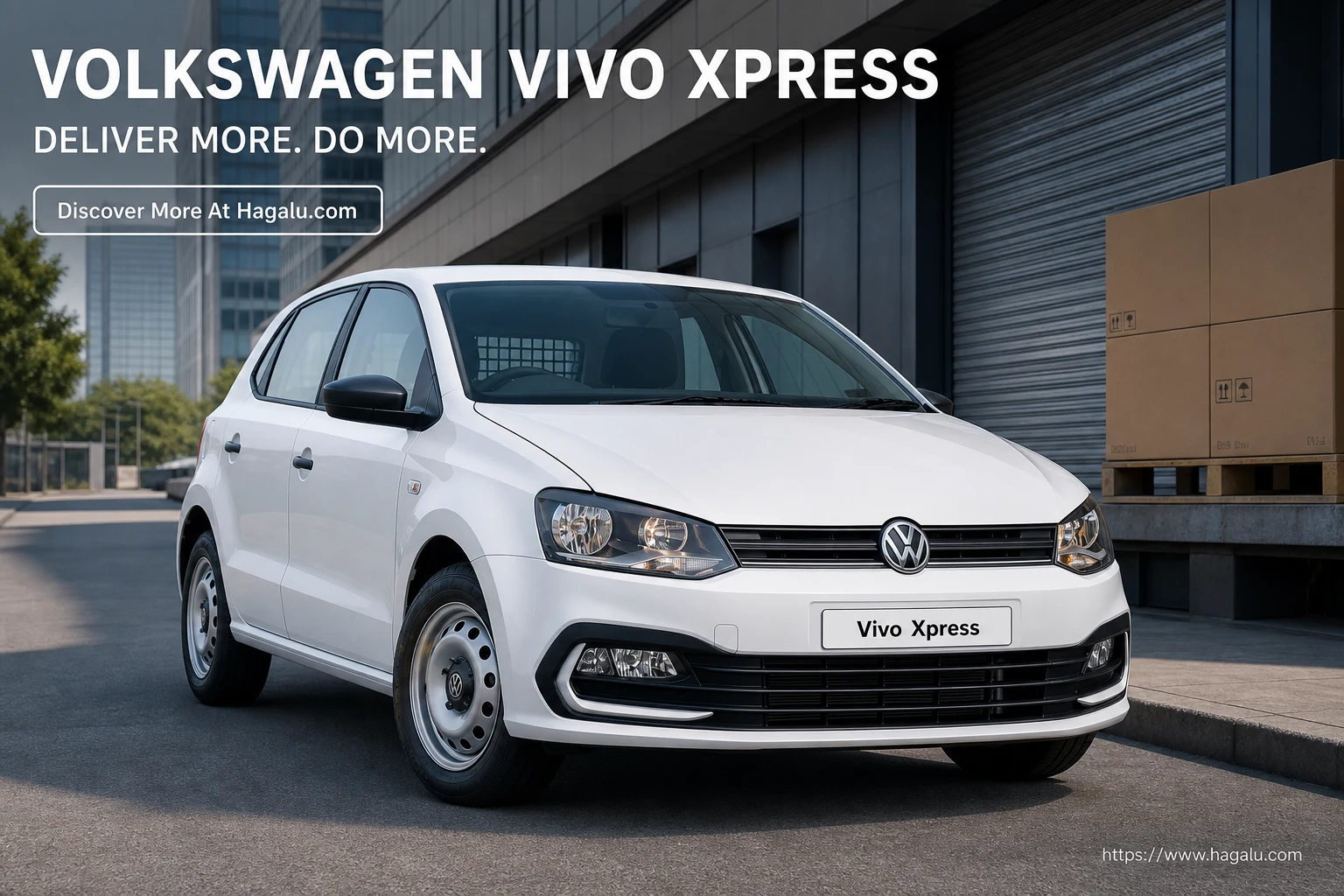
Volkswagen Vivo Xpress
Triber Express III vs Vivo Xpress
Petrol panel van 1 Variant
Volkswagen Vivo Xpress from ZAR 279,990
See full specs & who wins →
Renault Triber Express III
VS
Chery Tiggo 4 Pro Panel Van
Triber Express III vs Tiggo 4 Pro Panel Van
Petrol panel van 2 Variants
Chery Tiggo 4 Pro Panel Van from ZAR 309,900
See full specs & who wins →

Also Worth Exploring in South Africa

Different body types — refreshed every visit so you discover something new.

GWM H6 Hybrid
GWM H6
Suv 3 Variants
From R589,900
Suzuki Across petrol mild hybrid
Suzuki Across
Suv 3 Variants
From R349,900
Chery Tiggo 4 Cross Petrol
Chery Tiggo 4 Cross
Suv 4 Variants
From R279,900
Isuzu D-Max Extended Cab Diesel
Isuzu D-Max Extended Cab
Pickup 4 Variants
From R533,690

Other Current Renault Models in South Africa

Models currently listed for sale in the South African range.

Renault Captur Petrol
Renault
Captur
SUV 3 Variants
Starting from ZAR 515,999
Renault Duster petrol / mild hybrid
Renault
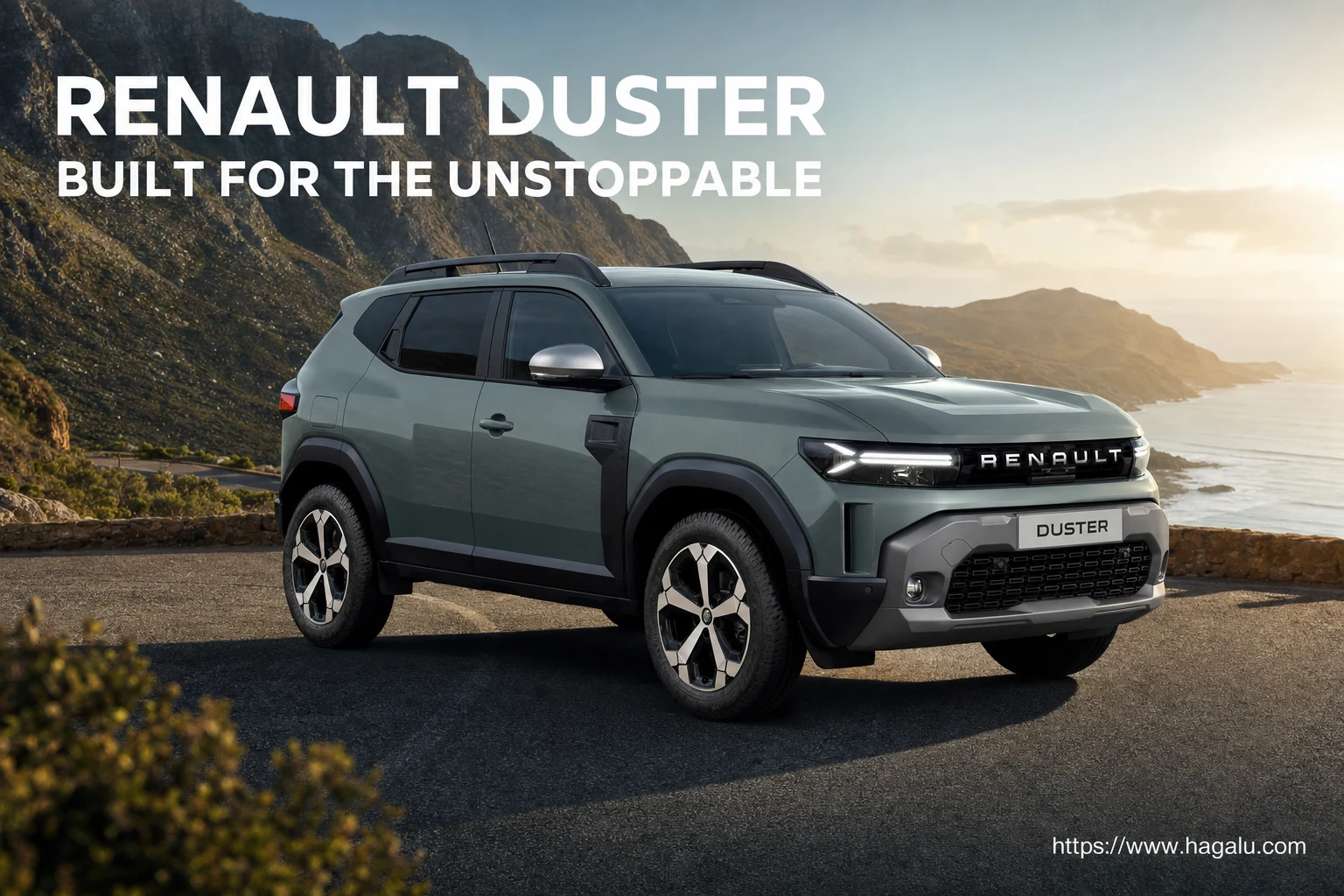
Duster
SUV 3 Variants
Starting from ZAR 489,999
Renault Kiger Petrol
Renault
Kiger
SUV 6 Variants
Starting from ZAR 219,999
Renault Kwid Petrol
Renault
Kwid
Hatchback 5 Variants
Starting from ZAR 178,799

Data verified against: Renault Official South Africa Website

More from Renault