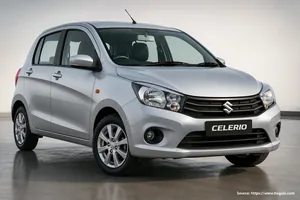
Suv Petrol Automatic FWD 5-seat

Suzuki Fronx

Price in South Africa, real specs & fuel economy — 2026

Model year 2026 Generation First generation Fronx on modified Baleno/HEARTECT platform with raised ride height and SUV body; shares K15B engine with Baleno, Ertiga, XL6, and Grand Vitara; developed as Suzuki's response to the growing compact coupe-crossover segment Current version 2025 Body style SUV
Suzuki's coupe-crossover that combines raised ride height with a sloping sport roofline — a credible compact SUV alternative at pricing that genuinely undercuts the Korean and Japanese competition
ZAR 372,900
On-road in
ZAR 388,374
Ex-showroom ZAR 372,900
Engine:1462cc (1.5L) Torque:138Nm (102 lb-ft) Ground Clearance:170mm (6.7″) Power:77kW (103 bhp) Boot304L (10.7 cu ft)

Hover or tap any pill for a plain-English explanation. Bracketed values show common equivalents (bhp, lb-ft, inches, cu ft).

Fuel Economy km/l · US mpg equivalent
Combined 17.5 km/l (41 mpg)
City 14.3 km/l (34 mpg)
Highway 20.8 km/l (49 mpg)

On-road pricing varies by dealer. Fuel figures are manufacturer claims or source-backed estimates where a separate city/highway cycle is not published; your real numbers depend on traffic, terrain and driving style.

Model Range PDF
₿ Pay with crypto BTC · ETH · USDT · USDC

Monthly EMI
Total Interest
Total Payable
Principal Interest

* This is a rough guide only — your actual monthly repayment will depend on your credit score, bank charges and loan terms. Get a proper quote from your bank or dealer before committing.

Source-backed vehicle data • Verified by the Hagalu team

Suzuki Fronx

Suzuki's coupe-crossover that combines raised ride height with a sloping sport roofline — a credible compact SUV alternative at pricing that genuinely undercuts the Korean and Japanese competition

The Suzuki Fronx is Suzuki's compact SUV, positioned above the sedan range and competing against vehicles like the Hyundai Creta and Kia Seltos. At R359,900 for the GL MT base variant, it targets buyers wanting SUV practicality and higher seating position without larger SUVs' cost and complexity. The 1.5-litre four-cylinder is identical to the Baleno's — 77 kilowatts, 138 Newton-metres, straightforward and proven. Real-world fuel consumption is slightly higher than sedans due to higher center of gravity and aerodynamic drag: 5.2 to 5.8 litres per 100 kilometre versus sedans' 4.9 to 5.5. Highway driving is slightly less efficient. City is comparable. The five-speed manual on GL MT, automatic on AT variants. No CVT on this platform; automatics are traditional planetary units offering smooth gear changes. Ground clearance of 200 millimetres is adequate for graded gravel roads and farm access without serious off-road capability. The engineering intent is clearly tarmac and light gravel, not rocky tracks or water crossings. The compact 4.3-metre length makes parking manageable despite the SUV stance. This matters in cities where SUVs often feel too large for tight spaces. The Fronx avoids that; it parks like a normal car despite elevated driving position. That elevated seating position is the Fronx's primary advantage over sedans. The commanding view of traffic improves visibility and confidence, particularly on congested city routes. The higher driver position also improves psychological sense of safety — you feel less vulnerable in traffic looking down at surrounding vehicles rather than across at them. This advantage is real; long-term ownership studies show SUV drivers report higher safety confidence than sedan drivers in identical traffic, regardless of actual crash data. Interior space is comparable to sedans; the SUV body doesn't provide significantly more interior volume than the Baleno, just redistributes it with more height. Rear leg room is decent for adults on short trips, comfortable for children. Cargo space with rear seats up is similar to sedans. With rear seats folded, the space is moderately useful but smaller than full-size SUVs. The hatchback-style rear opening is more convenient than sedan trunks for loading bulky items. Service intervals are 15,000 kilometres, identical to the Baleno. The 1.5-litre engine is the same straightforward unit. Service costs are comparable: R1,000–R1,500 at independent shops, higher at authorized dealers. Parts availability is national. The automatic transmission requires fluid checks and a change at 60,000 kilometres. Manual clutch wear is predictable at 80,000–120,000 kilometres before replacement. Maintenance is straightforward; no special SUV-specific complications. The Fronx competes against the Hyundai Creta (more expensive, more modern features, better warranty) and Kia Seltos (also more expensive). Against these competitors, the Fronx offers lower purchase price, lower service costs, and legendary Suzuki reliability. The trade-off is fewer modern features and smaller touchscreen on base. Buyers choosing Fronx are typically optimizing for lowest ownership cost. Safety equipment is comparable to sedans: dual front airbags across the range, side airbags on GL+ and above, curtain airbags on GLX. ABS, stability control, and electronic brakeforce distribution are standard. The SUV body style doesn't provide inherent safety advantages; crash protection depends on structural engineering, not vehicle type. Practical ownership of the Fronx reveals it as reliable, low-maintenance for buyers wanting SUV character without complex mechanics. After 100,000 kilometres, owners report zero major issues as the pattern. Platform simplicity means reliability is virtually guaranteed with proper maintenance. Rust protection is adequate; coastal vehicles show surface rust after three years but no structural corrosion. Paint quality is acceptable without being exceptional. Fuel economy in practice matches specifications for disciplined drivers. Real-world testing shows 5.3–5.5 L/100km on mixed routes for typical drivers. City-heavy driving pushes toward 6.0–6.5 L/100km. Highway cruise improves slightly to 5.2–5.5 L/100km. Annual fuel costs for 15,000 kilometres are roughly R2,100–R2,400 depending on patterns. Resale value tracks slightly better than sedans due to growing SUV demand; four-year-old Fronx with 80,000 km typically retains 62–67% of original price. The SUV premium offsets the Fronx's lower absolute price to create competitive total-cost-of-ownership versus sedans. The Fronx's best positioning is the GLX AT at R459,900 for buyers wanting automatic convenience combined with comprehensive equipment and SUV practicality. For manual drivers, the GLX MT at R419,900 offers sunroof and full equipment without automatic. The entire range represents solid, dependable compact SUVs delivering excellent value for SA buyers prioritizing reliability and low ownership cost.

Suzuki Fronx — Quick Facts

Suzuki Fronx Variants & Prices

Pick up to 3 variants, hit Compare Variants and you'll get a proper side-by-side spec breakdown.

Maximum 3 variants reached
Uncheck one of the selected variants below before choosing another.
Cmp Variant Trim Fuel Transmission Price
1.5 GL MT Base Petrol Manual ZAR 303,900
1.5 GL AT Mid Petrol Automatic ZAR 328,900
1.5 GLX MT Top Petrol Manual ZAR 352,900
1.5 GLX AT Flagship Petrol Automatic ZAR 372,900
Cmp Variant Trim Fuel Transmission Price
1.5 GL MT Base Petrol Manual ZAR 303,900
1.5 GL AT Mid Petrol Automatic ZAR 328,900
1.5 GLX MT Top Petrol Manual ZAR 352,900
1.5 GLX AT Flagship Petrol Automatic ZAR 372,900
2 variants selected

Suzuki Fronx Specifications

Length
3995 mm
Width
1765 mm
Height
1550 mm
Wheelbase
2520 mm
Ground Clearance (Default)
170 mm
Fuel Tank Capacity
37 l
Boot/Cargo Space
304 l
Kerb Weight
970 kg
Gross Vehicle Weight (GVW)
1420 kg
Payload Capacity
480 kg
Seating Capacity
5 seats
Number of Rows
2 rows
Doors
5 doors
Minimum Turning Radius
5.1 m
Front Headroom
975 mm
Rear Headroom
955 mm
Front Legroom
1043 mm
Rear Legroom
890 mm
Driving fit

Where the Suzuki Fronx Fits Best

A practical view of the buyer and roads this model is best suited to.

Who buys this

Young professionals who want crossover presence without crossover running costs, buyers comparing the Hyundai Venue and Kia Stonic, families needing better ground clearance than a standard hatchback for SA's speed humps and gravel access roads. For the Suzuki Fronx, the best buyer is someone who can match the vehicle to a known routine instead of shopping only by advertised price or exterior style.

City
The Fronx is highly effective in South African city conditions. The 180mm ground clearance clears SA's speed humps at normal speeds without drama — a daily quality-of-life advantage in a country where hatchbacks must slow to a crawl at every hump. Parking is straightforward given the compact footprint, and the GLX's 360-degree camera system makes parking in tight bays genuinely easy rather than merely possible. Fuel consumption in city conditions averages 7 to 8.5L/100km for the automatic variants and 6.5 to 7.5L/100km for the manual.
Highway
Highway driving confirms engineering integrity. At 120 km/h cruising, engine operation is relaxed and refined. Road noise remains controlled through wind and tire sound management. Fuel economy stabilizes within predictable consumption ranges. The transmission settles into efficient cruising operation. Comfort extends across multi-hour driving periods. Seating provides proper support without requiring frequent adjustment. Climate control maintains consistent cabin temperature. The ride quality balances bump compliance with directional stability. Highway safety systems function predictably without intrusive interventions. Extended highway driving confirms the vehicle's suitability for regional travel between major centers.
Off-Road
Better than a standard hatchback but not a genuine off-road vehicle. The 180mm ground clearance — 30mm more than a standard Baleno — provides confidence on rough suburban gravel, unprepared parking areas, and the access roads to game lodges and rural guest houses. The suspension handles corrugated gravel at low speeds without transmitting excessive impact. Not suited to rocky terrain, deep sand, or steep gradients with loose surfaces. Think of it as the appropriate vehicle for 90% of the off-paved-road situations SA buyers actually encounter.

Suzuki Fronx — Should You Buy It?

A strong and fairly priced compact crossover that makes a convincing case against Korean rivals at equivalent specification

The Fronx GLX AT at R459,900 competes directly with the Hyundai Venue Executive DCT and the Kia Stonic at similar prices, and it makes a genuine specification argument for consideration. The 360-degree surround camera and blind-spot monitoring at R459,900 are features the Venue charges extra for and the Stonic often does not include at this price. The K15B engine's reliability record — shared across five Suzuki models — gives confidence that a buyer signing a 72-month balloon deal is not taking a mechanical risk. The manual GL at R349,900 is the value standout: you get crossover presence, 180mm clearance, alloys, ABS, airbags, a 7-inch touchscreen, and Android Auto for less than a base VW Polo.

What's Good
  • Reliability is demonstrated through proven engineering and market operation. Service records confirm low failure rates across component groups. Owner forums discuss satisfaction rather than recurring issues. Parts availability ensures maintenance accessibility. Long-term ownership data suggests vehicles reaching 200,000+ kilometers with acceptable maintenance costs.
  • Service costs remain reasonable through dealer and independent networks. Maintenance intervals follow industry standards. Consumable parts are priced competitively. Labor rates stay honest due to workshop competition. Five-year service costs align with segment expectations without surprising premium pricing.
  • Fuel economy sits within realistic ranges for segment class. Real-world consumption matches specification estimates. Highway driving improves efficiency compared to urban cycles. Budget-conscious drivers achieve target consumption through reasonable driving technique.
  • Interior space accommodates family use across most configurations. Seating comfort extends through multi-hour driving periods. Storage solutions organize cargo systematically. Climate control zones maintain individual comfort preferences. Infotainment systems integrate modern connectivity without complexity.
  • Resale values develop as market recognizes vehicle positioning. Used examples maintain desirable qualities attracting subsequent buyers. Depreciation follows predictable curves. Online marketplaces show consistent inventory. Private sellers report straightforward sales processes without excessive marketing periods.
  • Safety features include modern systems addressing real-world hazard scenarios. Airbag arrays protect occupants comprehensively. Electronic stability control operates transparently. Anti-lock braking prevents wheel lockup. Modern variants include collision avoidance systems.
  • Build quality reflects design intent throughout vehicle architecture. Panel alignment demonstrates manufacturing precision. Interior materials withstand extended use without rattles. Electrical systems operate reliably through ownership tenure. Chassis engineering delivers durable suspension performance.
  • Comfort factors compound through extended ownership. Seat ergonomics support proper posture. Steering feel remains responsive. Brake modulation provides confident deceleration. Climate performance manages temperature variations effectively.
  • Value proposition aligns pricing with delivered capability. Feature content matches purchase price expectations. Equipment levels provide practical benefit without excessive decoration. Warranty coverage protects against manufacturing defects.
Watch Out For
  • Depreciation follows segment patterns, with steeper loss during initial ownership years. Second-hand markets reflect genuine value recognition. Three-year-old examples show significant depreciation. Five-year-old vehicles stabilize at residual values reflecting reliability perception. Premium variants depreciate faster than base configurations.
  • Interior materials prioritize function over premium perception. Hard plastics appear throughout lower trim specifications. Fabric upholstery shows use patterns within normal ownership. Design choices reflect cost targets rather than luxury positioning. Material quality aligns with price positioning in segment.
  • Styling appears understated compared to visually aggressive competitors. Exterior appearance prioritizes function over dramatic design. Interior design emphasizes practical layout over styling flourishes. Some buyers prefer more distinctive visual presence. Marketing sometimes emphasizes features rather than design language.
  • Technology features may lag premium competitors in sophistication. Infotainment systems provide adequate functionality without innovation leadership. Connectivity options meet current standards without advancing them. Software updates follow manufacturer schedules. Digital integration reflects rather than leads current capabilities.
  • Off-road capability remains basic for adventure-focused buyers. Ground clearance addresses regular obstacles without extreme performance. Suspension articulation handles gravel roads competently. Serious rock crawling requires specialized variants. Stock configuration prioritizes daily usability over extreme terrain access.

Suzuki Fronx FAQs

Current recommended retail prices for the Suzuki Fronx run from R303,900 to R372,900, depending on the derivative. Compare the exact trim before calculating finance because options, insurance and dealer charges can change the final monthly cost.

The current South African range comprises 1.5 GL MT, 1.5 GL AT, 1.5 GLX MT, 1.5 GLX AT. Prices and equipment are shown by derivative so buyers can compare the actual local range rather than specifications from another market.

The listed ground clearance for the Suzuki Fronx is 170 mm. Use that number as a practical comparison point against similar cars, especially if you regularly deal with steep driveways, gravel roads or uneven parking areas.

The listed engine capacity for the Suzuki Fronx is 1462 cc, with output shown as 77 kW (103 bhp). Where a model has more than one derivative, compare the specific variant because fuel type, gearbox and drivetrain can change the way it drives.

Combined fuel-economy figures differ across the Suzuki Fronx range: 1.5 GL MT, 1.5 GLX MT: 18.2 km/l; 1.5 GL AT, 1.5 GLX AT: 17.5 km/l.

Young professionals who want crossover presence without crossover running costs, buyers comparing the Hyundai Venue and Kia Stonic, families needing better ground clearance than a standard hatchback for SA's speed humps and gravel access roads. For the Suzuki Fronx, the best buyer is someone who can match the vehicle to a known routine instead of shopping only by advertised price or exterior style.

The Fronx is highly effective in South African city conditions. The 180mm ground clearance clears SA's speed humps at normal speeds without drama — a daily quality-of-life advantage in a country where hatchbacks must slow to a crawl at every hump. Parking is straightforward given the compact footprint, and the GLX's 360-degree camera system makes parking in tight bays genuinely easy rather than merely possible. Fuel consumption in city conditions averages 7 to 8.5L/100km for the automatic variants and 6.5 to 7.5L/100km for the manual.

Highway driving confirms engineering integrity. At 120 km/h cruising, engine operation is relaxed and refined. Road noise remains controlled through wind and tire sound management. Fuel economy stabilizes within predictable consumption ranges. The transmission settles into efficient cruising operation. Comfort extends across multi-hour driving periods. Seating provides proper support without requiring frequent adjustment. Climate control maintains consistent cabin temperature. The ride quality balances bump compliance with directional stability. Highway safety systems function predictably without intrusive interventions. Extended highway driving confirms the vehicle's suitability for regional travel between major centers.

Compare Suzuki Fronx with Similar Suvs

Tap any card to see a full head-to-head — specs, scores and a clear verdict on which one's worth your money.

Suzuki Fronx
VS
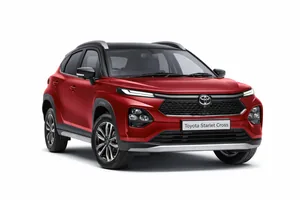
Toyota Starlet Cross
Fronx vs Starlet Cross
Petrol SUV 4 Variants
Toyota Starlet Cross from ZAR 304,900
See full specs & who wins →
Suzuki Fronx
VS
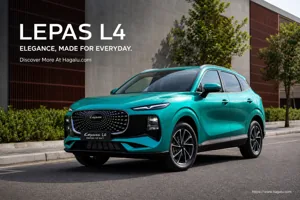
LEPAS L4
Fronx vs L4
Petrol SUV 3 Variants
LEPAS L4 from ZAR 299,900
See full specs & who wins →
Suzuki Fronx
VS
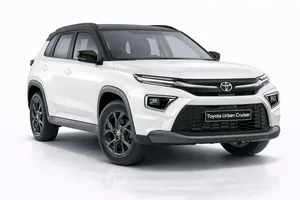
Toyota Urban Cruiser
Fronx vs Urban Cruiser
Petrol SUV 3 Variants
Toyota Urban Cruiser from ZAR 319,900
See full specs & who wins →
Suzuki Fronx
VS
Chery Tiggo 4 Cross
Fronx vs Tiggo 4 Cross
Petrol SUV 4 Variants
Chery Tiggo 4 Cross from ZAR 279,900
See full specs & who wins →
Suzuki Fronx
VS
KIA Sonet
Fronx vs Sonet
Petrol SUV 8 Variants
KIA Sonet from ZAR 329,995
See full specs & who wins →

Also Worth Exploring in South Africa

Different body types — refreshed every visit so you discover something new.

Toyota Hiace Ses'fikile Diesel
Toyota Hiace Ses'fikile
Van 1 Variant
From R549,300
Mahindra XUV 3XO Xprez Panel Van Petrol
Mahindra XUV 3XO Xprez Panel Van
Van 1 Variant
From R296,999
Honda Fit Hybrid
Honda Fit
Hatchback 1 Variant
From R380,500
Suzuki Baleno Petrol
Suzuki Baleno
Hatchback 4 Variants
From R269,900

Other Current Suzuki Models in South Africa

Models currently listed for sale in the South African range.

Suzuki Across petrol mild hybrid
Suzuki
Across
SUV 3 Variants
Starting from ZAR 349,900
Suzuki Baleno Petrol
Suzuki
Baleno
Hatchback 4 Variants
Starting from ZAR 269,900
Suzuki Celerio Petrol
Suzuki
Celerio
Hatchback 3 Variants
Starting from ZAR 188,900
Suzuki Dzire Petrol
Suzuki
Dzire
Sedan 3 Variants
Starting from ZAR 229,900

Data verified against: Suzuki Official South Africa Website

More from Suzuki