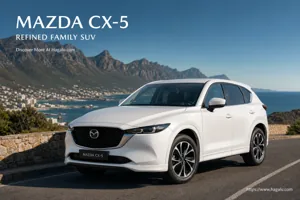
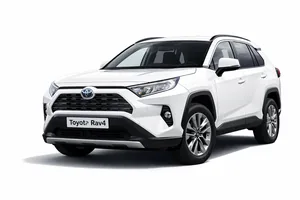
A proper head-to-head in South Africa — we cover price, performance,
petrol economy, safety and what it'll actually cost you to own each one long term.
CX-5 starts ZAR 610000 cheaperCX-5 from ZAR 570,500 · RAV4 from ZAR 610,000
Key Specs Side by Side
The specs that matter most — highlighted where one car leads.
Spec
CX-5
RAV4
Engine Power
121 kW
176 kW
Torque
213 Nm
221 Nm
Engine Size
1998 cc
2500 cc
Claimed Mileage
14.5 km/l
21.3 km/l
Ground Clearance
200 mm
186 mm
Boot / Load Bay
438 l
732 l
Airbags
6
Driver Knee, Front Side, Rear Curtain, Front Curtain
Kerb Weight
1575 kg
1725-1740 kg
Seating Capacity
5
5
Warranty
5 Years/Unlimited km
3 years / 100 000 km
= leads in this spec
The Bottom Line
RAV4 has a slight advantage, but CX-5 remains highly competitive.
Where They Actually Differ
Performance
RAV4
+17 pts
Efficiency
RAV4
+28 pts
Safety
RAV4
+12 pts
Practicality
RAV4
+10 pts
Ownership
CX-5
+9 pts
What Each Car Gets Right (and Wrong)
CX-5
Strengths
Better long-term ownership value
Weak Spots
Less powerful engine setup
Lower fuel efficiency
Less comprehensive safety features
Less practical in daily usage
Best suited to:General Use
🏆 Overall Winner
RAV4
Strengths
More powerful engine output
Better fuel efficiency
Stronger safety package
More practical for daily use
Weak Spots
Shorter warranty coverage
Best suited to:Highway DrivingFuel EfficiencyFamily Usage
Which One's Right for You?
CX-5
Long-term owners valuing warranty and ownership peace of mind
RAV4
Drivers who prioritise strong highway performance and overtaking power
Buyers looking for better fuel efficiency
Families prioritising stronger safety equipment
Large families needing more practicality and usability
Full Specs, Side by Side
Spec
CX-5
RAV4
Model Introduced Year
2017
2026
Generation
Second-generation KF-series Mazda CX-5, current outgoing South African range
All-new sixth-generation RAV4 introduced in South Africa in July 2026
Facelift History
The second generation arrived in 2017 and received a substantial update from 2021. An all-new replacement is scheduled to reach South Africa on 1 August 2026, while this current range remains on sale.
Full model change for 2026 with HEV, PHEV and GR-Sport derivatives
Facelift Launched Since
2017
Full model change for 2026 with HEV, PHEV and GR-Sport derivatives
Facelift Version Ending
Current
Current South African 2026 specification
Body Style
SUV
SUV
Model Year
2026
2026
Production Status
Active
published
Segment
Mid-size family SUV
SUV
Vehicle Type
SUV
SUV
Spec
CX-5
RAV4
Ground Clearance
200 mm
186 mm
Wheelbase
2700 mm
2690 mm
Length
4575 mm
4645 mm
Width
1845 mm
1880 mm
Height
1680 mm
1680 mm
Kerb Weight
1575 kg
1725-1740 kg
Gross Vehicle Weight
2065 kg
2230 kg
Seating Capacity
5
5
Boot Space
438 l
732 l
Towing Capacity
1000 kg
1000 kg
Turning Radius
5.95 m
5.6 m
Load Bed Length
438 l
732 l
Load Bed Width
-
-
Front Legroom
1041 mm
-
Rear Legroom
1007 mm
-
Front Shoulder Room
1451 mm
-
Rear Shoulder Room
1391 mm
-
Boot Space Seats Folded
1340 l
-
Number of Doors
5
5
Max Payload
490 kg
-
Boot Volume
438 l
732 l
Doors
5
5
Seats
5
5
Fuel Tank Capacity
56 l
55 l
Gross Vehicle Mass Kg
2065 kg
2230 kg
Ground Clearance Max
200 mm
186 mm
Ground Clearance Min
200 mm
186 mm
Ground Clearance Mm
200 mm
186 mm
Height Mm
1680 mm
1680 mm
Length Mm
4575 mm
4645 mm
Loadbox Length Mm
438 l
732 l
Loadbox Width Mm
-
-
Payload Kg
490 kg
-
Cargo Volume
438 l
732 l
Tare Mass Kg
1575 kg
1725-1740 kg
Turning Circle
5.95 m
5.6 m
Turning Circle M
5.95 m
5.6 m
Width Mm
1845 mm
1880 mm
Front Track Width
-
1620 mm
Rear Track Width
-
1650 mm
Spec
CX-5
RAV4
Engine
2.0 litre in-line 4 cylinder SKYACTIV-G
2.5-litre Petrol Hybrid
Engine Type
2.0 litre in-line 4 cylinder SKYACTIV-G
2.5-litre Petrol Hybrid
Displacement
1998 cc
2500 cc
Cylinders
4
Inline-4
Power
121 kW
176 kW
Power @ RPM
6000
6000
Torque
213 Nm
221 Nm
Torque @ RPM
4000
3600-5200
Turbocharger
Naturally Aspirated
-
Top Speed
182 km/h
180 km/h
0-100 km/h
10.3 sec
-
Compression Ratio
13.0:1
-
Cylinder Bore
83.5 mm
87.5 mm
Piston Stroke
91.2 mm
103.48 mm
Power
162 bhp
236 bhp
Cylinder Layout
Inline
Inline-4
Engine Aspiration
Naturally Aspirated
-
Engine Type Config
2.0 litre in-line 4 cylinder SKYACTIV-G
2.5-litre Petrol Hybrid
0–100 km/h
10.3 sec
-
Engine Displacement
1998 cc
2500 cc
Engine Displacement Litres
1998 cc
2500 cc
Acceleration 0 100
10.3 sec
-
Engine Config
2.0 litre in-line 4 cylinder SKYACTIV-G
2.5-litre Petrol Hybrid
Engine Cylinders
4
Inline-4
Engine Displacement Cc
1998 cc
2500 cc
Engine Power kW
121 kW
176 kW
Engine Torque Nm
213 Nm
221 Nm
Induction
Naturally Aspirated
-
Max Power kW
121 kW
176 kW
Max Torque Nm
213 Nm
221 Nm
Maximum Power
121 kW
176 kW
Maximum Torque
213 Nm
221 Nm
Power kW Rpm
6000
6000
Torque Nm Rpm
4000
3600-5200
Turbo Type
-
-
Fuel System
-
Petrol Hybrid
Spec
CX-5
RAV4
Transmission
6-Speed Auto
CVT
Drive Type
FWD
AWD E-FOUR
Drivetrain Layout
Front-engine, front-wheel drive
AWD E-FOUR
Transfer Case
-
-
Differential Lock
-
-
Paddle Shifters
Standard
Standard
Final Drive Ratio
4.624
-
Number of Gears
6 km/h
-
Transmission Type
6-Speed Auto
CVT
Drivetrain
FWD
AWD E-FOUR
Transmission
6-Speed Auto
CVT
4WD Engagement
-
Permanent electric all-wheel drive
4WD Hi Range
-
-
4WD Lo Range
-
-
4WD Selector
-
-
Automatic Shift Paddles
Standard
Standard
Front Differential Lock
-
-
Gearbox Type
6-Speed Auto
CVT
Low Range
-
-
Axle Layout
FWD
AWD E-FOUR
Rear Differential Lock
-
-
Transmission Speeds
6 km/h
-
LSD Available
-
Standard Front + Rear,
Spec
CX-5
RAV4
Claimed Mileage
14.5 km/l
21.3 km/l
Fuel Tank Capacity
56 l
55 l
Emission Standard
Euro stage IV
-
AdBlue Tank Capacity
-
-
Auto Start Stop
Standard
-
Average Fuel Consumption
6.9 l/100km
4.7 l/100km
Claimed Fuel Consumption
6.9 l/100km
4.7 l/100km
Fuel Efficiency
6.9 l/100km
4.7 l/100km
AC Charging Power
-
-
Charging Port Type
-
-
Charging Time AC Full
-
-
Charging Time DC Fast 80pct
-
-
Charging Type
-
-
Combined Consumption
6.9 l/100km
4.7 l/100km
Combined Consumption L 100km
6.9 l/100km
4.7 l/100km
DC Charging Power
-
-
Fuel Economy Combined
6.9 l/100km
4.7 l/100km
Fuel Tank Litres
56 l
55 l
Fuel Type
Petrol
Hybrid
Low Range Ratio
-
-
Combined Driving Range
-
-
Electric Consumption
-
-
Range Real World Highway
-
-
Range Real World Mixed
-
-
Range Wltp
-
-
Spec
CX-5
RAV4
Airbags
6
Driver Knee, Front Side, Rear Curtain, Front Curtain
ABS
Standard
Standard
Electronic Stability Control
Standard
Standard
Hill Descent Control
-
Standard
Hill Start Assist
Standard
Standard
ISOFIX Mounts
Standard
Standard 2
Brake Assist
Standard
Standard Standard Eco / Normal /
Engine Immobiliser
Standard
Standard
Seatbelt Warning All Seats
Front & Rear
Front + Rear
Front Parking Sensors
-
Intelligent Clearance Sonar
BA
Standard
Standard Standard Eco / Normal /
Curtain Airbags
Standard
Standard
Driver Airbag
Standard
Standard
EBD
Standard
Standard
Engine Immobiliser
Standard
Standard
Hill Hold
Standard
Standard
Passenger Airbag
Standard
Standard
Rear Cross Traffic Alert
Standard
-
Seatbelt Pretensioners
Standard
-
Side Airbags
Standard
Standard
Knee Airbag
-
Standard
ABS EBD
Standard
Standard
Child Safety Lock
-
Standard
AEB
-
Standard
Spec
CX-5
RAV4
Cruise Control
Standard
Standard Adaptive, All Speed
Adaptive Cruise Control
-
Standard Adaptive, All Speed
Lane Keep Assist
Standard
Standard Lane Trace Assist
Lane Departure Warning
Standard
Standard Lane Trace Assist
Blind Spot Monitoring
Standard
Standard Safe Exit Assist
Rear Cross Traffic Alert
Standard
-
Parking Sensors
Front & Rear
Intelligent Clearance Sonar
Rear View Camera
Standard
Display Audio/ Panoramic View Monitor
360 Degree Camera
-
Display Audio/ Panoramic View Monitor
Driver Fatigue Alert
Standard
-
Traffic Sign Recognition
-
Standard
Auto Highbeam
Standard
-
Auto Wipers
Standard
Auto, Rainsensing
Drive Modes
Sport
Sport / Trail / Snow
Rear Parking Sensors
-
Intelligent Clearance Sonar
Reverse Camera
Standard
Display Audio/ Panoramic View Monitor
Adaptive Cruise Control
-
Standard Adaptive, All Speed
Around View Monitor
-
Display Audio/ Panoramic View Monitor
Blind Spot Warning
Standard
Standard Safe Exit Assist
Autonomous Emergency Braking
-
Standard
Park Assist
-
-
Forward Collision Warning
-
Standard
Spec
CX-5
RAV4
Seat Material
Black Leather & Suede Combination
GR Sport Leather Sporty
Heated Seats
-
Standard Front
Ventilated Seats
-
-
Ambient Lighting
-
Standard
Steering Wheel Material
with red stitching
3 Spoke Heated, GR-S Leather
60 40 Split Seat
(40:20:40)
-
Driver Seat Adjustment
8-Way Power adjustable w. memory (Driver) 6-Way Power adjustment (Passenger)
Driver & Passenger Power
Passenger Seat Adjustment
8-Way Power adjustable w. memory (Driver) 6-Way Power adjustment (Passenger)
Driver & Passenger Power
Seat Trim
Black Leather & Suede Combination
GR Sport Leather Sporty
Spec
CX-5
RAV4
Climate Control
Dual-zone climate control
Auto Dual zone
Power Windows
Front & Rear
All All One Touch
Keyless Entry
Smart
Standard Smart Entry
Push Button Start
Standard
Push Start
Wireless Charging
Standard
Standard Front x1
Sunroof
-
Moon roof
Electric Tailgate
Standard
Standard Power
Rain Sensing Wipers
Standard
Standard
AC Type
Dual-zone climate control
Auto Dual zone
Gear Shift Type
Automatic
Automatic
Seatbelt Reminder
Front & Rear
Front + Rear
Service Plan
5 Years/Unlimited km
6 Services / 90 000 km
Stability Control
Standard
Standard
Spec
CX-5
RAV4
Infotainment Screen
Standard
JBL Display Audio, 12.9-inch
Apple CarPlay
Wireless
Standard
Android Auto
Standard
Standard
Bluetooth Connectivity
Standard
Standard
Number of Speakers
10
Standard 9 Standard Audio, Info Display, Voice
Digital Instrument Cluster
Standard
Standard 12.3-inch
USB Ports
2
Standard 5PCs
Infotainment Screen
10.25-inch
12.9-inch
Touchscreen
10.25-inch
12.9-inch
Spec
CX-5
RAV4
LED Headlamps
Standard
Standard
Daytime Running Lamps
Standard
Standard
Alloy Wheel Design
Black Metallic
-
Exterior Colour Options
Current paint selection depends on edition and remaining dealer allocation as the next-generation CX-5 approaches local launch.
Platinum White Pearl, Attitude Black, Smokey Blue, Urban Khaki, Fierce Red and selected bi-tone finishes
Headlights
Standard
Standard
Panoramic Sunroof
-
-
Fog Lamps
-
Standard LED
Roof Rails
-
Standard
Spec
CX-5
RAV4
Departure Angle
22.5 deg
-
Terrain Modes
Sport
-
Locking Differential
-
-
4WD System Type
FWD
AWD E-FOUR
Spec
CX-5
RAV4
Tyre Size
225/55 R19
R:235-50R20 Alloy
Front Brake Type
Ventilated disc
Ventilated Disc
Rear Brake Type
Solid disc
Disc
Spare Wheel Type
Temporary spare 155/80 R17
Space Saver 165-90D18 Steel F:235-50R20 Alloy-
Wheel Rim Size
19x7J
R:235-50R20 Alloy
Handbrake Type
Electronic
Electric
Spec
CX-5
RAV4
Front Suspension
Macpherson strut
Tread (mm) 1620
Rear Suspension
Multi-link
Tread (mm) 1650
Spec
CX-5
RAV4
CO2 Emissions
160 g/km
107 g/km
Spec
CX-5
RAV4
Ownership Role
style-focused upper derivative
Private and family
Price Source
https://www.mazda.co.za/specs-and-compare
Toyota South Africa model configurator checked 2026-07-16
Price Zar
688400 ZAR
941800 ZAR
Pricing Role
style-focused upper derivative
Flagship
Starting Price
688400
941800
Starting Price Zar
688400
941800
Spec
CX-5
RAV4
Warranty
5 Years/Unlimited km
3 years / 100 000 km
Spec
CX-5
RAV4
Service Interval
-
12 months / 15 000 km
Battery Warranty
-
8 years 160 000 km
Overall Verdict Score
Decision-grade view of the winner, score gap and category strengths.
Weighted / 100
Verdict readout
RAV4 leads by 12 points
RAV4 has a slight advantage, but CX-5 remains highly competitive.
In structured scoring, RAV4 emerges as the stronger overall package. However, CX-5 may appeal to buyers prioritising different factors. Ultimately, the right choice depends on your driving priorities in South Africa.
Other Comparisons Worth Checking
See how similar cars go head-to-head — you might find a better fit than you expected.
On our scoring the RAV4 edges ahead overall. That said, the right choice depends on what you actually use the car for — the breakdown above shows exactly where each one wins and loses.
Efficiency scores: CX-5 56 vs RAV4 84. In the real world, diesel variants of either car will beat the claimed figure on long highways and fall short in Joburg traffic.
Safety scores: CX-5 82, RAV4 94. Check each model page for NCAP ratings and which trim levels include AEB and blind-spot monitoring — those features aren't always standard.
Long-term ownership scores: CX-5 55, RAV4 46. Service intervals, parts availability in SA, and whether a service plan is bundled all factor in — check the individual variant specs for that detail.
Practicality scores: CX-5 61, RAV4 71. This covers boot space, seat flexibility, and day-to-day usability — not just interior dimensions on paper.
Performance scores: CX-5 48, RAV4 65. This looks at real-world pace — 0–100 kph, highway flexibility, and how either car feels when you actually need to overtake on an N-road.
Resale varies with colour, spec, and market timing, but Japanese brands — and Toyota specifically — have a strong track record in SA. Check current used prices for both on AutoTrader to see the real gap right now.
Ground clearance and 4WD availability are what matter most here. Scroll to the spec table above to compare both side by side — if either model offers a 4WD variant, that's the version worth comparing.
Fuel, insurance, and service costs are the big three. Diesel variants of both models typically save R800–R1,500/month in fuel at current SA pump prices. The RAV4 edges the overall ownership score, but check whether either variant includes a service plan — that changes the monthly maths significantly.
The RAV4 scores better overall, but neither car is a bad buy here. It comes down to what features matter to you — check the full spec table above to see exactly what you gain and lose at each price point.
In Depth — Breaking It All Down
The comparison between CX-5 and RAV4 in South Africa
evaluates performance, efficiency, safety, practicality and long-term ownership value.
Performance: CX-5 scores 48 vs 65.
Efficiency: CX-5 scores 56 vs 84.
Safety: CX-5 scores 82 vs 94.
Practicality: CX-5 scores 61 vs 71.
Ownership: CX-5 scores 55 vs 46.
Final structured scoring gives RAV4
the advantage in this comparison.
Compare
Get Best Price
We'll Contact You
Fill in your details and a dedicated executive will reach out shortly.
✓
We've Got Your Details!
An executive will contact you shortly. Thank you for your interest.