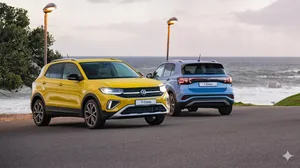
A proper head-to-head in South Africa — we cover price, performance,
petrol economy, safety and what it'll actually cost you to own each one long term.
Seltos starts ZAR 440000 cheaperCX-3 from ZAR 440,000 · Seltos from ZAR 389,995
Key Specs Side by Side
The specs that matter most — highlighted where one car leads.
Spec
CX-3
Seltos
Engine Power
115 kW
85 kW
Torque
206 Nm
260 Nm
Engine Size
1998 cc
1493 cc
Claimed Mileage
15.9 km/l
19.2 km/l
Ground Clearance
155 mm
190 mm
Boot / Load Bay
230 l
433 l
Airbags
6
6
Kerb Weight
1270 kg
1430 kg
Seating Capacity
5
5
Warranty
5 Years/Unlimited km
7 Years / 150,000 km
= leads in this spec
The Bottom Line
Seltos holds a noticeable edge over CX-3, especially in key ownership areas.
Where They Actually Differ
Performance
CX-3
+2 pts
Efficiency
Seltos
+12 pts
Safety
Seltos
+33 pts
Practicality
Seltos
+20 pts
Ownership
Seltos
+24 pts
What Each Car Gets Right (and Wrong)
CX-3
Strengths
More powerful engine output
Weak Spots
Lower fuel efficiency
Less comprehensive safety features
Less practical in daily usage
Shorter warranty coverage
Best suited to:Highway Driving
🏆 Overall Winner
Seltos
Strengths
Better fuel efficiency
Stronger safety package
More practical for daily use
Better long-term ownership value
Weak Spots
Less powerful engine setup
Best suited to:Fuel EfficiencyFamily Usage
Which One's Right for You?
CX-3
Drivers who prioritise strong highway performance and overtaking power
Seltos
Buyers looking for better fuel efficiency
Families prioritising stronger safety equipment
Large families needing more practicality and usability
Long-term owners valuing warranty and ownership peace of mind
Full Specs, Side by Side
Spec
CX-3
Seltos
Model Introduced Year
2015
2020
Generation
Current first-generation DK-series Mazda CX-3
First generation (SP2); SA launch 2020; 2023 facelift model current
Facelift History
The CX-3 has received successive equipment and design updates since its 2015 debut; Carbon and Individual now sit together at the top of the South African range.
2023 facelift with revised front and rear styling, updated ADAS suite and interior upgrades
Facelift Launched Since
2015
2023
Facelift Version Ending
Current
Current
Body Style
SUV
SUV
Model Year
2026
2026
Production Status
Active
published
Segment
Compact crossover
SUV
Vehicle Type
SUV
SUV
Dealer Stock Note
-
Flagship grade in the South Africa lineup
Color Note
-
Clear White, Aurora Black Pearl, Steel Grey, Gravity Blue, Intense Red, Pewter Olive, Glacier White Pearl (dual-tone on GT-Line)
Aero Grey, Snowflake White Pearl, Jet Black, Machine Grey, Polymetal Grey, Platinum Quartz and Soul Red Crystal are listed, with Carbon availability limited to selected finishes.
Multiple
Headlights
Standard
Yes
Panoramic Sunroof
Standard
No
Body Type
-
Compact SUV
Wing Mirror Type
-
Electric
Rear Wiper
-
Yes
Led Headlights
Standard
Yes
DRL
Standard
Yes
Led Taillights
-
Yes
Fog Lights
-
Yes
Fog Lamps
-
Yes
Front Fog Lights
-
Yes
Rear Fog Lights
-
Yes
Roof Type
-
Standard
Roof Rails
-
Yes
Rear Spoiler
-
Yes
Body Cladding
-
No
Chrome Exterior Finish
-
No
Door Handle Finish
-
Body Colour
Exterior Colour Options
-
7
Exterior Mirror Electric
-
Yes
Auto Headlights
-
Yes
Automatic Headlamps
-
Yes
Headlamps
Standard
Yes
Headlight Type
Standard
Yes
Exterior Mirror Folding
-
Yes
Headlamp Levelling
-
Yes
Daytime Running Lights
Standard
Yes
Front Fog Lamps
-
Yes
Rear Spoiler
-
Yes
Exterior Door Handle Colour
-
Body Colour
Load Bed Liner
-
-
Electric Blind Sunroof
-
Standard
Spec
CX-3
Seltos
Departure Angle
25.7 deg
25 deg
Terrain Modes
Sport
-
Locking Differential
-
No
4WD System Type
FWD
FWD
Approach Angle
-
19 deg
Ramp Breakover Angle
-
16 deg
Ramp-over Angle
-
17 deg
Recovery Hooks
-
No
Underbody Protection
-
No
Hill Descent Control
-
No
Off Road Descent Control
-
-
Crawl Control
-
-
Underbody Camera
-
-
Energy Recovery Display
-
-
Terrain Mode Mud
-
-
Terrain Mode Normal
-
-
Terrain Mode Rock
-
-
Terrain Mode Snow
-
-
Skid Plates Transfer Case
-
-
Skid Plates Fuel Tank
-
-
Rear Skid Plate Guard
-
-
Approach Angle Deg
-
19 deg
Departure Angle Deg
-
25 deg
Breakover Angle
-
16 deg
Wading Depth
-
-
Terrain Response System
-
-
Terrain Mode Sand
-
-
Off Road Traction Assist
-
-
Front Skid Plate Guard
-
-
Spec
CX-3
Seltos
Tyre Size
215/50R18
235/50 R18
Front Brake Type
Ventilated disc
Ventilated Disc
Rear Brake Type
Solid disc
Drum
Spare Wheel Type
Temporary spare 185/60 R16
Temporary Spare
Wheel Rim Size
18 X 7.0 J
235/50 R18
Handbrake Type
Electronic
Electronic
Brake Type Front
-
Ventilated Disc
Front Brake Disc Diameter
-
300 mm
Brake Type Rear
-
Drum
Rear Brake Drum Diameter
-
260 mm
Parking Brake Type
-
Electronic
Front Tyre Width
-
235 mm
Rear Tyre Width
-
235 mm
Wheel Diameter
18 X 7.0 J
235/50 R18
Wheel Type
Black Metallic + Machining
Alloy Alloy
Tyre Type
-
Radial
Tyre Load Index
-
103
Tyre Speed Rating
-
H
Spare Tyre
Temporary spare 185/60 R16
Temporary Spare
Wheelbase Mm
2570 mm
2610 mm
Tyre Pressure Monitoring
-
Yes
Tyre Pressure Display
-
Yes
Hydraulic Brake Assist
-
Yes
Autonomous Emergency Brake
-
Yes
Steering Wheel Audio Controls
-
Yes
Wheel Material
Black Metallic + Machining
Alloy Alloy
Wheels
Black Metallic + Machining
Alloy Alloy
Spare Wheel Size Type
-
Temporary Spare
Wheel Size Type
-
235/50 R18
Fifth Wheel Prep
-
-
Steering Wheel Cruise Controls
-
Yes
Steering Wheel Phone Controls
-
Yes
Leather Steering Wheel
-
Leather
Steering Wheel Trim
-
Leather
Electronic Brakeforce Distribution
-
Yes
Cornering Brake Control
-
Yes
Auto Brake Hold
-
Electronic
Electric Park Brake
-
Electronic
Brakes
-
Ventilated Disc
Spec
CX-3
Seltos
Front Suspension
Macpherson strut
MacPherson Strut
Rear Suspension
Torsion beam axle
Coupled Torsion Beam
Chassis Type
-
Unibody
Front Spring Type
-
Coil Spring
Rear Spring Type
-
Coil Spring
Shock Absorber Type
-
Telescopic
Front Anti-Roll Bar
-
Yes
Rear Anti-Roll Bar
-
Yes
Power Steering
-
Yes
Steering Column
-
Adjustable
Front Suspension Type
Macpherson strut
MacPherson Strut
Suspension
-
MacPherson Strut
Rear Suspension Type
Torsion beam axle
Coupled Torsion Beam
Chassis Material
-
Unibody
MagneRide Damping
-
-
Rear Axle Type
-
Coupled Torsion Beam
Shock Absorbers
-
Telescopic
Spec
CX-3
Seltos
CO2 Emissions
146 g/km
136 g/km
Fuel Octane Requirement
-
B7 Diesel
Particulate Filter
-
DPF
Fuel Evaporation Control
-
No
Idle CO2 Output
-
143
Green NCAP Rating
-
4
Start Stop System
-
Yes
Euro Emission Standard
-
Euro 6
Noise Level
-
67 dB
CO2 Emissions G Km
-
136
Hybrid System Type
-
-
Spec
CX-3
Seltos
Ownership Role
flagship equipment and comfort derivative
Flagship
Price Source
https://www.mazda.co.za/specs-and-compare
South Africa variant price CSV; verify against latest OEM price list
Price Zar
551600 ZAR
599995 ZAR
Pricing Role
flagship equipment and comfort derivative
Current listed price
Starting Price
551600
599995
Starting Price Zar
551600
599995
Spec
CX-3
Seltos
Warranty
5 Years/Unlimited km
7 Years / 150,000 km
Basic Warranty
5 Years/Unlimited km
7 Years / 150,000 km
Warranty Years
5 Years/Unlimited km
7 Years / 150,000 km
Warranty Kilometers
5 Years/Unlimited km
7 Years / 150,000 km
Anti-Corrosion Warranty
-
5 Years
Roadside Assistance
-
5 Years
Roadside Assistance
-
5 Years
Warranty Roadside Assistance
-
5 Years
Spec
CX-3
Seltos
Alternator
-
Yes
Engine Oil Change Interval
-
15000
Gear Shift Indicator
-
No
Service Plan Duration
3 Years/Unlimited km
3 Years / 45,000 km
Service Plan Distance
3 Years/Unlimited km
3 Years / 45,000 km
Maintenance Plan
-
3 Years / 45,000 km
Service Interval
-
15000
First Service At
-
15000
Approx Service Cost
-
R3,500 per service
Anti-Rust Treatment
-
Yes
Service Intervals
-
15000
Battery Warranty
-
7 Years / 150,000 km
Battery Type
-
-
Spec
CX-3
Seltos
Real-world City Mileage Min
-
13.3 l/100km
Real-world City Mileage Max
-
17.2 l/100km
Real-world Highway Mileage Min
-
20.0 l/100km
Real-world Highway Mileage Max
-
23.3 l/100km
Overall Verdict Score
Decision-grade view of the winner, score gap and category strengths.
Weighted / 100
Verdict readout
Seltos leads by 17 points
Seltos holds a noticeable edge over CX-3, especially in key ownership areas.
In structured scoring, Seltos emerges as the stronger overall package. However, CX-3 may appeal to buyers prioritising different factors. Ultimately, the right choice depends on your driving priorities in South Africa.
Other Comparisons Worth Checking
See how similar cars go head-to-head — you might find a better fit than you expected.
On our scoring the Seltos edges ahead overall. That said, the right choice depends on what you actually use the car for — the breakdown above shows exactly where each one wins and loses.
Efficiency scores: CX-3 61 vs Seltos 73. In the real world, diesel variants of either car will beat the claimed figure on long highways and fall short in Joburg traffic.
Safety scores: CX-3 61, Seltos 94. Check each model page for NCAP ratings and which trim levels include AEB and blind-spot monitoring — those features aren't always standard.
Long-term ownership scores: CX-3 47, Seltos 71. Service intervals, parts availability in SA, and whether a service plan is bundled all factor in — check the individual variant specs for that detail.
Practicality scores: CX-3 48, Seltos 68. This covers boot space, seat flexibility, and day-to-day usability — not just interior dimensions on paper.
Performance scores: CX-3 47, Seltos 45. This looks at real-world pace — 0–100 kph, highway flexibility, and how either car feels when you actually need to overtake on an N-road.
Resale varies with colour, spec, and market timing, but Japanese brands — and Toyota specifically — have a strong track record in SA. Check current used prices for both on AutoTrader to see the real gap right now.
Ground clearance and 4WD availability are what matter most here. Scroll to the spec table above to compare both side by side — if either model offers a 4WD variant, that's the version worth comparing.
Fuel, insurance, and service costs are the big three. Diesel variants of both models typically save R800–R1,500/month in fuel at current SA pump prices. The Seltos edges the overall ownership score, but check whether either variant includes a service plan — that changes the monthly maths significantly.
The Seltos scores better overall, but neither car is a bad buy here. It comes down to what features matter to you — check the full spec table above to see exactly what you gain and lose at each price point.
In Depth — Breaking It All Down
The comparison between CX-3 and Seltos in South Africa
evaluates performance, efficiency, safety, practicality and long-term ownership value.
Performance: CX-3 scores 47 vs 45.
Efficiency: CX-3 scores 61 vs 73.
Safety: CX-3 scores 61 vs 94.
Practicality: CX-3 scores 48 vs 68.
Ownership: CX-3 scores 47 vs 71.
Final structured scoring gives Seltos
the advantage in this comparison.
Compare
Get Best Price
We'll Contact You
Fill in your details and a dedicated executive will reach out shortly.
✓
We've Got Your Details!
An executive will contact you shortly. Thank you for your interest.