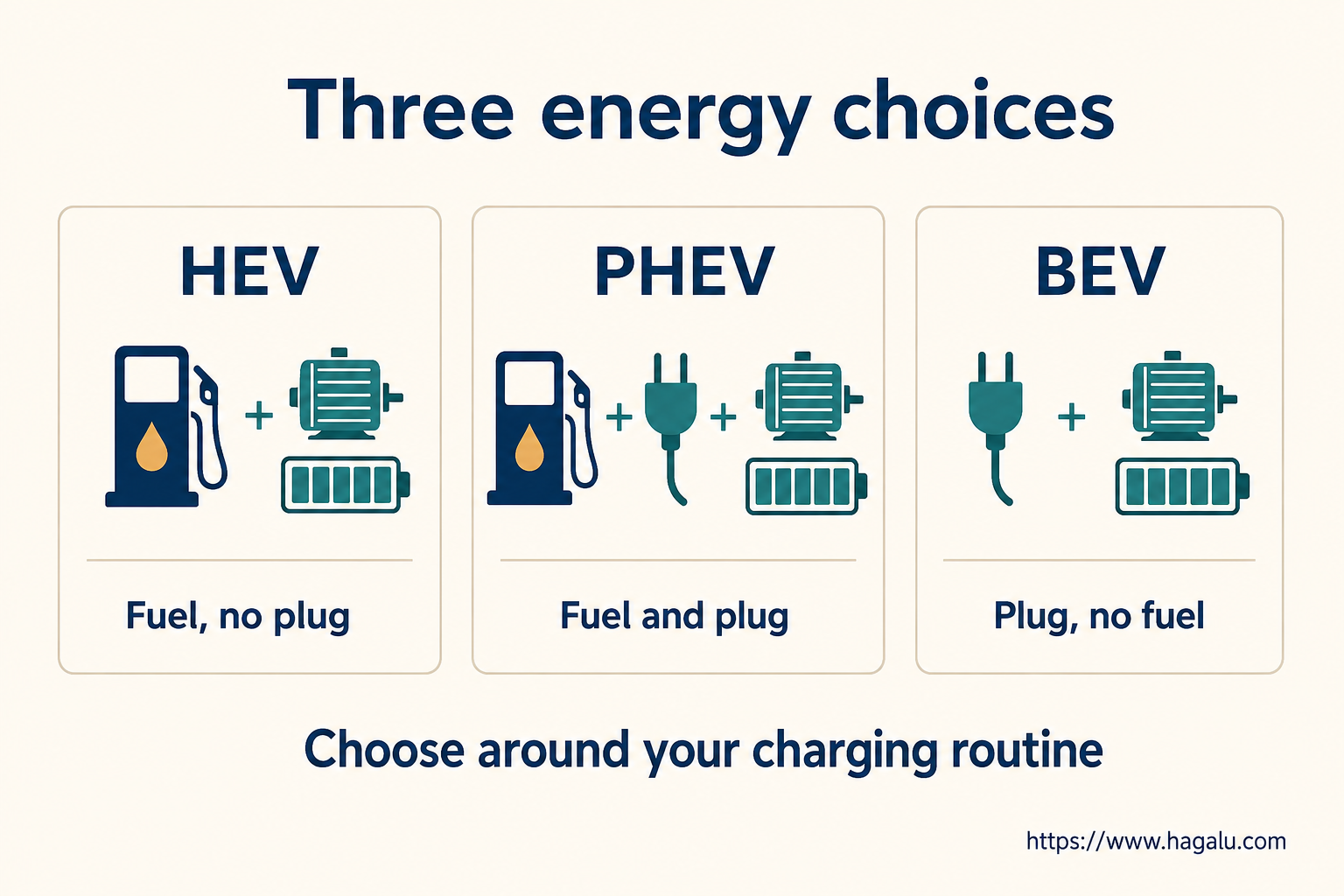
https://www.hagalu.comThe right powertrain is the one that matches where energy comes from during an ordinary week.On a phone, swipe the diagram sideways to read it at a larger size.Open full-size image ·
Hagalu Editorial Studio ·
image usage termsStart with the decision
What you need to know first
Electric-car interest in Kenya is growing, but the decision is not just about a battery range number. The buyer needs a dependable charging routine, an honest electricity-cost input, a route that fits the available range and a support path for tyres, software, warranty and high-voltage work.
A battery EV, a self-charging hybrid and a plug-in hybrid solve different problems. The Kenya catalogue keeps their energy measures separate: EVs use kWh and range, while fuel-burning variants use km/l or L/100 km. That separation makes the comparison slower, but much more trustworthy.
Five useful pictures, not decoration
See the decision before reading the fine print
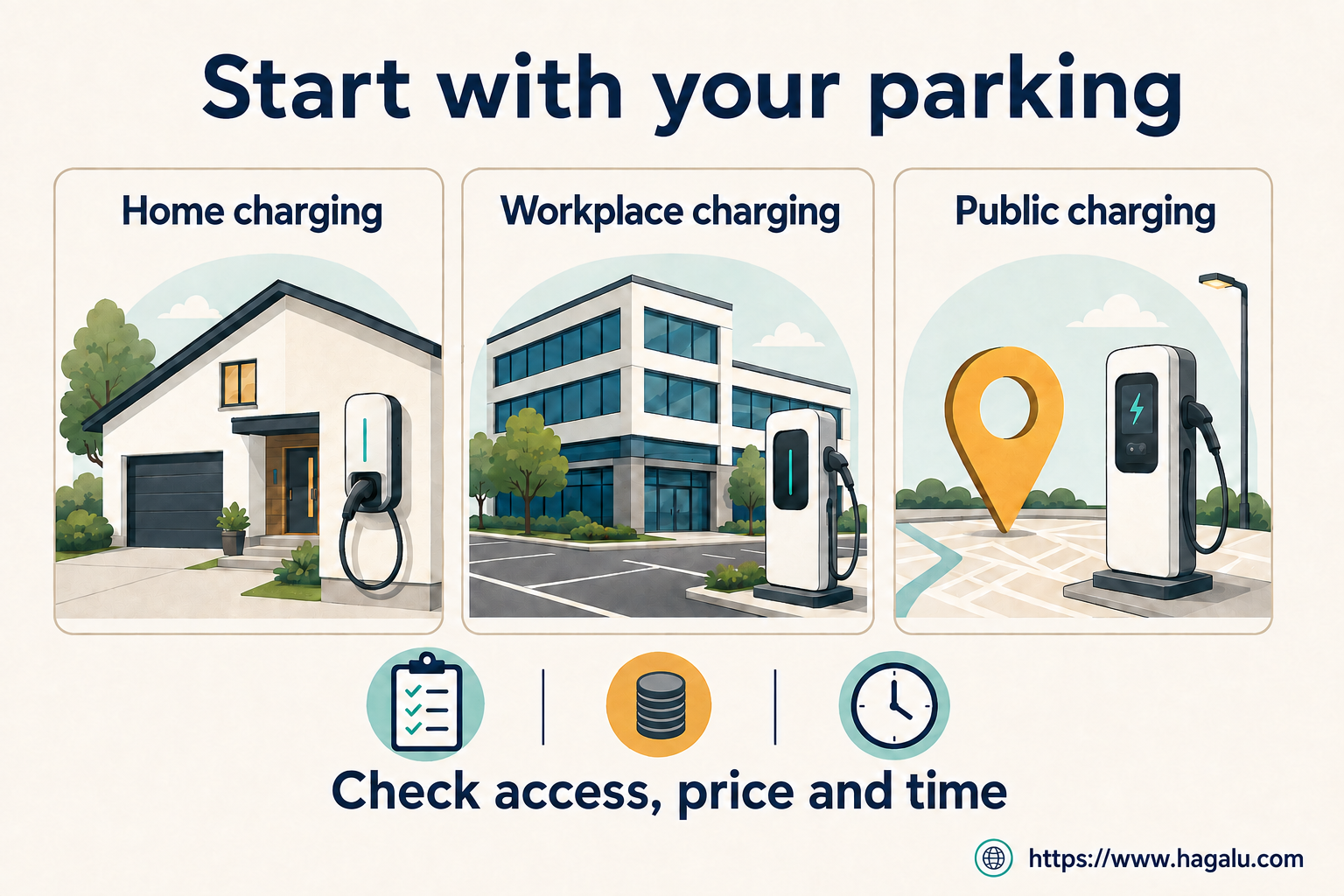
https://www.hagalu.comRange is useful only when the next reliable charging opportunity is part of the route.On a phone, swipe the diagram sideways to read it at a larger size.Open full-size image ·
Hagalu Editorial Studio ·
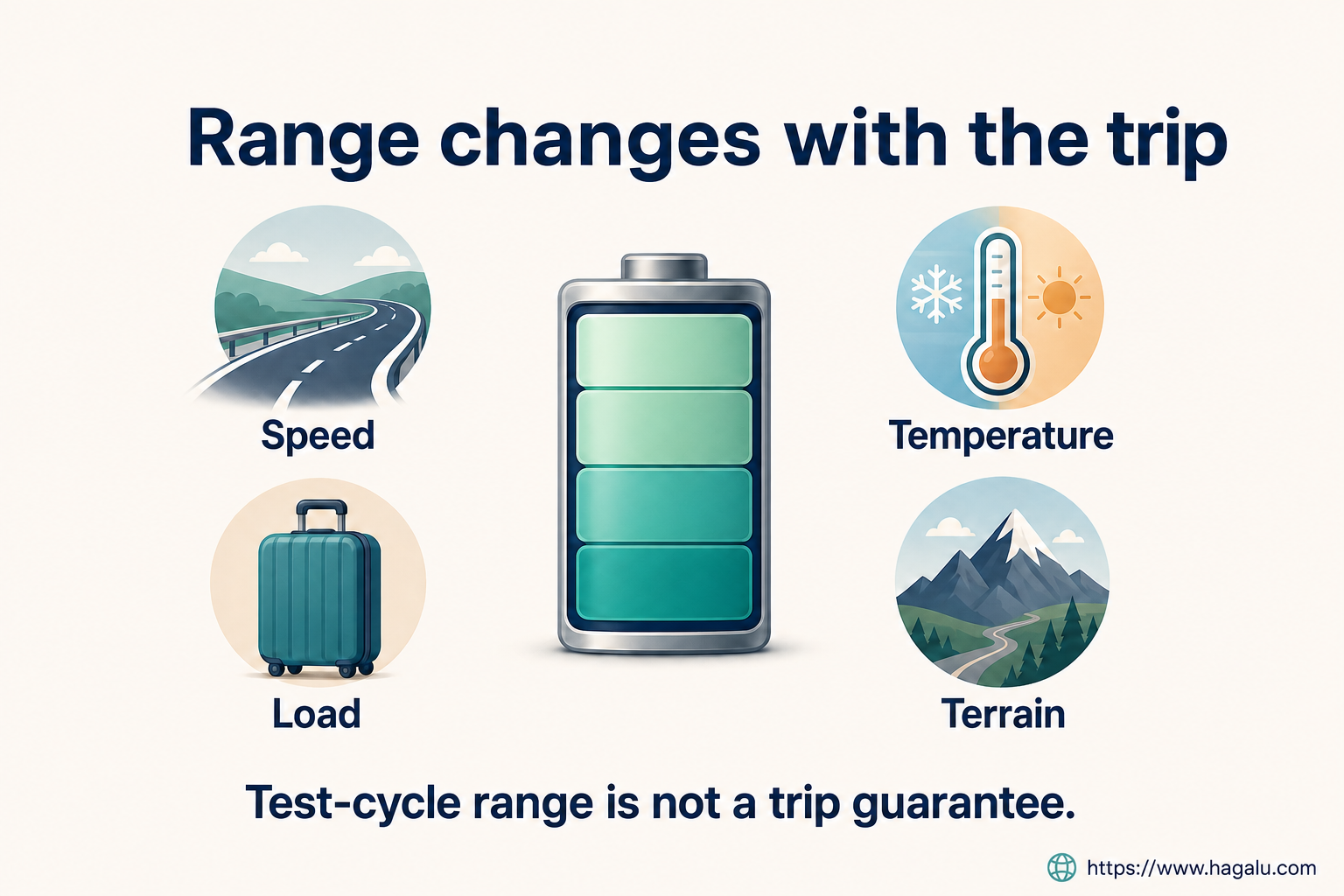
image usage termshttps://www.hagalu.comPublished range is a test result; your route and weather determine the usable plan.On a phone, swipe the diagram sideways to read it at a larger size.Open full-size image ·
Hagalu Editorial Studio ·
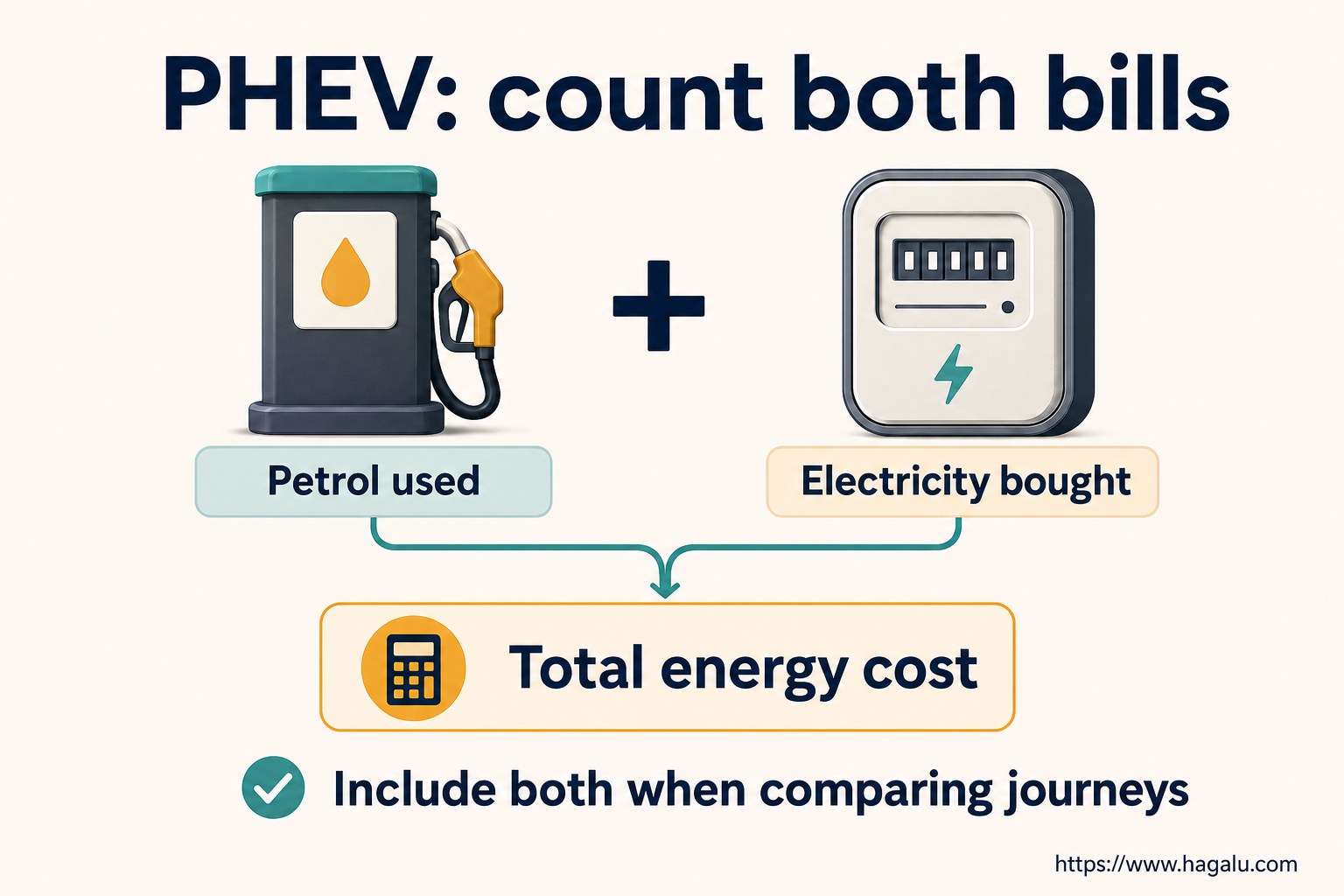
image usage termshttps://www.hagalu.comDo not compare an EV with a petrol car until both energy inputs use the same distance and price basis.On a phone, swipe the diagram sideways to read it at a larger size.Open full-size image ·
Hagalu Editorial Studio ·
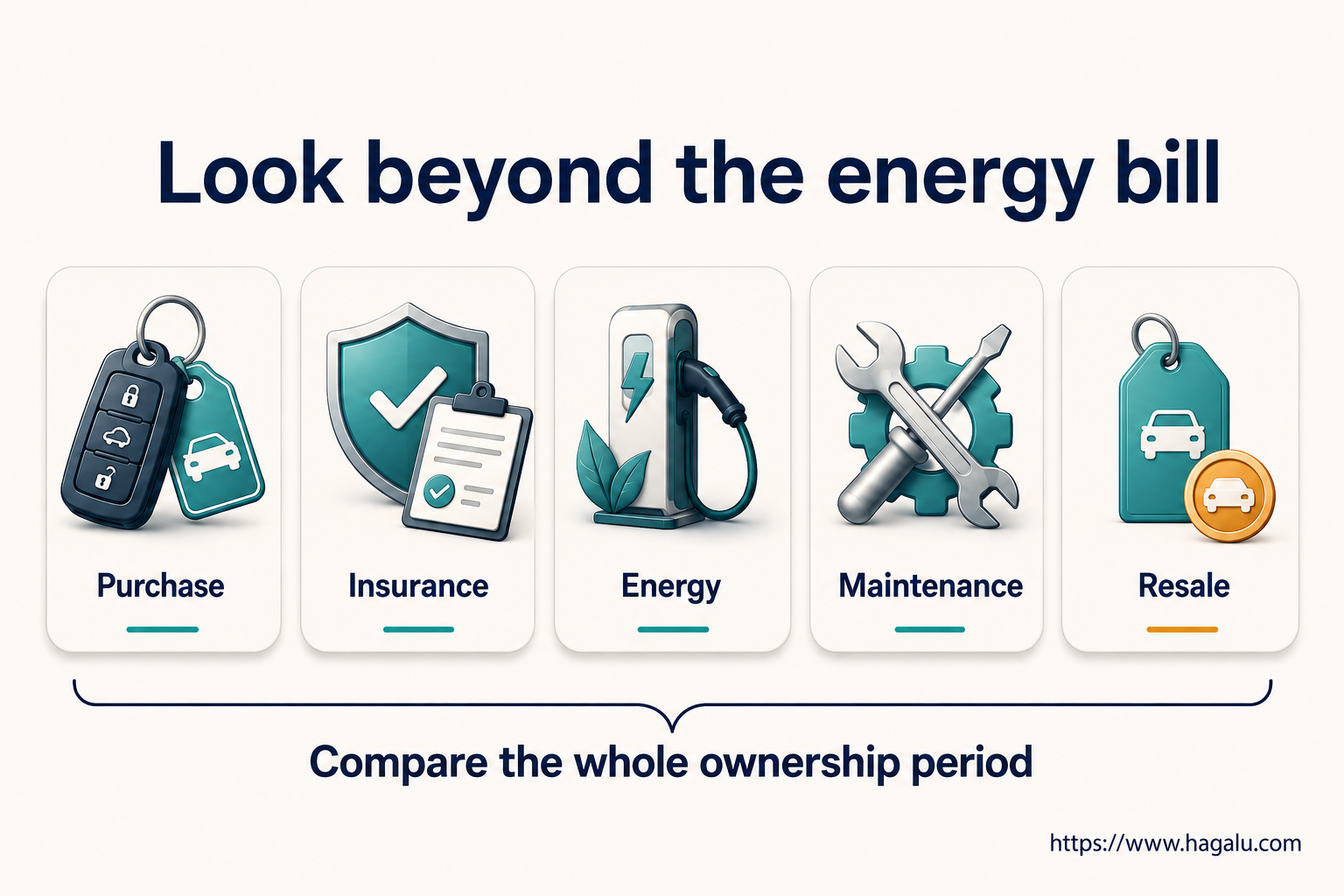
image usage termshttps://www.hagalu.comThe vehicle is only one part of the ownership decision; support and charging access matter too.On a phone, swipe the diagram sideways to read it at a larger size.Open full-size image ·
Hagalu Editorial Studio ·
image usage terms
Charging before range
Ask where the car will charge on an ordinary week
A home charger or a reliable workplace arrangement can make an EV feel simple. A buyer who parks on the street or travels between towns may depend more heavily on public charging and needs to understand where those points are, whether they work with the vehicle and what happens when one is busy or unavailable.
The best routine is usually a small regular top-up rather than waiting for the battery to become a problem. Map the places where the vehicle already stops: home, work, shopping, school or a trusted long-distance rest point. If charging requires a special trip every time, the advertised range will not remove the inconvenience.
Confirm parking, electrical access and installation permission.
Ask which connector and charging speeds the exact variant accepts.
Plan a backup for long routes and charger downtime.
Range is a planning number
Use the test figure carefully on Kenyan roads
Published range is measured under a defined cycle. Speed, hills, passengers, luggage, tyre pressure, traffic and air conditioning can reduce the distance available in real use. Leave a reserve for the route you cannot control, especially when public charging is sparse or the next stop is far away.
Energy consumption in kWh/100 km allows a fairer running-cost calculation than a fuel analogy. Multiply the distance by the energy use, then by the electricity price or charging tariff that applies to your routine. Public charging may have different pricing from home electricity and should not be blended without explanation.
Calculate the longest normal trip, not only the daily commute.
Keep a buffer for weather, hills, traffic and detours.
Separate home, workplace and public charging assumptions.
Support is a specification
Ask who will maintain the battery system
EVs have fewer combustion-engine service items, but that does not mean ownership is maintenance-free. Tyres, brakes, suspension, cooling, software, cabin systems and the high-voltage battery still need the correct support. Ask which workshop is authorised, how warranty claims work and what battery coverage means in time and distance.
Resale questions also deserve an honest answer. Battery health, charging history, warranty balance and future public support can influence the next buyer. Do not assume a petrol-car resale pattern transfers directly to an EV simply because both have four wheels.
Read battery and vehicle warranty terms together.
Confirm local high-voltage technician and parts support.
Ask how battery condition is documented for future resale.
Take this with you
Kenya EV questions before a deposit
Tick each item before deciding
Where will the car charge on weekdays and long trips?
What connector, AC/DC speeds and installation requirements apply?
What range cycle and kWh/100 km figure belong to the exact variant?
What battery warranty, service support and high-voltage workshop are available?
What is the electricity price at home and at the public chargers you expect to use?
No jargon test
Words on this page, made simple
Derivative
The exact version of a model—its engine, gearbox and equipment—not merely the badge on the boot.
ESC
Electronic stability control. It can brake individual wheels to help the car follow the driver's intended path during a skid.
ISOFIX
Built-in metal anchor points used by compatible child seats. The vehicle and child-seat manuals must still agree.
Payload
The combined weight the vehicle may carry, including people, bags and accessories.
Braked towing limit
The heaviest trailer the vehicle may tow when that trailer has its own working brakes.
Tow-ball limit
The most downward weight the trailer may press onto the vehicle's towbar connection.
Gross combination mass
The highest allowed total weight of the loaded vehicle and loaded trailer together.
PHEV
A plug-in hybrid: it has a battery that can be charged from an external plug as well as an engine.
Principal
The money borrowed before interest and finance fees are added.
Balloon payment
A large part of the debt deliberately left for the end of the finance agreement.
Annualise
Turn an irregular cost into a yearly amount, so monthly and occasional bills can be compared fairly.
How the list was built
Method, eligibility and limits
The guide keeps BEV energy consumption and range separate from liquid-fuel mileage.
Only the exact Kenya derivative record can supply the public range and battery facts shown on a model page.
Running-cost examples use user-entered electricity prices rather than a frozen national tariff.
The guide does not assume that a global EV launch is a Kenyan market announcement.
They can be practical when the buyer has dependable home, workplace or public charging and a route that fits the exact vehicle's range. Charging access should be checked before the badge or price.
How much does it cost to charge an EV in Kenya?
It depends on energy used, electricity tariff, charging losses and whether the charge is at home or public infrastructure. Use the exact kWh/100 km figure and your real tariff.
Is an EV cheaper to maintain than a petrol car?
It may have fewer combustion-engine service items, but tyres, brakes, suspension, software and high-voltage support still matter. Read the exact warranty and service terms.
Should I buy a hybrid instead of an EV?
Choose the powertrain that fits your charging access and route. A self-charging hybrid may suit a buyer without reliable external charging; an EV can suit a buyer with a dependable routine.
Evidence before excitement
Sources and checking method
Primary technical references checked 27 September 2026. Illustrations are conceptual, not photographs or specifications of a particular vehicle. Worked examples use explicitly stated assumptions, not current tariffs or quotations.
Prices, equipment and availability can change after publication. Ranked model cards link their recorded vehicle source when one is available; the broader sources above explain market, legal or calculation context. Always verify the exact derivative in a current OEM document and written dealer quotation.