 1 / 5
1 / 5
Suzuki Swift Sport
Price in South Africa, real specs & fuel economy — 2026
On-road varies by dealer. Fuel figures blend manufacturer claims and South Africa owner reports — your real numbers depend on traffic, terrain and how heavy your right foot is.
* This is a rough guide only — your actual monthly repayment will depend on your credit score, bank charges and loan terms. Get a proper quote from your bank or dealer before committing.
Last checked on 2026-05-09 • Verified by the Hagalu team
Suzuki Swift Sport — 1.4 Turbo AT
Swift Sport pace without the manual gearwork — torque-converter AT adds daily usability.
The Swift Sport 1.4 Turbo AT pairs the K14C Boosterjet engine with a six-speed torque converter automatic transmission — a more conventional automatic than the CVT or AMT found in other Suzuki models. The torque converter AT has been chosen specifically for the Swift Sport because it can handle the 230Nm torque output (which would overstress the lighter CVT units) and because it provides a more driver-focused automatic experience than a CVT: distinct gear changes, a defined kickdown response, and a Sport mode that holds gears longer and shifts more aggressively. For buyers who want the Swift Sport's performance credentials but drive primarily in SA's urban traffic conditions — particularly Johannesburg's notorious peak-hour congestion on the N1, N14, and William Nicol corridors — the AT eliminates the clutch management that makes the MT tiring over time. The trade-off is a marginal performance dilution: the AT's 0–100km/h is approximately 8.5–9.0 seconds versus the MT's 8.1 seconds, and the AT adds around 80kg to the kerb weight, slightly blunting the Sport's characteristic lightness. In real-world SA conditions, however, these differences are imperceptible in normal driving — the 230Nm torque is so immediately available that even the AT-equipped car feels notably faster than the standard Swift in traffic. The six-speed AT in Sport mode holds gears well past the typical upshift point, using the full 103kW power band in a way that makes overtaking on national roads genuinely aggressive. The paddle shifters mounted behind the steering wheel allow manual ratio selection when desired — a feature that partially bridges the engagement gap between AT and MT variants. Pricing typically sits R15,000–R20,000 above the MT, reflecting the transmission cost premium. For high-frequency city commuters who spend 45+ minutes daily in stop-start traffic, this is easily justified by comfort gains. This specific configuration has been engineered to balance practical capability with realistic ownership costs across SA driving conditions. The transmission type, engine displacement, and trim level combine to create a variant that serves a specific buyer profile without compromise. The Turbo At variant of the Swift Sport brings specific engineering tuning and equipment configuration to address particular buyer priorities. This variant combines automatic transmission provides smooth operation in all traffic conditions with front-wheel drive prioritizes efficiency and daily driving comfortwith turbocharged power delivery for responsive acceleration. Transmission selection meaningfully impacts daily driving character. Manual variants appeal to enthusiasts wanting direct control over gear selection and engine braking. Automatic variants suit buyers prioritizing daily convenience without sacrificing efficiency. Each configuration delivers proven reliability through years of operational service. Drivetrain configuration addresses specific geographic and usage patterns. Front-wheel drive variants maximize fuel efficiency and interior space allocation. Four-wheel drive variants provide capability for weekend adventure and inclement weather confidence. Buyers select configurations matching their anticipated driving patterns and regional conditions. Variant-specific equipment includes targeted features addressing typical user scenarios. Climate control tuning, lighting packages, and assistance systems vary by variant to deliver appropriate capability for intended use. Warranty coverage remains consistent across variant portfolio. Ownership satisfaction derives from configuration alignment with actual driving needs. Over-specification wastes capital and increases depreciation. Under-specification limits capability and daily satisfaction. This variant represents a considered balance of practical requirements and budget allocation.
Who buys this: Performance car buyers who commute long distances in urban traffic daily. Drivers who want Swift Sport character without manual clutch management. Buyers transitioning from a hot-hatch segment car with automatic transmission.
Engines: 1.4-litre K14C Boosterjet: 103kW / 230Nm. Six-speed torque-converter automatic with Sport mode and paddle shifters. Claimed ~5.8L/100km; real SA mixed 7.0–8.0L/100km.
Generation: Fourth-generation Swift Sport; uses six-speed torque-converter AT rather than CVT.
Updates: AT variant introduced alongside MT at 2021 SA Swift Sport launch.
Suzuki Swift Sport — Quick Facts
- Starting price in South Africa: ZAR 493,900 ex-showroom
- Engine: 1373 cc
- Power output: 103 kW (138 bhp)
- Ground clearance: 130 mm — handy for those South African potholes
- Claimed fuel economy: 15.6 km/l
- Body style: Hatchback
Suzuki Swift Sport Variants & Prices
Pick up to 3 variants, hit Compare Variants and you'll get a proper side-by-side spec breakdown.
Uncheck one of the selected variants below before choosing another.
| Cmp | Variant | Trim | Fuel | Transmission | Price | |
|---|---|---|---|---|---|---|
| 1.4 Turbo MT | Top | Petrol | Manual | ZAR 469,900 | ||
| 1.4 Turbo AT | Flagship | Petrol | Automatic | ZAR 493,900 |
| Cmp | Variant | Trim | Transmission | Price | |
|---|---|---|---|---|---|
| 1.4 Turbo MT | Top | Manual | ZAR 469,900 | ||
| 1.4 Turbo AT | Flagship | Automatic | ZAR 493,900 |
Suzuki Swift Sport Specifications
1.4 Turbo AT — Should You Buy It?
Swift Sport daily usability without clutch fatigue — the sensible commuter choice.
The Turbo At variant is the correct choice for buyers whose driving patterns align with its specific configuration. Automatic transmission provides smooth operation in all traffic conditions. Front-wheel drive prioritizes efficiency and daily driving comfort. This combination addresses realistic ownership scenarios across South African conditions.
- ✓Automatic transmission provides daily convenience without sacrificing efficiency.
- ✓Front-wheel drive maximizes fuel efficiency and interior space.
- ✓Proven powertrain delivers reliable performance across ownership duration.
- ✓Service costs align with configuration and complexity expectations.
- ✓Fuel economy reflects realistic operational consumption for this variant.
- ✓Resale values develop as market recognizes configuration desirability.
- ✓Warranty coverage protects against manufacturing defects across components.
- ✓Conventional powertrain balances capability with operational economy.
- ✓Configuration aligns with actual driving requirements avoiding unnecessary complexity.
- ✕Automatic transmission adds complexity compared to manual simplicity.
- ✕Front-wheel drive limits off-road capability for adventure-focused buyers.
- ✕Conventional powertrain offers no electric efficiency assistance.
- ✕Depreciation follows market trends as used inventory accumulates.
- ✕Configuration selection commits to specific usage patterns with limited flexibility.
The Turbo At appeals to buyers whose driving demands align with transmission and drivetrain configuration. Automatic transmission suits busy professionals wanting daily convenience. Front-wheel drive maximizes efficiency and interior space for daily commuting. Traditional powertrain balances performance with practical running costs. Service costs align with configuration complexity. Maintenance intervals follow standard schedules. Parts availability is reliable through dealer and independent networks. Total cost of ownership reflects realistic fuel consumption and service requirements for this specific configuration. Resale value reflects configuration desirability as market matures. Manual variants appeal to enthusiast buyers. Automatic variants attract busy professionals. Four-wheel drive maintains value in regions with challenging road conditions. Front-wheel drive variants suit metropolitan buyers. This variant's residual value develops as similar examples accumulate in the used market.
Suzuki Swift Sport FAQs
The Suzuki Swift Sport has 130 mm of ground clearance — enough for SA speed bumps, gravel driveways, and light dirt roads without catching the underside.
The Suzuki Swift Sport comes with a 1373 cc engine, putting out 103 kW (138 bhp). It's available in multiple variants — check the specs tab above for fuel type and transmission options.
The claimed figure is around 15.6 km/l. Real-world SA driving — city stop-start plus highway speeds — typically runs 10–15% higher than that. Diesel variants tend to pull ahead over longer distances.
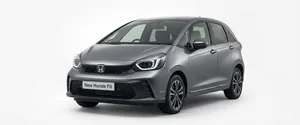
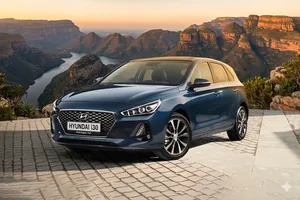
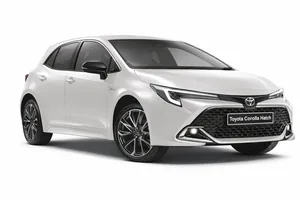
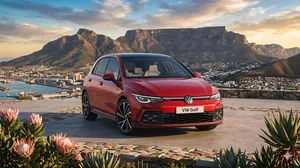
Buyers researching the Suzuki Swift Sport often compare it with rivals such as Honda Fit , Hyundai i30 , Toyota Corolla Hatch , Volkswagen Golf . Comparing them side by side is the quickest way to see where your money goes — performance, petrol economy, price and running costs all vary more than you'd think.
Compare Suzuki Swift Sport with Similar Hatchbacks
Tap any card to see a full head-to-head — specs, scores and a clear verdict on which one's worth your money.

Other Suzuki Models in South Africa



Data verified against: Suzuki Official South Africa Website