1 / 5
Price in South Africa, real specs & fuel economy — 2026
Hover or tap any pill for a plain-English explanation. Bracketed values show common equivalents (bhp, lb-ft, inches, cu ft).
On-road varies by dealer. Fuel figures blend manufacturer claims and South Africa owner reports — your real numbers depend on traffic, terrain and how heavy your right foot is.
* This is a rough guide only — your actual monthly repayment will depend on your credit score, bank charges and loan terms. Get a proper quote from your bank or dealer before committing.
Last checked on 2026-06-09 • Verified by the Hagalu team
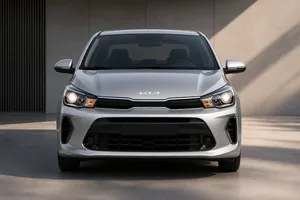
The Kia Pegas LX Manual is South Africa's value-positioned three-box sedan entry point into the Pegas range, powered by a 1.4-litre four-cylinder producing 73 kW and 132 Nm, paired with a six-speed manual gearbox. At 5.9 L/100km combined, a 502-litre boot, a 2570mm wheelbase, and the full complement of Apple CarPlay, Android Auto, and rear parking sensors, the Pegas LX Manual challenges the Polo Vivo sedan on value per rand.
South Africa's sedan market has undergone significant pressure over the past decade as SUVs and crossovers have absorbed the family car buyer's attention. What remains is a core group of buyers who understand that a three-box sedan's combination of a large, enclosed boot, a long wheelbase, and a stable, efficient highway character makes it a better rational choice than an equivalently priced crossover for South African driving conditions — particularly the long-haul routes between Johannesburg and Durban, between Cape Town and Bloemfontein, and between Pretoria and Polokwane that define many families' annual travel patterns. The Kia Pegas LX Manual is aimed directly at this buyer. The Pegas is not a rebadged or restyled version of the Picanto extended into sedan form. It is a purpose-built entry-level sedan on its own platform, with a wheelbase of 2570mm that is 170mm longer than the Picanto's 2400mm. This additional length directly translates into rear passenger space that makes the Pegas genuinely comfortable for four adult occupants on the kinds of intercity journeys that define South African family travel. The boot at 502 litres is approximately double the Picanto hatchback's 255-litre capacity, and crucially, the sedan's separate boot enclosure means luggage is fully separated from the passenger compartment — a security and weatherproofing advantage that hatchback alternatives cannot offer. The 1.4-litre G4FA four-cylinder petrol engine fitted to the Pegas produces 73 kW at 6000 rpm and 132 Nm at 4200 rpm. These figures represent a meaningful step above the Picanto's 1.0-litre three-cylinder in every measurable performance dimension. The additional 24 kW and 38 Nm over the 1.0-litre engine makes the Pegas a noticeably more confident vehicle on South Africa's national highway network, where overtaking at 120 km/h requires a power reserve that the Picanto's smaller engine approaches at its limit and the Pegas's 1.4-litre manages with composure. The six-speed manual gearbox paired with the 1.4-litre is the correct specification choice for the LX Manual: six ratios allow the engine to sit at its most efficient and relaxed point at highway cruising speeds, which the Picanto's five-speed manual cannot replicate. Combined fuel consumption for the Pegas LX Manual is 5.9 litres per 100 kilometres — exactly the figure you'd expect from a well-matched 1.4-litre/six-speed combination in a 2026 sedan. This is competitive with the Polo Vivo sedan's comparable figure and represents genuine real-world economy on South African roads. On a steady N2 coastal highway cruise between Cape Town and Hermanus at 110 km/h, the Pegas LX Manual can return consumption figures approaching 5.5 L/100km. On the more demanding N1 climb through the Hex River mountains at full passenger and luggage load, consumption rises to 6.5-7.0 L/100km. These are honest, predictable variations that allow a family to budget a Johannesburg to Durban or Cape Town to Port Elizabeth fuel stop accurately. The LX trim level provides the connectivity and sensor equipment that most South African sedan buyers now consider standard. Apple CarPlay and Android Auto integrate the driver's smartphone navigation and audio into the dashboard display, enabling Waze routing through Johannesburg's complex peak-hour highway network and seamless music streaming on intercity runs. Rear parking sensors provide audible feedback for the sedan's longer rear overhang — the three-box body creates a parking geometry that differs from the hatchback, with the boot lid extending further behind the rear axle. Steering wheel-mounted audio and phone controls allow hands-free management of navigation and communication without lifting hands from the wheel. The Pegas's interior at LX level uses cloth seating in a design that reads as appropriately senior relative to the Picanto. The longer wheelbase translates directly into meaningful rear passenger legroom — adults of 180cm height sit in the rear without knee contact with the front seat backs, a comfort benchmark the Picanto cannot meet. The dashboard design is clean and driver-focused, with the infotainment unit sitting at a natural eyeline height and the analogue instrument cluster providing clear, uncluttered speed and fuel information. Storage solutions include a glovebox, centre armrest with a storage compartment, door pockets front and rear, and a rear parcel shelf that integrates cleanly with the boot lid's operation. Exterior styling follows Kia's contemporary design language with a three-box proportion that is balanced and modern without chasing a sportiness that would read as incongruous at the price point. The sedan's profile is longer than the hatchback derivatives in the range, and the rear three-quarter view — boot lid, D-pillar, and rear quarter glass — is the most distinctive visual angle. At LX level, steel wheels with plastic covers are fitted; the alloy upgrade awaits the EX. Colour options including Clear White, Aurora Black Pearl, Smoke Blue, Sporty Blue, and Fiery Red give buyers appropriate personalisation across the Pegas's five available shades. The seven-year, 150,000km manufacturer warranty applies to the Pegas LX Manual, and it is arguably more significant for the sedan buyer than for the city car buyer. A family purchasing a sedan as their primary vehicle — for school runs in Johannesburg's northern suburbs, family holidays along the Garden Route, and weekly commuting in Pretoria's eastern suburbs — is making a longer, higher-cost commitment than the city car buyer, and the seven-year warranty's coverage through the full finance term provides a level of financial certainty that is proportionally more valuable at the sedan acquisition cost. Competitor analysis at the Pegas LX Manual's price and specification level is instructive. The Volkswagen Polo Vivo sedan at equivalent trim is the primary competitor. The Polo Vivo carries the VW brand premium and offers a marginally more refined overall package but costs meaningfully more at equivalent specification. The Toyota Starlet sedan at LX-equivalent trim is a newer model with strong reliability credentials, but the Kia's seven-year warranty advantage over Toyota's coverage period remains a meaningful differentiator. The Suzuki Dzire is a genuine sedan competitor in the same price bracket with strong fuel economy, but dealer support is less comprehensive than Kia's national network. The Honda Amaze competes on value but carries a higher price at equivalent specification. For the buyer who has correctly weighted warranty length, sedan practicality, fuel economy, and connectivity in their purchase criteria, the Pegas LX Manual makes a compelling case against all of these alternatives.
Who buys this: The Pegas LX Manual targets South African families and value-conscious buyers who have determined that a three-box sedan's boot capacity, rear passenger space, and intercity highway capability make it the more rational choice than a hatchback or crossover at an equivalent price. The core buyer profile is a family with two school-age children in Johannesburg's northern suburbs, Pretoria East, Cape Town's southern suburbs, or Durban's Berea who needs a reliable, fuel-efficient primary vehicle for daily school runs, weekly shopping, and bi-annual intercity holidays. The manual gearbox buyer within this profile is typically an engaged driver who grew up on manuals, actively prefers the driving involvement of a six-speed, and is comfortable with manual operation in urban school-run traffic. The seven-year warranty is a primary purchase motivator: for a family for whom the car represents a significant financial commitment, the certainty of seven years of covered mechanical risk provides genuine peace of mind through the finance term. The 502-litre boot is often the single feature that tips the decision from a hatchback competitor: it handles the family holiday luggage load without a roof rack, and the enclosed sedan boot gives peace of mind on overnight trips that hatchback parcel shelves cannot match.
Pick up to 3 variants, hit Compare Variants and you'll get a proper side-by-side spec breakdown.
| Cmp | Variant | Trim | Fuel | Transmission | Price | |
|---|---|---|---|---|---|---|
| 1.4 LX Manual | Base | Petrol | Manual | ZAR 292,995 | ||
| 1.4 LX Auto | Mid | Petrol | Automatic | ZAR 307,995 | ||
| 1.4 EX Manual | Top | Petrol | Manual | ZAR 303,995 | ||
| 1.4 EX Auto | Flagship | Petrol | Automatic | ZAR 318,995 |
| Cmp | Variant | Trim | Fuel | Transmission | Price | |
|---|---|---|---|---|---|---|
| 1.4 LX Manual | Base | Petrol | Manual | ZAR 292,995 | ||
| 1.4 LX Auto | Mid | Petrol | Automatic | ZAR 307,995 | ||
| 1.4 EX Manual | Top | Petrol | Manual | ZAR 303,995 | ||
| 1.4 EX Auto | Flagship | Petrol | Automatic | ZAR 318,995 |
South Africa's best-value six-speed sedan — the Pegas LX Manual combines 73 kW, a 502-litre boot, CarPlay, and a seven-year warranty at a price that challenges the Polo Vivo sedan on every rational metric.
The Pegas LX Manual makes the three-box sedan format compelling for South African families who have correctly identified that a 502-litre enclosed boot, meaningful rear passenger space, and a six-speed 73 kW drivetrain deliver more family car per rand than any hatchback or crossover at the same price. CarPlay and rear sensors at LX level meet the modern connectivity standard. The seven-year warranty provides full finance-term coverage. The six-speed manual buyer gets a genuinely engaging highway driving experience that the automatic cannot replicate. The absence of cruise control and leather are the EX's territory; for buyers who can live without those features, the LX Manual is the better value calculation.
The KIA Pegas has 148 mm of ground clearance — enough for SA speed bumps, gravel driveways, and light dirt roads without catching the underside.
The KIA Pegas comes with a 1368 cc engine. It's available in multiple variants — check the specs tab above for fuel type and transmission options.
The claimed figure is around 16.9 km/l. Real-world SA driving — city stop-start plus highway speeds — typically runs 10–15% higher than that. Diesel variants tend to pull ahead over longer distances.
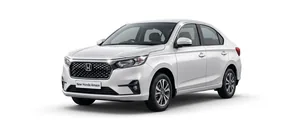
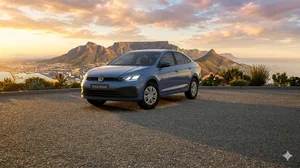
Buyers researching the KIA Pegas often compare it with rivals such as Honda Amaze , Volkswagen Polo Sedan . Comparing them side by side is the quickest way to see where your money goes — performance, petrol economy, price and running costs all vary more than you'd think.
Tap any card to see a full head-to-head — specs, scores and a clear verdict on which one's worth your money.
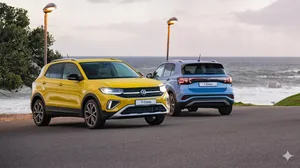
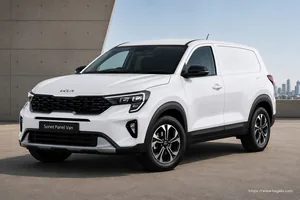
Different body types — refreshed every visit so you discover something new.
Data verified against: KIA Official South Africa Website